




Economic Watch: Increasing Traffic Congestion Points to Improving Economy
If increased traffic along the nation’s highways is a accurate indicator of increased commerce and an improving economy, then things are better overall than they were the same time a year ago according to one firm, Inrix, which monitors traffic congestion.
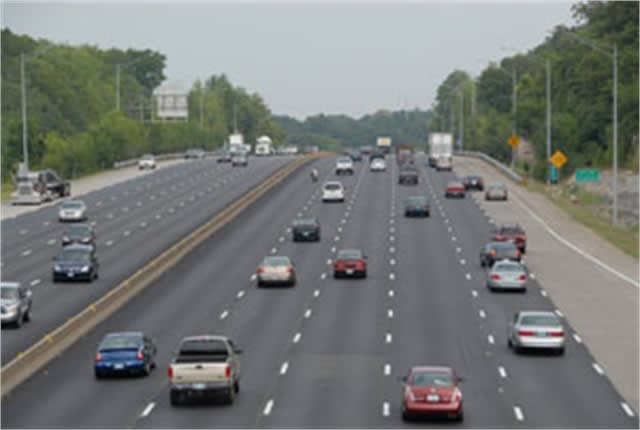
If increased traffic along the nation’s highways is a accurate indicator of increased commerce and an improving economy, then things are better overall than they were the same time a year ago according to one firm, Inrix, which monitors traffic congestion.
Data from the latest INRIX Gridlock Index shows that United States traffic congestion rose by more than 7% on a year-over-year basis in July 2013. It says this highlights the overall U.S. economy's improvement since July 2012's plunge of 26% and underlines the fine line the Federal Reserve must walk as it considers removing the unprecedented support it has provided since the start of the crisis.
"Traffic reflects the net effect of the shopping, shipping and commuting that keeps our economy ticking," said Bryan Mistele, CEO of INRIX. "We've taken a step forward from last year but we'll be watching closely to see how the economy holds up as the Fed goes back to business as usual."
National levels of traffic congestion increased by 7.4% from July 2012 to July 2013 to reach a composite IGI score of 6.4, meaning the average trip took drivers in the 100 most populated metro areas over six percent longer due to increased traffic.
The Midwest had the greatest rise in traffic congestion as a large majority of its most populated metro areas saw year-over-year traffic increases in July. Double-digit increases in many of its largest metro areas, including St. Louis at 39% and Cleveland at 29%, underlined the forward-looking optimism found in a recent survey of business conditions in the region.
The Northeast experienced an increase in traffic congestion in a majority of its most populated metro areas. Philadelphia's 20% year-over-year increase aligns with recent news of increased manufacturing activity in the metro area. New York 's metro region experienced 10% traffic growth year-over-year, while northern neighbors like Syracuse and Buffalo had less hopeful economic tidings, as year-over-year traffic levels declined 52% and 39%, respectively. Moody's Investor Services took note of the ailing upstate economy in a recent report.
The most populated metro areas in the West were split almost evenly between advancers and decliners for July year-over-year traffic growth. The San Francisco metro area topped the list with a huge year-over-year increase of 35%. The year-over-year traffic increase in the Portland metro area was the second highest in the region. In the Bakersfield metro area, traffic plunged by 76% year-over-year, underlining the economic challenges for an area in which a quarter of the population lives in poverty. There was also bad news for the nearby Fresno metro area. Its traffic congestion on a July year-over-year basis plunged by 67%, mirroring its high unemployment rate.
The South saw 54% of its most populated metro areas experience year-over-year traffic growth in July. The Memphis metro area experienced a 51% year-over-year increase, in line with a recent business survey that pointed to positive economic sentiment.
The Tulsa metro area led the decliners in the region for year-over-year traffic congestion, falling 45%, ahead of last week's report that the Oklahoma jobless rate rose in July for the third straight month.
More Drivers

Truck Drivers Need More Than Another Alert
Fleets have more visibility into truck health, safety events, and driver activity than ever. The next challenge is turning all that information into useful guidance for the person who has to decide what to do next.
Read More →
FMCSA Removes 110 Truck Driver Training Schools from Certified ELDT List
Federal regulators also are targeting more than 160 additional training providers and launching a nationwide audit of third-party CDL skills testers as part of a broader crackdown on trucking fraud.
Read More →
Hours of Service Pilot Programs: FMCSA Readies for 2027 Rollout
Two pilot programs could eventually reshape hours-of-service rules, giving truck drivers options to pause their 14-hour clock or use longer split sleeper rest periods.
Read More →
Medical Cards, English Proficiency Reshape Roadcheck Violations
Medical-card violations jumped to the top of the driver out-of-service list during CVSA’s 2026 International Roadcheck, while English-language proficiency violations appeared among the leading violations for the first time.
Read More →
Driver Trust Can Make or Break the Success of Fleet Safety Technology
New Teletrac Navman research suggests that onboarding, transparency about driver data, and positive feedback can play a significant role in how commercial drivers respond to safety and coaching technology.
Read More →
EEOC Sues KLLM Over Alleged Sex Discrimination in Driver Training
KLLM is facing a federal sex-discrimination lawsuit over policies the EEOC alleges put female truck driver trainees at a disadvantage.
Read More →
FMCSA Moves to Codify English Language Requirements for Commercial Drivers
By changing regulations on English-language proficiency requirements for commercial drivers, rather than relying on a guidance memo, the FMCSA said future administrations won't be able to walk back the Trump administration's stricter enforcement with just a memo.
Read More →
Drivers Put Western Star Trucks to the Test at Star Nation Experience
Watch to get an inside look at the Western Star trucks, technology, and community behind the Star Nation Experience 2026!
Read More →
Trump Administration Looks to Put More Veterans Behind the Wheel
The Freedom Haulers program pulls together existing and expanded programs at several federal agencies to recruit veterans to drive commercial heavy-duty trucks and cut the red tape for them to get a CDL, training, and employment.
Read More →
Putting Mack’s Command Steer to the Test
A test drive of Mack’s Command Steer active steering system evaluates how it can make truck driving easier and less tiring.
Read More →