




What's the Best Thing Ever to Happen to Cargo Securement?
Of all the rules truckers must abide by, the cargo securement rules are likely the most often misinterpreted. In many cases, citations result not from willful neglect or negligence, but from simple ignorance or misunderstanding. And it's not always only the driver who's to blame.

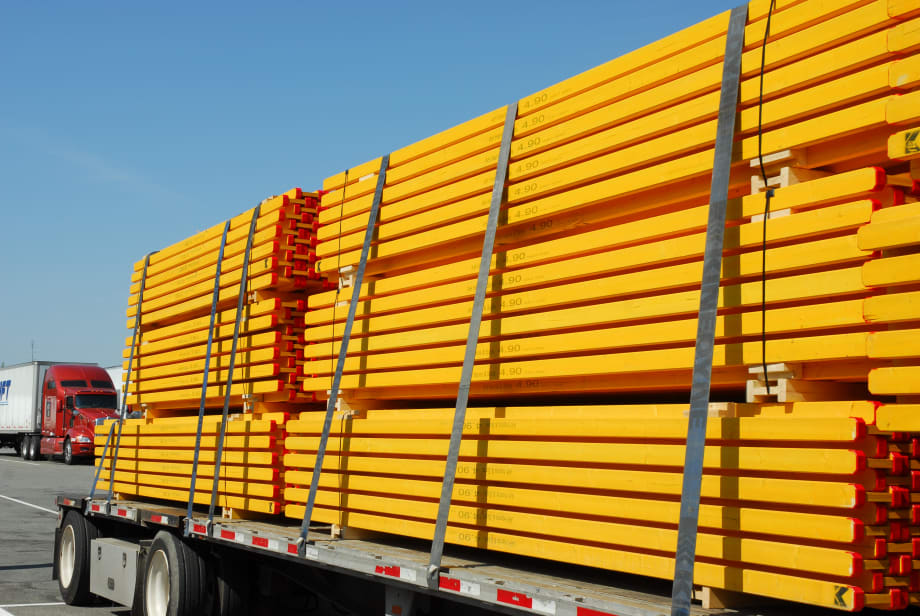
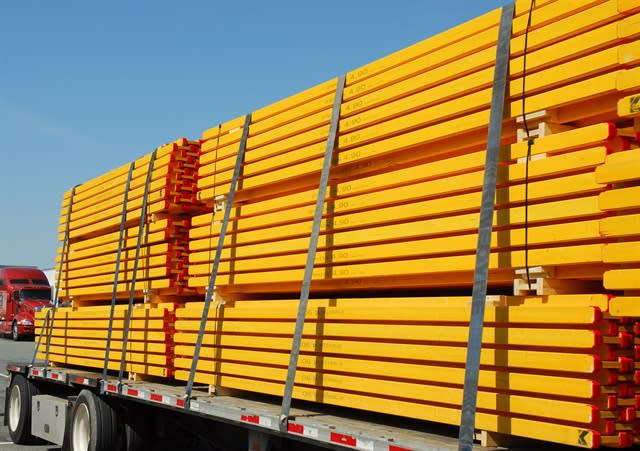
It's difficult enough complying with one set of rules. Cargo securement is one of those rules that vary depending on which side of the border you find yourself. Some parts of the regulation are distinctly different in both the U.S. and Canada. Others are similar, but suffer from varying interpretations. All of this can make compliance a real challenge. A driver may be in compliance in one country, but not another.
While many rules the two countries share are different, cargo securement is a little different, because the cargo crosses borders and is therefore subject to inspection in either country.
With hours of service, for example, the U.S. and Canada have an agreement that requires truckers to follow the rules of the country they are operating in. So if a Canadian driver were inspected on the U.S. side of the border and he had 13 hours of driving on the previous day in Canada, U.S. enforcement is supposed to recognize that 13 hours is allowed in Canada and therefore not a violation because the driving was done in Canada.
There is no such agreement in place for the cargo securement rules. However, a long-standing committee made up of officials from both countries has been working to iron out some of the bilateral differences.
The rules, often referred to as the North American Cargo Securement Standard, were drafted jointly by American and Canadian regulators. Work on the rule began back in the late 1980s and was eventually put into place in 2002. Each country took the standard and turned it into their own regulations. It has been modified and revised several times since then, and it has been causing heartburn for truckers and enforcement officers ever since.
Despite fairly heroic efforts by committees on both sides of the border, significant differences between the rules still exist in both countries. Those familiar with the rules will be aware of some of the biggies: different interpretations of direct and indirect tiedowns, the use of unmarked tiedowns, the rating and use of friction mats, securement of accessory equipment in heavy machinery, securing metal coils in sided vehicles ...
It's a pretty lengthy list, considering we supposedly talking about a "North American Cargo Securement Standard." Compounding the problem is the fact that truckers may be required to comply with different interpretations of the rules in either country, or worse, in different states or provinces.
Can anything be done about this often expensive and confusing ambiguity? The answer is yes, and the next round of discussions is slated for April 13.
The North American Cargo Securement Harmonization Public Forum meetings take place twice a year, once in the spring somewhere in the U.S., and in the late fall in Canada, either Montreal or Toronto. The upcoming spring meeting takes place in at the Hyatt Regency Jacksonville Riverfront hotel in Jacksonville, Florida, in conjunction with the 2015 CVSA Workshop.
The North American Cargo Securement Public Forum is unrestricted and open to all stakeholders and interested persons, including law enforcement and regulators – and most importantly, fleets, drivers, safety and compliance people. Even the public if they had an issue with cargo securement. (But in five years of attending such meetings I have never seen a member of the public attend.)
Among the objectives of the committee are to provide stakeholders the opportunity to voice issues or concerns with the cargo securement rules in both countries; and to identify cargo securement regulatory issues and differences between the United States, Canada and Mexico, including inconsistencies in the application of cargo securement enforcement policies between the three countries.
At the Canadian meetings I have attended, fleet participation is pretty light. There are a few regular fleet representatives who are always there, and they are usually from the top-drawer carriers that take this stuff very seriously. I've seen a few owner-operators at the meetings, though I must say it's pretty difficult for a driver to get to the meetings considering they happen mid-week.
To attend, all you need to do is register. There is no fee.
To put an item on the agenda, you have to be there. Much of the discussion I have witnessed in the past has been submitted by enforcement personnel through various channels within the Commercial Vehicle Safety Alliance. But there is always a call from the chair for new issues to look at. Sometimes the questions can be answered right there on the spot. Often items are referred to the committee for more study.
But one thing is certain: If you don't participate and don't speak, your concern will go unaddressed.
The North American Cargo Securement Harmonization Public Forum is the only such open forum in North America where the trucking industry, regulators and any other stakeholders are welcome to bring a concern to the table and have it discussed openly. It's a refreshing, bottom-up discussion where the participants' opinions matter every bit as much as the experts at the front of the room.
If you are involved in cargo securement, I wholehearted urge you to attend. If you attend regularly, good for you. If you don't, you don't know what you're missing. Make this year the first time. I can almost guarantee it won't be the last.
Again, it is free to attend and you do not have to be a CVSA member or an attendee of the CVSA Workshop. However, registration is required to attend the forum.
Click here to log in/create to your CVSA account and register for the forum. Once logged in, under the “Events” heading, click on “Browse Events” and select “North American Cargo Securement Harmonization Public Forum.” If you do not have a CVSA account, you will need to create one to register for this event.
You can visit the CVSA website for more information on the sessions. And there, you will also find the Cargo Securement Subcommittee meeting agendas, minutes from previous meetings and the Cargo Securement Subcommittee Terms of Reference.
For more information, contact Will Schaefer at williams [at] cvsa.org or 301-830-6154.
More Blog Posts

Truck Driver’s Dilemma: Click, Twist or Swipe?
Whether 'tis safer to twist a knob or press a button than to swipe right then swipe down to scan the menu for your favorite playlist...? That's a question for the age.
Read More →
Even the Swedes are Doing Turnpike Doubles
The government doesn't seem to mind asking trucking to invest a trillion dollars toward a greener future. But they won't let us pull turnpike doubles making 30% less CO2. Which is insanity, says HDT's Jim Park in his On the Road blog.
Read More →
Is Your Recruiting Message on Point?
How does your recruiting and retention messaging compare with the reality at your company? Would your drivers agree with your own assessment? Jim Park explores those questions in his On the Road blog.
Read More →
You Can’t Blame Trucks for the Highland Rest Area Bus Crash [Commentary]
The causes of the Highland Park rest area crash go far beyond the parking shortage and the need for flexibility in hours of service — but those issues must be addressed, too, says Jim Park in his On the Road blog.
Read More →
Electric Trucks Seem Far Down the Road for Fleets Dealing with Today's Maintenance Challenges
While the push for zero-emissions trucks rings clear for regulators, advocates and even a small crowd of suppliers, ZEVs seem to have run out of steam down on Main Street, says HDT Equipment Editor Jim Park in his latest On the Road blog.
Read More →
Guinea Pigs 2.0: Can Trucking Comply with a Near Impossible NOx Reduction?
The EPA’s Final Rule on NOx reduction will be incredibly difficult if not nearly impossible for trucking to comply with. Rather than endure another round of equipment failures, downtime and loss of customer faith, industry needs to rally ‘round the OEMs and seek a solution to this wrong-headed rule.
Read More →
Is Downspeeding Bad for Brakes?
Is there a connection between downsped drivetrains and increased brake wear? There shouldn’t be. Downsped fleets seeing increased brake wear are probably not letting the technology do its job, explains HDT Equipment Editor Jim Park.
Read More →
Dig for the Gold Behind CVSA’s Out-of-Service Numbers
Published out-of-service rates don’t mean much until you dig into the why. With brake problems consistently placing in two of the top five spots, maybe we’re missing something in brake maintenance, writes HDT Equipment Editor Jim Park.
Read More →
Things That Go Poof in the Night
We’re in electric-truck heydays now. But like another famous heyday, the 1849 California Gold Rush, there will be a lot fewer winners than losers, says Jim Park in his On the Road blog.
Read More →
Do Your Truck Drivers Know How to Descend a Mountain Grade?
Where do drivers learn mountain-driving techniques? It's sure not from the typical state CDL manual. Jim Park shares what he learned following a deadly 2019 Colorado crash.
Read More →