




Do Your Truck Drivers Know How to Descend a Mountain Grade?
Where do drivers learn mountain-driving techniques? It's sure not from the typical state CDL manual. Jim Park shares what he learned following a deadly 2019 Colorado crash.

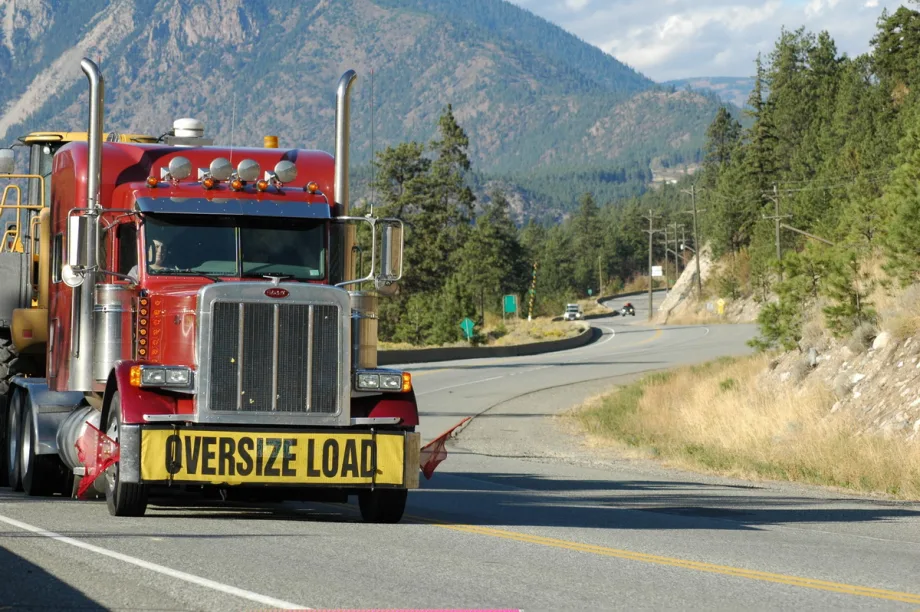
You only get one chance a coming down a mountain grade too fast. Proper driving technique is critical, but training is hard to come by.
Photo: Jim Park
One of my first trips down a serious mountain grade came in 1982 on the I-80 hill just east of Salt Lake City. It was a warm-up for the Donner Pass, which I would tackle the following day. I was fairly well-versed in descending steep grades, having operated extensively in western Pennsylvania.
But while the grades in that part of the Keystone are steep and twisting, they are fairly short — 2 to 3 miles at best. Long grades are different critters that require different thinking.
I should add, that back in the day, I was driving a naturally aspirated 318 Detroit engine with no engine brake. Even if it had one, it would have not done me much good. Back then, they did little more than scare the deer back into the woods with all the noise they made.
I made it down that first grade successfully, but my brakes were a little warm by the time I got into Salt Lake City. Unlike Donner pass, the Salt Lake City hill wasn’t really well marked at the time. I had to keep the speed down because I had no idea what lay around the next turn. That, of course, helped to keep the brake temperature high.
If I had known then what I know now, I would have done it differently. I can say I was never in any real danger, and I’d admit there were moments when I thought about stopping to let the brakes cool, but I didn’t. I did on Donner, though. A couple of times. I remember feeling a bit of pressure watching the other trucks blow past me. I couldn’t help thinking I was doing something wrong and should have been able to maintain a higher speed.
I often wonder if Rogel Aguilera-Mederos felt that same pressure. His fateful trip down the I-70 hill into Denver in 2019 was less successful, resulting in four deaths and a highly publicized prison sentence. But we each had two to three years of experience at the time. He had spent much of his first three years driving around Texas, which is pretty darned flat. And I’ll bet that we each had about the same amount of mountain-driving training at that point in our careers, though I probably had a little more experience.
I’m not saying I'm any better than him. Luckier, maybe.
But I know there are thousands of drivers out there right now who have never seen a mountain grade the likes of I-70 near Denver, or Donner Pass, or The Grapevine, or Wolf Creek Pass, or the Cabbage Hill near Pendleton, Oregon.
Driver Training Falls Short
The point is, where do entry-level truck drivers get mountain driving training?
The Texas CDL manual (Texas being the state Aguilera-Mederos was from) only has a couple of pages on the topic, and they are not particularly helpful. They are little more than a footnote to the full training curriculum. In fact, they can be a bit misleading. The manual recommends “selecting a safe speed” to make the descent, and then snubbing the brakes to maintain that speed.
The manual says, “If your ‘safe’ speed is 40 mph, you would not apply the brakes until your speed reaches 40 mph. You now apply the brakes hard enough to gradually reduce your speed to 35 mph and then release the brakes. Repeat this as often as necessary until you have reached the end of the downgrade. ... “
Or until you have overheated your brakes and rendered them useless.
How do drivers exposed to mountains for the first time know what speed is safe? Some grades have signs that display a profile of the hill. Some signage offers ambiguous warnings such as, “Use Lower Gear” or “Slow Down” — but lower than what? How slow?
What the CDL manual doesn't say (but should) is that it’s not a matter of driving at a given speed. Drivers should be descending at a speed that allows them to use only the engine brake — with no service brake applications at all — to maintain a safe descent speed.
Maintaining a safe speed can pose additional problems for drivers unfamiliar with the operation of an automated manual transmission. They are designed to continuously upshift as the vehicle speed increases. Drivers who do not know how to use the manual or hold feature on the transmission may have a hard time maintaining a safe speed with the transmission wanting to upshift and with engine rpm so low that the engine-brake is no more than 20% or 30% effective.
The CDL manual doesn’t go into any detail like that, but that’s critical knowledge for safe mountain driving.
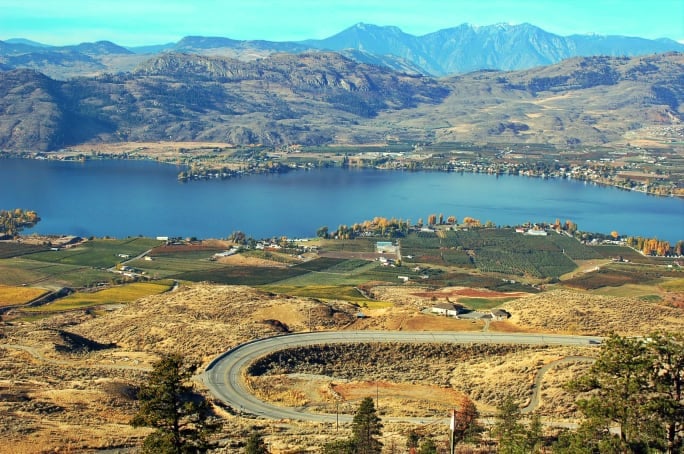
Due to geographical limitations, you can't teach downhill driving techniques in most states.
Photo: Jim Park
Mountain Driving 101
Not long after I learned of the Mederos incident on I-70 in Lakewood, Colorado, I decided to recruit some expert help and create a video-based mountain driving course, Mountain Driving 101. Production of the video series was sponsored by Volvo Trucks North America, and it was produced by Today’s Trucking magazine in Canada. (I write for both HDT and Today’s Trucking.)
The video series features the vast expertise of veteran mountain driver Andy Roberts. He's also the proprietor of the Mountain Transport Institute, a commercial driving school located in Castlegar, British Columbia. MTI is located in the Kootenay Mountain range in the southeastern part of the province. It’s literally surrounded by mountains. Roberts offers a first-rate, and possibly the only one of its kind, mountain driving training program.
One driver who took the course, William McNamee, a company driver with New Jersey-based tanker fleet Carbon Express, commented, "After 28 years OTR, I thought I knew my mountain driving skills. Then my employer sent a small group to MTI for training. My world changed 150% after the mountain driving course. I’ve spent the last two years using all of the (proper) techniques to descend mountain grades and have never felt safer or more professional on the descent."
(That would have been an expensive proposition, so my personal compliments to Carbon Express CEO Steve Rush for making that investment.)
I structured the resulting video course in four segments, each building on knowledge from the previous section, so drivers would gain a complete understanding of what’s involved in mountain driving. There’s special emphasis on the correct use of an automated manual transmission. In this case, it’s a Volvo I-Shift, but other AMTs have similar functionality.
The videos contain lots of animations to help clarify the explanations. The final segment, where Andy and I descend a long grade, was filmed on the Blueberry-Paulson Hill near Castlegar — a 7-mile, 6-8% grade. We make two trips down the hill, one loaded to 80,000 pounds, the other at 102,000 pounds, using the same descent technique: using the engine brake only to control speed, without ever touching the service brakes.
Watch the Mountain Driving 101 Video Series:
Part 1: How truck brakes work, and how they overheat
This video is a primer on brakes. It covers the basics on how brakes work and what happens when brake drums get hot. High temperatures can diminish a drum brake's stopping ability, so drivers operating in mountainous terrain must avoid overusing and thus overheating their brakes with poor downhill braking technique.
Part 2: Inspecting brakes before heading downhill
You can’t take brakes for granted when driving in mountains. That’s why you’ll often find brake-check areas at the top of steep mountain grades. This video explains how to conduct a quick walkaround inspection to ensure the brakes are in proper adjustment and functioning properly.
Part 3: Understanding warning signs and using an automated manual transmission
This video breaks down what various warning signs mean and explain how they can help drivers on long grades. It also explains the correct use of an automated transmission and the engine brake to maintain a safe downhill speed.
Part 4: Match the truck gear and speed to the grade
Mountain driving instructor Andy Roberts and equipment editor Jim Park talk their way through a downhill descent, explaining gear selection, and desired road speed.
More Blog Posts
Truck Driver’s Dilemma: Click, Twist or Swipe?
Whether 'tis safer to twist a knob or press a button than to swipe right then swipe down to scan the menu for your favorite playlist...? That's a question for the age.
Read More →
Even the Swedes are Doing Turnpike Doubles
The government doesn't seem to mind asking trucking to invest a trillion dollars toward a greener future. But they won't let us pull turnpike doubles making 30% less CO2. Which is insanity, says HDT's Jim Park in his On the Road blog.
Read More →
Is Your Recruiting Message on Point?
How does your recruiting and retention messaging compare with the reality at your company? Would your drivers agree with your own assessment? Jim Park explores those questions in his On the Road blog.
Read More →
You Can’t Blame Trucks for the Highland Rest Area Bus Crash [Commentary]
The causes of the Highland Park rest area crash go far beyond the parking shortage and the need for flexibility in hours of service — but those issues must be addressed, too, says Jim Park in his On the Road blog.
Read More →
Electric Trucks Seem Far Down the Road for Fleets Dealing with Today's Maintenance Challenges
While the push for zero-emissions trucks rings clear for regulators, advocates and even a small crowd of suppliers, ZEVs seem to have run out of steam down on Main Street, says HDT Equipment Editor Jim Park in his latest On the Road blog.
Read More →
Guinea Pigs 2.0: Can Trucking Comply with a Near Impossible NOx Reduction?
The EPA’s Final Rule on NOx reduction will be incredibly difficult if not nearly impossible for trucking to comply with. Rather than endure another round of equipment failures, downtime and loss of customer faith, industry needs to rally ‘round the OEMs and seek a solution to this wrong-headed rule.
Read More →
Is Downspeeding Bad for Brakes?
Is there a connection between downsped drivetrains and increased brake wear? There shouldn’t be. Downsped fleets seeing increased brake wear are probably not letting the technology do its job, explains HDT Equipment Editor Jim Park.
Read More →
Dig for the Gold Behind CVSA’s Out-of-Service Numbers
Published out-of-service rates don’t mean much until you dig into the why. With brake problems consistently placing in two of the top five spots, maybe we’re missing something in brake maintenance, writes HDT Equipment Editor Jim Park.
Read More →
Things That Go Poof in the Night
We’re in electric-truck heydays now. But like another famous heyday, the 1849 California Gold Rush, there will be a lot fewer winners than losers, says Jim Park in his On the Road blog.
Read More →
Do Your Drivers Understand Their Brakes?
As a former driver, Equipment Editor Jim Park thinks many drivers could use some refresher training on how to inspect brakes on one knee or how to apply brakes when the ABS isn't working.
Read More →