We’re in electric-truck heydays now. But like another famous heyday, the 1849 California Gold Rush, there will be a lot fewer winners than losers, says Jim Park in his On the Road blog.
ACT Expo 2022 really opened my eyes to the potential and pitfalls of the future of fossil-fuel-free transportation.
Photo: Jim Park
6 min to read
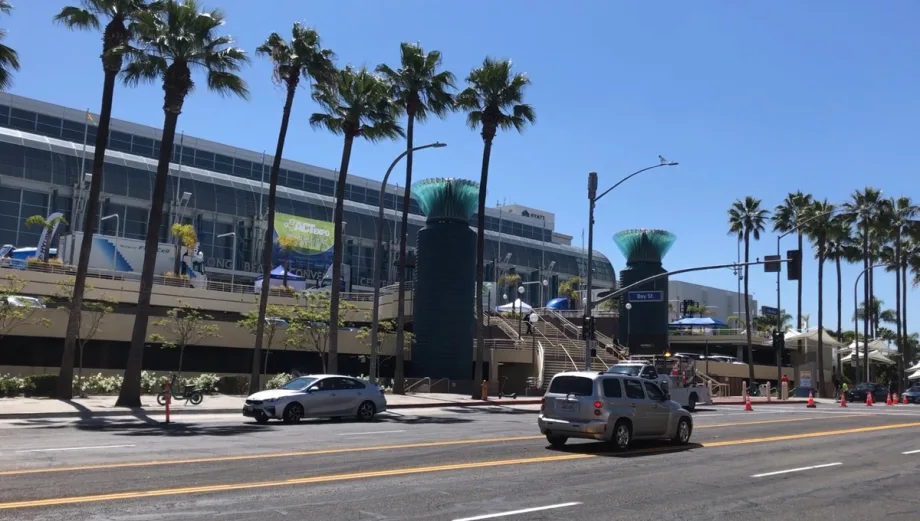
This year’s ACT Expo event in Long Beach, California, really opened my eyes to the future of fossil-fuel-free transportation. With more than 200 exhibitors in the hall and a few dozen more outside, it would be easy to believe the alt-energy industry is close to hitting critical mass. But even while surrounded by all that glitz and glitter, I couldn’t help wondering how many of those companies would be exhibiting a few years from now.
There’s no shortage of opportunity in the sector now. And no shortage of venture capital either. That begets an influx of entrepreneurs with twinkles in their eyes, hopeful of investor interest or maybe buyout offers from larger and more stable companies. Investment dollars are arriving by the diesel-powered truckload, and almost daily there’s word of a new start-up in the electric or self-driving vehicle space. That’s not a problem, but it sure muddies the water. The ensuing hype in the business and tech press usually drowns out the moans and groans from those in the trenches serious about finding a way forward.
Ad Loading...
How many battery-electric skateboards or charging machines do we need? Truth be told, we need a lot of them, but they have to be up to the standards this industry expects, and we are notoriously difficult to please.
Some of the charging vendors I spoke with at ACT Expo flipped on the hard-sell almost as soon as I crossed onto their carpet. "Buy now, the cost is going up." "Get in soon while we still have inventory." "Sign a long-term lease and get a better price." Some of them were like used-car sales people.
I trust that most fleets would see through the pitch, but I soon started wondering if these companies were actually selling product or just posturing for investors. If they came away from the show with an armful of orders — or even prospects — they’d be a step or two closer to a Series A round of financing.
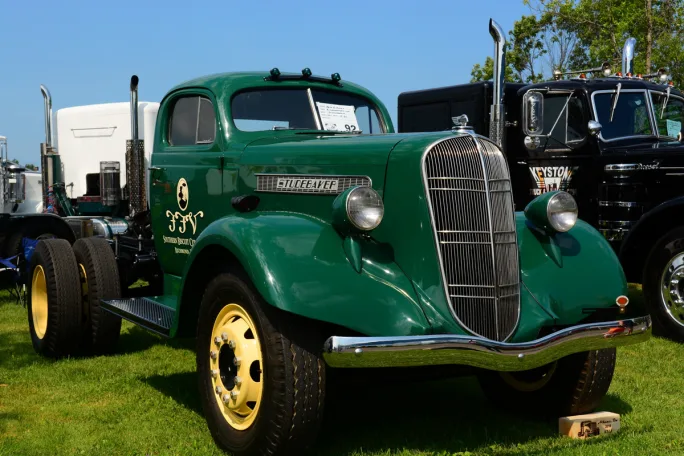
Studebaker trucks, like this 1937 J30 model, were introduced with the slogan “Stamina for Profit, Style for Prestige.” The style certainly lived on long after the stamina evaporated. I wonder if we’ll look back that fondly on the current crop of BEVs?
Photo: Jim Park
Even if some of these startups can maintain the funding levels required to stay in the game for another five years, what fleet would go in deep on what’s basically unproven technology? How can some of these EV entrants design and build trucks that hope to compete with the established OEMs? Pesky things like durability, dealer support, warranty, and residual value weigh heavily in the purchasing decision. It’s about more than total cost of ownership, but I can’t see how a start-up could realistically compete there, either, unless they are giving the trucks away.
Getting the truck sold is not the finish line. That’s where the deeply invested OEMs have distinct advantages. They have the luxury of time to get it right because they have existing revenue streams. Without revenue streams, those start-ups are not businesses, really; they’re research organizations relying on investor largesse. God help them if something like a recession spooks the benefactors.
Ad Loading...
The Next Big Wave
ACT Expo this year had a somewhat carnival-like atmosphere, reminiscent of the World Fairs of the previous century. They introduced visions of the future, and some were pretty fanciful indeed. Like the turn of the 19th to the 20th centuries, the truck market today has a Wild West feel to it. New technologies that promise longer range, lighter weight, and faster charging times are on the horizon, but are frustratingly out of reach. But that won’t stop the Silicon Valley golden boys and their well-honed sales pitches.
Trucking has never experienced a wave of innovation like this one. It was simply too much of an investment to bring engines and axles and frame rails and cabs together and turn them into trucks. The only parties able to do that were established auto and truck makers and various spin-offs from other similar industries.
Today, you can literally build a truck in your garage and put it on the market. If investors, and more importantly, the industry, like what they see, you have a fighting chance today. Trucks aimed at niche markets stand a slightly better chance because of the limited competition, but as I said, getting a truck into production is just the tip of the iceberg.
Fleets have come to expect certain levels of dealer support and reliability — and all at a reasonable cost. One might be able to provide diagnostics and electronic repairs remotely, but what happens when the windshield wipers quit, or the cooling system springs a leak? Fleets can be pretty unforgiving of unscheduled downtime.
Some portion of the exhibitors at ACT Expo are just dipping their toes in the water and are probably worthy of consideration, but there will be a few spectacular failures still to come.
Ad Loading...
Chanje burst onto the scene in 2016 with a promising electric delivery van. The company went poof in 2021, leaving initial customers and investors hold lots of bags, but very few trucks.
Photo: Jim Park
Chanje springs to mind. Remember that company? It burst onto the scene in 2016 promising to import partially assembled electric delivery vans and then finish the assembly at manufacturing facility in the U.S.
Chanje was, at the time, leaps and bounds ahead of domestic builders. It had a product based on proven technology and a good track record of service in China. It attracted the interest of Ryder, FedEx, and several other big-league players, but it quietly dissolved a year ago, leaving carriers to sue Chanje in hope of recovering some small portion of their investments and down payments.
TheVerge has published the whole sordid tale on the rise and fall of Chanje and its CEO Bryan Hansel. It’s a long read, but worth it if only as a harbinger of what might be still to come.
I ventured to Brooklyn in October 2017 to test drive the Chanje V8070. And while a two-hour drive is hardly sufficient to prove out the long-term prospects for such a truck, it had the makings of a winner. Chanje didn’t disappear because the product was no good. It died by its own hand, steered into the muck by its eccentric leader, says TheVerge.
We witnessed a similar near-self-destruct event when Trevor Milton was exposed as a fraud in hyping Nikola. I think Nikola’s current management is steering a straighter path, and I can see the electric or fuel-cell powered Tre or Nikola One as serious players in the EV space.
Ad Loading...
Nikola looks like it will become a success story, but it very nearly became the butt of some nasty jokes. Beware the Silicon Valley Golden Boys in t-shirts and very expensive jeans.
Photo: Jim Park
As for that other big-name disrupter of all that’s holy in truck build and buying ... there wasn’t a Tesla Semi anywhere near ACT Expo this year. Rather strange, I thought, to be absent from THE premiere trade show and expo for the emerging zero-emissions vehicle market.
Will it Play in Peoria?
It will take a lot more than diploma and credentials — or the glow of a Silicon Valley superstar — to succeed in this business. Certain problems require a deeper understanding of the fundamentals of truck building and marketing. And despite success achieved overseas, the North American market is unique in the world.
We’ve seen worthy technology fail to make the cut here time and time again. Whether it doesn’t look right or sound right, or the door hinges wear out after a couple of years, keeping North American truck buyers satisfied and coming back requires a bit more than glitzy launch.
It’s nice to see some new blood coming into that industry now, and as we read almost daily, the OEMs are gobbling up that cutting-edge technology almost as quickly as it comes out of stealth mode.
Good things come of innovation; just stay cautiously wary of the innovators.
Zeroing in on Zero-Emission Trucks
A report from Calstart on commercial EV deployments in the U.S. found that most of the battery-electric models and companies that made up early deployments are no longer in existence. Without the maintenance and support of companies such as Smith EV and Chanje, it’s likely that many of those early deployments are no longer in operation. In fact, according to the report, more than 60% of zero-emission trucks that have been deployed in the United States are believed to be currently non-operational.
Whether 'tis safer to twist a knob or press a button than to swipe right then swipe down to scan the menu for your favorite playlist...? That's a question for the age.
The government doesn't seem to mind asking trucking to invest a trillion dollars toward a greener future. But they won't let us pull turnpike doubles making 30% less CO2. Which is insanity, says HDT's Jim Park in his On the Road blog.
How does your recruiting and retention messaging compare with the reality at your company? Would your drivers agree with your own assessment? Jim Park explores those questions in his On the Road blog.
The causes of the Highland Park rest area crash go far beyond the parking shortage and the need for flexibility in hours of service — but those issues must be addressed, too, says Jim Park in his On the Road blog.
While the push for zero-emissions trucks rings clear for regulators, advocates and even a small crowd of suppliers, ZEVs seem to have run out of steam down on Main Street, says HDT Equipment Editor Jim Park in his latest On the Road blog.
The EPA’s Final Rule on NOx reduction will be incredibly difficult if not nearly impossible for trucking to comply with. Rather than endure another round of equipment failures, downtime and loss of customer faith, industry needs to rally ‘round the OEMs and seek a solution to this wrong-headed rule.
Is there a connection between downsped drivetrains and increased brake wear? There shouldn’t be. Downsped fleets seeing increased brake wear are probably not letting the technology do its job, explains HDT Equipment Editor Jim Park.
Published out-of-service rates don’t mean much until you dig into the why. With brake problems consistently placing in two of the top five spots, maybe we’re missing something in brake maintenance, writes HDT Equipment Editor Jim Park.
Where do drivers learn mountain-driving techniques? It's sure not from the typical state CDL manual. Jim Park shares what he learned following a deadly 2019 Colorado crash.
As a former driver, Equipment Editor Jim Park thinks many drivers could use some refresher training on how to inspect brakes on one knee or how to apply brakes when the ABS isn't working.