





Trucking Needs More Than Magical Thinking to Fight Climate Change
Even the Swedes are Doing Turnpike Doubles
The government doesn't seem to mind asking trucking to invest a trillion dollars toward a greener future. But they won't let us pull turnpike doubles making 30% less CO2. Which is insanity, says HDT's Jim Park in his On the Road blog.
June 4, 2024
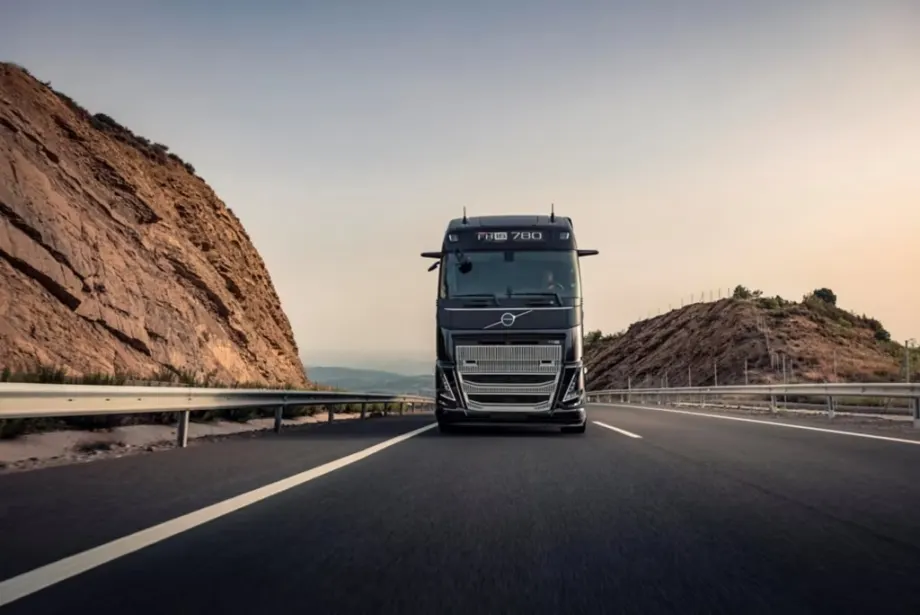
Volvo's new 780-horsepower D17 diesel engine is pulling 35 meter combination trailers in Sweden today.
Photo: Volvo Trucks Australia
4 min to read
Having recovered sufficiently from the four-day barrage of technological innovation called ACT Expo 2024, I have to say the depth and breadth of what was on display was awe-inspiring.
But I did not see a single tandem-axle converter dolly on the exhibit hall floor, nor among the outside displays.
That boring, dull, mundane, and insignificant bit of hardware could cut trucking's carbon footprint nearly in half practically overnight.
And not one to be seen.
I know, they don't inspire the kind of thrill that hydrogen fuel cells do. They are a mere 1,000 pounds of steel and rubber. And not a wire in sight.
Who could possibly get excited about something like that at a time like this?
Yeah, here goes Park, again. On a tear about longer-combination vehicles, or turnpike doubles if you prefer.
I wrote an extensive analysis on these things back in 2019, illustrating the safety and fuel efficiency benefits — all based on existing studies and research done mostly outside the U.S.
On paper, the research makes a pretty compelling argument in favor of turnpike doubles. The biggest impediment to their implementation, however, seems to be human nature.
And frankly, it's a pretty weak argument in light of the carbon reduction challenges we face going forward.
We Don't Want LCVs
Not long after my LCV piece appeared, I had a call from Charlie Willmott, CEO of WillGo Transportation Consulting. He said he agreed with most everything I had written. But he said it was all moot because we would never see more LCVs on U.S. highways in our lifetime. I invited him to write a column explaining his rationale.
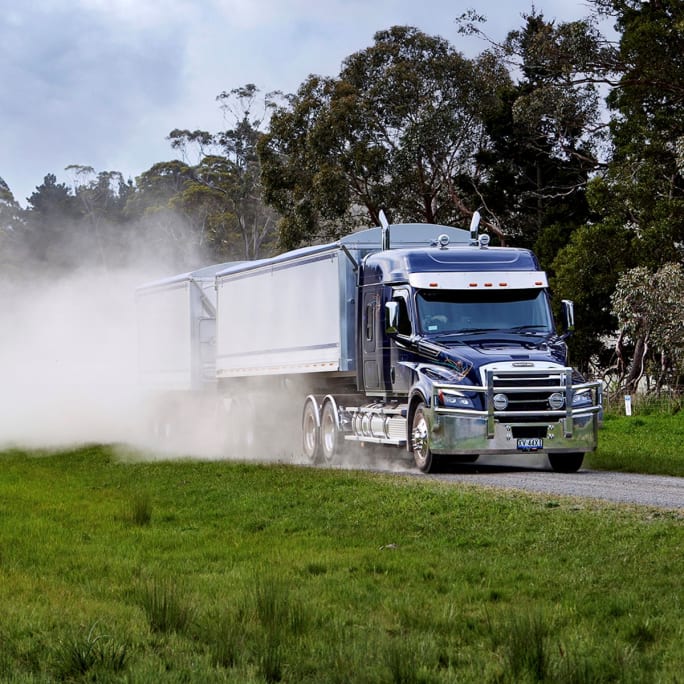
One major problem with adopting so-called "turnpike doubles" in North America is public perception of the vehicles.
Photo: Daimler Trucks Australia
I can't argue with his reasoning, but what a bizarre spectacle it is. He mentioned opposition from railroad lobby groups and safety advocates (one and the same?), as well from certain segments within this industry. I get that. Trying to limit competition is a pretty strong motivator, as is reluctance to invest in additional equipment.
Their safety record in other countries is substantially better than traditional five-axle tractor-semi-trailers, and the environmental benefits are simply too great to ignore — but ignore them we will.
Charlie wound up his column like this:
"... regardless of the sound rationale for change in the interest of economic efficiency, reduced carbon emissions, enhanced public safety, the flag and apple pie, the freeze (ISTEA of 1991) will remain until the rules on special interest lobbying and campaign finance are re-written to promote public service and responsibility over self-interest and getting re-elected. In other words, sadly, not in my lifetime."
Regrettably, Charlie's probably correct.
The Swedes are on the Right Track
This issue percolated to the surface again, mostly because of Volvo's recent announcement of a 700-hp diesel engine designed for heavy haulers. Specifically, newly allowed 34.5-meter (113 feet) long-combination units weighing up to 60 tons pulled by a single tractor in Sweden.
My colleague, Jack Roberts, has reported extensively on Volvo's big new 780-hp, 2,802 lb-ft, D17 engine, said to have been designed exclusively to power these extra-long, extra-heavy trucks.
A few months earlier, Volvo had a bunch of North American truck journalists over to headquarters in Gothenburg to see the latest in its electric-truck line up. All fine trucks, and machines any driver would be happy to pilot, but even the best one had a range of less than 300 miles.
That's fine as far as BEVs go, but the lineup doesn't account for long-haul, which even in Europe accounts for a significant chunk of road transport. Sweden plans to use the longer rigs on a select number of highways where freight moves over longer distances, like 500-600 miles.
The Swedish solution is to double the load while using a single power unit, thereby getting much more work done with just a slight increase in the fuel burn compared to a pulling a single trailer.
The touted result is a 27% reduction in CO2 emissions.
Find me a single example of all the technology on the floor at ACT Expo that can match that at scale right now, in 2024.
Freight Efficiency or Political Bottleneck?
Actually, the parking lot adjacent to the Las Vegas Convention center was full of them. Literally any long-haul tractor today with a decent sized engine could pull two trailers, nearly doubling the freight efficiency, and cutting fuel consumption by at least a third compared to two trucks pulling two trailers.
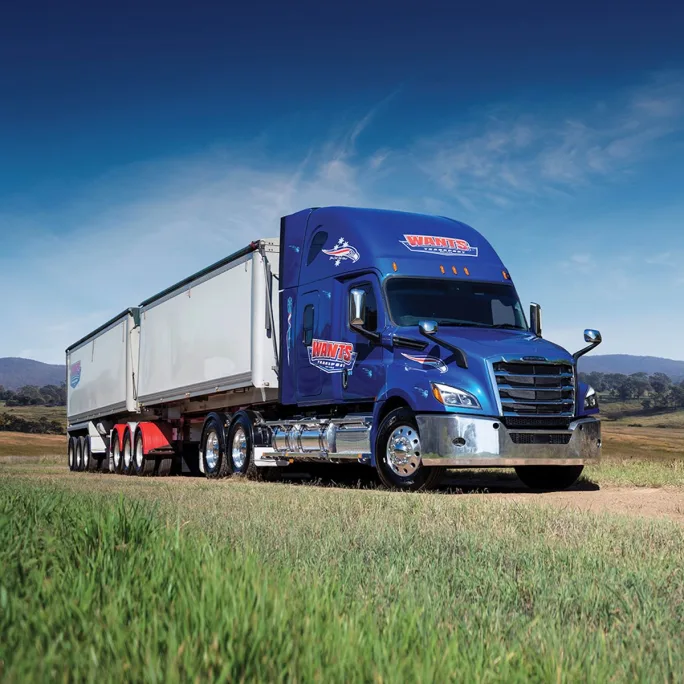
Combination trailers have a well-established history of moving more freight while burning less fuel.
Photo: Daimler Trucks Australia
Canada does quite well with such combinations. Length limits there allow for two 53-foot trailers, a convertor dolly, and a sleeper cab tractor for an overall length of 40 meters (131 feet). Weight is capped at 62,500 kg (138,000 lbs) on nine axles.
Those things shine in high-cube freight applications. Two full trailer loads for little more fuel than a single load.
Alas, as Charlie Wilmott explained, it's probably never to be.
But wait: What if we pulled those two trailers with renewable diesel, or maybe renewable natural gas?
Cummins' new X15N would be up to the task.
Or maybe autonomous LCVs. That would get the attention of the tech mavens and the green crowd. And it would leave the safety advocates, the railroads, and other naysayers with much weaker arguments.
Subscribe to Our Newsletter
More Blog Posts

Truck Driver’s Dilemma: Click, Twist or Swipe?
Whether 'tis safer to twist a knob or press a button than to swipe right then swipe down to scan the menu for your favorite playlist...? That's a question for the age.
Read More →
Is Your Recruiting Message on Point?
How does your recruiting and retention messaging compare with the reality at your company? Would your drivers agree with your own assessment? Jim Park explores those questions in his On the Road blog.
Read More →
You Can’t Blame Trucks for the Highland Rest Area Bus Crash [Commentary]
The causes of the Highland Park rest area crash go far beyond the parking shortage and the need for flexibility in hours of service — but those issues must be addressed, too, says Jim Park in his On the Road blog.
Read More →
Electric Trucks Seem Far Down the Road for Fleets Dealing with Today's Maintenance Challenges
While the push for zero-emissions trucks rings clear for regulators, advocates and even a small crowd of suppliers, ZEVs seem to have run out of steam down on Main Street, says HDT Equipment Editor Jim Park in his latest On the Road blog.
Read More →
Guinea Pigs 2.0: Can Trucking Comply with a Near Impossible NOx Reduction?
The EPA’s Final Rule on NOx reduction will be incredibly difficult if not nearly impossible for trucking to comply with. Rather than endure another round of equipment failures, downtime and loss of customer faith, industry needs to rally ‘round the OEMs and seek a solution to this wrong-headed rule.
Read More →
Is Downspeeding Bad for Brakes?
Is there a connection between downsped drivetrains and increased brake wear? There shouldn’t be. Downsped fleets seeing increased brake wear are probably not letting the technology do its job, explains HDT Equipment Editor Jim Park.
Read More →
Dig for the Gold Behind CVSA’s Out-of-Service Numbers
Published out-of-service rates don’t mean much until you dig into the why. With brake problems consistently placing in two of the top five spots, maybe we’re missing something in brake maintenance, writes HDT Equipment Editor Jim Park.
Read More →
Things That Go Poof in the Night
We’re in electric-truck heydays now. But like another famous heyday, the 1849 California Gold Rush, there will be a lot fewer winners than losers, says Jim Park in his On the Road blog.
Read More →
Do Your Truck Drivers Know How to Descend a Mountain Grade?
Where do drivers learn mountain-driving techniques? It's sure not from the typical state CDL manual. Jim Park shares what he learned following a deadly 2019 Colorado crash.
Read More →
Do Your Drivers Understand Their Brakes?
As a former driver, Equipment Editor Jim Park thinks many drivers could use some refresher training on how to inspect brakes on one knee or how to apply brakes when the ABS isn't working.
Read More →