




What trucking can learn from the airlines
For-hire trucking could learn a few things from the airlines, because they have finally figured out how to make money in a deregulated environment
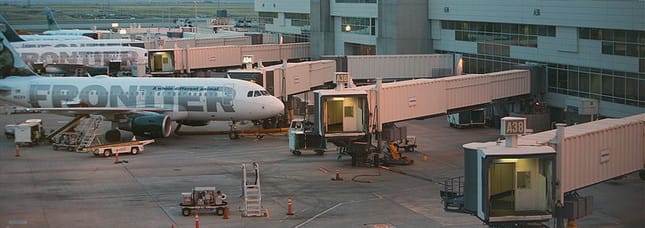
Airlines have not lost a minute of sleep over baggage fees or sandwich prices. Photo used under Creative Commons license.
For-hire trucking could learn a few things from the airlines, because they have finally figured out how to make money in a deregulated environment.
Before I get into this installment, let me say that the promised piece on the "Culture of Culpability" is coming next week. A promise is a promise, but after 14 hours at the mercy of U.S.Air on a round trip to Las Vegas last week, I got thinking about how those folks have turned their financial houses around at the expense of the passengers. It made me wonder how trucking might do the same.
Love 'em or hate 'em, commercial airlines are the most time- and cost-effective way -- even comfortable if you compare an Airbus A320 to a cattle truck -- of moving our butts back and forth across the country. While passengers may be unhappy with being nickeled-and-dimed to death, they are paying the endless list of fees and surcharges, and the airlines are racking up record revenue increases.
The Associated Press reports that U.S.-based airlines hauled in $3.4 billion in baggage fees in 2010, a 24% increase over 2009. By the end of the third quarter 2011, 17 major U.S. airlines had collected $2.6 billion for checking luggage. Not bad for something that used to be free.
Rather than face an uprising over fare increases, the airlines downloaded the problem to the passengers, who must now duke it out in the cabin to see who gets their humongous suitcase into the overhead luggage bin first. The least the airlines could do is have the decency to enforce the carry-on size limits.
But they don't and we keep on flying. Baggage fees apparently have not diminished the public's appetite for air travel, and the price hikes haven't had any tangible impact on the national economy or GDP growth.
The airlines are actually a great example of how to recover otherwise lost revenue by tacking on fees and surcharges where they are warranted. Want a beer? Seven bucks. A sandwich? Eight bucks. You won't get a free lunch anywhere else, so why should you expect one on an airplane?
While some airlines may be going a little over the top on fees -- Spirit Airlines recently began charging passengers $5 to print boarding passes at check-in if they had not previously printed them at home -- it seems passengers get what they opt to pay for and little else. We don't always want a beer and a sandwich on a flight, but it's nice to have the option. If I don't elect to have lunch at 35,000 feet, why should I pay for the next guy's lunch by adding $15 to my ticket?
Then there are the fares. Have you ever booked a ticket less than 24 hours in advance of your planned departure? There are circumstances when you don't have the option of booking a few weeks in advance, and those poor sods, whether through poor planning or urgent need, get hosed big time.
On the other hand, if you have the luxury of booking well in advance, and don't mind a three-connection flight that departs at 0-dark-stupid that takes you back and forth across the continent a couple of times, flying is a real bargain.
The airlines use a complex pricing system called "yield management," which is rather concisely defined by Wikipedia, as the process of understanding, anticipating and influencing consumer behavior in order to maximize yield or profits from a fixed, perishable resource (such as airline seats or hotel room reservations).
The term was coined by Robert Crandall, former chairman and CEO of American Airlines, who called it, "the single most important technical development in transportation management since we entered deregulation."
Back in the days when the Interstate Commerce Commission actually enforced tariffs, trucking had the luxury of charging customers based on a menu of service offerings. Today, flat-rate pricing is the norm -- especially when dealing with freight brokers -- and that limits our ability to charge for certain services, or to recovers costs incurred in providing such services.
To me, airfare pricing is Black Magic. On the surface, there's little rhyme or reason to it. And as a consumer, I much prefer flat-rate pricing because I know where I stand. But as baggage fees have shown, $3.4 billion is a lot of money to leave on the table for the convenience of the customer.
I'll grant that there are differences between an aircraft in scheduled service leaving the gate with unsold seats -- that's lost revenue -- and a truck running down the road for an agreed-to flat rate. But when you consider all we do that's above and beyond getting freight from one loading dock to another, I think we're leaving a lot of money on the table too.
There are the obvious examples such as inadequate fuel surcharges and unbilled detention time, but what about things like cancelled loads, deliveries to remote destinations, day-of-the-week or time-of-day load/unload premiums? You know delivering in Los Angeles on a Friday means a weekend layover. How might you convince your customer to load a few days early so you can deliver on Wednesday? Charging a premium for delivering on a day, or time of day, that limits your reloading potential would be a good way of influencing the customer's decision.
Ever had a load cancelled once the truck is en route to the pick up? The driver has begun his or her workday and has started the 14-hour duty cycle. Diverting or sitting that truck is going to cost the driver and the carrier something. Why shouldn't the customer pay for its lack of foresight?
Weight is another big issue. In the truckload world, a load is a load. A to B = X dollars. If you're dragging a van around, it doesn't matter many boxes are stuffed into the trailer, what matters to the carrier is weight. How many carriers (and brokers, for that matter) charge a flat rate for a truckload whether the weight is 10,000 pounds or 50,000? Weight sure matters to the guy paying for the fuel. The customer should pay accordingly.
Tons of other extras spring quickly to mind that carriers could and should be billing for, such as driver load or unload, special handling, destinations where reloads are difficult, scheduled appointments, team service, temperature-controlled service, multiple-drop, re-consigned loads, weekend deliveries, residential deliveries, security fees, paperwork preparation, scale tickets ... The list of possibilities is a long one indeed.
Many carriers are now charging what have come to be known as accessorial charges, but many are not. I hear carriers that do levy accessorial charges are having varying degrees of success at collecting those charges, but that's another story.
My question is, why would you not charge extra fees for legitimate services? It apparently hasn't hurt the airlines.
Passengers continue to fly, and passengers still have choices -- lots of choice, in fact. They can opt not to check a bag, although that's not always an option. They can pass on the sandwich or bring their own aboard. They can pay higher fares that cover the extra services, or they can pay a la carte for the services they use.
Shippers would still have choices if motor carriers were to charge for everything they do as well. Shippers that choose to move trucks in and out promptly would not have to pay delay fees. Shippers that insist on 3 a.m. delivery appointment should have to pay for the lost time between the delivery and a potential reload during normal business hours. Loads that deliver to out-of-the-way locations should pay a location charge to cover the deadhead miles back to civilization.
We can offer our customers choices too. Pay me now, upfront, or pay me later when I've finished tallying up all the extra charges for things I had to do to get your load delivered. If trucking adopted the airline pricing model, I think $3.4 billion in recovered revenue would be drop in a bucket.
There's a great description of Yield Management in this article on Wikipedia, if you care to dig a little deeper into the mechanics of this revenue preservation tool.
More Blog Posts

Truck Driver’s Dilemma: Click, Twist or Swipe?
Whether 'tis safer to twist a knob or press a button than to swipe right then swipe down to scan the menu for your favorite playlist...? That's a question for the age.
Read More →
Even the Swedes are Doing Turnpike Doubles
The government doesn't seem to mind asking trucking to invest a trillion dollars toward a greener future. But they won't let us pull turnpike doubles making 30% less CO2. Which is insanity, says HDT's Jim Park in his On the Road blog.
Read More →
Is Your Recruiting Message on Point?
How does your recruiting and retention messaging compare with the reality at your company? Would your drivers agree with your own assessment? Jim Park explores those questions in his On the Road blog.
Read More →
You Can’t Blame Trucks for the Highland Rest Area Bus Crash [Commentary]
The causes of the Highland Park rest area crash go far beyond the parking shortage and the need for flexibility in hours of service — but those issues must be addressed, too, says Jim Park in his On the Road blog.
Read More →
Electric Trucks Seem Far Down the Road for Fleets Dealing with Today's Maintenance Challenges
While the push for zero-emissions trucks rings clear for regulators, advocates and even a small crowd of suppliers, ZEVs seem to have run out of steam down on Main Street, says HDT Equipment Editor Jim Park in his latest On the Road blog.
Read More →
Guinea Pigs 2.0: Can Trucking Comply with a Near Impossible NOx Reduction?
The EPA’s Final Rule on NOx reduction will be incredibly difficult if not nearly impossible for trucking to comply with. Rather than endure another round of equipment failures, downtime and loss of customer faith, industry needs to rally ‘round the OEMs and seek a solution to this wrong-headed rule.
Read More →
Is Downspeeding Bad for Brakes?
Is there a connection between downsped drivetrains and increased brake wear? There shouldn’t be. Downsped fleets seeing increased brake wear are probably not letting the technology do its job, explains HDT Equipment Editor Jim Park.
Read More →
Dig for the Gold Behind CVSA’s Out-of-Service Numbers
Published out-of-service rates don’t mean much until you dig into the why. With brake problems consistently placing in two of the top five spots, maybe we’re missing something in brake maintenance, writes HDT Equipment Editor Jim Park.
Read More →
Things That Go Poof in the Night
We’re in electric-truck heydays now. But like another famous heyday, the 1849 California Gold Rush, there will be a lot fewer winners than losers, says Jim Park in his On the Road blog.
Read More →
Do Your Truck Drivers Know How to Descend a Mountain Grade?
Where do drivers learn mountain-driving techniques? It's sure not from the typical state CDL manual. Jim Park shares what he learned following a deadly 2019 Colorado crash.
Read More →