




To the Dump, To the Dump, To the Dump, Dump Dump
While you're getting dragged backwards through various knotholes in this year's RoadCheck 2013 event, take heart that a few local cops are patrolling the dumps and the Home Depot and Loews store parking lots looking cars with tons of gravel in their trunks or lifts of plywood on the roof.

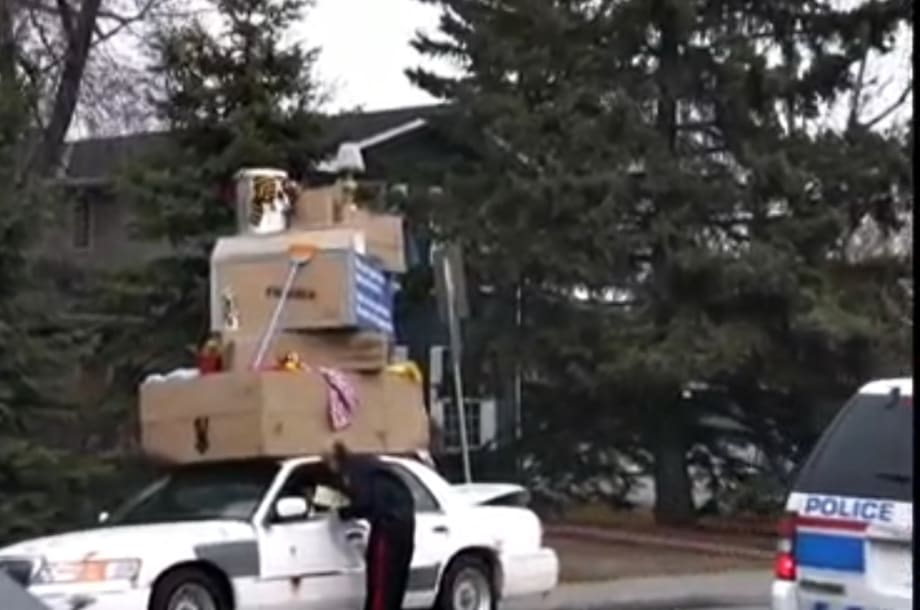
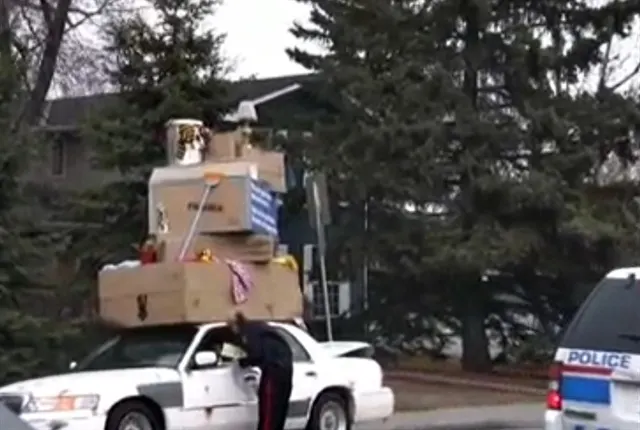
It's an annual ritual where I live. Every spring, hundreds of mild-mannered householders become wanton criminals over a few days on or around the Memorial Day weekend. After months of putting up with all that crap in the basement and around back of the garage, they haul a year's worth of accumulated junk out to the driveway and cram into or onto their cars or borrowed trailers or pickup trucks. Destination? The Dump.
Waiting for them at the dump on this fateful long weekend is a phalanx of sheriffs, county and local cops, or worse, commercial vehicle enforcement officers. Their loads of junk are much like those videos you see on YouTube. Cars, trucks and trailers crammed high and wide with everything their spouses are sick of tripping over.
I mention this annual ritual only because it makes the men and women who face similar scrutiny everyday feel just a little bit better knowing that Ol' Smokey is watching the four-wheelers too -- if only for a couple of days a year.
Police near my hometown on Memorial Day weekend staged such a blitz, and according to reports in the paper, netted over 40 offenders with high, heavy and/or poorly secured loads, along with dozens of unsafe vehicle citations. These were mostly for the rattle-trap trailers missing lights, springs, tailgates, tiedowns, etc. One can only imagine.
If some of those loads were on big trucks, we'd be reading about them in an FMCSA press release about imminent hazards.
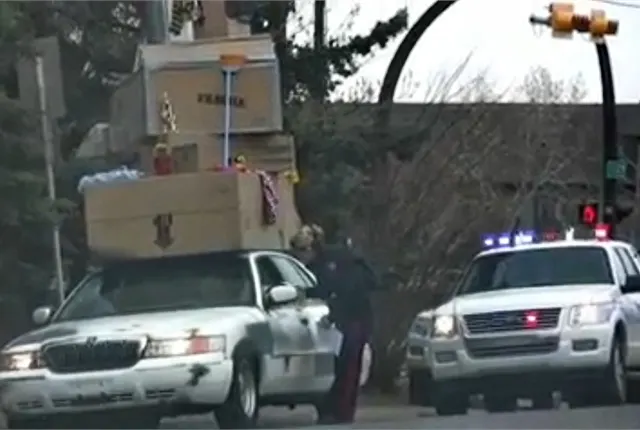
The thing is, Jane and John Public don't know didley-squat about cargo securement -- or the laws of physics, it seems. Some of them seem to think it's okay to pile a few eight-inch diameter logs on top of a pile of brush, and tie it down with a length of cloths-line cord. It's maybe better than nothing, but not much.
One driver that weekend was charged with dangerous driving for operating a trailer so overloaded, the front wheels of the towing car were barely making contact with the pavement. I can't imagine how he steered the thing, or more to the point, why or how he thought it was okay to drive like that.
Another vehicle, whose operator was obviously caught up in the spring-fever thing, had a load of old asphalt shingles in a trailer. A couple of shingles aren't that heavy. A bundle of shingles weighs close to 100 pounds. A pallet of shingles must be 2000 pounds or more. How many bundles would it take to re-shingle a good-sized roof? Since the same number of shingles has to come off the roof before then new ones can be applied, the little utility trailer this fellow had must have been two or three times over the axle and tire rating of the trailer. The tires were practically flat and experiencing some serious negative camber.
His fine? $1,200. It seems he cheerfully told the cop he was a professional roofer, thereby making his truck -- by virtue of its weight -- a commercial vehicle.
The cops around here say shingles, top soil and gravel are among the more serious problems. Most people have no idea what weight there vehicles are rated for.
"They just keep piling in material until their trunks or the trailer his 'full'," says a pal of mine, Sgt. Brian Rollins of the Niagara Police Dept., making a mound in the air with his hands. "That can affect the vehicle's ability to stop. Never mind about the tires and suspensions, the brakes on most mini-vans and pickup trucks are not rated for that kind of load."
The problem, says the big, good natured sergeant, is informing the public about cargo securement and vehicle loading. "Unless they take the trouble to find the information, or carefully read their vehicle operator manuals, there's no way to tell them what they need to know," Rollins says.
While trucking regulations are quite specific in most cases when it comes to vehicle load and cargo securement, no similar rules exist for passenger cars and light trucks, beyond the mechanical restrictions of the vehicle itself.

So while you're getting dragged backwards through various knotholes in this year's RoadCheck 2013 event, take heart that a few local cops are patrolling the dumps and the Home Depot and Loews store parking lots looking for egregious violators with a ton of gravel in their trunks, or a lift of plywood on the roof.
Some make it home; others become the source of many laughs on YouTube. Still others make the newspapers as causes of collisions. Personally, I wish the police could do more about the four-wheel heavy-haulers. I hate riding my Yamaha behind a guy in a Prius who is hand-holding a mattress on the roof of his car. I was hit in the chest by a bird once. I can just imagine what would happen if I took a Sealy-Posturepedic in the face.
Just for laughs, here's the video a couple of the still photos abouve came from. It turns out the overloaded car in the photo was a publicity stunt staged by a mortgage lender. Still, the police were no less pleased. The drivers was apparently cited for an unsafe load.
More Blog Posts

Truck Driver’s Dilemma: Click, Twist or Swipe?
Whether 'tis safer to twist a knob or press a button than to swipe right then swipe down to scan the menu for your favorite playlist...? That's a question for the age.
Read More →
Even the Swedes are Doing Turnpike Doubles
The government doesn't seem to mind asking trucking to invest a trillion dollars toward a greener future. But they won't let us pull turnpike doubles making 30% less CO2. Which is insanity, says HDT's Jim Park in his On the Road blog.
Read More →
Is Your Recruiting Message on Point?
How does your recruiting and retention messaging compare with the reality at your company? Would your drivers agree with your own assessment? Jim Park explores those questions in his On the Road blog.
Read More →
You Can’t Blame Trucks for the Highland Rest Area Bus Crash [Commentary]
The causes of the Highland Park rest area crash go far beyond the parking shortage and the need for flexibility in hours of service — but those issues must be addressed, too, says Jim Park in his On the Road blog.
Read More →
Electric Trucks Seem Far Down the Road for Fleets Dealing with Today's Maintenance Challenges
While the push for zero-emissions trucks rings clear for regulators, advocates and even a small crowd of suppliers, ZEVs seem to have run out of steam down on Main Street, says HDT Equipment Editor Jim Park in his latest On the Road blog.
Read More →
Guinea Pigs 2.0: Can Trucking Comply with a Near Impossible NOx Reduction?
The EPA’s Final Rule on NOx reduction will be incredibly difficult if not nearly impossible for trucking to comply with. Rather than endure another round of equipment failures, downtime and loss of customer faith, industry needs to rally ‘round the OEMs and seek a solution to this wrong-headed rule.
Read More →
Is Downspeeding Bad for Brakes?
Is there a connection between downsped drivetrains and increased brake wear? There shouldn’t be. Downsped fleets seeing increased brake wear are probably not letting the technology do its job, explains HDT Equipment Editor Jim Park.
Read More →
Dig for the Gold Behind CVSA’s Out-of-Service Numbers
Published out-of-service rates don’t mean much until you dig into the why. With brake problems consistently placing in two of the top five spots, maybe we’re missing something in brake maintenance, writes HDT Equipment Editor Jim Park.
Read More →
Things That Go Poof in the Night
We’re in electric-truck heydays now. But like another famous heyday, the 1849 California Gold Rush, there will be a lot fewer winners than losers, says Jim Park in his On the Road blog.
Read More →
Do Your Truck Drivers Know How to Descend a Mountain Grade?
Where do drivers learn mountain-driving techniques? It's sure not from the typical state CDL manual. Jim Park shares what he learned following a deadly 2019 Colorado crash.
Read More →