




The Magnificent Stopping Power of Air Disc Brakes
" Since a 13-liter diesel engine with 40 tons in tow will never match the get-up-and-go of a Porsche 911 GT3, we G-force junkies have to get our fix with air disc brakes." Equipment Editor Jim Park got the chance to test the stopping power of several European trucks with air disc brakes on a trip to Europe last week, and he shares the experience in his latest "On the Road" blog post.

Since a 13-liter diesel engine with 40 tons in tow will never match the get-up-and-go of a Porsche 911 GT3, we G-force junkies have to get our fix with air disc brakes. Nothing compares with the pulse-quickening whoa-power of a 10-wheel ADB setup when it comes to quick, sure stops.
There are few moments in truck driving when we really need all the brake we can get our boots behind, but when they happen, a safe stop is close to a religious experience. If you're a safe and cautious driver, you may have never experienced the full stopping power of a truck brake system, and that's unfortunate in a couple of ways.
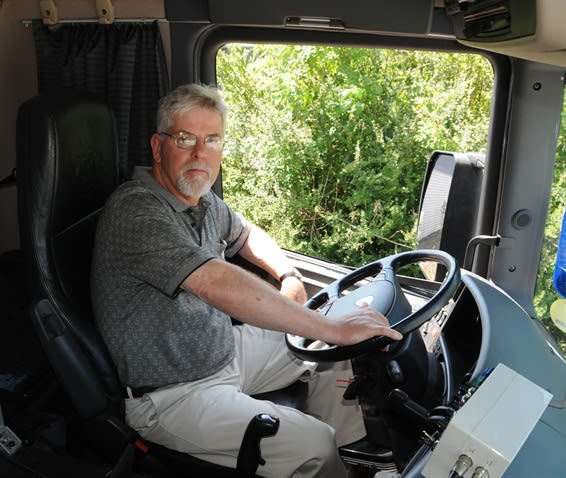
First, it's inspiring when you can bring 40 tons or more to a stop in 220 feet from 60 mph -- certainly more of a thrill than going from zero to 60. And second, until you have made a full-pressure, push-and-hold brake application, you'll never know how a truck handles under maximum deceleration. Take it from me, trucks with crappy brakes make panic stops pretty exciting experiences.
Meritor recently invited a small group of North American truck journalists to its Cwmbran, Wales (pronounced "kum-brawn"), brake engineering and manufacturing facility. Part of the itinerary included some time on an ad-hoc test track where we could experience for ourselves the effectiveness of air disc brakes.
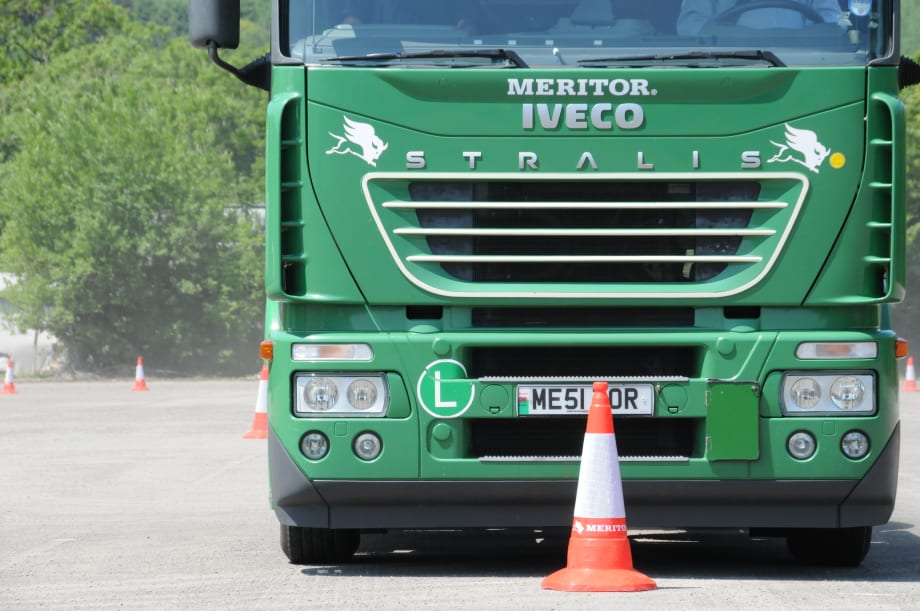
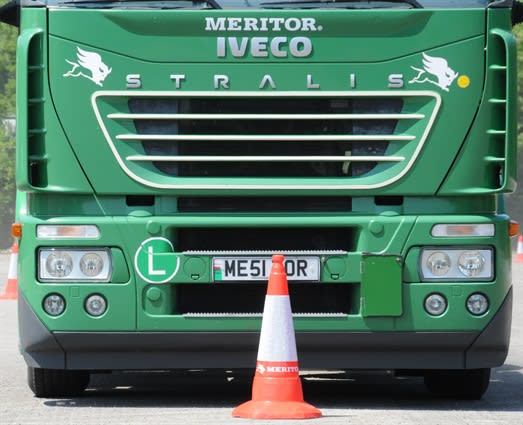
They had four European heavy trucks set up for the test -- all cabovers of course -- with four different performance parameters for us to experience. The Scania R420 is what the Europeans call a Rigid (we call it a straight truck) with a full trailer connected by means of a single axle converter dolly. It grossed 44 tonnes GVW or 97,000 pounds. The other tractor-trailer, a 4X2 Volvo FH12, was a more typical 40 tonne 5-axle combo, while the other trucks were bobtail. One was a Scania R480 with some weight on the drive axle to simulate a fully loaded trailer, while the Iveco Stralis was not loaded.
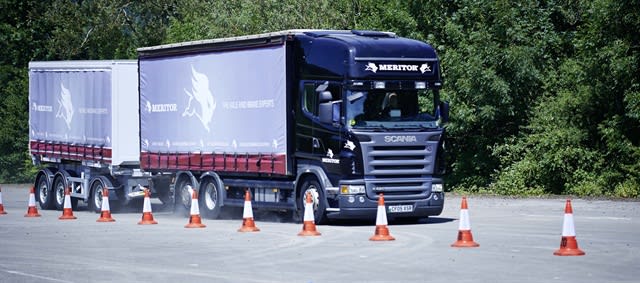
The heavier and longer Scania rigid and its trailer pushed brake rotor temps up more than 160 degrees over two full pressure stops.
The trucks were rigged with a bit of instrumentation and a laptop computer to display such data as application pressure, duration of application, rotor and pad temperatures, etc.
The big Scania rigid being the heaviest with the greatest number of axles was the more dramatic, even from about 30 mph. It stopped true and straight with a force I figured would be enough to launch me out the big front window if I wasn't firmly strapped in. It had me wondering how well those truck makers had designed the cab latches that hold the cab from tipping forward.
The increase in the rotor temperatures before and after told an interesting story. I had the big Scania on the first run of the day when the rotors were still cool (97 degrees F on the front axle and 95 degrees on the drive axles). At the end of the first run, the temps had increased to 168 and 143 degrees respectively. After the second run, the temps were 264 and 172 degrees respectively. You can see how the front axle did the majority of the work by the way those temps increased the fastest.
Now just imagine how much energy it would take to raise the temperature of a 75-pound hunk of steel by 160 degrees. Now figure in not just one brake rotor but 12 all rising by some similar amount.
The bobtail stop was similar, with a less dramatic temperature increase.
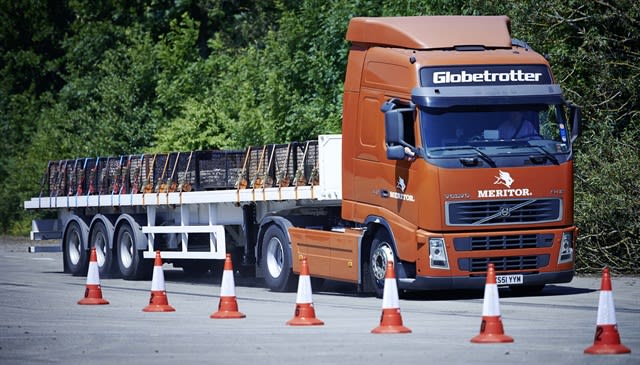
The difference between an ABS-on stop and one with ABS off can best be appreciated when you do them back to back.
The next test was in the 5-axle Volvo, and it was a comparison between an ABS stop and non-ABS stop. The first run was done with the ABS switched off, so the tires skidded under the full brake application from about 30 mph. It was actually fairly gentle. The ABS-on stop was less relaxing. As the ABS system modulated the brake application, the truck stopped much sooner and much more abruptly. Again, I found myself blessing my seatbelt.
With the green Iveco, we faced a different task; get the truck up to about 30 mph and then estimate the distance required to stop before striking a hapless orange traffic cone. We were supposed to come in at speed, then hit and hold the brakes without releasing them to see how accurate our guesses were. On the practice run, each of the four journalist/test-pilots stopped well back of the cones, obviously underestimating the truck's stopping ability.
On the second run, a few got a bit over-confident and applied the brakes too late, creaming the cone. I got stopped about four feet from the cone, earning me a third place finish. Trucker writer, David Kolman of RoadKing magazine and Fleet Maintenance -- and himself a former driver -- managed to get within 6 inches of the cone. He called it good luck rather than good management.
Full Speed to Full Stop
On another brake testing junket to the Bendix test facility in Ohio about six or seven years ago, a bunch of journalists got the chance to brake an air-disc-brake equipped truck from 60 mph to zero in a full pressure application. That was magical. It just stopped sure and true, straight as an arrow and totally under control.
It's really too bad that most drivers never get the chance to try a stop like that with a loaded trailer. It could damage any freight that was securely tied down, or worse, as I have heard happening, launch some of the freight right through the front wall of the van. But that's another story.
We made a total of three full-application stops with the air disc brake equipped truck and measured the shortening of the stopping distance as the brakes grew hotter with each stop. Yes, the stopping distance decreased as the brake rotors expanded with the heat.
Later, we did the same with a drum-brake equipped truck, and measured the increase in the stopping distance as the brake drums grew hotter and expanded away from the brake shoes, taking the pushrod stroke out to and probably past its stroke limit. As the drum brakes grew hotter, it took longer to stop.
And that, friends, is why I'm a very zealous supporter of air disc brakes for heavy trucks. So what if enhanced drum brakes meet the new stopping distance rules. They will only do so once, when they are cold. If I'm into heavy braking on a long hill in busy traffic, I want every advantage money can buy, and top of my list of allies would be air disc brakes.
More Blog Posts

Truck Driver’s Dilemma: Click, Twist or Swipe?
Whether 'tis safer to twist a knob or press a button than to swipe right then swipe down to scan the menu for your favorite playlist...? That's a question for the age.
Read More →
Even the Swedes are Doing Turnpike Doubles
The government doesn't seem to mind asking trucking to invest a trillion dollars toward a greener future. But they won't let us pull turnpike doubles making 30% less CO2. Which is insanity, says HDT's Jim Park in his On the Road blog.
Read More →
Is Your Recruiting Message on Point?
How does your recruiting and retention messaging compare with the reality at your company? Would your drivers agree with your own assessment? Jim Park explores those questions in his On the Road blog.
Read More →
You Can’t Blame Trucks for the Highland Rest Area Bus Crash [Commentary]
The causes of the Highland Park rest area crash go far beyond the parking shortage and the need for flexibility in hours of service — but those issues must be addressed, too, says Jim Park in his On the Road blog.
Read More →
Electric Trucks Seem Far Down the Road for Fleets Dealing with Today's Maintenance Challenges
While the push for zero-emissions trucks rings clear for regulators, advocates and even a small crowd of suppliers, ZEVs seem to have run out of steam down on Main Street, says HDT Equipment Editor Jim Park in his latest On the Road blog.
Read More →
Guinea Pigs 2.0: Can Trucking Comply with a Near Impossible NOx Reduction?
The EPA’s Final Rule on NOx reduction will be incredibly difficult if not nearly impossible for trucking to comply with. Rather than endure another round of equipment failures, downtime and loss of customer faith, industry needs to rally ‘round the OEMs and seek a solution to this wrong-headed rule.
Read More →
Is Downspeeding Bad for Brakes?
Is there a connection between downsped drivetrains and increased brake wear? There shouldn’t be. Downsped fleets seeing increased brake wear are probably not letting the technology do its job, explains HDT Equipment Editor Jim Park.
Read More →
Dig for the Gold Behind CVSA’s Out-of-Service Numbers
Published out-of-service rates don’t mean much until you dig into the why. With brake problems consistently placing in two of the top five spots, maybe we’re missing something in brake maintenance, writes HDT Equipment Editor Jim Park.
Read More →
Things That Go Poof in the Night
We’re in electric-truck heydays now. But like another famous heyday, the 1849 California Gold Rush, there will be a lot fewer winners than losers, says Jim Park in his On the Road blog.
Read More →
Do Your Truck Drivers Know How to Descend a Mountain Grade?
Where do drivers learn mountain-driving techniques? It's sure not from the typical state CDL manual. Jim Park shares what he learned following a deadly 2019 Colorado crash.
Read More →