





Related: Rear Impact Guard Puts Wabash Up for Swedish Steel Prize
Railcar Wins Swedish Steel Prize, But Wabash’s Entry Still Admirable
The Helix Dumper is a major advance and worthy of a prize. But I'd have voted for Wabash National's RIG-16 rear impact guard.
May 18, 2017
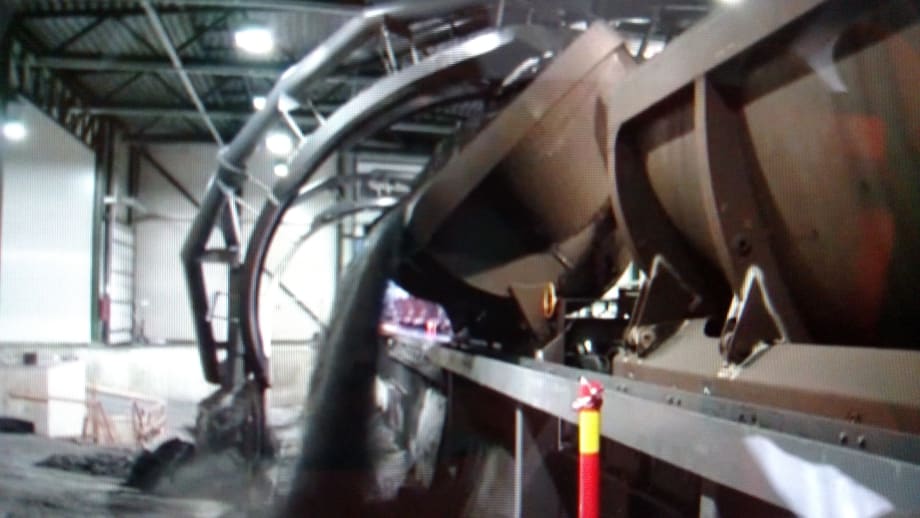
External spiral rails grab Helix Dumper's load-carrying tub and smoothly tip it to discharge the load, then set it back on the railcar's frame. This won the annual Swedish Steel Prize for Kiruna Wagon. Photo: Tom Berg, from Kiruna Wagon video
3 min to read
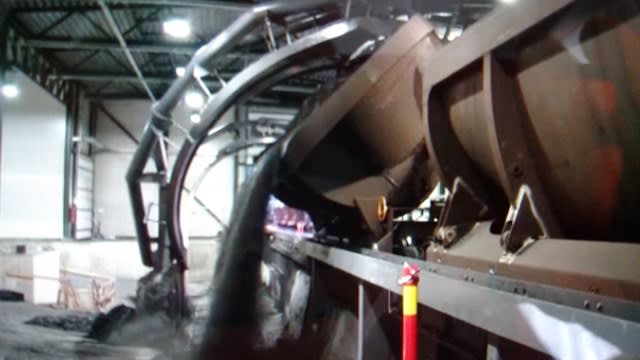
External spiral rails grab Helix Dumper's load-carrying tub and smoothly tip it to discharge the load, then set it back on the railcar's frame. This won the annual Swedish Steel Prize for Kiruna Wagon. Photo: Tom Berg, from Kiruna Wagon video
The annual Swedish Steel Prize is sponsored by SSAB, a Sweden-based manufacturer of lightweight, high-strength steels, to encourage innovative uses of its products. If I had been on the jury deciding who got the latest award announced last week, I’d have voted for Wabash National’s RIG-16 rear impact guard for trailers. It was one of the finalists in the 2017 competition, which itself is an honor, as there were 98 other entries. And Wabash was the only American company to rank so high.
But I’m not on the jury, and its members instead awarded the prize to Kiruna Wagon, a railcar manufacturer in Kiruna, Sweden, for its Helix Dumper. It’s a side-dump ore car that unloads quickly and efficiently by means of an external spiral framework that grabs the load-carrying tub, tips it to one side, then guides it down again on the car's frame. The operation is shown in this video.
Ore cars are usually hoppers that dump loads through bottom doors, which are moving parts that require maintenance and can freeze in winter; or rotational dumpers, where entire cars swivel on their couplers until they’re upside down, which requires complex and heavy turning equipment. So the Helix Dumper is a major advance, and certainly worthy of a prize.
But as I stated in my blog a month ago, I applaud efforts to make trailer bumpers stronger and better able to absorb energy from a car that crashes into a trailer’s rear end. Motorists shouldn’t do that, but they don’t deserve a death sentence if they do. And sudden death is what a good friend of mine got back in 1973 when he rear-ended a semi that had stopped on a dark night on an expressway in upstate New York. So Wabash and its RIG-16 guard will remain the winner in my mind.
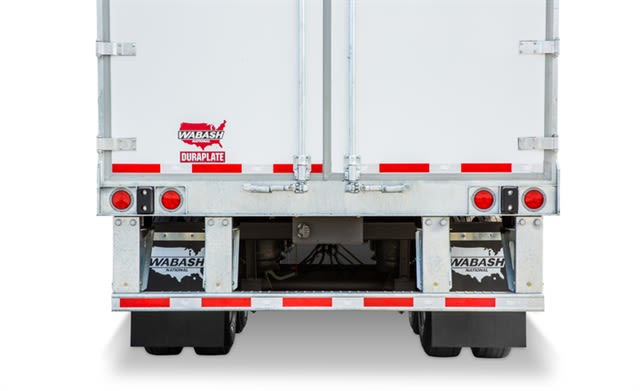
Wabash's RIG-16 rear impact guard, introduced last year, uses high-strength steel throughout, but is especially strong at its outer edges. Photo: Wabash National Corp.
Since that blog, I talked with Robert Lane, Wabash’s vice president of product engineering, who described the work that went into the new impact guard. “We have worked with SSAB for quite a while,” he said. “We have used their advanced high-strength steel in our trailers for special applications … to add strength and reduce weight.
“We looked at redesigning our current RIG,” Lane continued. “It took over two years to design, test and line up supplies and manufacturing plans for the new rear impact guard,” which handles 30% “offset” crashes in addition to full frontal impacts.

Exhisting rear impact guards were much improved over old bumpers, but didn't protect against offset crashes, as shown in this IIHS test. Photo: Insurance Institute for Highway Safety
“We performed nine of our own crash tests, testing different designs with high-strength steel. The final RIG-16 design performed very well in the Insurance Institute for Highway Safety offset test. SSAB asked us to submit it in the Swedish Steel Prize competition, and we were selected as one of four finalists.”
Like improved standards required by federal regulations in the mid-1990s and a more stringent Canadian standard that came later, Wabash’s RIG-16 costs more money, but not a lot, he said. It’s an option on all Wabash National vans and adds 1 to 1.5% to a trailer’s price. For its life-saving potential, that’s a real bargain.
Subscribe to Our Newsletter
More Blog Posts
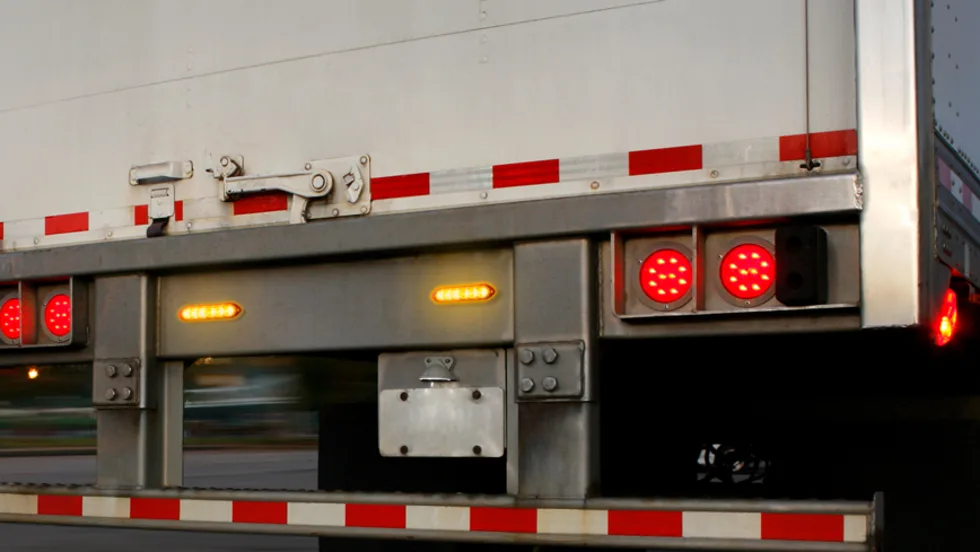
Pulsing Back-of-Trailer Lamps Aim to Prevent Crashes
Can the addition of a pulsing brake lamp on the back of a trailer prevent rear-end collisions? FMCSA seems to think so, if its exemptions are any indication.
Read More →
Designing a 14-Foot Trailer
Trailers are 13 feet, 6 inches high, right? Not for Hub Group, which developed a special 14-foot-high trailer spec for a dedicated customer based in California. Learn more in the Trailer Talk blog.
Read More →
CARB Comes for Reefer Trailers
A new round of emissions control regulations decreed by the California Air Resource Board will begin affecting refrigerated trailer and TRU design and operations next year.
Read More →
5 Ways Data Analysis Maximizes the Value of Trailer Telematics
Are you getting the most out of your trailer telematics investment?
Read More →
Can You Guess What's in That Trailer?
You don’t always know what’s in the trailers that pass you on the road. But some of those trailers are carrying something a little more dangerous that frozen food or new bedding…like, maybe, a nuclear weapon. But this isn’t an ordinary trailer; this is a trailer specifically made to not only carry this type of payload, but protect it at all costs.
Read More →
How Trailers Are Harnessing 'Free' Energy
Can trailers play a more active role in sustainable transport beyond aerodynamic add-ons or low-rolling-resistance tires? Some companies think so.
Read More →
Wrapping a Trailer for COVID’s Everyday Heroes
“We don’t only deliver freight. We deliver awareness.” That’s what Jim Barrett, president and CEO of Road Scholar Transport, likes to say about the Dunmore, Pennsylvania-based carrier’s “awareness fleet.” Its latest trailer wrap honors the everyday heroes of the pandemic.
Read More →
How a Tanker Fleet is Using Unorthodox Trailer Lighting to Fight Rear-End Collisions
Groendyke Transport watched the number of rear-end collisions with its trailers rise steadily until it tried an unorthodox and then unapproved method of alerting following drivers that its trucks were applying brakes and slowing down.
Read More →
The Role Trailers are Playing in COVID-19 Funerals
In places such as New York City and Detroit, overwhelmed hospitals and mortuaries are using refrigerated trailers to store the bodies of people killed by COVID-19.
Read More →
Reefer Trailer Aims to Help Reach Zero Emissions
Wabash National is partnering with C&S Wholesale Grocers to test a new type of zero-emissions refrigerated trailer.
Read More →