





You also might like: The Path to Electric Reefers
CARB Comes for Reefer Trailers
A new round of emissions control regulations decreed by the California Air Resource Board will begin affecting refrigerated trailer and TRU design and operations next year.
April 29, 2021
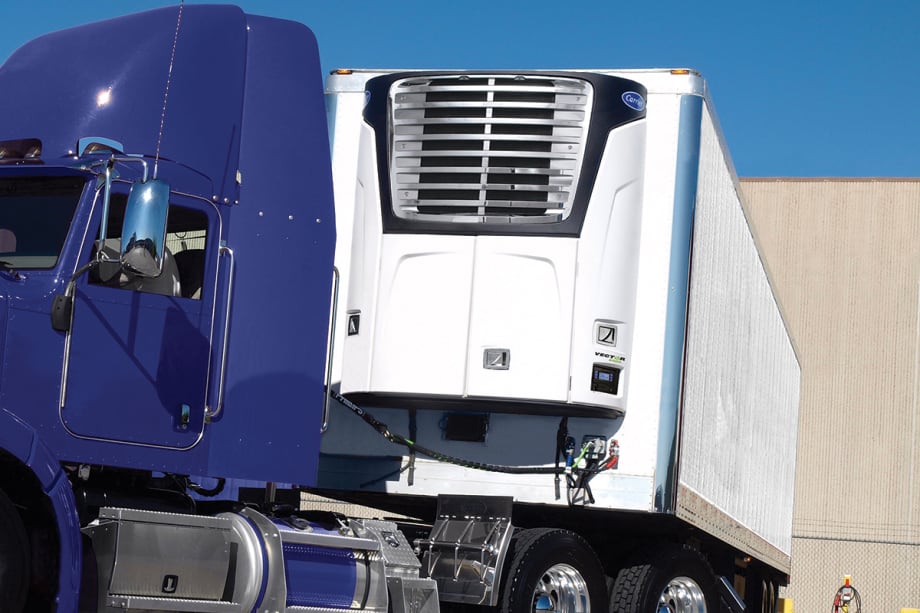
Registering transportation refrigeration units with CARB is part of a ramp-up for more stringent emissions regulations on the way.
Photo: Carrier Transicold
6 min to read
The clock is ticking, counting down to a new set of emissions regulations issued by the California Air Resource Board.
But then again, isn’t that always the case?
This time, CARB is moving into a new area of emissions regulations for trucking, with regulations beginning next year that will target trailer refrigeration units in the Golden State. And, of course, as any veteran fleet officer knows, when it comes to emissions regulations, once California adopts new standards, it is only a matter of time before much of the rest of the United States follows suit.
Trailer and refrigeration unit manufacturers are watching this pending regulation closely.
Thermo King has issued some guidelines for fleets in California and says the two most immediate regulatory concerns focus on transport refrigeration units (TRUs) as well as other refrigerated trailers, truck bodies and transport containers.
For the purposes of these new regulations, CARB defines TRUs as "units that are powered by internal combustion engines (inside the unit housing) that control the environment of temperature-sensitive products that are transported in refrigerated trucks, trailers, railcars, and shipping containers. They may be capable of cooling or heating. TRUs are used to transport and store many products, including, but not limited to food, pharmaceuticals, plants, medicines, blood, chemicals, photographic film, art work, and explosives.”
CARB also notes that, “Some companies use TRUs for extended cold storage during the four- to six-week period before major holidays and events. Distribution centers and grocery stores are known to run out of cold storage space in their buildings, so they store overflow goods in TRU-equipped trucks and trailers outside the grocery stores and distribution centers. Distribution centers and other cold storage facilities also attract large volumes of TRUs that contribute to higher localized health risk in nearby communities."
Of course, all those idling reefer units are putting out emissions. So CARB is in the midst of developing new regulations "to reduce emissions from facilities with TRU activity by transitioning to zero-emission operation where practical.”
Although specific emissions regulations are still in the process of being developed, In order to make enforcement possible, fleets in Califronia already are required to register all TRUs operating in the state with CARB. Importantly, registration will soon be required for TRUs owned by California fleets that are based outside of the state.
Additionally, beginning next year, any “newly manufactured” truck, trailer, domestic shipping container and rail TRUs that were manufactured with refrigerant and operating in California must use a refrigerant with a Global Warming Potential (GWP) less than, or equal to, 2,200. This requirement will mostly be a formality for fleets, entailing talking with trailer OEMs to verify that the refrigerant being used in new equipment meets this criterion and obtaining the pertinent documentation at the time of purchase.
These new regulations, however, are just a warm-up act for additional new CARB trailer mandates that will become law in 2023 and additional, increasingly stringent emissions regulations that will follow in 2025.
Beginning in 2023:
Applicable “facility owners” In California will be required to register their facilities with CARB and pay fees every three years, and report all TRUs that operate at their facility to CARB quarterly or attest that only compliant TRUs operate at their facility.
TRU owners will be required to including out-of-state based) with CARB, pay fees (every three years), and affix CARB compliance label (every three years).
Truck TRU fleets shall transition toward a goal of zero-emissions from TRUs, based on a reduction in fleet emissions of 15% each year (for seven years).
Beginning on Dec. 31, 2022, model year 2023 and newer trailer TRU generator set engines will be required to meet the Ultra-Low-Emission TRU (ULETRU) performance standard – with the manufacture of TRU generator units that do not meet the ULETRU by trailer OEMs banned outright beginning on May 31, 2022.
Then, beginning in 2025:
All trailer and domestic shipping container TRUs will meet zero-emission operation when parked or stationary for more than 15 minutes at an applicable facility.
All trailer and domestic shipping container TRUs must be equipped with an electronic telematics system.
All trailer and domestic shipping container TRUs must meet US EPA Tier 4 Final emission standards for 25-50 horsepower engines.
All truck TRUs must phase in 15% per year (over 7 years) of their fleet to zero-emission.
Importantly, Thermo King notes, most of the proposed changes target “in use” equipment and not just newly manufactured equipment.
CARB’s end goal with these regulations will be achieved in 2029, when the law will require that all truck TRUs operating in California shall be zero-emission by Dec. 31, 2029 (although compliance extension may be granted due to infrastructure delays).
“For fleets in California, the initial impetuous for complying with the 2022 CARB regulations will be going through the process of registering all TRUs in service, as well as making certain any new TRU additions meet the GWP target number,” a CARB spokesperson in the agency’s Transportation and Toxics Division, which is overseeing the TRU regulation, told HDT.
The spokesperson also noted that CARB staff are currently developing amendments to the TRU Airborne Toxic Control Measure (ATCM), which will be released in late July for a 45-day comment period and will be considered at the September board meeting. The current concept for the amendments includes reporting requirements for out-of-state based TRUs that operate in California. If adopted by the board, these requirements would begin on Dec. 31, 2023.
At the moment, the spokesperson stressed, the existing TRU ATCM already requires California-based TRUs to be reported to CARB. The required information may be submitted to CARB by using the agency’s CARB’s online ARBER program, by mail, or by email.
Out-of-state based TRU owners will be subject to the same reporting requirements already established for California-based TRU owners.
“Reporting of all TRUs that operate in California, regardless of where they are based, is needed to ensure robust compliance monitoring and enforcement of all TRUs operating in California, and to help to level the playing field between California-based and out-of-state based TRUs,” the CARB spokesperson said, when asked about extending CARB’s compliance jurisdiction outside of California.
New regulations require that TRUs begin the transition to zero-emission technology now, according to Purkeys, which just introduced a new shore-power system for reefers. Purkeys officials said in addition to all reefers operating in California being registered with CARB by 2022, all facilities must complete installation of electric powering infrastructure to support zero-emission reefers (ZER) by 2024.
“TRUs used in transportation within California and the 14 other states that comply with CARB regulations will need to use either electric or hybrid technology when parked for more than 15 minutes,” said Dale Tompkins, president of MCE’s Vehicle Power segment, of which Purkey's is a part.
Why is California making such a big deal out of reefer regulations? In 2019, CARB estimated that TRUs within the state were responsible for nearly 900,000 tons of greenhouse gas (GHG) emissions, 7,000 tons of NOx, and 277 tons of toxic diesel particulate matter.
Subscribe to Our Newsletter
More Blog Posts
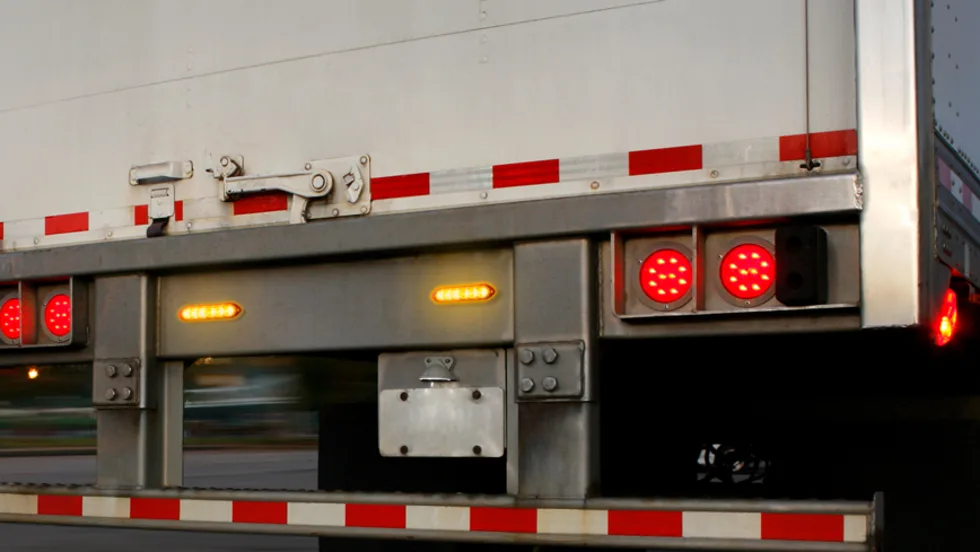
Pulsing Back-of-Trailer Lamps Aim to Prevent Crashes
Can the addition of a pulsing brake lamp on the back of a trailer prevent rear-end collisions? FMCSA seems to think so, if its exemptions are any indication.
Read More →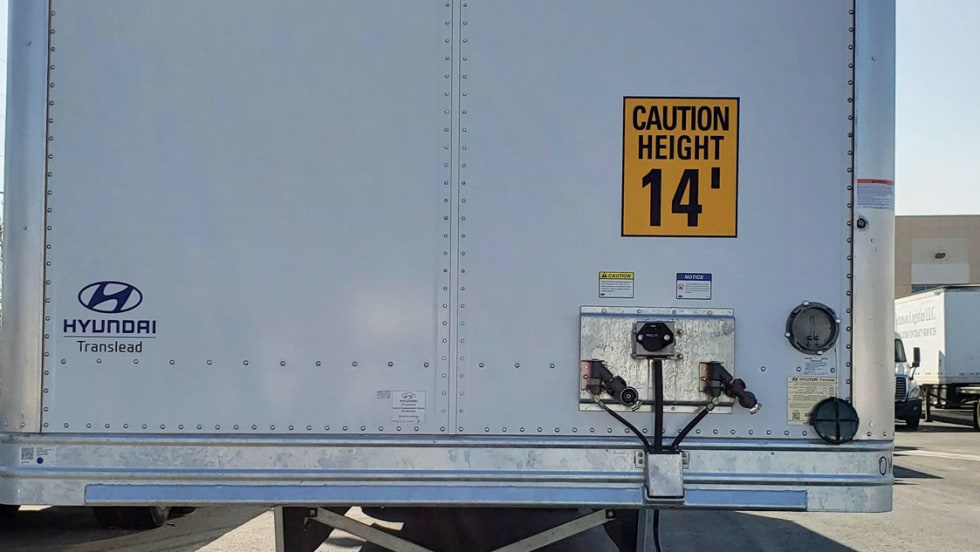
Designing a 14-Foot Trailer
Trailers are 13 feet, 6 inches high, right? Not for Hub Group, which developed a special 14-foot-high trailer spec for a dedicated customer based in California. Learn more in the Trailer Talk blog.
Read More →
5 Ways Data Analysis Maximizes the Value of Trailer Telematics
Are you getting the most out of your trailer telematics investment?
Read More →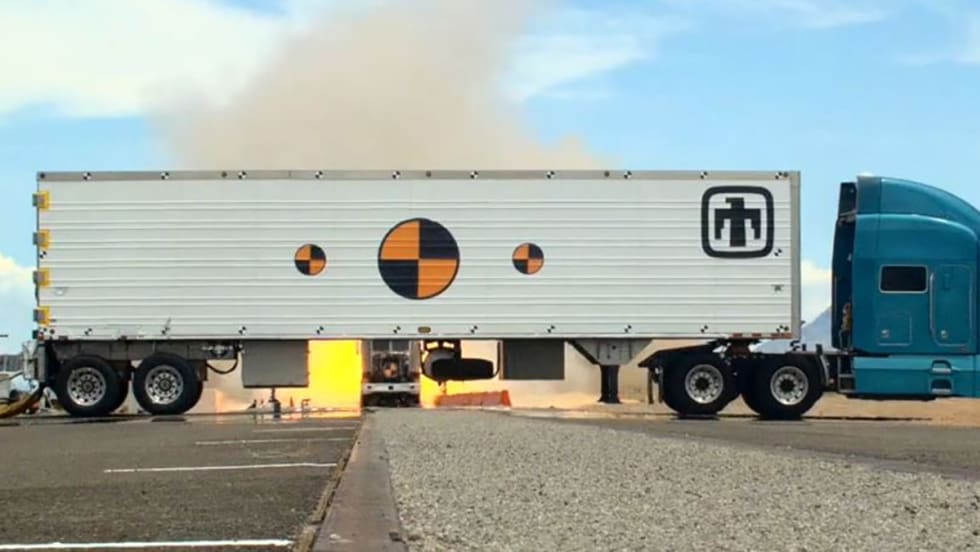
Can You Guess What's in That Trailer?
You don’t always know what’s in the trailers that pass you on the road. But some of those trailers are carrying something a little more dangerous that frozen food or new bedding…like, maybe, a nuclear weapon. But this isn’t an ordinary trailer; this is a trailer specifically made to not only carry this type of payload, but protect it at all costs.
Read More →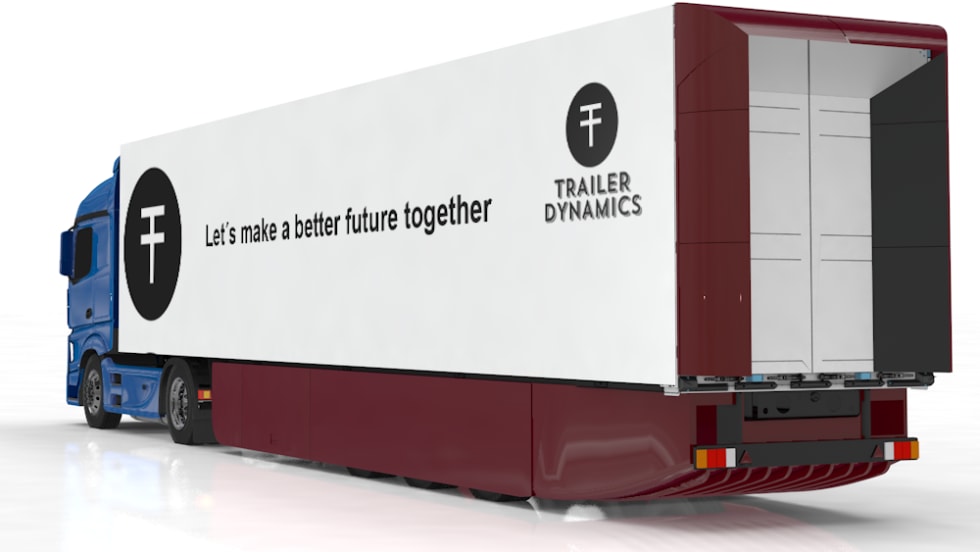
How Trailers Are Harnessing 'Free' Energy
Can trailers play a more active role in sustainable transport beyond aerodynamic add-ons or low-rolling-resistance tires? Some companies think so.
Read More →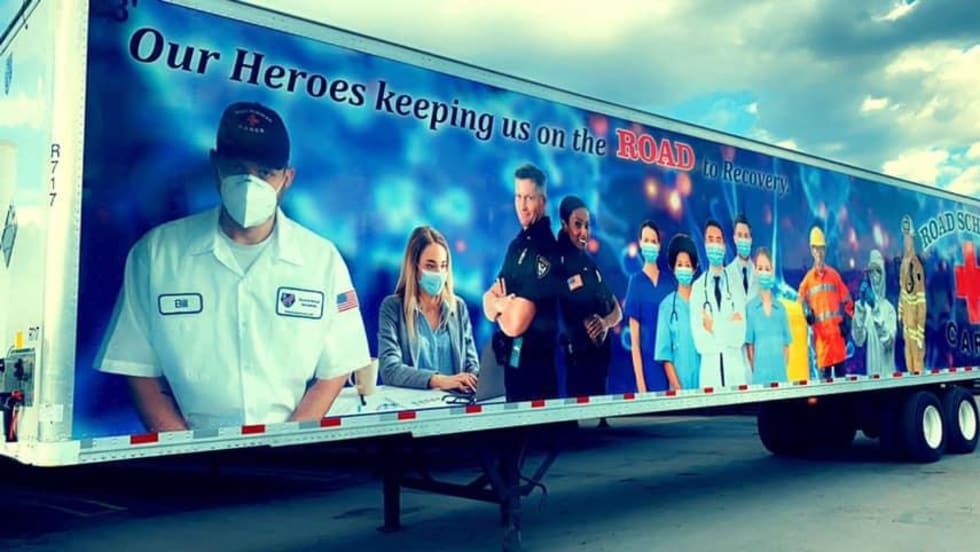
Wrapping a Trailer for COVID’s Everyday Heroes
“We don’t only deliver freight. We deliver awareness.” That’s what Jim Barrett, president and CEO of Road Scholar Transport, likes to say about the Dunmore, Pennsylvania-based carrier’s “awareness fleet.” Its latest trailer wrap honors the everyday heroes of the pandemic.
Read More →
How a Tanker Fleet is Using Unorthodox Trailer Lighting to Fight Rear-End Collisions
Groendyke Transport watched the number of rear-end collisions with its trailers rise steadily until it tried an unorthodox and then unapproved method of alerting following drivers that its trucks were applying brakes and slowing down.
Read More →
The Role Trailers are Playing in COVID-19 Funerals
In places such as New York City and Detroit, overwhelmed hospitals and mortuaries are using refrigerated trailers to store the bodies of people killed by COVID-19.
Read More →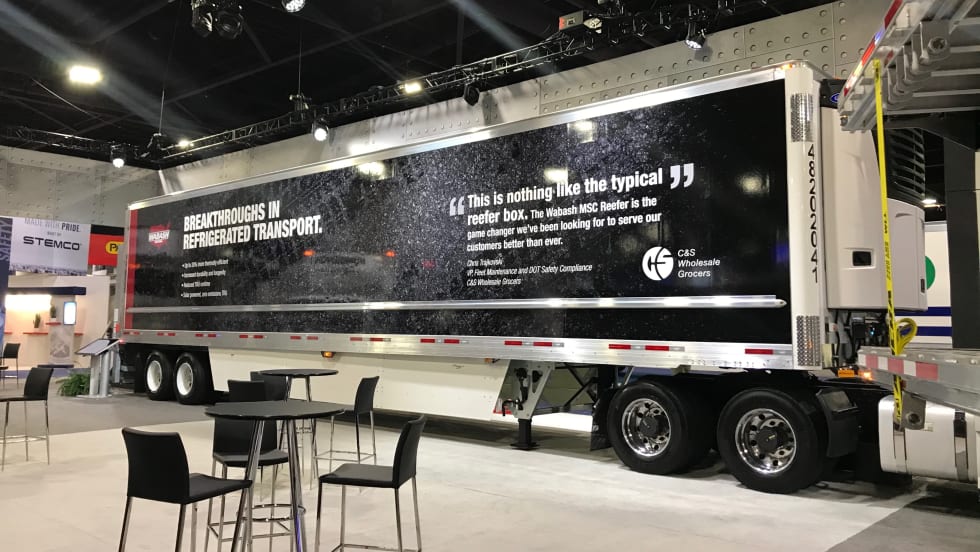
Reefer Trailer Aims to Help Reach Zero Emissions
Wabash National is partnering with C&S Wholesale Grocers to test a new type of zero-emissions refrigerated trailer.
Read More →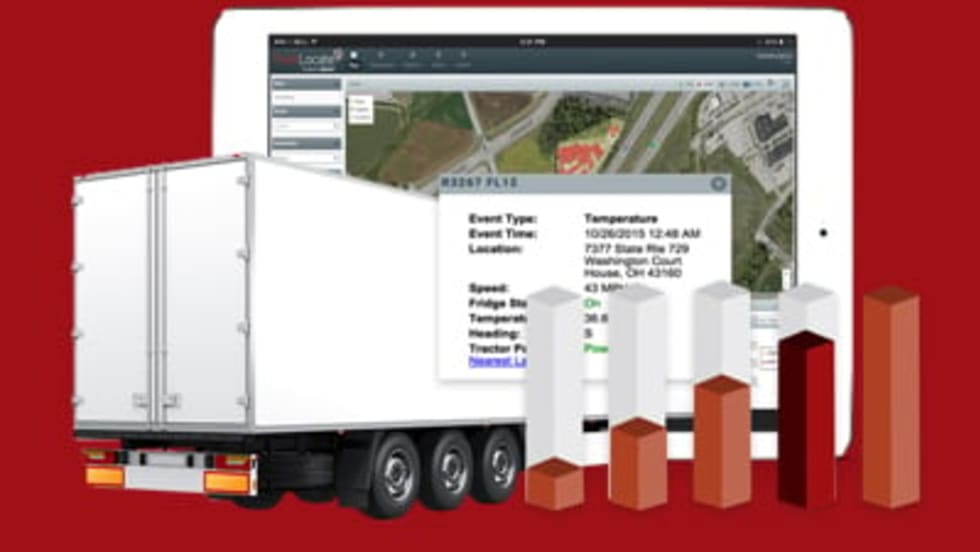
Spireon Turns 'Smart Trailer' Data Into Insights
What is a smart trailer? Spireon says it has an answer, with its recent introduction of Intelligent Trailer Management.
Read More →