




New Hours of Service Rule Relaxes Safety, But You Don’t Have To
The National Transportation Safety Board contents that the new, more "flexible" hours-of-service rule puts commercial drivers — and those with whom they share the roads — at increased risk.
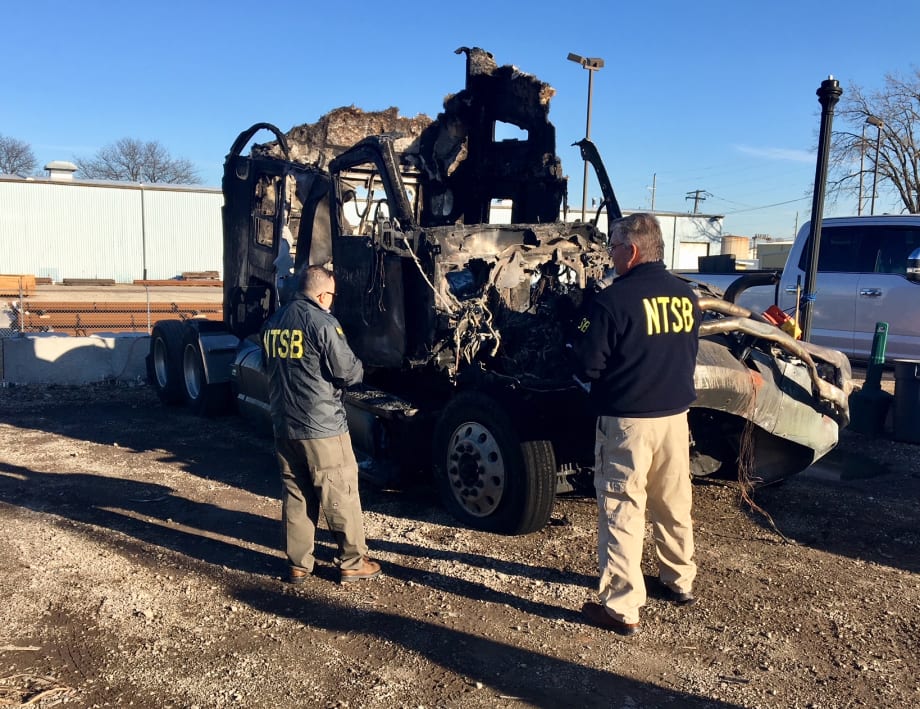
The NTSB determined that this Elmhurst, Illinois, crash was the Pioneer Transportation driver’s failure to respond to slow-moving traffic due to a performance decrement likely caused by fatigue associated with his untreated sleep disorder.
Photo: NTSB
Truck drivers are pros at what they do. They drive the big rigs and all manner of smaller vehicles over our nation’s highways to transport critically needed goods that are essential to American commerce.
But the nature of their work, driving eight to 11 hours a day, often at night, and regularly crossing time zones in a single trip, make them susceptible to fatigue. Fatigue on our highways is pervasive, preventable, and impacting transportation safety in all modes.
The Federal Motor Carrier Safety Administration recently completed a two-year effort to permanently relax hours-of-service rules for commercial motor vehicle drivers. The new final rule puts commercial drivers — and those with whom they share the roads — at increased risk.
The National Transportation Safety Board’s mission is to promote safe transportation, and we are troubled by the relaxed rules that ignore this approach. Fatigue degrades a person’s ability to stay alert and attentive while safely controlling any vehicle. We have investigated too many preventable tragedies to remain silent on this critical issue.
These rule changes come at a time when new data show trucking fatalities increasing. Between 800 and 900 drivers lose their lives on the road each year, and the risk only begins with the truck driver. We must be doing more to continue improving trucking safety, not less.
It’s a fact that hours-of-service regulations save lives in transportation. But it isn’t easy. The effort to reduce fatigue goes beyond the regulations and requires a comprehensive approach, including research, education, training, technology, sleep disorder treatment, HOS regulations, and better scheduling policies and practices.
The FMCSA’s new rule uses terms such as “safety-neutral” and “without adversely affecting safety.” The Department of Transportation’s press release optimistically adds that the rule will “improve” safety. But the science doesn’t support those claims.
The FMCSA claims that the changes “enhance flexibility” so drivers can stop when they feel tired. The reality is, fatigued drivers are more likely to be in an accident, and humans are exceedingly poor at self-assessment.
How Does the New Hours of Service Rule Relax the Regulations?
The new final rule relaxes the HOS regulations in several ways.
It expands the short-haul exception from 100 air-miles to 150 air-miles and increases the allowable duty day from 12 to 14 hours. That’s a loophole you could drive a truck through!
It expands the driving window during adverse driving conditions by up to an additional two hours. So, the weather’s bad, the workload and fatigue is increased, and we’re going to press on?
It requires a 30-minute break after eight hours of driving time (instead of on-duty time) and allows an on-duty/not driving period to qualify as the required break. That might include loading or unloading, which could be even more tiring than driving. Sure, it feels good to get back in the cab where I don’t have to work so hard. But the risk is much higher!
It modifies the sleeper berth exception to allow a driver to meet the 10-hour minimum off-duty requirement by spending at least seven — rather than at least eight — hours in the berth, and a minimum off-duty period of at least three hours spent inside or outside of the berth. All of us fall asleep immediately and get high-quality sleep when we’re in the bunk, right?

When a Walmart truck driver approached the work zone in Cranbury, New Jersey, close to 1 a.m. on June 7, 2014, he had only gotten about four hours of sleep opportunity in the preceding 33 hours.
Photo: NTSB
We understand that economics matter in this debate, and that most drivers only get paid when the wheels are turning.
But we don’t believe dollars versus human lives is a good tradeoff. You probably wouldn’t either.
NTSB isn’t alone in wanting to put safety first in the trucking industry. The Teamsters, who have a vested interest in full employment, recognize the value of ensuring driver safety and have also come out against these changes to the HOS rules.
Going Beyond HOS Rules to Prevent Truck Driver Fatigue
We should point out, too, that trucking companies that have addressed fatigue beyond simply complying with HOS regulations have experienced fewer crashes and seen fewer fatalities as a result of driver crashes.
For example, after a fatigued driver caused a fatal truck crash in Cranbury, New Jersey, in 2014, Walmart Transportation introduced a fatigue management program that exceeded regulatory minimums with effective sleep management protocols. By investing in safety, proactive companies like Walmart have improved their bottom line.

After the highly publicized 2014 fatal crash between a fatigued Walmart driver and a van limo carrying comedian Tracy Morgan, Walmart introduced a fatigue management program that exceeded regulatory minimums.
Photo: NTSB
An investment in safety does not cost. It saves.
A lawsuit from a fatal crash can easily cost a company and its insurer tens of millions of dollars, without beginning to consider the business costs that arise from damaged business relationships, lost business, and lost time. A fatal accident can cause small operators to go out of business. And when crippling injuries are added the fatal crash statistics, the cost-benefit analysis loses validity rapidly.
Sleep Science and Fatigued Truck Drivers
The HOS rules are complex, but sleep science is not.
Fatigue is a manageable threat to transportation safety that can be mitigated through reasonable company safety practices and individual responsibility.
The NTSB has recommended for decades that the FMCSA tighten enforcement of fatigue regulations, implement sleep apnea screening, set science-based maximum hours of service, develop sleep management programs, and deploy electronic logging devices for all commercial truck drivers.
Imagine what happens if a fatigued trucker collides with a minivan full of children, construction workers on the road, or commuters on an intercity bus. Recent investigations involving fatigued truckers prove the point — one in Boise, Idaho, and another in Elmhurst, Illinois.
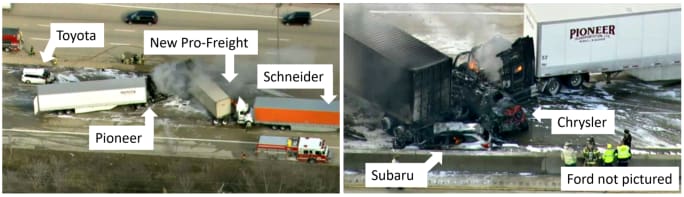
Scene views of six of the vehicles at final rest on eastbound I-290 after a March 1, 2018, crash in Elmhurst, Illinois.
Photo: NTSB
Safety is job one in any mode of transportation. Compared with a crash resulting in serious injuries or loss of life, nothing else matters. And, getting adequate rest (at least seven to nine hours of continuous sleep) reduces fatigue and makes our highways safer.
Like all drivers on our highways, commercial drivers must be well-rested. While fatigued drivers operating smaller vehicles can also result in deadly consequences, trucks weighing 80,000 pounds and up to 80 feet long require just a bit more alertness and finesse than driving the family car.

National Transportation Safety Board Vice Chairman Bruce Landsberg poses a question to the investigative staff during a public meeting held in Washington, D.C.
Photo: NTSB Photo by Chris O’Neil
Here is the bottom line: The fact that a driver has successfully (and luckily) driven fatigued for hundreds of trips absolutely does not guarantee that the next one will have a happy ending.
Fact: Every one of the drivers involved in a fatal crash were 100% certain they could complete their run safely – let’s state it again, humans are exceedingly poor at self-assessment.
At a time when truck-related fatalities are increasing, how many of your family and friends are you willing to sacrifice for a few more miles each day? The NTSB has investigated too many preventable tragedies to remain silent on this critical issue.
We urge you to join other responsible operators and view the hours of service regulations as what they are: the bare minimum. Together we can do more to improve trucking safety, not relax it. It’s an approach we all can live with!
Reduce Fatigue-Related Accidentsis on the NTSB 2019-2020 Most Wanted List.
More Blog Posts

Fragmented AI: Why Trucking Must Take Security More Seriously
As AI becomes embedded throughout transportation operations, the result can be a tech environment that looks more advanced on paper, but isn't necessarily more efficient, secure, or manageable in practice.
Read More →
We've Been Thinking About Truck Uptime Backward
The truck repair operations that minimize downtime aren’t necessarily the ones with the fastest technicians. They’re the ones who have the part.
Read More →
The Real Cost of Trailer Tires: Why It's Not Just a Maintenance Problem Anymore
Tire wear isn't random. The trucking fleet with a tire program that knows which trailers, positions, and routes are punishing tires the hardest is the one that buys fewer of them.
Read More →
A New Argument for Electrification: Managing Fuel Volatility
As oil prices surge amid Middle East conflict and a blocked Strait of Hormuz, fleets are feeling the squeeze in real time. In this guest column, Geotab's Neil Cawse argues electrification is no longer just about sustainability or ROI — it’s about insulating operations from what he calls a "volatility tax."
Read More →
The Time is Now to Expand Longer Combination Vehicles [Opinion]
The reauthorization of the federal highway bill offers a rare chance to advance double 53-foot LCVs. Industry leaders shouldn’t miss it, says a longtime trailer industry professional in this Guest Voices blog post.
Read More →
The Hidden Costs of 'Free' Smart Trailer Tech Installations [Commentary]
Free installation of smart trailer technologies may sound good on paper, but you could end up paying down the road.
Read More →
Protecting Small Trucking Fleets from Scammers: Lessons from the Insurance Frontlines
Hijacked DOT numbers, fake invoices, and high-tech cargo theft are on the rise. A veteran trucking insurance broker shares how to spot trouble early — and why a trusted advisor may be your strongest defense.
Read More →
Tire Retreading Makes Sense for Trucking Fleets. H.R. 3401 Could Make It Even Smarter.
Retreaded tires offer trucking fleets cost savings, sustainability gains, and supply chain security. New legislation, H.R. 3401, could make retreads even more attractive and support U.S. jobs.
Read More →
Hydrogen Fuel Cell Trucks Are Ready for the Long Haul. Now Policymakers Must Act
Accelerating the growth of hydrogen-fuel-cell-truck adoption would help make zero-emission trucking is not only possible, but practical and profitable, argues the Center for Transportation and the Environment in this Guest Voices blog.
Read More →
A New Definition for Long-Haul Heavy-Duty Trucking
Understanding the various routes that make up long haul is important as we move through trucking’s Messy Middle — a time when fleets have a variety of powertrain solutions to choose from, writes NACFE's Mike Roeth.
Read More →