




Maybe the DOT <B>should</B> pay for naps
Ray LaHood should resign over his remarks regarding the recent spate of napping air traffic controllers. He has revealed himself to be so far behind current thinking on the value of naps in safety sensitive environments that his judgment can't be trusted
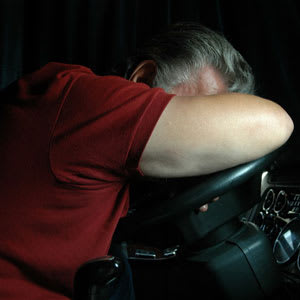
Humans are wired to spend nighttime hours sleeping. Napping isn't a substitute for sleep, but it can increase alertness and reduce the risk of falling asleep spontaneously.
Ray LaHood should resign over his remarks regarding the recent spate of napping air traffic controllers. He has revealed himself to be so far behind current thinking on the value of naps in safety sensitive environments that his judgment can't be trusted.
You're probably at least vaguely familiar with the recent firings of air traffic controllers caught sleeping on the night shift. The count is up to seven as of May 1. On the surface, it's a frightening prospect: a jetliner approaching an airport looking for landing clearance, weather information, taxi instructions and such, greeted by dead air on the radio. In fact, modern aircraft can land themselves without intervention from the pilot or a controller -- unlike trucks where "dead air" would most certainly foreshadow a calamity like the crash in Miami, Okla., in 2009.
The real danger of AWOL air traffic controllers is not in the routine arrivals and departures, but those rare emergency situations where instant and accurate responses and decisions are required.
A control tower at even a busy airport is a pretty quiet place at night. Most of the traffic has landed by midnight or so, and the morning rush won't begin until around 5 o'clock. The control rooms are dark and quiet, bathed in the glow of computer screens and various scanners, instruments, and radios. Not a very stimulating environment to be in at a time when most non-nocturnal creatures are biologically wired to be sleeping. And we have recently learned that many of these control towers are staffed at night by a single controller.
That every now and then a controller nods off isn't comforting, but it's hardly surprising. Far more surprising, to me, was Secretary LaHood's reaction to the incidents. Contrary to mountains of evidence and research done by some of the nation's leading sleep and safety scientists, LaHood steadfastly refused to allow air traffic controllers to take scheduled naps while on a night shift.
"Paying controllers to sleep will not be part of what we do at the FAA," LaHood said on CBS's "The Early Show" in April. "We're not going to pay controllers to nap."
Research shows naps could help
Previously, a research project conducted by the Federal Aviation Administration and the National Air Traffic Controllers Association issued recommendations that included allowing naps on overnight shifts.
"Extensive scientific modeling clearly proves that introducing a recuperative break on the midnight shift can mitigate the identified risk of reduced cognitive performance due to fatigue," the FAA-NATCA work group stated in its recommendations.
More recently, in response to current interest in the subject, National Transportation Safety Board member Mark Rosekind, an expert in fatigue issues, said research has shown short naps of 20 to 30 minutes are effective in keeping workers alert. "Recuperative breaks should be on the table for consideration," he said, as reported by the Associated Press.
NATCA President Paul Rinaldi has repeatedly called upon the FAA to implement the napping recommendations contained in the report, but Secretary LaHood won't have any part of it.
"I don't expect to walk into a break room and see controllers napping, period," he said in recent interview.
The weight of evidence pointing to napping as a fatigue countermeasure is overwhelming, and proven in any number of operational settings from the flight decks of transcontinental airliners to the battlefields of Kuwait where napping could have prevented fatigue-induced friendly fire situations that claimed the lives of several members of our armed forces.
Yet Ray LaHood doesn't want to pay people in safety sensitive positions to nap at times when the predisposition to sleepiness is at its highest?
Naps in trucking
There's an eerily familiar ring to all this.
We, in trucking, know that hours of service rules alone are not a good way to eliminate sleepiness, yet industry custom and practice along with the regulatory framework discourage napping -- or "recuperative breaks," if you're sensitive to the wimp-factor connotations of relegating a very effective fatigue mitigation measure to the kindergarten milk-and-cookies moments we experienced as kids.
The current HOS rules dictate that if any off-the-clock break is taken, it must be two hours long, which sleep scientists will tell you is too long for a nap and not long enough for a full sleep period. Additionally, drivers perceive that stopping for a full two hours could compromise the amount of driving they could do in a day. Fearful of losing revenue to the breaks, some elect to continue driving even when they know they are sleepy.
Scheduling, traffic patterns and other factors often work against drivers who would probably otherwise stop and nap if not for the repercussions.
Canadian HOS rules allow for stopped-clock breaks as short as 30 minutes. A driver still needs 10 hours off in a 24-hour period, with at least 8 consecutive hours off. The remaining two can be tacked on to the 8 for 10 hours off, or they can be broken down in to intervals of no less than 30 minutes. That provides a perfect window for drivers who want a short nap -- maybe two or three -- during a shift. Far more sensible, if you ask me.
North Americans have an odd aversion to napping for some reason. It's like we have this puritan work ethic that dismisses napping as a sign that we're lazy or not able to handle the job. Sleep scientist Kevin Gregory says night-time sleepiness is a natural reaction to what's happening in our bodies, and it's nearly impossible to override.
"You can try to tough it out; grab a coffee look for some form of stimulation to help maintain alertness, but that is just masking the sleepiness," says Gregory, a senior scientist at Alertness Solutions of Cupertino, Calif., a scientific consulting firm specializing in circadian factors, alertness and performance. As far back as the early 1990s, Gregory worked with the some of the nation's preeminent sleep researchers, such as Dr. Mark Rosekind, Dr. David Dinges, and others to produce benchmark studies on the effectiveness of naps as a fatigue mitigation measure.
"In a non-stimulating night-time environment, like a control tower, an aircraft in cruise, or even the cab of a truck on a boring stretch of highway, the monotony of the situation unmasks the natural sleepiness that occurs in all of us at night," Gregory says.
Napping on the job
While air transport regulators in many parts of the world allow controlled and managed in-flight napping by crew members, the FAA still refuses to sanction controlled crew naps on or off the flight deck. Nor is that same agency prepared to allow its air traffic controllers a bit of restorative rest during a night shift, even though it's been proven an effective safeguard against falling asleep on the job.
I can't imagine why Secretary LaHood would oppose napping as a fatigue countermeasure in control towers provided there were at least two controllers on duty and the hand-off from one to the other was conducted according to protocol.
To my way of thinking, a planned nap with a predictable outcome is a far better option than having a controller -- or a truck driver or a pilot -- drift off at a moment when their full attention was required.
LaHood, whose pre-political-life work experience includes teaching junior high school and managing the Rock Island County Youth Services Bureau, is on record as saying there's no way FAA is going to pay controllers to sleep on the job.
He's one guy standing in the way of a safer and healthier work environment for the country's 15,000 air traffic controllers. He's one guy arguing against the best sleep researchers in the country who say napping works. He's one guy who could reverse the stupidity of what could be the next HOS rule for more than a million truckers. He's one gu
More Blog Posts

Truck Driver’s Dilemma: Click, Twist or Swipe?
Whether 'tis safer to twist a knob or press a button than to swipe right then swipe down to scan the menu for your favorite playlist...? That's a question for the age.
Read More →
Even the Swedes are Doing Turnpike Doubles
The government doesn't seem to mind asking trucking to invest a trillion dollars toward a greener future. But they won't let us pull turnpike doubles making 30% less CO2. Which is insanity, says HDT's Jim Park in his On the Road blog.
Read More →
Is Your Recruiting Message on Point?
How does your recruiting and retention messaging compare with the reality at your company? Would your drivers agree with your own assessment? Jim Park explores those questions in his On the Road blog.
Read More →
You Can’t Blame Trucks for the Highland Rest Area Bus Crash [Commentary]
The causes of the Highland Park rest area crash go far beyond the parking shortage and the need for flexibility in hours of service — but those issues must be addressed, too, says Jim Park in his On the Road blog.
Read More →
Electric Trucks Seem Far Down the Road for Fleets Dealing with Today's Maintenance Challenges
While the push for zero-emissions trucks rings clear for regulators, advocates and even a small crowd of suppliers, ZEVs seem to have run out of steam down on Main Street, says HDT Equipment Editor Jim Park in his latest On the Road blog.
Read More →
Guinea Pigs 2.0: Can Trucking Comply with a Near Impossible NOx Reduction?
The EPA’s Final Rule on NOx reduction will be incredibly difficult if not nearly impossible for trucking to comply with. Rather than endure another round of equipment failures, downtime and loss of customer faith, industry needs to rally ‘round the OEMs and seek a solution to this wrong-headed rule.
Read More →
Is Downspeeding Bad for Brakes?
Is there a connection between downsped drivetrains and increased brake wear? There shouldn’t be. Downsped fleets seeing increased brake wear are probably not letting the technology do its job, explains HDT Equipment Editor Jim Park.
Read More →
Dig for the Gold Behind CVSA’s Out-of-Service Numbers
Published out-of-service rates don’t mean much until you dig into the why. With brake problems consistently placing in two of the top five spots, maybe we’re missing something in brake maintenance, writes HDT Equipment Editor Jim Park.
Read More →
Things That Go Poof in the Night
We’re in electric-truck heydays now. But like another famous heyday, the 1849 California Gold Rush, there will be a lot fewer winners than losers, says Jim Park in his On the Road blog.
Read More →
Do Your Truck Drivers Know How to Descend a Mountain Grade?
Where do drivers learn mountain-driving techniques? It's sure not from the typical state CDL manual. Jim Park shares what he learned following a deadly 2019 Colorado crash.
Read More →