




Related: The Enduring Technician Shortage
Imagine A Better World for Technicians
Even if we could find a way to fill every driver’s seat, our trucking industry and our nation would still be in dire straits. We need more technicians and we need them soon – but first some things have to change, says Paul Cupka with the Fairfax County Department of Vehicle Services in this Guest Voices blog.
by Paul Cupka
August 7, 2019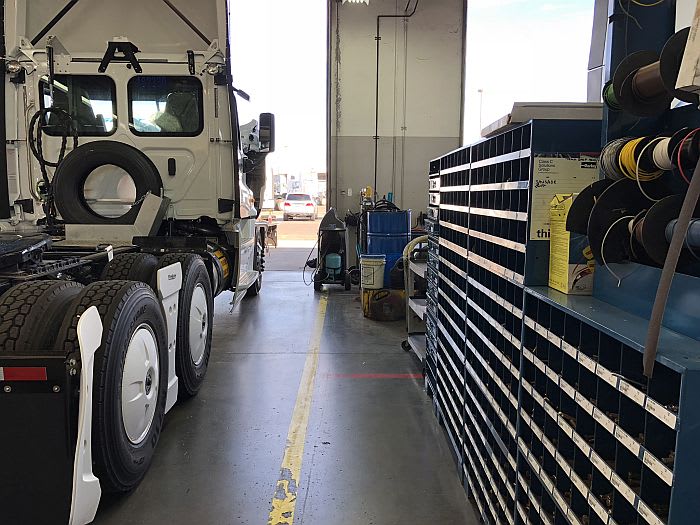
Even if we could find a way to fill every driver’s seat our trucking industry and our nation would still be in dire straits. We need more technicians and we need them soon, but first some things have to change.
Photo: Steven Martinez
4 min to read
Imagine walking into a grocery store to buy food for your family and there is little to no food on the shelves. You have the money to pay for the food, but it’s just not there.
Imagine strolling into your favorite clothing store wanting to buy the latest fashions to impress your friends and coworkers, but you find the racks bare. Again, you have the money to buy them, but the clothes are just not there.
Imagine the trash in front of your house not being picked up for days, or at all.
Imagine (and for those of us that were driving cars in the 1970s it’s not that hard) that you can only buy gas for your car on certain days according to the last number on your license plate. And if there is any gas at all, you have to wait in lines that stretch around the block.
Imagine your children or yourself waiting for an hour or more at a school or transit bus stop, only to find out that the bus is not coming at all.
Imagine, and this one should really hit home, waiting for your local fire and rescue department to arrive and help you in your time of need, only to find out that they are not able to answer your call.
If it sounds like I’m talking about a driver shortage, you’d be mistaken. Because even if we could find a way to fill every driver’s seat, or even create autonomous vehicles to fill in the gaps, our trucking industry and our nation would still be in dire straits.
That’s because every commercial vehicle, even autonomous ones, needs someone to maintain it and repair it when it breaks. The vehicle technician shortage is real. It’s been here for years. And it is only going to get worse the longer we kick it down the road.
The TechForce Foundation reports that due the upcoming “silver tsunami," when tens of thousands of older technicians will have to be replaced, we will far short of the demand in each of the next few years. It’s time for people to stop talking about great ideas and to start implementing them, because this is a national crisis in the making.
Part of the problem is that the industry does not provide enough places, especially in white collar areas like mine, to get the training necessary to learn how to maintain and repair today’s vehicles and equipment.
But let’s not put the cart before the horse.
Truck technician pay and training
Why would someone want to enter the vehicle and equipment maintenance and repair industry in the first place?
I’ve been in the industry for more than 40 years, and I’ve watched the wage gap increase dramatically over that time. Technical jobs in other, more popular, industries have seen average salaries increase at a higher rate, while our technicians have not enjoyed the same pay increases.
Why? Because the American public does not understand how much of their day-to-day lives depend on this equipment that has to be maintained at a high level. At the same time, I’ve watched the work that someone who was once called a “grease monkey” or more politely “mechanic” get so technical that without the ability to understand software and how it works, it gets challenging to diagnose a piece of equipment that can have many computers talking with each other. If we expect new people to enter this industry, it’s time to compensate them fairly. I think it’s about time to tell our story.
Now let’s talk about the cart, or in this case, access to training.
There are a few organizations that are doing all they can to improve the situation. I commend and applaud your efforts. But we as an industry must demand more. We need to ask our federal, state and local governments to work with OEMs to create more reasonable and applicable programs for anyone that is interested in entering our industry.
Everyone wins with this collaboration. I truly believe that there are people out there that are not interested in spending four or more years in college only to possibly struggle to find work when or if they graduate. Rather than being weighed down for years with hundreds of thousands of dollars in student debt, why can’t they get the training they need in our community colleges where, with a part-time job, students might be able to pay as they go?
Who knows, after a couple of semesters we may have a great entry-level technician, ready to begin their career and continue his or her lifelong path of continued training that we all know is required of our technicians today.
If I’ve pointed out the elephant in the room, then I’ve accomplished what I intended. As I stated earlier, I have spent over 40 years in the industry, and as someone who is getting close to retirement from an industry that has allowed me to live a great life, I would like to leave knowing that I made an effort to improve it for the next generation.
Paul Cupka is the superintendent of quality control, safety and training for the Fairfax County Department of Vehicle Services. This article has been edited according to the standards of HDT to provide useful information to our readers.
Subscribe to Our Newsletter
More Blog Posts

Fragmented AI: Why Trucking Must Take Security More Seriously
As AI becomes embedded throughout transportation operations, the result can be a tech environment that looks more advanced on paper, but isn't necessarily more efficient, secure, or manageable in practice.
Read More →
We've Been Thinking About Truck Uptime Backward
The truck repair operations that minimize downtime aren’t necessarily the ones with the fastest technicians. They’re the ones who have the part.
Read More →
The Real Cost of Trailer Tires: Why It's Not Just a Maintenance Problem Anymore
Tire wear isn't random. The trucking fleet with a tire program that knows which trailers, positions, and routes are punishing tires the hardest is the one that buys fewer of them.
Read More →
A New Argument for Electrification: Managing Fuel Volatility
As oil prices surge amid Middle East conflict and a blocked Strait of Hormuz, fleets are feeling the squeeze in real time. In this guest column, Geotab's Neil Cawse argues electrification is no longer just about sustainability or ROI — it’s about insulating operations from what he calls a "volatility tax."
Read More →
The Time is Now to Expand Longer Combination Vehicles [Opinion]
The reauthorization of the federal highway bill offers a rare chance to advance double 53-foot LCVs. Industry leaders shouldn’t miss it, says a longtime trailer industry professional in this Guest Voices blog post.
Read More →
The Hidden Costs of 'Free' Smart Trailer Tech Installations [Commentary]
Free installation of smart trailer technologies may sound good on paper, but you could end up paying down the road.
Read More →
Protecting Small Trucking Fleets from Scammers: Lessons from the Insurance Frontlines
Hijacked DOT numbers, fake invoices, and high-tech cargo theft are on the rise. A veteran trucking insurance broker shares how to spot trouble early — and why a trusted advisor may be your strongest defense.
Read More →
Tire Retreading Makes Sense for Trucking Fleets. H.R. 3401 Could Make It Even Smarter.
Retreaded tires offer trucking fleets cost savings, sustainability gains, and supply chain security. New legislation, H.R. 3401, could make retreads even more attractive and support U.S. jobs.
Read More →
Hydrogen Fuel Cell Trucks Are Ready for the Long Haul. Now Policymakers Must Act
Accelerating the growth of hydrogen-fuel-cell-truck adoption would help make zero-emission trucking is not only possible, but practical and profitable, argues the Center for Transportation and the Environment in this Guest Voices blog.
Read More →
A New Definition for Long-Haul Heavy-Duty Trucking
Understanding the various routes that make up long haul is important as we move through trucking’s Messy Middle — a time when fleets have a variety of powertrain solutions to choose from, writes NACFE's Mike Roeth.
Read More →