




How We Pay Drivers
Every time a driver shortage looms, speakers at industry meetings talk about the fact that drivers aren't paid enough. Last month's American Trucking Associations Management Conference and Exhibition was no exception
Every time a driver shortage looms, speakers at industry meetings talk about the fact that drivers aren't paid enough. Last month's American Trucking Associations Management Conference and Exhibition was no exception.
"I've never met a motor carrier that didn't want to pay a driver more," said ATA Chief Economist Bob Costello. "In real terms, truck drivers today don't make any more money than they did in 1990." And in fact, many will tell you that those 1990 numbers already were lower than pre-deregulation pay.
Yet it's not just the amount of take-home pay that's the issue. It's also the inherent unfairness of how that pay is calculated.
How can we expect drivers to adhere to rules regulating their "work" hours, when they aren't paid for those hours waiting to load and unload? Why are we surprised when they skimp on pre-and post-trip inspections, or on checking inflation and airing up tires, when those activities don't count toward a paycheck? Is it really a surprise that drivers believe carriers are trying to screw them when they're paid by some arbitrary pre-determined mileage figure, which is invariably less than the real miles they run?
A recent survey of fleets by Transport Capital Partners hints that things may be changing. The trucking consulting firm, in its Third Quarter Business Expectations Survey, reported that 68% of the truckload carriers surveyed expect to be able to renegotiate accessorials across more categories - most commonly detention times.
And compared the first quarter, three times as many carriers were planning to renegotiate from "short" miles to "practical" miles in rate setting.
I called TCP Principal Lana Batts, a longtime player in the industry, to talk about the results.
"Prior to deregulation, you got paid for detention all the time," she said. "When the market got flooded, detention went out the door." But with a stricter focus on driver hours of service, including electronic driver logs and regulations that make it tougher to "fudge" that wasted time, people are talking about it, she said. "There's only 660 minutes a day I can use this driver; why are they sitting at your dock for four hours?"
Then there's the miles question. You could have two drivers make the same run, for the same rate per mile, yet depending on whether they're being paid actual, shortest, or practical miles, those paychecks could be radically different. And the shortest route could easily take a driver more time than either practical or actual miles.
One driver in an online forum gave this example for the give-and-take between miles and time. He worked for a company that, for a run from Kansas City, Mo., to Chicago, paid "practical miles" for drivers to run I-35 to Hwy 36 to I-72 to I-55. That's 121 miles on state highway. It's four-lane, but you still have red lights. PC*Miler, a popular routing software, routes the driver via I-35 to I-80 to I-55, Interstate all the way. It's 25 miles more, but saves an hour of driving time, the driver said.
"I think as we look at the impact that EOBRs are going to have, we are going to have to husband those driver hours as carefully and efficiently and effectively as we can," Batts said.
Now let's get really radical. How about paying drivers by the hour? A few years ago, Duprè Logistics, a regional carrier based in Louisiana, decided to pay its drivers by the hour. The result was lower turnover, efficiency gains and improved safety.
Batts says discussions about paying by the hour are taking place in some corridors. "If you're a regional carrier running a guy on I-95 between New York and Boston, you're starting to see that kind of hourly pay in heavily congested ares. There's no other fair way to do it."
In the days when logbooks were much more commonly fudged, there was a feeling that a driver's time was free; it wasn't being measured like miles.
Driver time is no longer free. It's time to have a real discussion, not just about how much we pay drivers, but about HOW we pay them.
From the November 2011 issue of HDT.
More Blog Posts
The Diesel Price Crisis Has No Easy Fix
Washington is trying everything from oil-reserve releases to longer driving hours for fuel haulers. None addresses all the forces keeping diesel prices high.
Read More →
Beyond the Central Transport Settlement: Lessons on Hiring and Risk
The $5.5 million discrimination settlement raises broader questions about hiring practices, safety performance, and the hidden risks that can lurk in a fleet's recruiting process.
Read More →
Are Diesel Shortages Something to Worry About Again?
There’s a certain déjà vu when tensions flare in the Middle East and diesel price spikes can give you panic attacks. What parallels are there between the current situation and the 1970s energy crisis?
Read More →
NOx Isn’t Laughing Gas. Let’s Clear That Up.
A recent EPA reference mixed up NOx and nitrous oxide. It’s an easy mistake. Just not one you expect to see in emissions policy. Let’s look at the difference.
Read More →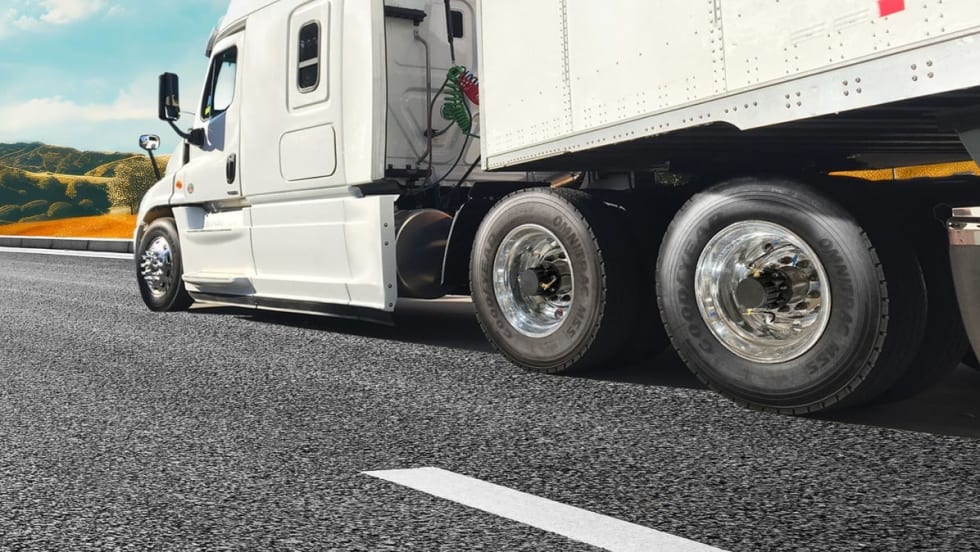
TMC 2025 Takeaway 2: Buy... or Subscribe?
TaaS. Does that mean trucks as a service, trailers as a service, or tires as a service? HDT's Deborah Lockridge has another takeaway from the Technology & Maintenance Council meeting in her blog.
Read More →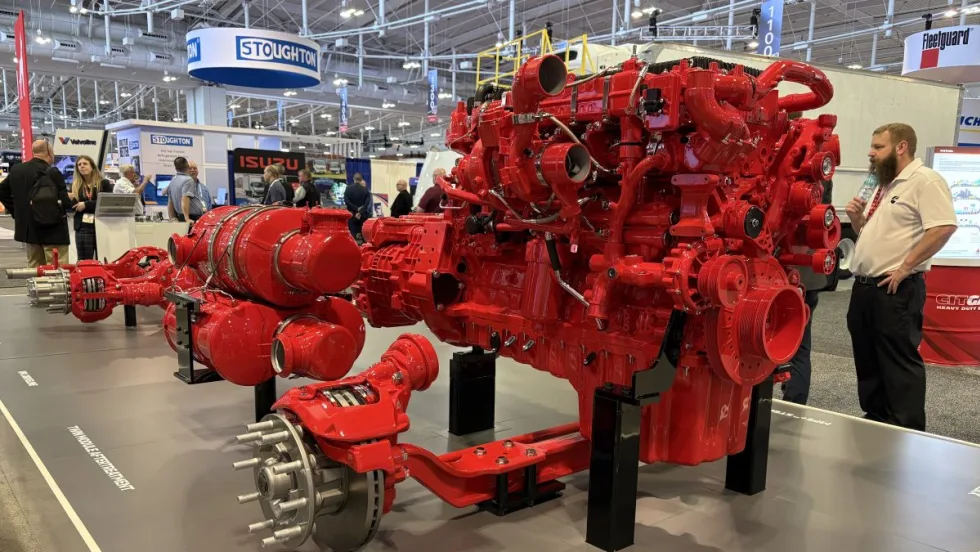
TMC 2025 Takeaway: The Journey Toward Vertical Integration
HDT's Deborah Lockridge on how the trucking industry has moved toward "vertical integration" over the past 25 years.
Read More →
Trucks Are For Girls!
HDT Editor and Associate Publisher Deborah Lockridge is a longtime Girl Scout leader and loves to connect her passion for inspiring girls with her love of the trucking industry.
Read More →
Trucking Advocacy: Impact Beyond the 2024 Elections
No matter who wins the election, trucking continues to work to educate the people who pass the laws and make the rules that affect the industry. HDT's Deborah Lockridge shares insights from two major trucking associations in her All That's Trucking blog.
Read More →
Recharge Your Brain for Better Business
Skimping on vacation may be the worst thing you can do for your business, your career, and your mental health. In her All That's Trucking blog, Deborah Lockridge writes about the importance of giving your brain what it needs to be innovative.
Read More →
Trucker Pre-Trip Leads to Mission 'Im-paw-sible'
See what happened when a truck driver found an unexpected stowaway during his pre-trip inspection.
Read More →