




COVID-19 Impact Weighs On Food Supply Chain
Food shipments decline over 10% in the last month due to supply disruptions and plant shutdowns.

Photo: Lyza via Flickr
Food shipments have declined more than 10% in the last month due to supply disruptions and plant shutdowns.
We saw it first in consumer packaged goods. When governments began instituting shelter-in-place orders, the news of toilet paper shortages and frantic runs on hand sanitizer and soap spread far and wide. As we rode out those early weeks of quarantine, our own data confirmed the increase in shipment volume for the CPG industry, which felt the brunt of the supply chain strain more than others.
But moving out of early March, CPG load volume declined back to its pre-COVID averages. As the pandemic wears on, FourKites platform data illustrate that supply chain impacts are moving upstream, now showing more signs of wear on the food supply chain than in CPG. That’s no real surprise; in recent weeks, hundreds of workers at food processing companies have fallen ill to COVID-19, causing widespread supply chain disruptions. To assess the impact of these supply disruptions in the US, we looked at aggregate load volume across the major food suppliers in the country, across four sectors: meat, dairy, alcohol and pet food. The latest snapshot of what’s happening on the ground provides a more nuanced view of the food supply chain as a whole.
Here’s what we found: In aggregate, our data points to a 10-15% drop in shipped loads over the past month across meat, dairy, alcohol and pet food. And while that is certainly a significant drop, it’s not quite as precipitous as we expected.
Source: Four Kites
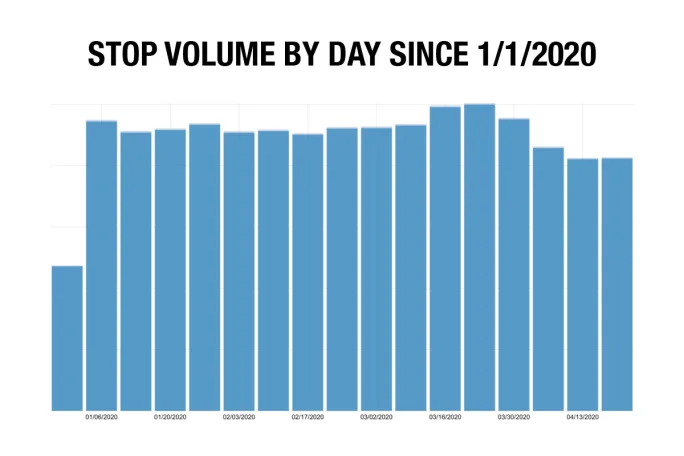
Total shipment volume across the major meat processing companies in the US declined 17% during the week of April 13 compared to its peak the week of March 23.
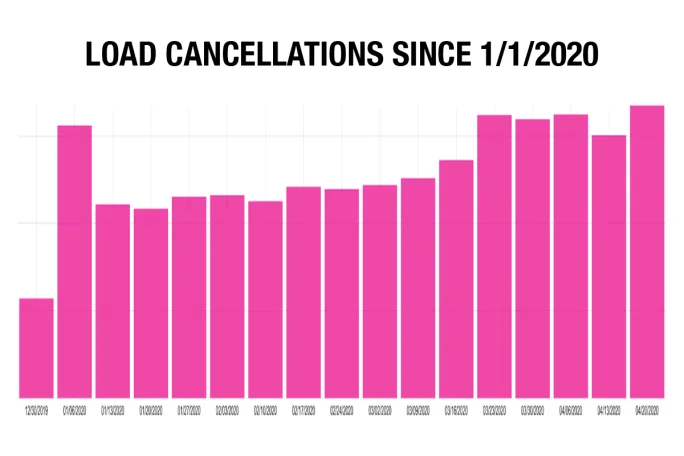
Correspondingly, load cancelations for meat processing companies – or loads that were planned two to three weeks in advance but then canceled by the customer – reached an all-time high last week, up 9% from the week of April 13 and up 22% month over month. This is especially concerning for the industry and supply outlook.
Source: Four Kites
The data confirm the impact of the current health crisis on the national food supply, including meat and poultry, with meat processing load volumes declining even below their typical volume from a couple of months ago.
The meat distribution story remains incredibly fluid, especially in light of this week’s White House declaration. If food producers bring workers in, we may see distributors and retailers increasing demand on carriers to keep up with escalating load volume. It will inevitably be a local decision based on a multitude of factors, and we will keep close watch on how this story unfolds.
4/13 vs. 3/16 | 4/13 vs. 2/17 | |
Meat | ↓17% | ↓9% |
Dairy | ↓5% | ↓4% |
Alcohol | ↓13% | ↓1% |
Pet Food | ↓9% | ↓1% |
CPG | ↓2% | ↑27% |
Load volumes across dairy, alcohol and pet food are also down from their peak in early March, though they have each seen increased volume across the board in the month of April.
Alcohol, which saw declines from its peak in the week of March 30, saw a sharp increase this week – up 28% from the week of 4/13.
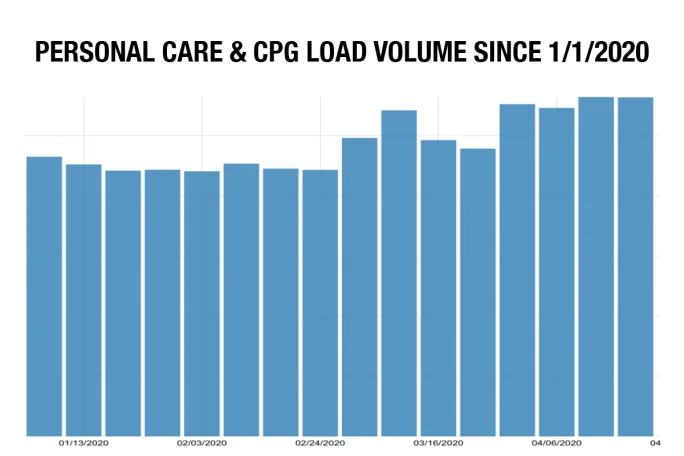
The personal care and CPG industry has bounced back from its dip in load volume in mid-March, and rebounded strong in April, with load volume consistently higher than it’s been at any other point this year.
Source: Four Kites
We will continue to keep a close eye on these food trends, along with other areas of the supply chain impacted by coronavirus. FourKites analyzes data from millions of loads and real-time machine learning to help shippers and carriers optimize their assets and inventory movements.
Vivek Vaid serves as the chief technology officer for FourKites, where he leads the development of a visibility and machine learning platform for the supply chain industry. Prior to Fourkites, Vivek served as the chief data officer for Uptake. As the head of technology for Morningstar’s Institutional Business, Platform and Mobile technologies, he led a global team of mroe than 500 employees across 13 countries.
More Blog Posts

Fragmented AI: Why Trucking Must Take Security More Seriously
As AI becomes embedded throughout transportation operations, the result can be a tech environment that looks more advanced on paper, but isn't necessarily more efficient, secure, or manageable in practice.
Read More →
We've Been Thinking About Truck Uptime Backward
The truck repair operations that minimize downtime aren’t necessarily the ones with the fastest technicians. They’re the ones who have the part.
Read More →
The Real Cost of Trailer Tires: Why It's Not Just a Maintenance Problem Anymore
Tire wear isn't random. The trucking fleet with a tire program that knows which trailers, positions, and routes are punishing tires the hardest is the one that buys fewer of them.
Read More →
A New Argument for Electrification: Managing Fuel Volatility
As oil prices surge amid Middle East conflict and a blocked Strait of Hormuz, fleets are feeling the squeeze in real time. In this guest column, Geotab's Neil Cawse argues electrification is no longer just about sustainability or ROI — it’s about insulating operations from what he calls a "volatility tax."
Read More →
The Time is Now to Expand Longer Combination Vehicles [Opinion]
The reauthorization of the federal highway bill offers a rare chance to advance double 53-foot LCVs. Industry leaders shouldn’t miss it, says a longtime trailer industry professional in this Guest Voices blog post.
Read More →
The Hidden Costs of 'Free' Smart Trailer Tech Installations [Commentary]
Free installation of smart trailer technologies may sound good on paper, but you could end up paying down the road.
Read More →
Protecting Small Trucking Fleets from Scammers: Lessons from the Insurance Frontlines
Hijacked DOT numbers, fake invoices, and high-tech cargo theft are on the rise. A veteran trucking insurance broker shares how to spot trouble early — and why a trusted advisor may be your strongest defense.
Read More →
Tire Retreading Makes Sense for Trucking Fleets. H.R. 3401 Could Make It Even Smarter.
Retreaded tires offer trucking fleets cost savings, sustainability gains, and supply chain security. New legislation, H.R. 3401, could make retreads even more attractive and support U.S. jobs.
Read More →
Hydrogen Fuel Cell Trucks Are Ready for the Long Haul. Now Policymakers Must Act
Accelerating the growth of hydrogen-fuel-cell-truck adoption would help make zero-emission trucking is not only possible, but practical and profitable, argues the Center for Transportation and the Environment in this Guest Voices blog.
Read More →
A New Definition for Long-Haul Heavy-Duty Trucking
Understanding the various routes that make up long haul is important as we move through trucking’s Messy Middle — a time when fleets have a variety of powertrain solutions to choose from, writes NACFE's Mike Roeth.
Read More →