




'Bomb Carts' Haul Containers at Busy Port of Charleston
A Pro-Shuttle has a floor of stout steel beams with short, slanted sides that guide a container into place as the gantry crane lowers it. For the short trips within the port, containers are not tied down. Tom Berg has more in his Trailer Talk blog.

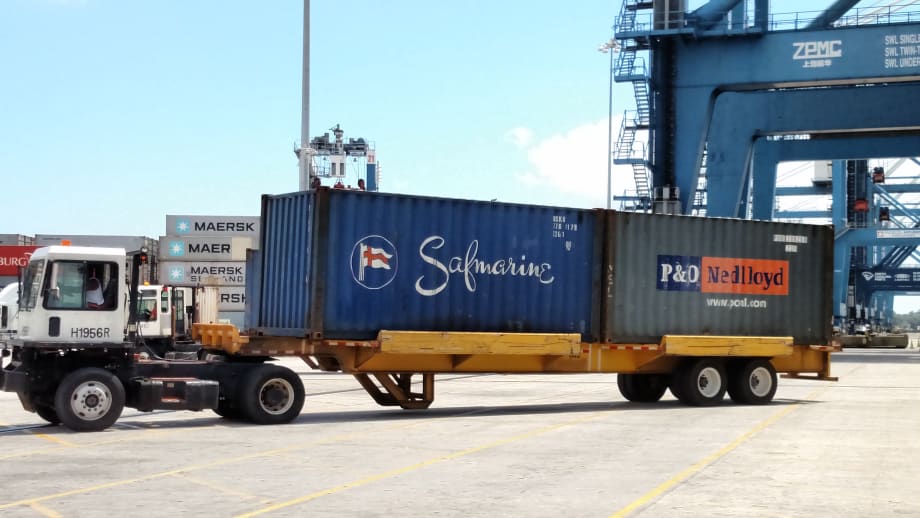
TICO terminal tractor and shuttle chassis carry off a pair of 20-foot ocean-going containers. The trailer can also carry a single 20- and a single 40-foot "box." Photo: Tom Berg
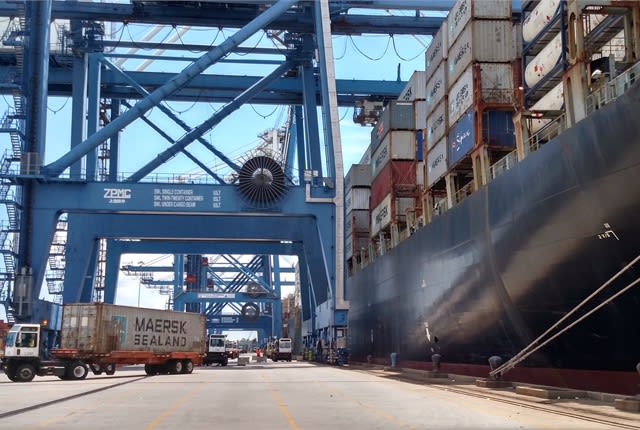
Stevadores unload containers from the Northern Magnum, a Panamax container ship, at Charleston. Photo: Tom Berg
If you want to see a busy place, visit the Port of Charleston, South Carolina. Container operations there are busier after the facility upgraded its automated gate identification to a faster system. Also, the port is seeing more container shipments to the U.S. East Coast since the enlarging of the Panama Canal.
Of course, containers move over highways on special chassis pulled by normal road tractors, which use that gate. Port authorities call each movement in or out a "truck mission." Within the port, the steel “boxes” are hauled by purpose-built tractors and trailers.
A group of us truck writers saw a lot of them on a recent visit to the port that was sponsored by Mack Trucks and arranged by one of its customers, Pat Barber, founder, president and CEO of Superior Transportation. He set up the tour with port officials, and Mack hired a bus to carry us through the sprawling facility.
The port also has break-bulk and RO-RO (roll-on, roll-off) operations. Barber’s Macks and Kenworths haul machinery and other large, heavy cargoes to and from the break-bulk section using lowboy trailers, some of them with multiple axles.
Huge gantry cranes were unloading the Northern Magnum as our bus rolled up and we got off to watch. About once every minute or two, a steel “box” dropped onto a trailer and a rig moved briskly away, heading toward a “stack” where it would be temporarily stored. Such operations proceed until a ship is relieved of its many loaded containers and then reloaded with a mix of loaded and empty boxes for export. Like other busy ports, Charleston operates 24 hours a day.
Each Panamax-size ship like the one we saw carries 5,000 to 12,000 containers measured by 20-foot-equivalent units, or TEUs. (Thus a 40-foot-long container is counted as two TEUs.) Larger New Panamax ships, each capable of carrying 13,000 to 14,000 TEUs, have just begun calling, said Cliff Eisenhauer, a port spokesman.
I took note of scores of “hustler” tractors and special trailers, but until this tour, had never heard of their builder: the manufacturing arm of Terminal Investment Corp., or TICO, down near Savanah, Ga. It leases these vehicles to fleets at ports on the East and Gulf coasts, and built about 1,200 Pro-Spotter tractors before it sold its first one, according to its website. It also designed the Pro-Shuttle container-carrying chassis. The company decided to build its own vehicles when it wasn’t satisfied with what was available on the market.
“A chassis is euphemistically called a ‘bomb cart,’” Eisenhauer said. That term’s origin might be because it uses no tie-downs and instead cradles its cargo, like military munitions conveyances used to resupply fighter and bomber aircraft at air bases. Or, it’s because “they’re bomb-proof,” meaning very rugged, explained Andrew Cannon, TICO’s representative for the Carolinas and Florida.
(This has nothing to do with the bomb scare at Charleston earlier this week. Port operations were halted for about seven hours as authorities ran containers from a ship through a radiation scanner, because the phoned-in "tip" said the device was a "dirty bomb" that would've scattered radioactive material. Nothing was found.)

TICO terminal tractor and shuttle chassis carry off a pair of 20-foot ocean-going containers. The trailer can also carry a single 20- and a single 40-foot "box." Photo: Tom Berg
A Pro-Shuttle chassis has a floor of stout steel beams with short, slanted sides that guide a container into place as the gantry crane lowers it. Large, bollard-like pins locate a single 20-foot container about midway on the chassis or, being spring-loaded, are pushed down and out of the way as two 20s or a single 40-footer comes aboard. They are not tied down. Trailers are about 45 feet long and 96 inches wide, Cannon said.
These rigs never leave the port, so are not registered and don’t have lights. Tires are Continental solid rubber, which require virtually no maintenance, and the tandem rear axles are cushioned by steel leaf springs, he said. Tractors and therefore trailers are limited to 25 mph, but both have air brakes so they can stop well.
Pro-Spotters use components familiar to the terminal tractor business, including Cummins QSB Tier 4 Final diesels, Allison 3000 automatic transmissions, and Meritor axles. Fronts are rated at 12,000 pounds and rears at 30,000 pounds.
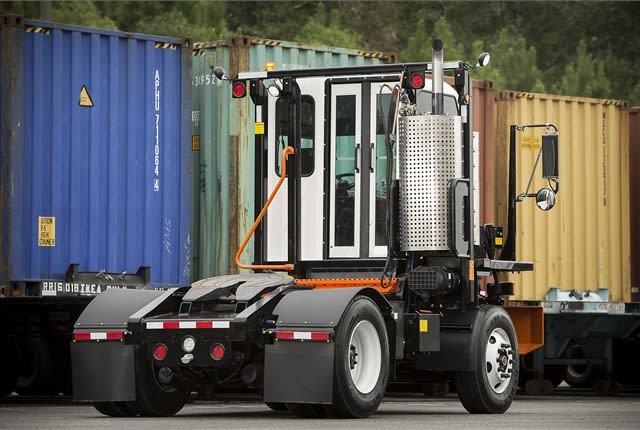
TICO says its fleet-service people developed Pro-Spotter tractor's specs after seeing what works and what doesn't in rough port operations.Photo: TICO Manufacturing
Cabs are fiberglass composite with high-visibility windows and a wide rear passage with air-operated doors through which drivers can move to hook and unhook lines when they’re working with standard container chassis. Customers can change many specifications to suit individual ops, Cannon said.
TICO also makes a road-going Pro-Spotter whose components are EPA-, NHTSA- and DOT-legal. It can run up to 45 mph pulling container chassis among a customer’s factories and warehouses that are separated but linked by city streets.
The fact that more loaded containers come into the Port of Charleston than leave is due to the import-export situation, any economist will tell you. The same is true of other ports in the U.S. Cheap but generally decent-quality products swarm onshore, the result of free trade, the global market, and consumers who almost always buy on price.
While on the bus we passed large stacks of boxes that were empty because exports from America aren’t as numerous as imports. Eisenhauer, the port spokesman, remarked, “There you see a graphic illustration of our balance of trade deficit.”
On the other hand, every week thousands of BMW cars and SUVs are exported from Charleston via RO-RO ships. Bavarian Motor Works builds them at Greer, South Carolina, about 220 miles away. Each night, 800 to 900 come in by train -- an unusally short rail move but efficient in this case. Greer is the German auto maker's largest factory anywhere. So, hurray for "Made in the USA."
More Blog Posts
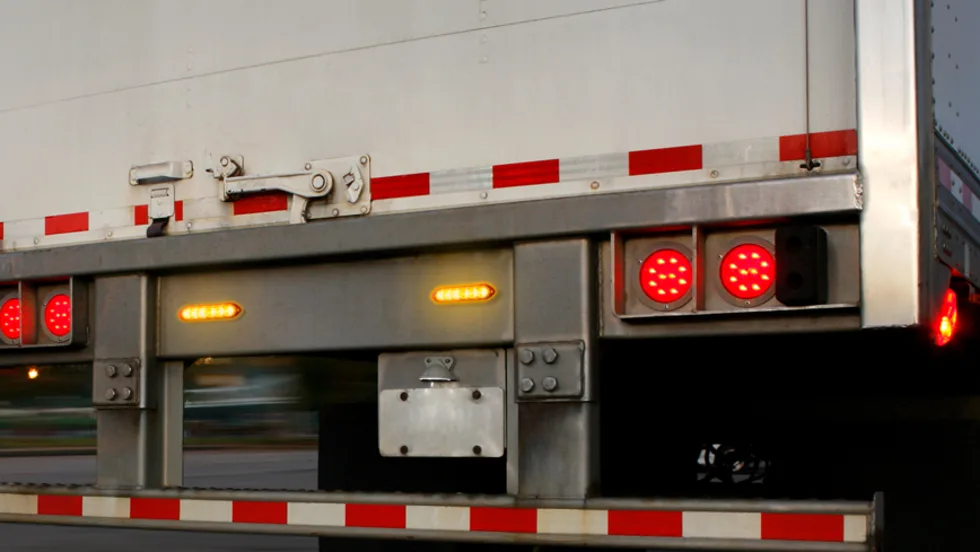
Pulsing Back-of-Trailer Lamps Aim to Prevent Crashes
Can the addition of a pulsing brake lamp on the back of a trailer prevent rear-end collisions? FMCSA seems to think so, if its exemptions are any indication.
Read More →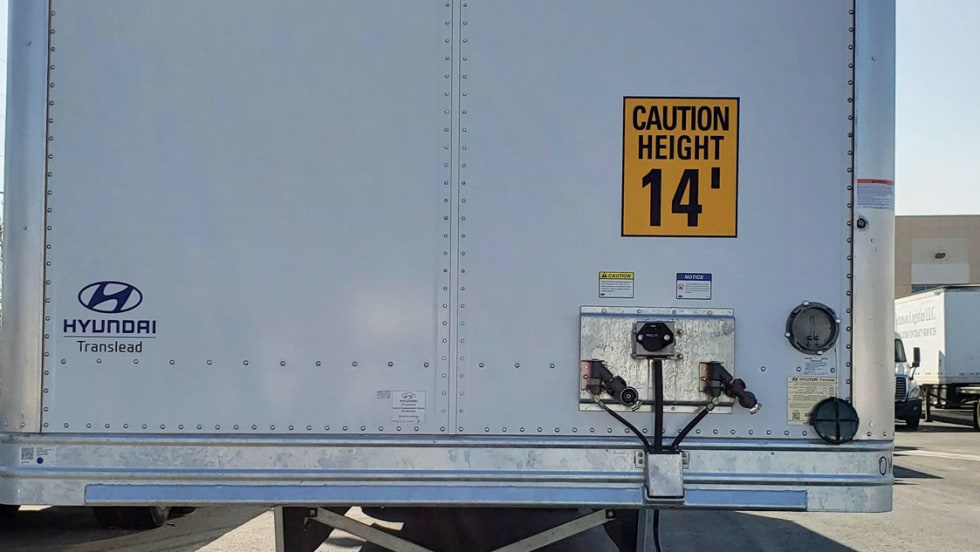
Designing a 14-Foot Trailer
Trailers are 13 feet, 6 inches high, right? Not for Hub Group, which developed a special 14-foot-high trailer spec for a dedicated customer based in California. Learn more in the Trailer Talk blog.
Read More →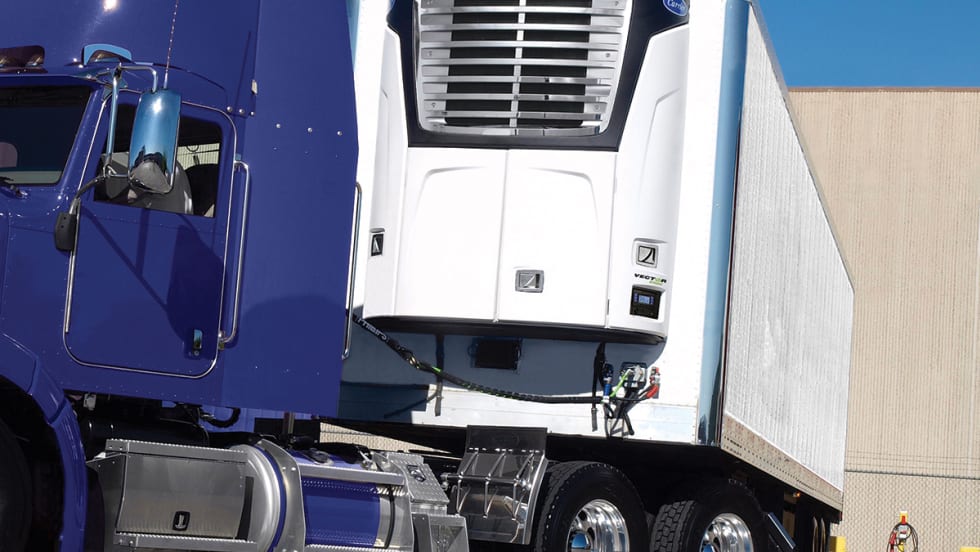
CARB Comes for Reefer Trailers
A new round of emissions control regulations decreed by the California Air Resource Board will begin affecting refrigerated trailer and TRU design and operations next year.
Read More →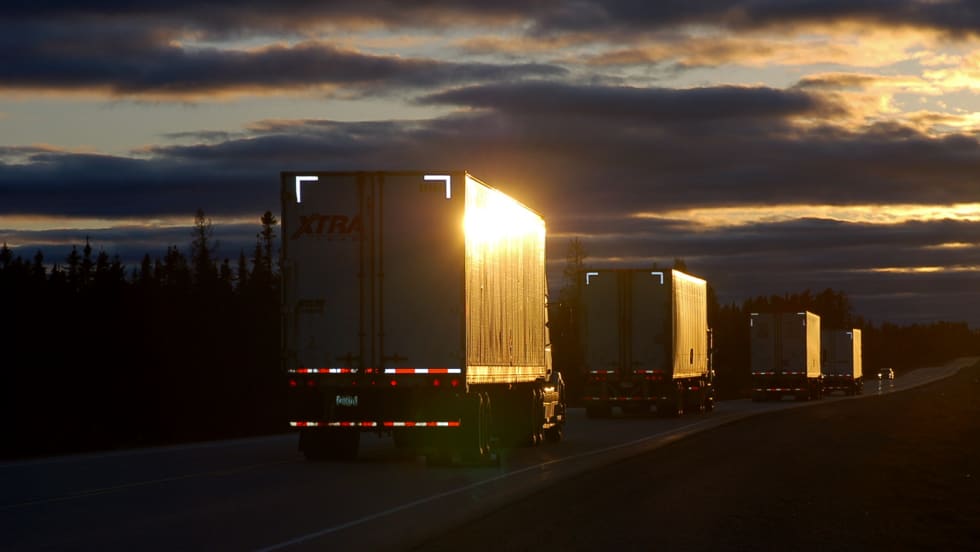
5 Ways Data Analysis Maximizes the Value of Trailer Telematics
Are you getting the most out of your trailer telematics investment?
Read More →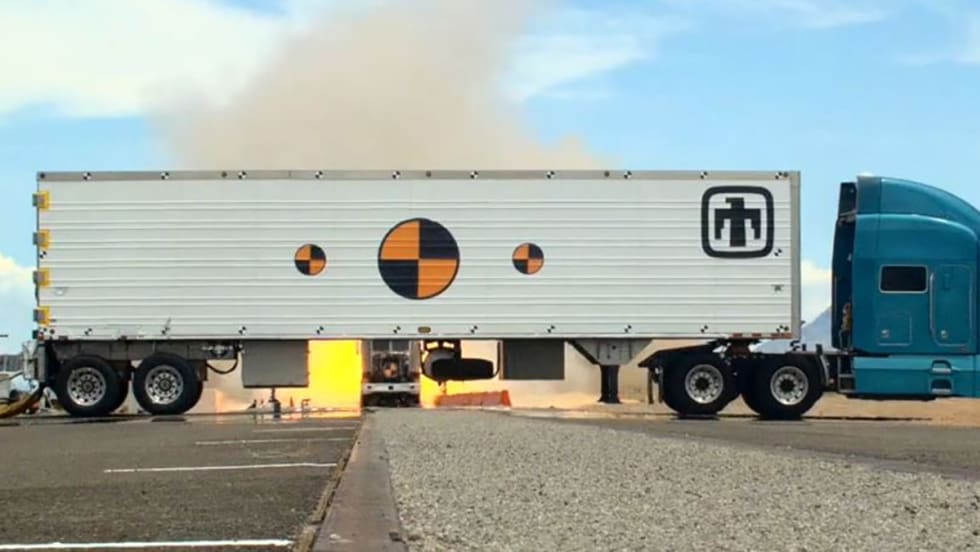
Can You Guess What's in That Trailer?
You don’t always know what’s in the trailers that pass you on the road. But some of those trailers are carrying something a little more dangerous that frozen food or new bedding…like, maybe, a nuclear weapon. But this isn’t an ordinary trailer; this is a trailer specifically made to not only carry this type of payload, but protect it at all costs.
Read More →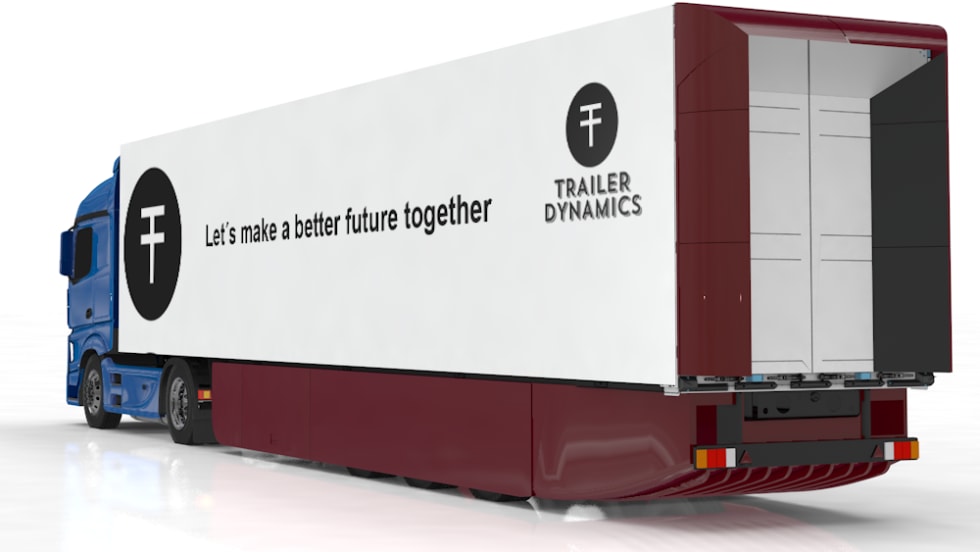
How Trailers Are Harnessing 'Free' Energy
Can trailers play a more active role in sustainable transport beyond aerodynamic add-ons or low-rolling-resistance tires? Some companies think so.
Read More →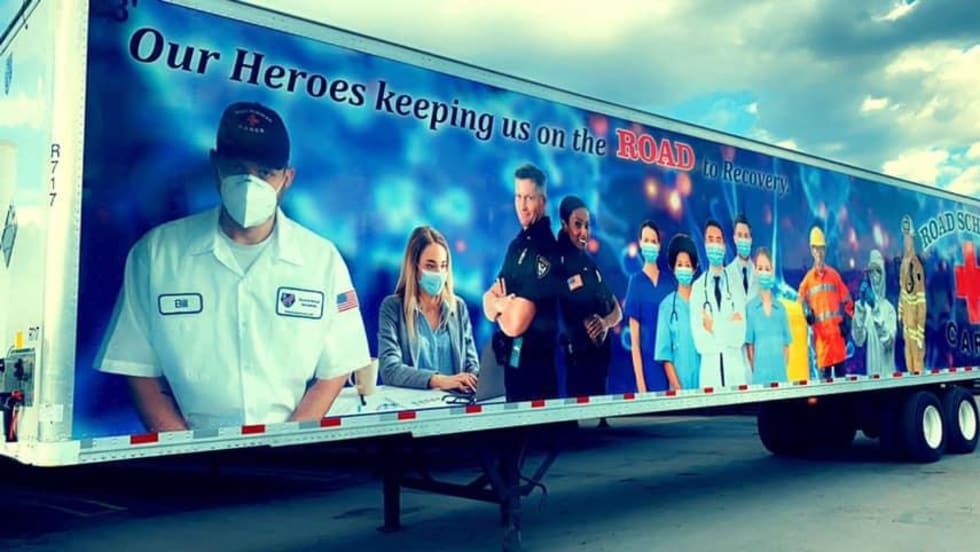
Wrapping a Trailer for COVID’s Everyday Heroes
“We don’t only deliver freight. We deliver awareness.” That’s what Jim Barrett, president and CEO of Road Scholar Transport, likes to say about the Dunmore, Pennsylvania-based carrier’s “awareness fleet.” Its latest trailer wrap honors the everyday heroes of the pandemic.
Read More →
How a Tanker Fleet is Using Unorthodox Trailer Lighting to Fight Rear-End Collisions
Groendyke Transport watched the number of rear-end collisions with its trailers rise steadily until it tried an unorthodox and then unapproved method of alerting following drivers that its trucks were applying brakes and slowing down.
Read More →
The Role Trailers are Playing in COVID-19 Funerals
In places such as New York City and Detroit, overwhelmed hospitals and mortuaries are using refrigerated trailers to store the bodies of people killed by COVID-19.
Read More →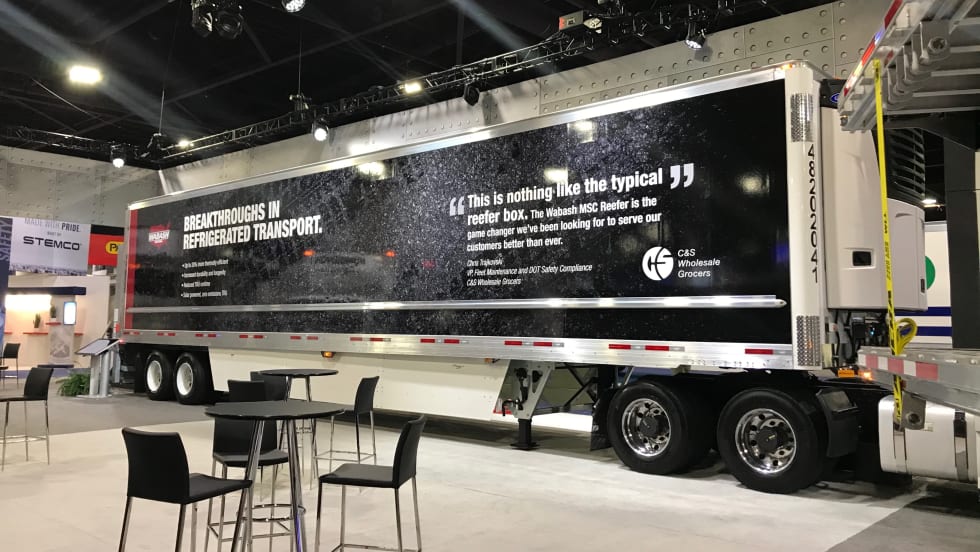
Reefer Trailer Aims to Help Reach Zero Emissions
Wabash National is partnering with C&S Wholesale Grocers to test a new type of zero-emissions refrigerated trailer.
Read More →