





Related: Five Years to Autonomous?
An Automated Future, First, Bendix Says
A future filled with fully autonomous cars and trucks remains a long way away, Bendix leaders said in a sit-down at the Mid-America Trucking Show. Jack Roberts has more in his Truck Tech blog.
March 22, 2017
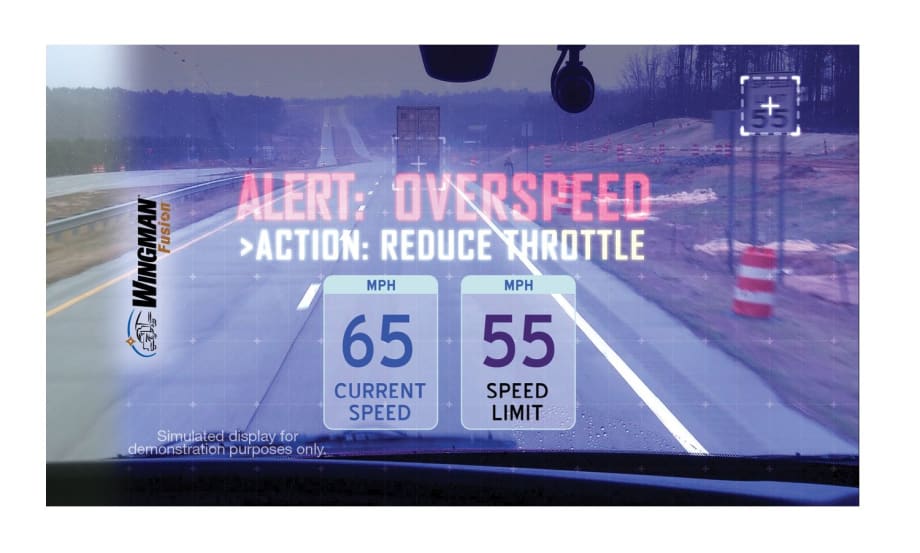
Bendix says the driver will remain key in increasingly automated vehicle systems for a long time to come. Photo: Bendix
4 min to read

Bendix says the driver will remain key in increasingly automated vehicle systems for a long time to come.Photo: Bendix
LOUISVILLE, KY -- Fifteen years ago, Bendix executives and engineers sat down to hash out the company's electronics strategy for foreseeable future. At the time, the focus was on the just-emerging field of electronic safety systems, based largely on Bendix's still-new anti-lock braking systems and brand-new anti-rollover technology.
"We had no idea where that path was going to lead us," company Bendix chairman and executive board member Joe McAleese says with a laugh.
I'm sitting at the Mid-America Trucking Show with McAleese and Fred Andersky, whose job title names him as Bendix's director, customer solutions and government relations. But in reality, he's the company's Future Tech Wizard, playing an integral role in the development of Bendix's current vehicle technology while trying to peer into the crystal ball and figure out how the next phases of automotive tech — namely autonomous vehicles — will play out.
And the most interesting aspect of all this is that, increasingly, it's the integration of electronic vehicle systems like Bendix's Wingman active cruise/safety system that finds itself at the core of autonomous vehicle development efforts. "When we first put our electronics platform together 15 years ago," McAleese says now, we knew we would build new functions onto them as they went forward. And we knew there would be some degree of integration. But, even so, we never envisioned anything on the scale we're seeing today."
All that said, you'd think Bendix would be chomping at the bit to race forward into a bright, new, autonomous future. But the truth is Bendix is one of the more conservative technology companies today when it comes to autonomous vehicle prognostication. They decline to put an actual date on when we'll see fully-autonomous, Level 5 cars and trucks in everyday use. But both McAleese and Andersky say it will be a long time before that happens.

Bendix's Fred Andersky talks to reporters at the Mid-America Trucking Show.Photo: Deborah Lockridge
"We're really looking at this more in terms of 'automated' systems, as opposed to 'autonomous' systems," McAleese says. "For one thing, we see the technology curve here being more evolutionary than revolutionary. The road to autonomous vehicles will be a series of gradual technological steps consisting of automated systems designed to help drivers be safer and fleets be more efficient. And, of course, that just so happens to be right where Bendix's expertise and experience lie."
For example, most people don't think of air disc truck brakes as an autonomous technology enabler. But McAleese and Andersky both believe that truck platooning will be one of the earliest applications of autonomous technology that will be visible both to the trucking industry and the public at large. "And air disc brakes will be extremely important for trucks in platooning operations," Andersky says. "They can reduce a fully loaded truck's stopping distance by as much as 50 feet, compared to drum brakes. And that additional stopping power will be critical in platooning operations given the reduced following distances that will be in play."
Andersky says today's electronic vehicle safety systems are really the foundation for autonomous tech. "Essentially, autonomous vehicle systems today are really fully integrated safety systems," he says. "But nobody is going to pay $40,000 or $50,000 for an adaptive cruise control system with steering assist."
That's why Andersky thinks autonomous vehicle development will be a deliberate, calculated path, with several major developmental hurdles along the way. "The first thing we need to see are economies of scale come into play to drive the acquisition costs of this technology down," he says. "And that's why I believe the initial autonomous push will come from the passenger car side of the business. Because they have the numbers required to make that a reality."
Next, Andersky says the development of effective and reliable vehicle-to-vehicle and vehicle-to-infrastructure systems will be key to making autonomous vehicles a viable transportation tool. "When you look at some of the prototype autonomous vehicles today, they are preloaded with GPS information for a specific area of operations. So they're great for driving around small towns in Silicon Valley — but not so great when you want to load the car up and go visit Grandma in Colorado."
For the immediate future, Andersky thinks faster communication between various electronic systems on trucks, and the advent of more powerful, more integrated safety systems will be a series of automated steps that drivers and fleets alike will approve of. "The driver is still key in all of these systems," he stresses. "And that will be a reality for a long time to come."
Subscribe to Our Newsletter
More Blog Posts

That Time Mack Trucks Threw Me a Birthday Party
Sometimes the best birthdays are the ones you never planned. Mine happened courtesy of one of America's oldest truck manufacturers, and it reminded me why I still love this industry after more than three decades.
Read More →
Trucking Should Prepare for Long Siege of High Fuel Prices
Many in trucking are treating today's fuel-price surge as a temporary disruption. History suggests they may be making a costly mistake.
Read More →
30 Days on the Road: April 2026
There was a glut of good news for the North American trucking industry. HDT's Jack Roberts takes a look back at our major stories from the month.
Read More →
30 Days on the Road: HDT's Monthly News Roundup for March 2026
HDT's Monthly News Roundup takes a look at the major North American trucking industry news stories from March, 2026.
Read More →
The Major Autonomous News No One is Talking About
Both Aurora Innovation and PlusAI have made under-the-radar announcements that signal a massive game-changer for trucking is coming soon.
Read More →
HDT's Monthly News Roundup: February 2026
February was dreary and dull -- as usual. But the North American trucking industry finally showed some signs of life. But how long that will last is anybody's guess.
Read More →
Like it or Not, The New Year is Here!
HDT's Monthly Trucking Newsletter looks back on the top stories from January, 2026.
Read More →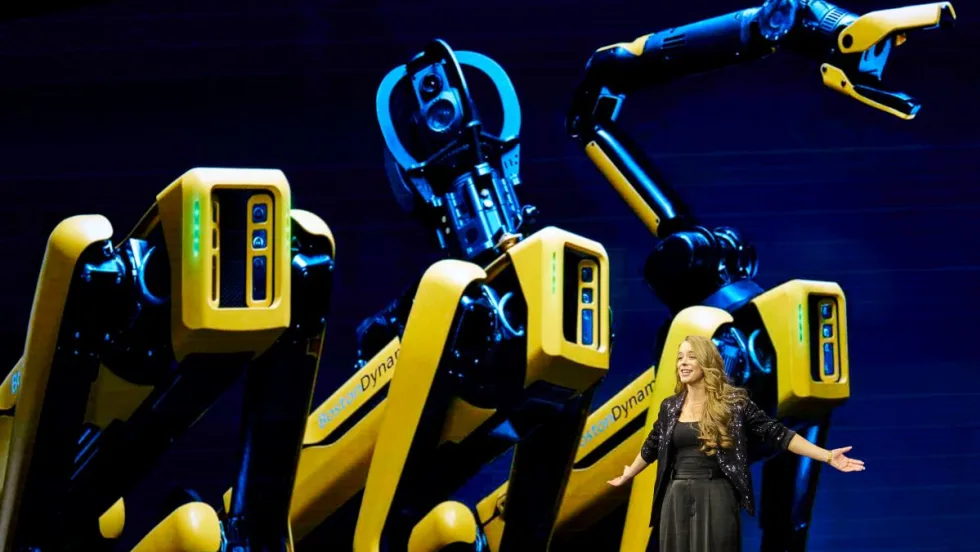
The Robots are Here
After a bruising year for trucking, CES 2026 felt subdued. Until it suddenly offered a glimpse of trucking's next disruption and reminded everyone that technology never waits for the next freight cycle.
Read More →
Robots and Road Rage
Computers never get angry. And that's a good thing on crowded stretch of interstate.
Read More →
For the Love of Old Trucks
Old trucks generally get ignored in classic car circles. Maybe that's changing.
Read More →