




Will There Be A Christmas This Year?
Industry experts look to the peak freight season – and beyond.
For as long as many can remember, Christmas for most truckers came in October. That's when retail stocking for holiday shoppers caused freight demand to climb sharply before making an equally steep drop in November.
In the last few years, that peak has been less pronounced. Some say it's a long-term change, due mainly to better inventory management and more Internet purchases. Others say the economy is what determines the seasonal curve: When the economy is strong, so is the traditional peak season.
In August, John Larkin, managing director and head of transportation capital markets research at Stifel, Nicolaus & Co., hosted a conference call with six industry experts to discuss this year's peak season and the outlook in general. Following are some highlights from that conference call.
ERIC STARKS, PRESIDENT, FTR ASSOCIATES.
FTR is a Nashville, Ind.-based econometrics firm that specializes in freight transportation forecasting.
There will be a peak shipping season, but it won't be a strong season. U.S. consumers took a breather in the second quarter. The credit crunch – brought on by subprime mortgage problems – could affect consumer spending through the end of 2007. Consumer spending may slow, but it won't stop.
Truck tonnage is off due to the weak housing and automotive sectors. First-quarter North American intermodal rail movements were down 1.5 percent from the same period a year ago, the first year-over-year decline since first quarter 2002.
A third-quarter seasonal boost is expected, but intermodal is expected to be up only 0.2 percent, year-over-year. Roughly 60 percent of intermodal is international equipment. Exports are showing healthy growth, while import shipments are showing slow or negative growth in some cases.
FTR expects truck freight to be sluggish over the next few quarters due mainly to the struggling housing and automotive markets. The weak freight environment, combined with an overbuy of trucks last year and early this year, means there will be plenty of equipment in the system to meet peak-season demands. Therefore, shippers will continue to push back on rate increases.
Some of the equipment purchases (during the EPA 2007 pre-buy) were due to carrier optimism. Carriers were anticipating that the economy would improve and wanted to make sure they had enough equipment. These carriers preferred the old equipment over the new, untested engines. FTR numbers suggest overcapacity of about 120,000 trucks.
The economy will dictate how many pieces of equipment are purchased. If the freight markets turn more positive by the middle of 2008, then 2009 could be a very good year.
TOM FINKBINER, CHAIRMAN, UNIVERSITY OF DENVER'S INTERMODAL INSTITUTE.
There are several "crunch points" in rail intermodal: engineers, locomotives, cars and containers. In June or July, intermodal carriers decide how much equipment they'll take out of storage for use during the peak season. This year's constraint will likely be containers and cars, which could cause some systemic service problems.
There's an interesting situation developing with regards to international containers. Earlier this year, Maersk eliminated the transpacific land bridge traffic from its business. Instead of freight traveling from the Pacific Rim to the U.S. West Coast, freight will go through the Suez Canal to the U.S. East Coast. Any freight terminating within 250 miles of East Coast ports will move inland by truck. If freight demand is strong, the international freight could be trucked to Chicago, St. Louis or Dallas. That will end up costing the rail system 250,000 to 350,000 loads.
The number of electronics containers has decreased, even though the dollar value of the electronics freight has not. The reason is electronics consumer products such as televisions, laptops, iPods, etc., continue to get smaller.
NOËL PERRY, CHIEF PLANNER AND CORPORATE ECONOMIST, SCHNEIDER NATIONAL.
Schneider is the nation's largest privately held truckload carrier. The company also has large intermodal, brokerage and logistics operations.
Prospects for freight growth in this country over the next 10 years are not very good. Reasons for the stagnant outlook include: (1) the U.S. economy continues to shift from producing goods to services, (2) electronics products are getting smaller, (3) packaging is being scaled down, and (4) more imports mean fewer domestic freight moves at intermediate points in the supply chain.
Unless economic growth exceeds 3.5 percent, freight tends to not grow very rapidly. The consensus forecast is about 1.7 percent GDP growth for 2007 and 2.5 percent for 2008, which means freight growth may be flat or negative through next year.
Long-term, the seasonal freight surge is spreading out over a longer period of time and being reduced, but that trend has practically no measurable impact year-to-year. The big swing in the surge levels over the last few years is almost entirely driven by economics, not by changes in the supply chain. Last year, the economy tanked in the fourth quarter and offset what is a normal seasonal move. In contrast, the economy accelerated late in 2003, 2004 and 2005.
Despite the slow economy, there's no indication that there isn't going to be a Christmas this year. If the economy doesn't change in fourth quarter, we should get something like a normal seasonal uptick, not the spectacular one we had in 2004, but something like 2003 or 2002, or perhaps the late 1990s. But some pick-up in the fourth quarter won't help the first quarter of next year because it's seasonal.
Truck retail sales are falling more dramatically than expected, which means capacity utilization in the industry will begin to recover sometime this year. Therefore, pricing should make some modest gains over the next six months.
Overcapacity has been estimated at 170,000-200,000 units, but over half of that is the result of carrier optimism, not the EPA 2007 pre-buy. An unused tractor is a lot more expensive than the incremental expense of the new EPA 2007 technology, so if the carriers hadn't had good years in 2004-2006, there wouldn't have been a pre-buy in 2006. Unless the mood shifts from conservative to optimistic, there won't be a significant pre-buy in 2009. The pressure to reduce capacity is much greater than the pressure to avoid whatever happens in 2010, and there isn't enough time between now and then to get capacity down to the levels everyone wants.
JOE COWAN, PRESIDENT, COWAN SYSTEMS LLC.
Baltimore-based Cowan Systems is a regional truckload carrier operating primarily in the mid-Atlantic.
Freight volume is flat and rate pressures continue, although much of Cowan's business is dedicated, which offers some protection. The retail industry has been "very disappointing." Competition in Canada is particularly fierce. Operating costs have gone up at least 1.5 to 2 percent, driving up the company's operating ratio about 1.5 percent.
Drivers are job hopping, trying to find the best deal or the most miles, but there are plenty of drivers available right now.
MIKE BUNNELL, SENIOR VICE PRESIDENT, CORPORATE SALES AND MARKETING, C.R. ENGLAND.
The Salt Lake City-based carrier is one of the largest refrigerated carriers in the nation.
C.R. England mainly hauls food and food-related products and is therefore protected from some of the market volatility. Its reload percent (percent of trucks unloaded and reloaded on the same day) is better this year than last year. Loads per truck are up 16 percent, and the company is running more trucks than it did last year.
The seasonal peak won't be what it was in 2005, but it will be better than last year. Shippers are doing a much better job of managing their inventories, thanks primarily to Wal-Mart, so we'll probably never again see seasonal spikes like we've seen in the past.
The driver situation has improved but is still tough and will be for many years to come. Fuel prices remain high. Carriers, in general, are not growing. In the food transportation market, there appears to be a need for more capacity, although that additional need isn't large.
GEORGE PAYNE, CEO, INTERSTATE DISTRIBUTOR CO.
Interstate is a Tacoma, Wash.-based transportation provider. About 60 percent of its business is linehaul trucking, 20 percent is dedicated carriage, and the rest is intermodal and brokerage.
The peak season is focused on the retail sector, where demand can spike as much as 40 percent in the third and fourth quarters. Last year's peak season was a non-event for the company and there's no indication it will see a big spike this year. Instead, Payne expects "a few little blips" of a couple weeks each.
Wal-Mart and Home Depot reported lower-than-expected earnings due to lower consumer spending; but other retailers, such as Nordstrom and Costco, continue to post strong results because of their merchandising abilities. Other retail sectors, such as specialty retailers in the arts and crafts niche, are experiencing strong sales.
One significant development over the past five to 10 years is the ability to develop and maintain reliable supply chains. Several years ago, there was probably an element of safety stock brought into the inventory for the peak season. Now, orders are coming in a lot more evenly.
One factor in the 2007 EPA pre-buy was the "fear factor" from the 2002 emissions technology that was characterized by a "fairly significant" decrease in tractor reliability. There wasn't adequate time for full testing and development and the result was service failures. That mindset will come into play again in 2009.
More Fleet Management

What Geotab's New AI Connector Means for Fleets
Fleets can now ask their usual AI assistants questions about maintenance, safety, fuel use, and vehicle performance, using their live Geotab data, and take action on the answers without leaving their preferred AI tool.
Read More →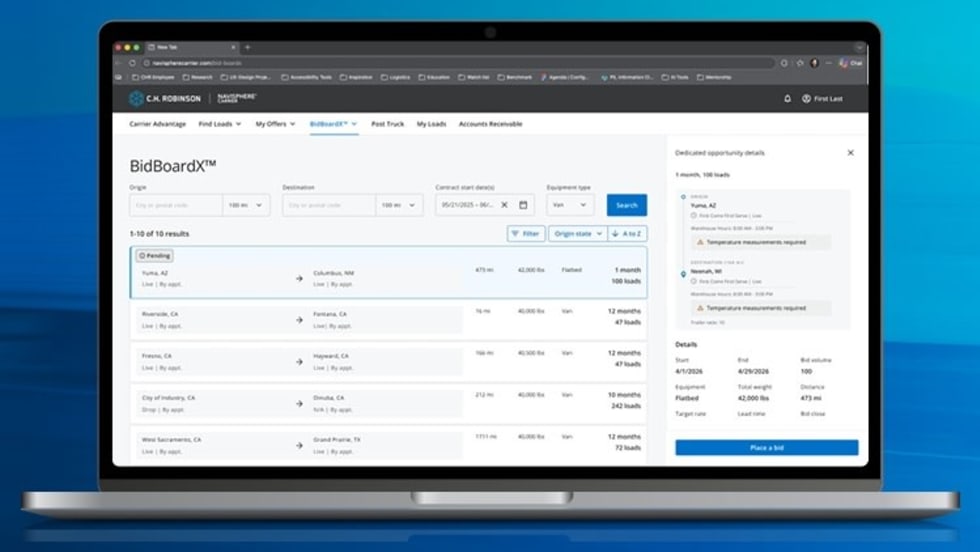
New C.H. Robinson Tool Opens Door to More Predictable Freight
BidBoardX lets carriers search, bid on, and secure committed freight opportunities through a single digital marketplace.
Read More →
New York City's Microhub Project is Delivering Results
Trucking, last-mile delivery companies, and environmental advocates like what they are seeing so far with New York's microhub program.
Read More →

Why Truck Detention Keeps Costing Fleets Time and Money
A 2024 ATRI study found detention affects nearly 40% of truckload stops and costs the industry more than $15 billion annually. Despite the toll on drivers, fleets, and supply chains, the problem remains stubbornly persistent.
Read More →
Time is Running Out to Apply for Exclusive HDT Event
Heavy Duty Trucking Exchange brings fleet managers and suppliers together for the deeper conversations that lead to ideas, partnerships, and solutions. Time is running out to apply for the September event.
Read More →
Amazon Launches Less-Than-Truckload Freight Offering for All Businesses
This launch is the latest addition to Amazon Supply Chain Services, a portfolio of supply chain capabilities from Amazon, including freight, distribution, fulfillment, and parcel shipping.
Read More →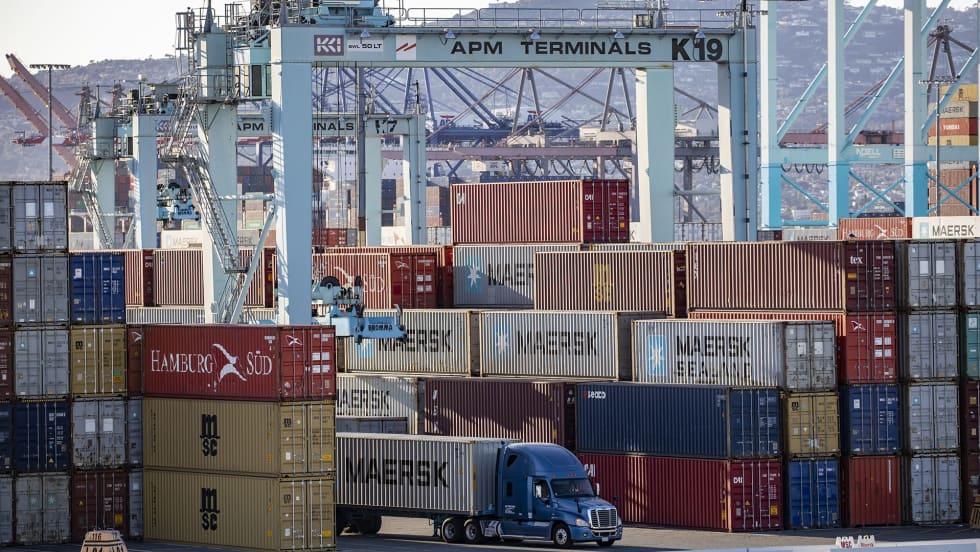
Import Cargo Volume to See Year-Over-Year Gain Again in June, Then Remain Below 2025 Levels Into Fall
After July, the report predicts a weakening in import volume as consumer uncertainty remains high and the impact of increasing inflation takes its toll.
Read More →
AUCTION OF EQUITY INTEREST IN HEAVY HAUL TRUCKING COMPANY!!
Mark your calendar: June 30, 2026 (10:00 a.m. PDT). A 37.5% ownership interest in MagnaTrans, LLC, a California limited liability company doing business as Magna Transportation Group, will be sold in an in-person and online auction to the highest bidder or bidders under Article 9 of the Uniform Commercial Code. The Rancho Cucamonga-based heavy haul and over-dimensional trucking company operates across California, Oregon, and Arizona.
Read More →
Volvo Trucks Adds Unattended Over-the-Air Software Update Capabilities
The latest evolution of Volvo’s over-the-air update technology allows software updates to run while trucks are parked, helping fleets keep vehicles current without disrupting operations.
Read More →
How Waste Connections is Using Data, Telematics, and AI
How do you manage and maintain more than 18,000 connected trucks? Data. Lots of it.
Read More →