




Why You Should Consider Wheel Balancing
People will tell you that wheel balancing isn't necessary these days. Going back 10 or 20 years, new tires often needed a small amount of weight to balance out the irregularities in the old production process. With today's more exacting manufacturing standards, irregularities are the exception. But that doesn't mean you can't benefit from wheel balancing.

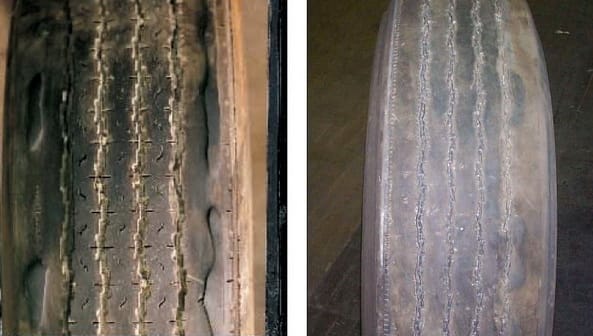
Tire wear associated with balance problems often appears as cupped channels along the tread face of the tire. (Photo: TMC)

People will tell you that wheel balancing isn't necessary these days. Going back 10 or 20 years, new tires often needed a small amount of weight to balance out the irregularities in the old production process. With today's more exacting manufacturing standards, irregularities are the exception. Overall, new premium-brand tires are much better balanced than in the past.
So, can we forget wheel balancing? It wouldn't be the end of the world if you did, but it will probably cost you in tread life and driver complaints. You see, the tire is just one part of a system that includes the tire, the wheel, the hub and the brake drum. They all rotate around the spindle at about 500 rpm at highway speed. Any one of those components could off balance.
Achieving good wheel balance -- not just tire balance -- starts with proper mounting. The tire must be concentrically mounted on the wheel, says Guy Walenga, director of engineering for commercial products and technologies, Bridgestone Americas.
"To get it right the first time, you need to lubricate the bead seat area on both sides of the tire as well both flanges on the wheel," he says. "Contrary to popular belief, lubricating the bead seat and tire bead is not to make it easier to slide the tire over the rim flange, it's to help those surfaces seat properly, and the help the tire bead slip up onto the 15-degree bead seat of the wheel. As the inflation pressure increases, the tire is pushed into the proper position on the wheel by the equal force applied all around the tire by the increasing pressure."
With the tire partially inflated, the installer should check the guide ring located near the bead to ensure equal spacing between the ring and the wheel flange the full 360 degrees around the tire.
"This is visual check," Walenga says. "You can see if the space between the guide ring and the flange are different anywhere around the tire. If it is, you must deflate the tire and try again."
By ensuring the wheel is concentrically mounted, you'll eliminate at least one cause of irregular tire wear -- radial runout, or an out-of-round condition -- and one suspect in your wheel balance challenges.
At this point, dynamic balancing is useful -- at least as a troubleshooting tool. Once the tire and wheel are dynamically balanced, they can be dismissed as causes of vibration.
If dynamic balancing is not to your taste, then some internal or external balancing tools can help.[PAGEBREAK]

Powders or liquids inside the tire can produce a dynamically balanced condition when the wheel is in motion, Walenga says. "But you can't do both.
"Once the compound is in the tire, the dynamic balancing machine will try to compensate for the weight of that material, which is always moving inside the tire. You'll never get a proper balance on a machine with something in the tire," he cautions.
Powders, Liquids & Rings
These tools have some advantages over traditional tire weights, says Peggy Fisher, tire guru and president of TireStamp.
"One of the advantages to these alternate forms of balancing is that they will adapt to the tire as it changes shape with age," she says. "As rubber wears off the tire, especially if you have irregular wear from some other source, the balancing compounds will compensate for the missing rubber by moving around within the tire. Weights can't do that."
She also notes that throwing a bag of balancing compound into the tire is less labor intensive than hoisting the tire and wheel onto a balancing machine, but is one a demonstrably better way of balancing a tire? "Both achieve balance well," she says, "but there are other things to consider."
With powder or liquids, you can't always use them over and over again. Some liquids require special disposal. Some are notorious for rusting steel wheels. Some powders can clog valve stems, and if the powder comes in contact with the bead seat area, it can prevent the tire from seating properly.
"Also," she warns, "some powdered materials can clump up and turn into basically rocks if they come into contact with moisture -- which is pretty common in most truckstop tire fill systems. Having those rocks flying around inside the tire can wreck liner."
Fisher says she has also seen good results with the external balancing rings, but she cautions that if the mounting surface of the ring is not hardened steel, they can cause problems with wheel fastener torqueing.
"Softer metals can compress under torque, which can cause fasteners to loosen over time," she cautions. "Check with the manufacturer to ensure they are using hardened material, or at the very least, make a habit of checking your wheel fastener torque more frequently."
Balancing the System
So far, we have only discussed the tire and wheel. On the truck in real life, you have the hub and brake drum to contend with, each of which could be out of balance. Brake drums, for example, often have weights welded to the drum or cores drilled out to achieve a static balance. But if the weights fly off or the cores fill with dirt, balance comes into question, Walenga says.
"The rings and balancing compounds are an attempt to continuously address balance as the tire rolls, and they'll work in this situation. But a properly balanced tire and wheel assembly bolted onto a properly balanced hub and drum is just as good," he says."
Balancing is usually unnecessary with today's premium tire because of the consistency in manufacturing, but Walenga notes that it's an easy way to tweak or optimize the ride.
"I'd spend my time and money optimizing steer tires because that's where a driver is most likely to feel and see a problem," he says.
And Fisher believes that balancing is cheap insurance against premature tire wear. "In most cases," she says, "if a tire is mounted correctly and balanced it should run okay unless bad things happen to it."
More Drivers

Trump Administration Looks to Put More Veterans Behind the Wheel
The Freedom Haulers program pulls together existing and expanded programs at several federal agencies to recruit veterans to drive commercial heavy-duty trucks and cut the red tape for them to get a CDL, training, and employment.
Read More →
Putting Mack’s Command Steer to the Test
A test drive of Mack’s Command Steer active steering system evaluates how it can make truck driving easier and less tiring.
Read More →
Competition Heating Up for Truck Drivers
New report reveals rising driver hiring costs, the return of sign-on bonuses, growing AI advantages, and the operational factors shaping driver retention.
Read More →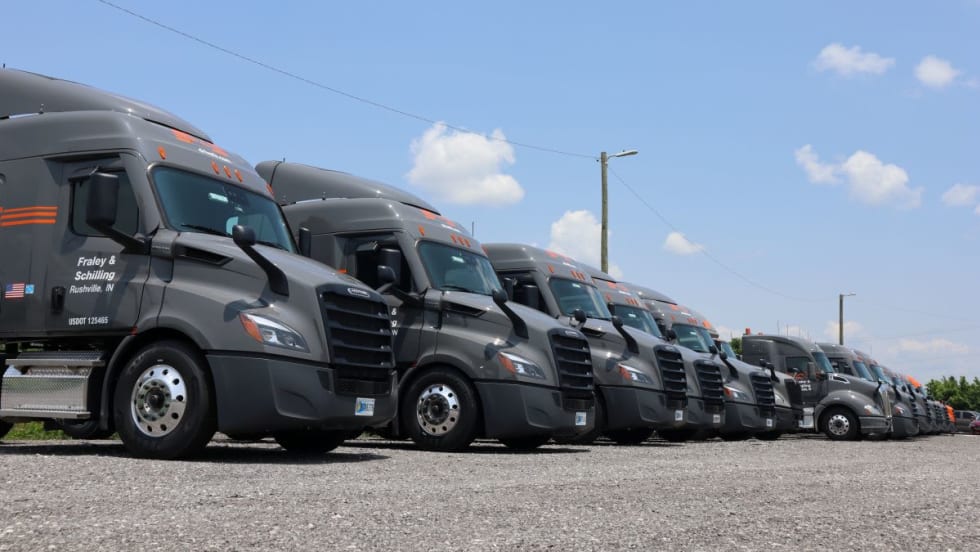
How Fraley & Schilling Improved Logbook Compliance by Over 50%
Fraley & Schilling needed a way to close a compliance workflow gap in its ELD system without adding more work from driver training, reminders, and back-office follow-ups. It found the answer in a custom driver app.
Read More →
Volvo Goes Gaming
Volvo has roared into American Truck Simulator with two new flagship trucks.
Read More →
What the Best Fleets to Drive For Teach About Driver Retention
Survey fatigue, AI-powered routing, owner-operator expectations, and the decline of social media all emerged as themes from this year's Best Fleets to Drive For program.
Read More →
Driver Retention Lessons From the Best Fleets to Drive For
What separates trucking's best workplaces from the rest? Jane Jazrawy shares the biggest lessons from this year's Best Fleets to Drive For program on driver retention, communication, AI, and workforce trends on the HDT Talks Trucking podcast.
Read More →
Farewell, CDL: Why I'm Giving Up My Commercial Driver's License
After more than 20 years as a CDL holder, HDT Executive Editor Jack Roberts is letting his commercial license expire. Not because he wants to — but because trucking's nuclear verdict crisis has made the risks of public-road test drives too great for editors, manufacturers, and everyone involved.
Read More →
How Top Trucking Fleets Improve Driver Retention [Video]
What do healthy snacks, optimized routing, and just picking up the phone have in common? They're all strategies the Best Fleets to Drive For are using to retain truck drivers.
Read More →
Trucker Path Adds Verisk CargoNet Theft Data to Navigation Platform
Trucker Path’s new cargo theft risk overlays give drivers and fleets visibility into high-risk areas, stolen commodity trends, and theft hotspots.
Read More →