




Trucks-as-a-Service Model to Help Drive EV Adoption by Fleets
The Trucks-as-a-Service (TaaS) subscription-based model aims to make it easier and faster for fleets to convert to electric trucks.

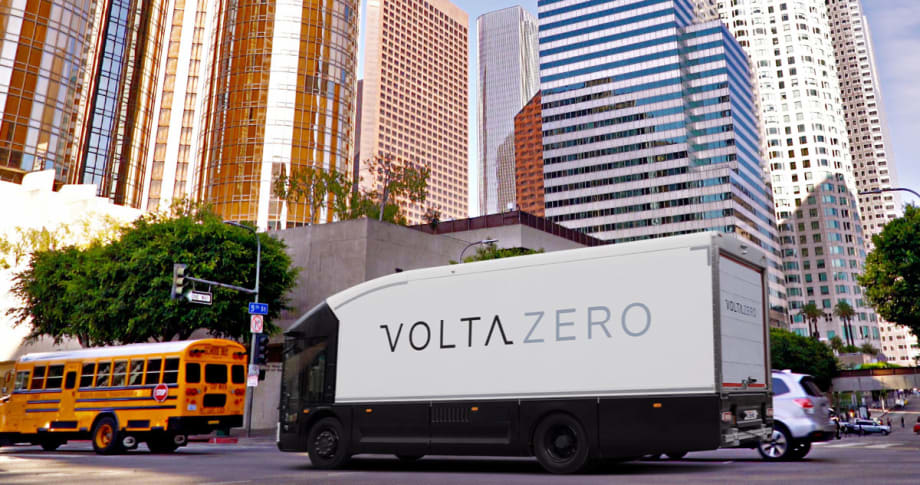
Truck-as-a-Service is a major selling point for Swedish-based EV startup Volta Trucks.
Photo: Volta Trucks
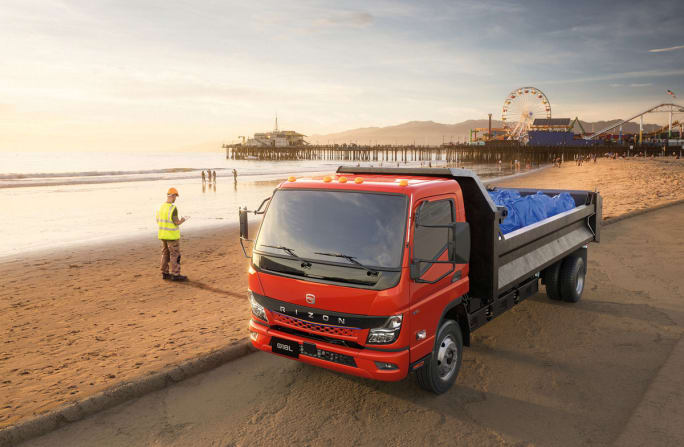
New electric-truck brand Rizon’s identity is “rooted in the brand’s commitment to form a partnership with business owners as they shift to zero-emission transportation,” according to Daimler Truck.
Photo: Daimler Truck
Of all the ways to acquire new trucks, from buying them outright to financing them to signing up for full-service leasing, the buzziest buzzword in this context is a clunky, multi-hyphenated phrase: Trucks-as-a-Service (TaaS).
While TaaS is marketing-speak, it does accurately describe a business model that aims to make it easier and faster for fleets to tap into electric trucks and all it takes to acquire, charge, and run them (including maintenance in some cases) via a single provider on a monthly “subscription” fee basis.
The moniker is derived from the Software-as-a-Service model that erupted a few years ago to make it simpler to keep business software updated for customers while enabling providers to build longer-term relationships with those users. It could be argued that a more accurate rendering of what TaaS and SaaS stand for would substitute “service” with “subscription.”
Then there’s “servitization,” a broader term that describes both these business models. It is defined as “selling an ‘outcome as a service’’ as opposed to making a one-off sale,” according to Richard Howells, vice president of thought leadership, ERP, finance and supply chain for SAP, a global provider of enterprise application software.
In Howells’ view, a servitization model charges customers “a fixed cost per-unit of service consumed, while the ownership of the system remains with the technology provider, who is also responsible for all operational costs.”
To achieve this, a supplier develops a customized, ongoing arrangement based on a monthly transaction fee that’s determined by usage, uptime, utilization, or other factors. Judging by recent pronouncements of electric vehicle makers and truck lessors, providing Trucks-as-a-Service packaged solutions will streamline the adoption of EVs by truck fleets in an efficient and scalable manner.
“Trucks-as-a-Service is a model that was developed to meet the demand for electric vehicles rated from Class 1 to 6,” says Hadley Benton, executive vice president of business development for management-services provider Fleet Advantage.
“This model is about one payment that includes everything,” he explains. “It’s similar to a fair-market-value lease structure in that it includes the truck, the charger, the [required] infrastructure and, in some cases, the electricity, all within a single monthly payment. It’s now gaining some traction with fleets running Class 8 tractors. More lessors are starting to offer this type of lease program, and more will probably follow suit as EV adoption increases.”
Of course, truck leasing firms are no strangers to bundling services to best meet the demands of large swaths of customers. And, historically, lessors are willing to live on the bleeding edge of technology to enable their customers to adopt new technology quickly and at lower risk. For example, the nation’s top truck lessors were among the first to field an array of advanced safety technologies as well as other innovations, such as low-rolling-resistance tires and automated transmissions.
Package Deals Critical to Advance Electric Truck Adoption
Jason Leon, vice president of operations for Ryder, contends that offering fleets a package that covers the electric trucks, the charging infrastructure, the maintenance, and other services required to run the EVs, and an owned network of nationwide facilities, is “critical for EV early adoption and to make implementation a simple solution.”
He recommends fleets look for a leasing provider with cross-functional departments, resources, and partners, and specifically, a department focused on environmental services and related tools, as well as a connected fleet and a telematics department.
Leon says that with EVs come more challenges to vehicle acquisition, including factoring in new ancillary requirements, especially electrification consultation and charging infrastructure.
“Leasing providers that are industry-leading and/or offer end-to-end solutions understand all regulations with a greater level of detail,” Leon says. “As fleets think about a transition to EVs to meet sustainability goals, we are using telematics data as an integral part of the assessment to determine where EVs should be adopted. With more regulations and rising insurance rates, we also want to help customers stay safe and in compliance.”
Truck Makers ‘Servitize’ EVs
The electric truck marketplace is highly dynamic and still evolving rapidly, so it’s not just lessors putting together better mousetraps to present to fleets. Major truck makers are also “servitizing” offerings with an eye to speeding and easing the adoption of EVs by fleets.
For example, when Hino Trucks rolled out electric versions of its M- and L- Series medium-duty trucks in March, the OEM also stated it is “building infrastructure to support these trucks.”
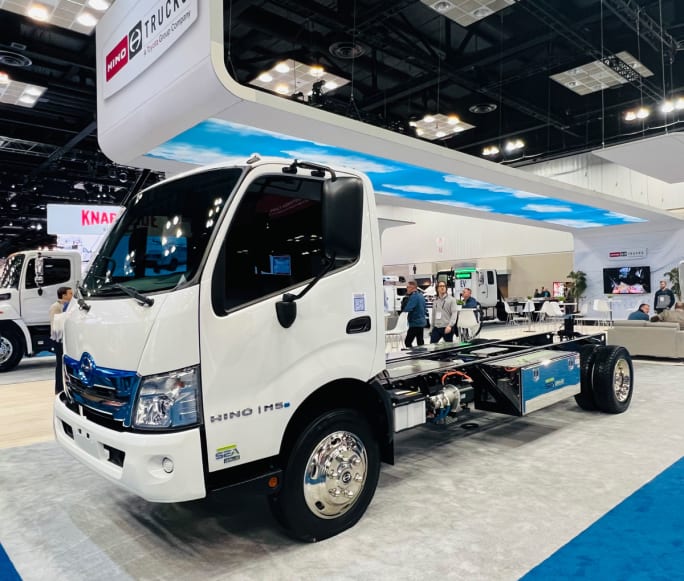
Hino rolled out its InclusEV offering when it introduced electric versions of its M- and L- Series medium-duty trucks.
Photo: David Cullen
They don’t mean simply charging infrastructure. Hino InclusEV is a “premier portfolio of end-to-end electric vehicle enablement” that will be available through Hino dealers. This package includes EV consulting services, intelligent charging solutions, warrantied EV infrastructure, 24/7 customer service, and what Hino called “the industry’s first complete bundled financing product.”
Hino InclusEV is built on various partnerships, including with ChargePoint, EnTech Solutions, and Mitsubishi HC Capital America. Hino said the goal is to “simplify and accelerate the transition to EVs by providing the best customer experience from first interest through ownership and maximizing ROI.”
Going even further with the TaaS model, Daimler Truck in April pulled back the curtain on Rizon, an all-new, battery-electric medium-duty truck brand. Targeted at Class 4-5 vocational applications, Rizon trucks will be distributed exclusively by the Velocity Vehicle Group in North America.
Velocity will field a comprehensive Rizon sales and support dealer network with flexible financing via Daimler Truck Financial Services. What Daimler calls the Rizon “seamless experience” will also provide customers with consulting on AC and DC charging and telematics access.
Startups Get into TaaS
Truck-as-a-Service is a major selling point for Swedish-based EV startup Volta Trucks, which is piloting Class 7 trucks in California this year ahead of 2024 production. The starup offers a single monthly fee that funds the use of an all-electric Volta Zero vehicle and all of its servicing, maintenance, finance, insurance, and training requirements.
The company will develop Volta Trucks Hubs for vehicle service and maintenance close to customers’ logistics centers. It also will develop a network of Certified Service Partner facilities.
Because charging infrastructure is a major factor in battery-electric truck adoption, there are also Truck-as-a-Service offerings coming from that side of the equation.
For instance, a new California start-up, WattEV, is offering a Truck-as-a-Service model that provides access to battery-electric trucks at a per-mile or per-route rate nearly on par with diesel, according to the company. That includes not only the vehicles, but also the costs of charging infrastructure, installation, and maintenance.
With all the attention already being paid to the Trucks-as-a-Service model by truck makers, lessors, and others, rest assured this alphabet soup will be served up more and more as truck fleets opt to go all-electric at the lowest cost in time, money, and complexity as possible.
More Equipment

How Volvo Updated Its D13 for EPA 2027 [Watch]
Volvo’s updated D13 promises lower emissions without sacrificing performance or fuel economy. Take a closer look at what changed inside the engine in this HDT Spotlight video.
Read More →
Michelin Tire Improves Efficiency and Durability for Regional Fleets
The Michelin X Multi Energy D2 is a regional haul drive tire engineered to help fleets improve fuel efficiency, durability and traction in demanding stop-and-go operations.
Read More →
ZF Expands Commercial Vehicle Push in North America
ZF is expanding its North American commercial-vehicle presence with new transmission applications, electrification, trailer technology and autonomous-driving systems.
Read More →
Tesla Wants a Self-Driving Semi. Are Cameras Enough?
Could Tesla’s camera-only autonomous driving technology work on an 80,000-pound Semi? In this commentary, HDT's Deborah Lockridge takes a look at Tesla, Cybercab, and how autonomous trucks see the road.
Read More →
Kodiak: Driverless Long-Haul Truck Launch on Track for 2026
Kodiak AI says its driverless long-haul safety case is 93% complete and it remains on track to begin commercial operations by year-end 2026.
Read More →
What DOT’s Automated Vehicle Strategy Means for Trucking
The U.S. Department of Transportation issued a new automated-vehicle strategy that outlines plans for driverless-truck regulations, cross-state freight corridors, and federal safety standards.
Read More →
East Coast Port Launches $45M Electric Truck Push
The Port Authority of New York and New Jersey announced millions in incentives for zero-emission drayage trucks, yard tractors, and new charging hubs near the port.
Read More →
PlusAI Going Public to Fund Autonomous Truck Launch
A SPAC deal could provide PlusAI with up to $300 million as it works toward a 2027 commercial launch of factory-built autonomous trucks.
Read More →
NHTSA Moves to Rewrite Truck Fuel-Economy Rules
The National Highway Traffic Safety Administration says it lacks authority to regulate medium- and heavy-duty truck engines separately from complete vehicles, but the existing standards have not yet been eliminated.
Read More →
Detroit Opens Orders for EPA 2027 Engines
Detroit isn’t starting from scratch to meet EPA 2027 diesel emissions standards. Its Gen 6 DD13 and DD15 engines keep much of today’s platform while updating the fuel and aftertreatment systems.
Read More →