




Trends to Watch in 2012: Economy and Business
A recent survey by GE Capital of mid-market chief financial officers showed that transportation CFOs, while less optimistic about the U.S. economy and the global economy than their counterparts, are one of the more optimistic groups of CFOs when it comes to the state of their own industry


A recent survey by GE Capital of mid-market chief financial officers showed that transportation CFOs, while less optimistic about the U.S. economy and the global economy than their counterparts, are one of the more optimistic groups of CFOs when it comes to the state of their own industry.
These CFOs expect revenues and profit margins to rise. At the same time, they expect energy and other costs to increase. Fuel price volatility, safety, and recruiting and retaining quality drivers are their top concerns.
The survey reflects what we've heard talking to industry experts about what to expect in 2012: Real possibilities for trucking to outperform a sluggish economy, even in the midst of uncertainties about everything from geopolitical issues to regulatory reforms.
This year we've seen the national and global economy shaken by an earthquake and tsunami in Japan, a downgrading of the U.S. credit rating and the debt crisis in Europe. The failure of the bipartisan Joint Committee on Deficit Reduction, the so-called "super committee," to come up with the required $1.2 trillion in budget cuts has some economists concerned as well.
Most experts, however, think that we are on track to continue with slow growth for 2012, rather than slipping back into a "double dip" recession.
As we went to press, third-quarter gross domestic product, or GDP, was revised downward to 2% from the previously estimated 2.5%. The numbers are still better than the second quarter's meager growth of 1.3%. There were some bright spots. Consumer spending rose 2.3% after second-quarter growth of just 0.7%. Exports grew by 4.3%, and corporate profits increased.
Economists responding to the latest National Association for Business Economics Outlook Survey expect moderate economic growth through 2012, with little likelihood of another recession or an outbreak of inflation. The consensus is 2.4% growth in 2012, with GDP in the second half slightly stronger than the first.
The NABE Outlook Survey panel also expect in 2012 that:
- consumer spending will grow 2.1%;
- housing starts will increase 10%, spending on nonresidential structures 4.5%;
- we'll see solid 8% growth in spending on business equipment and software; and
- industrial production will rise 3.3%.
"I've been preaching cautious optimism," says Chuck Clowdis, a trade and transportation expert with forecasting firm IHS Global Insight. "Basically, until unemployment drops a point or two and people get back to work in jobs they know are going to continue, there won't be the unleashing of pent-up consumer demand that I believe is out there."
Experts also are keeping an eye on the global economy, especially the debt crisis in the European Union.
Peter Nesvold, transportation expert at investment firm Jefferies & Co., notes that "Europe is far away geographically, but economically, it really is our neighbor. I believe there's a lot of reason for hope in the next 12 to 18 months for the U.S. economy. If Europe continues to unravel, it's a much more challenging backdrop.
"If I keep my focus to what I can really measure," Nesvold says, "the U.S. economy actually feels pretty good, as odd as that might sound."
John Larkin, transportation analyst with investment firm Stifel Nicolaus, notes that in spite of concerns around the world, from the European debt crisis to regime change in the Middle East, "the U.S. is doing OK, and OK in a world of so much uncertainty is sort of emblematic of just how resilient this economy is."
Bob Costello, chief economist with the American Trucking Associations, says the fears of a double-dip recession have gone away, "but the realization of anemic economic growth has set in."
Even if we slip back into recession, Costello says, it wouldn't be as painful as last time. "Back in '08, we jumped off a cliff," he says. If what he calls a worst-case scenario were to come to fruition now, "it would be more like jumping off the curb."
Trucking experts were a bit more pessimistic in their forecasts for GDP growth next year, calling for 1% to 2% growth. However, Costello says trucking could beat those numbers.
Freight volume trends have been mixed in 2011, with less-than-truckload and tank experiencing increasing volumes and truckload and dry van volumes declining slightly. Some markets are doing better than others. For instance, for fleets serving the energy exploration space, such as those hauling water or sand or other supplies for natural gas "fracking," business is booming.
The most recent seasonally adjusted ATA Truck Tonnage Index, for October, was up 5.7% over the previous year and just 4.4% below the index's all-time high in January 2005.
"I think one important thing is if manufacturing can do better than the macro economy, then trucking can do better than the macro economy," Costello says. "That's one reason loads and tonnage have outpaced GDP this year. Certainly we haul a lot of retail goods, but when something's domestically produced in the U.S., that has a lot of truckloads associated with it."
He believes industrial production in 2012 could be a good half percentage point better than GDP growth, which will help trucking.
Exports have been another bright spot, with U.S. goods flowing to economies in places like Asia and South America that are doing well. In addition, businesses may not be hiring, but they are investing in capital improvements, such as equipment and technology, and a lot of that is produced here in the U.S., propping up manufacturing a little more.
One of the key reasons trucking is doing fairly well despite the macro economic situation is capacity. During the recession, a great deal of trucking capacity went out of the industry, both through trucking bankruptcies and fleets downsizing.
"We're hearing consistently that capacity has been balanced," Nesvold says, "even this summer, when volumes got comparatively light following the Japanese earthquakes and the U.S. credit downgrade.
"Of course you can't separate trucking from the economy, and you can't separate the U.S. economy from the global economy, but from a micro-economic standpoint, the trucking industry does seem to be faring better than we might have expected."
This business cycle is unique for trucking, says Costello. "For the first time perhaps ever, during the Great Recession, companies took remarkable steps to right size. And they are at a much better place in a business cycle than any other time we would have seen."
Let's face it: If we were looking at this type of slow growth in the economy and freight volume in previous cycles, we'd likely be looking at overcapacity and a shipper's market. That's not happening, and if anything we're seeing the opposite.
In fact, Larkin says, "if you had any kind of normal recovery, coming back from the trough with 3, 4, 5% growth, I think very quickly you would be in a position of capacity shortage."
Part of the reason for that tighter capacity is the question of who's going to be behind the wheel. Fleets are having a hard time putting drivers in the seats they already have - or at least quality drivers who won't drag down a carrier's CSA rating and can hold up to all the other qualification concerns coming out of Washington (see following story.)
"One guy told me, 'There's plenty of applicants, but can we trust them with our trucks?'" says Chris Kemmer of CK Commercial Vehicle Research, who surveys fleets quarterly on their buying plans and business outlook.
In fact, Nesvold says driver pay and driver availability is the biggest issue facing the industry. "When we talk to investors, often one of the first questions we get is, how can there be a driver shortage when we have 9% unemployment?"
He explains that the universe
More Fleet Management

July Imports Poised to Set Container Record
The National Retail Federation projects July container imports will surpass the pandemic-era record as shippers frontload freight ahead of expected August tariff increases.
Read More →
HDT Announces 2026 Truck Fleet Innovator Finalists
From AI and fleet electrification to safety, operations, and leadership, these HDT Truck Fleet Innovator finalists are changing how trucking gets done.
Read More →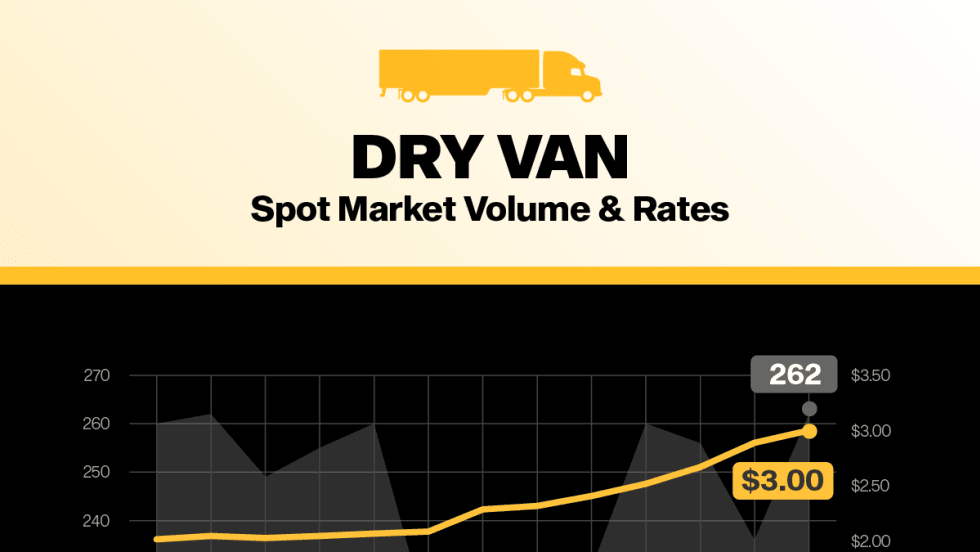
Van Spot Rates Top Contract Rates for First Time Since 2022
There’s more good economic news for the North American trucking industry according to the latest Truckload Volume Index report from DAT.
Read More →
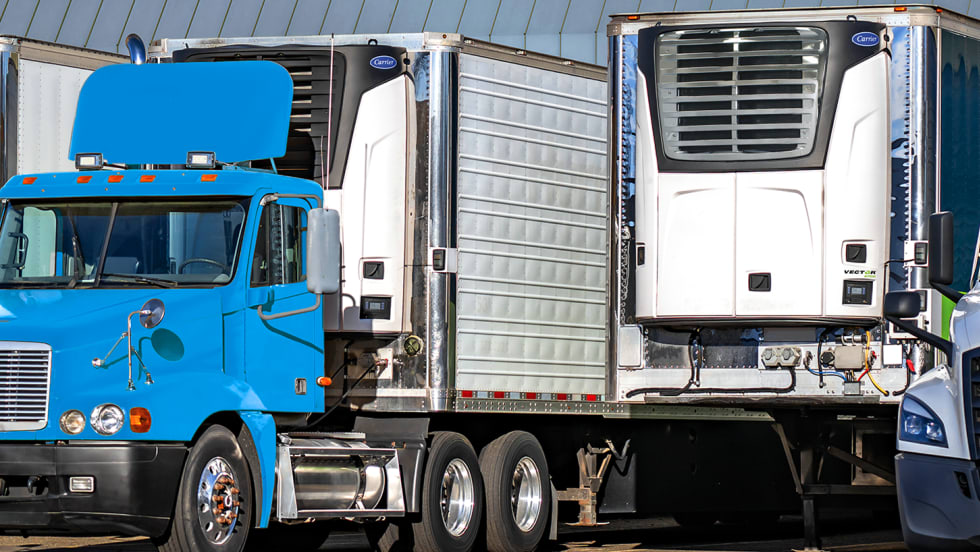
Carrier Transicold Extends Refrigerated Trailer Life
Fleet Refresh enables refrigerated fleets to replace aging transport refrigeration units instead of entire trailers, while adding Lynx Fleet telematics and BluEdge service coverage.
Read More →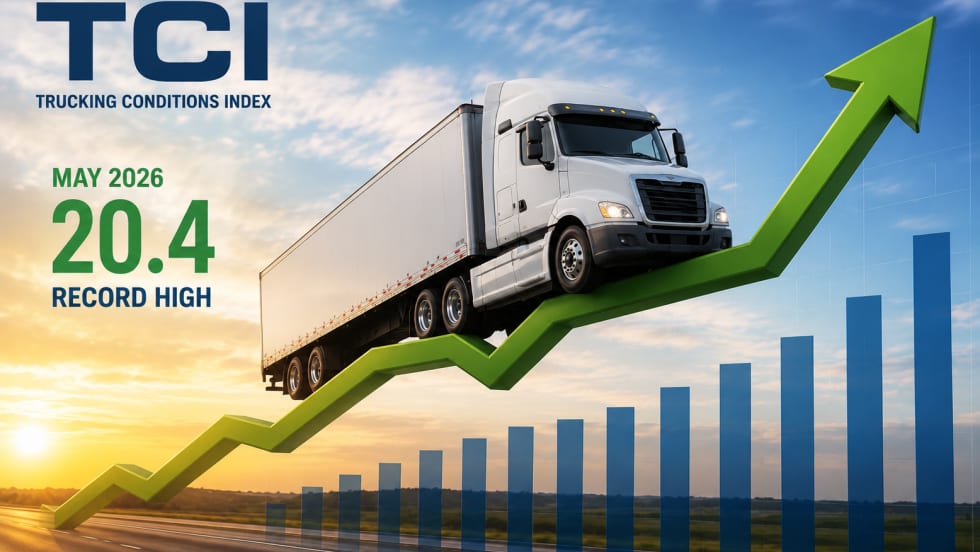
FTR Says Freight Rates Surged in May
FTR's Trucking Conditions Index surged to a record high in May, the analytics firm reports.
Read More →
Meet HDT's Truck Fleet Innovators at Heavy Duty Trucking Exchange
Heavy Duty Trucking Exchange brings fleet managers and suppliers together for the deeper conversations that lead to ideas, partnerships, and solutions. Time is running out to apply for HDTX, September 23-25.
Read More →
Enhance Fleet Performance with High-Efficiency Auxiliary Power Units
Drive sustainable cost savings while increasing driver comfort during short- and long-haul logistics operations.
Read More →
Is Your Parts Procurement Process Reactive or Proactive?
Ready to revamp your parts procurement process? Learn how now with “Strategic Parts Purchasing: A Process Checklist”
Read More →
What Trucking Events are Happening in 2026?
Looking for trucking-related conventions, expos, and other events? Heavy Duty Trucking has developed this list of national and larger regional trucking shows and events.
Read More →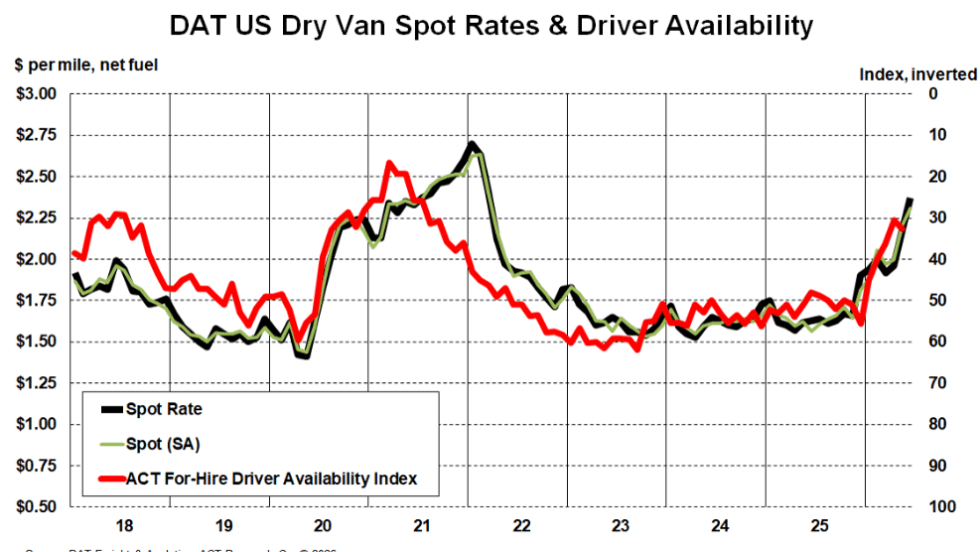
Truckload Rates Keep Rising as Tight Capacity Fuels Freight Market Recovery
Spot and contract rates continued climbing in May and June, not because freight demand is surging, but because fewer trucks and drivers are available.
Read More →