




Trailer Report: Running Reefers Right
People who operate refrigerated trailers know a lot about their businesses, but even the most experienced would tell you that they don't know it all.

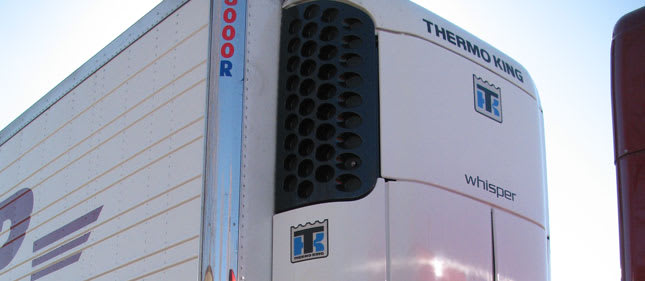
The newer the reefer, the more efficient its engine, compressor and other components. (Photo by Tom Berg)
People who operate refrigerated trailers know a lot about their businesses, but even the most experienced would tell you that they don't know it all.
To them, and maybe more for the less experienced among truckers who haul temperature-controlled freight, makers of reefer units freely offer advice. They did so last summer at the Truckload Carriers Association Refrigerated Division's annual meeting near Bend, Ore.
In separate sessions, representatives of Carrier Transicold and Thermo King listed the capabilities of their products, whose microprocessor controls are amazingly adept at dealing with a wide variety of products, assuming drivers are trained on how to set them for maximum efficiency.
Drawing on their contacts with many trucking customers, the reps also discussed operating considerations and how they affect expenses. Their presentations were enhanced by comments and questions from those in the audience. Among the items discussed:
Running modes
Stop-start vs. continuous running: These determine how much the reefer unit's engine runs, and therefore how much fuel is burned and the amount of maintenance on unit components. They also control how steady the temperatures of the perishables in the trailer are. Ambient temperatures and the trailer's insulation value, along with its age and condition, also affect how much the unit must run.
Temperature swings of 5 or 10 degrees over and under the set point are tolerable for many commodities. But some cargoes require steady temps, which require continuous running. And some shippers demand continuous running even though their products don't need it. Acceptable bands of temperatures should be negotiated with each shipper prior to signing a contract or picking up a load, so drivers can correctly set the unit's controls to satisfy the shipper and save as much operating money as possible.
If a shipper demands continuous running, a trucking operation should ask itself: Does the freight rate reflect the relatively high fuel and maintenance costs for the reefer unit? Or does the trucker comply with his wishes for barely adequate compensation? As capacity is becoming constrained and shippers have less clout, the trucker can request higher compensation and probably get it.
Larger carriers have the resources and expertise to track each customer's shipments, then determine if rates are adequate. And they can use their knowledge of products to determine if a requested temp is realistic. These factors are then built into rates for each customer. Of course, any final figures are negotiable, but the knowledgeable carrier enters negotiations better prepared than one who hasn't done his homework. Smaller carriers can build their knowledge with the help of their reefer suppliers and use of the correct operating software.
Products such as beverages, paint, canned goods and candy are safe within wide temperature ranges, even if shippers want narrower ranges. A wider range might save 50 percent in fuel. Learn what the safe temperature ranges are for every commodity hauled and try to reason with customers about settings.
It's a good idea to document fuel use and running times for every customer and every product, and have the information handy when negotiating rates.
Trailer use and care
* Drop-and-hook operations are often necessary to minimize driver waiting times, but trucking companies lose control of their trailers when they're left at customers' docks and yards. Customers can do almost anything with trailers if they aren't tracked and reefer running isn't monitored. Telemetry allows remote, real-time monitoring, but careful manual recording of running hours can also tell tales of possible abuse.
* Don't run a unit if the doors are open, whether making deliveries or while it's parked somewhere. This is an obvious waste of energy, but drivers and customers might do it if it's convenient and they're not told otherwise. Door switches can cut off the unit when doors are opened. Some customers may demand that reefers run while trailers are at their docks; if so, see that the engine runs at lower rpm to save fuel.
* Use the highest insulation value possible while allowing sufficient cube in the trailer. Insulating values are expressed by UA numbers, and the lower, the better. A low UA might be awarded to a trailer with 4 inches of insulation in the roof, floor and walls, and might allow a reefer unit to use only half the fuel of a trailer with a high UA number because of only 1.5 inches of foam in the walls and 3 inches in the floor and roof. But the low-UA trailer will have 7 percent less volume and might weigh an extra 250 pounds, causing the tractor to burn some extra fuel to pull it.
* Repair tears and punctures in trailer skin as soon as possible. Breaches in the skin allow conditioned air to escape and moisture to contaminate insulation, further worsening performance. The longer the damage goes unfixed, the more costly the repair will be.
* Know what a reefer's sophisticated controls can do and train drivers to get the most from them. Complexity of controls can be masked by showing drivers how to use easy-to-understand settings. Modern microprocessors have scores of possible settings, not only by temperature and temperature range but also by commodity (for instance, fresh fish, potatoes, strawberries) and customer name (ABC Produce, which usually ships lettuce).
* Run modern reefers because they'll be more efficient than older units. Engines on newer units will also emit fewer pollutants, which keeps California authorities happy. One fleet manager said his company runs trailers for 10 years and switches units every five years, so a unit is never more than five years old.
* Electric "standby" power saves fuel, and is becoming necessary in California. But of course plug-ins are required wherever the trailer will be spotted. This will almost always be at docks, and the reefer unit must be able to run on the voltage that's available. Older units were set up for 220/240 volts, but current industry practice favors 440/480 volts. Yes, those voltages are in ranges, as with 110/120-volt home power; but sometimes the power must be exact, like 3-phase, 460-volt. Know what the voltage is where trailers will go - or tell customers what it should be - so all equipment is compatible. Partnerships with customers are the best way to ensure this.
The future will bring all-electric reefers with no engines. And that's another story.
From the December 2010 issue of Heavy Duty Trucking magazine.
More Equipment
DTNA Software Update Gives Truckers More Time Before DEF Derates Take Effect
The changes reflect EPA guidance aimed at reducing downtime caused by emissions-system faults while maintaining compliance requirements.
Read More →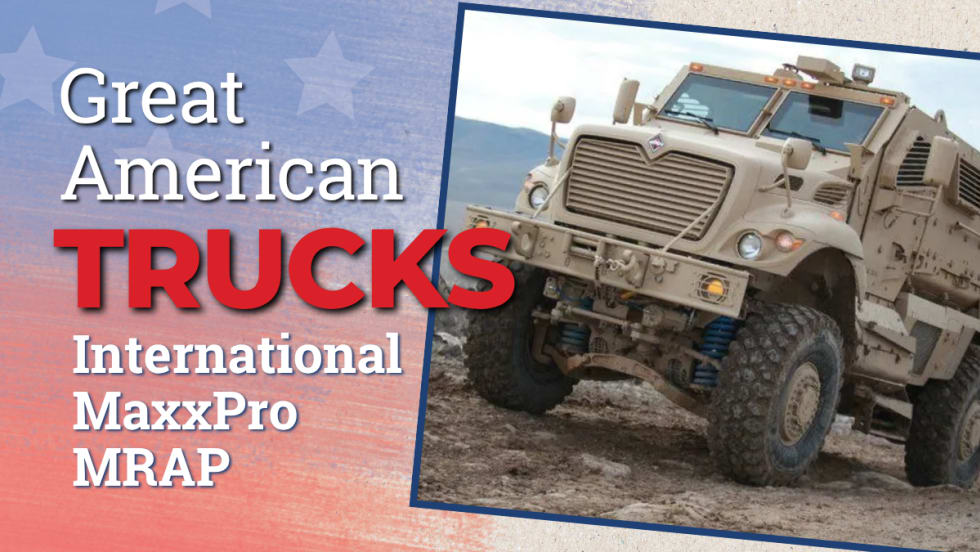
Great American Trucks: The International MaxxPro MRAP
Built from an International WorkStar chassis and powered by a MaxxForce diesel, the MaxxPro MRAP became one of the most important military trucks of the Iraq War era.
Read More →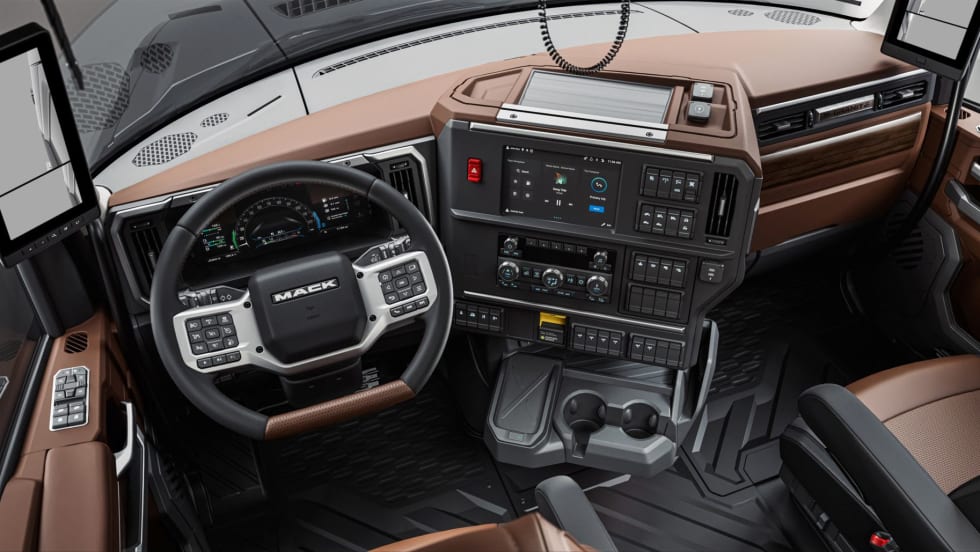
New Mack Granite Cab Puts Driver Comfort Front and Center
Mack’s next-generation vocational truck features a roomier cab, premium seating, advanced steering technology, and a driver-focused interior designed with direct input from professional operators.
Read More →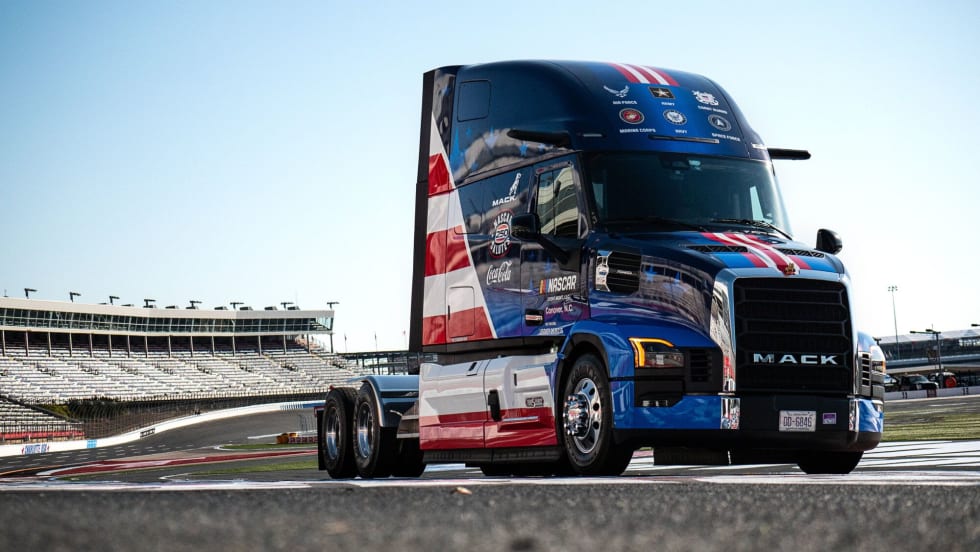
Mack Unveils Fan-Selected Patriotic NASCAR Pioneer Wraps
Racing fans picked the patriotic design now featured on three Mack Pioneer trucks hauling NASCAR equipment across the country during the 2026 season.
Read More →
Michelin Expands X Line Grip D Tire Line
Michelin is expanding its X Line Grip D drive tire lineup with a new pre-mold retread and additional sizes, building on what the company says is strong fleet adoption of the tire's traction, mileage, and fuel-efficiency benefits.
Read More →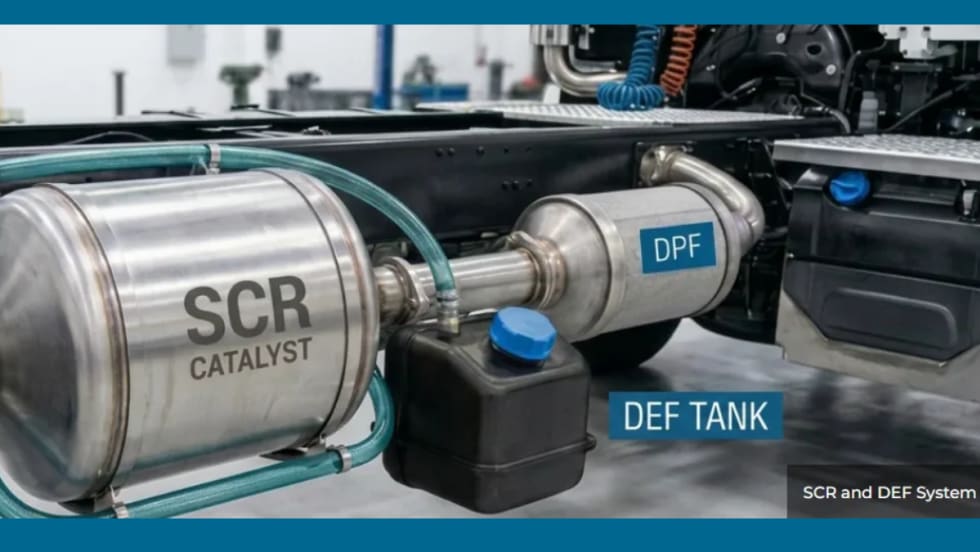
Engine Technology Forum Launches SCR, DEF Resource Center Amid Emissions Debate
The Engine Technology Forum’s new online hub aims to provide fleets, policymakers, and equipment owners with fact-based information about selective catalytic reduction technology, diesel exhaust fluid and emissions compliance.
Read More →
Prime Inc. to Open $7.9M Flagship Used-Truck Dealership
A new driver-focused facility to sell Prime Inc's used trucks and trailers will be the first purpose-built location in the company's history.
Read More →
Lessons Learned About Alternative Fuels: Start Small, Stay Flexible
Practical advice on adopting alternative fuels and ZEVs from HDT's 2026 Top Green Fleets, from renewable diesel and natural gas to electric trucks.
Read More →
Kenworth Names Peter Ahrens General Manager
Leadership changes at Kenworth take effect July 1 as the OEM promotes two longtime Paccar executives to key management roles.
Read More →
Hino Adds Electric Class 6/7 Truck
Hino says the Le Series is an important step in the company's efforts to reduce environmental impact and support its customers’ sustainability goals.
Read More →