




Tires for multiple applications
The economic recession had profound effects on trucking, but one of the most surprising is a greater need for tires on trucks that need to be used in more than one application. That's the opposite of another trend, which is more single-application-specific tires.

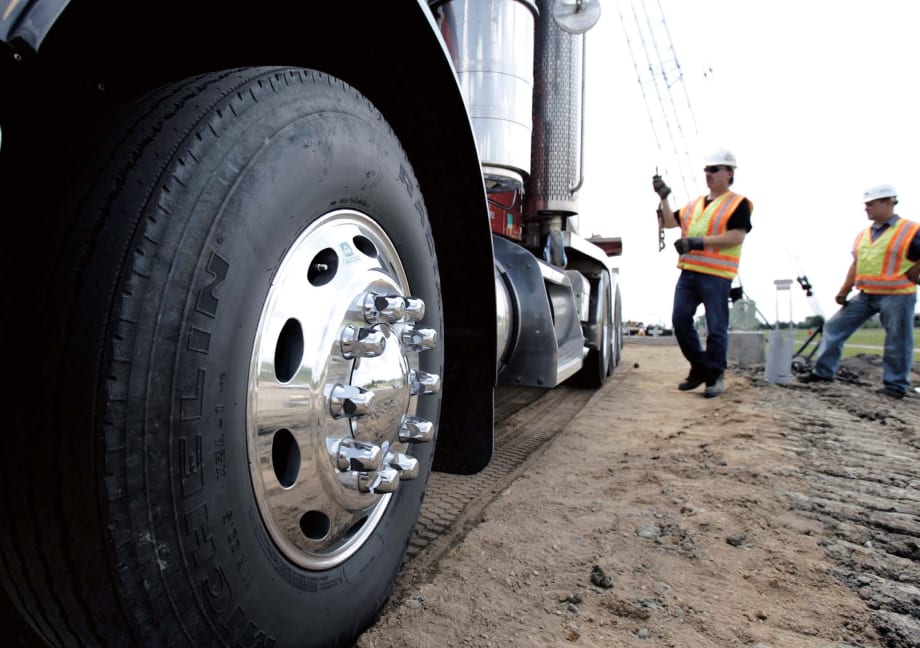
The economic recession had profound effects on trucking, but one of the most surprising is a greater need for tires on trucks that need to be used in more than one application. That's the opposite of another trend, which is more single-application-specific tires.
“Back in 2008, when we had the industry downturn and there was so much consolidation within the trucking industry globally, we started to see fleets that were traditionally just long distance ... being able to pick up routes on a regional basis as well,” says Alex Chmiel, brand and communications manager for Continental Truck Tires.
This led to Continental launching tires that run in what he calls “hybrid applications,” or — in other words — tires designed for multiple applications.
While not all tire makers are aboard this bandwagon yet, more are realizing there are an increasing number of customers who need tires that can handle more than one job.
Common multi-application scenarios
While different tire makers break down truck tire applications a little bit differently, there are basically four different categories: long-haul, regional/urban, off-highway and construction.
“Typically the most common you will see when it comes to needing tires for multiple applications are long haul with regional/urban,” says Paul Crehan, director of product marketing, Michelin Truck Tires.
“This application has surfaced with fleets creating a more ‘spoke and hub’ system, giving drivers more evenings at home, keeping driver retention and embracing the more urban nature of delivery areas.”
The second area of multiple applications involves on-road and on-/ off-road, he says, such as construction vehicles, gravel haulers, oil/gas servicing vehicles and a mixture of regional applications in rural areas.
“These situations involve applications where the vehicles spend the majority of the time performing in certain conditions such as smooth pavement and the rest of the time in very different conditions such as on gravel roads,” according to Crehan.
Balancing act
“Fleets should target a balanced performance package, such as fuel economy, miles to removal, start-and-stop traction, casing retreadability, safety and price,” says Donn Kramer, director of product marketing innovation, Goodyear, “which will help optimize their return on assets by lowering their overall operating cost.”
In other words, all this is about making tradeoffs.
Kramer says trade-offs in tires that help deliver optimal fuel economy could include lower miles to removal and lower casing retreadability, while trade-offs in products that help deliver high miles to removal could include lower fuel economy.
The other thing to remember is durability.
When you optimize a tire for durability and traction, especially to resist chipping in off-road and tougher-duty applications, you end up increasing rolling resistance and reducing fuel economy.
“Your question is how to balance the performance needs when a fleet operates over the course of days and weeks in multiple applications,” says Michelin's Crehan.
Like any component of a truck, not having tires properly spec'd is going to cost you money and headaches. With tires, one of the most common problems is irregular wear.
“That irregular wear pattern is going to prevent you from running that tire to the complete end of its life and the tread depth, which means you are going to see a massive reduction in the mileage that tire could potentially achieve,” says Continental's Chmiel. “At the same time, it could also potentially put stresses on the casing it-self, which would then lead to problems with casing integrity for the retreading process.”
Choosing a tire
Guy Walenga, director of engineering, commercial products and technologies with Bridgestone, says a 6x4 tractor could run long haul and could also be used to deliver pup trailers in the city.
“Tires for long haul and for pickup and delivery are different,” he says. When you run a top-performing long-haul tire in a regional application, even for a short period of time, you can greatly reduce the overall mileage performance of that product.
“You would choose the best tires for the more dominant portion of the vehicle application,” Walenga recommends.
If one application is not dominant, however, finding the best tire for your fleet may take some experimentation.
“For different applications where the miles are about 50/50, a fleet should try a few sets of tires as defined for each application,” Walenga says.
“They can then follow the tires’ performance over time and see what combination yielded the best performance across both applications. This would define your best cost per mile tire choice.”
Know your fleet
Because there are so many different factors to consider to get the lowest overall driving costs, fleets need to fully understand what applications their trucks are running in one week to the next, says Continental's Chmiel.
“Traditional long-distance fleets are looking more and more to the effects of fuel efficiency, while regional/ short-haul fleets want to maximize the life of the tire through mileage. Construction trucks typically need a high level of durability and traction, while those in off-road need the most robust tire on the market,” he says.
He notes that fleets can work with a trained tire representative to help determine what qualities are most important to that fleet manager and recommend products that will give that operation the lowest overall driving costs possible.
“The fleet would want to understand each segment's size and operating difference, and then rank them, so they can pick the product portfolio that would help generate the highest return on assets — across all segments,” says Goodyear's Kramer. “Clearly articulating their performance expectations and what they expect tires to deliver.”
Crehan adds that fleets need to “understand the nature of their operations from their vehicles, to their drivers and their habits, driving locations. And from their maintenance habits to their budget.”
Vehicle maintenance reporting and scrap analysis also should help narrow the choices, he says.
Crehan says there are three basic areas that need to be considered in order to make the correct tire choice:
1. There needs to be a very good understanding of the intended usage of the vehicle.
2. The fleet operator needs to understand the key success factors for the operation, such as on-time delivery, route flexibility, fuel costs and weight sensitivity.
3. There needs to be a good under standing of how the tire can help the fleet achieve success.
Crehan says this can be achieved just as well by excelling in a performance (fuel savings) as by avoiding a problem (winter traction).
In every case, it is about matching the tire's performances to what is important to the fleet's success.
Managing after the purchase
When it comes to spec'ing tires for multiple applications, the process doesn't end with buying and installing them. Fleets have to manage the tradeoffs so they get the best return on their investment.
This means keeping records on your tires, says Guy Walenga, director of engineering, commercial products and technologies with Bridgestone. “Keep records, confirm tire original tread performance and utilize your casings for retreads.”
“Fleets should track and understand what causes breakdowns on the road,” says Donn Kramer, director of product marketing innovation, Goodyear. “They also should examine emergency roadside service as a total percentage of service, as well as tire repair costs as a percentage of retreaded tire cost. In addition, casing durability should be tracked, and retread-to-new-tire sales ratio by wheel position should be examined.”
Management of tires also differs when it comes to the number of trucks in a fleet, says Paul Crehan, director of product marketing for Michelin Truck Tires. “As the size of the fleet increases, there will be fewer compromises and more opportunities to direct various portions of the fleet for specific applications regionally or by delivery type.”
Small fleets, he says, must prioritize the critical factors for their specific operation to best manage the trade-offs. For instance, if a fleet wants to choose a tire selection for its retreadability capability to lower the overall cost of the operation and focus on total cost of ownership, casing quality will be a critical selection factor.
More Equipment
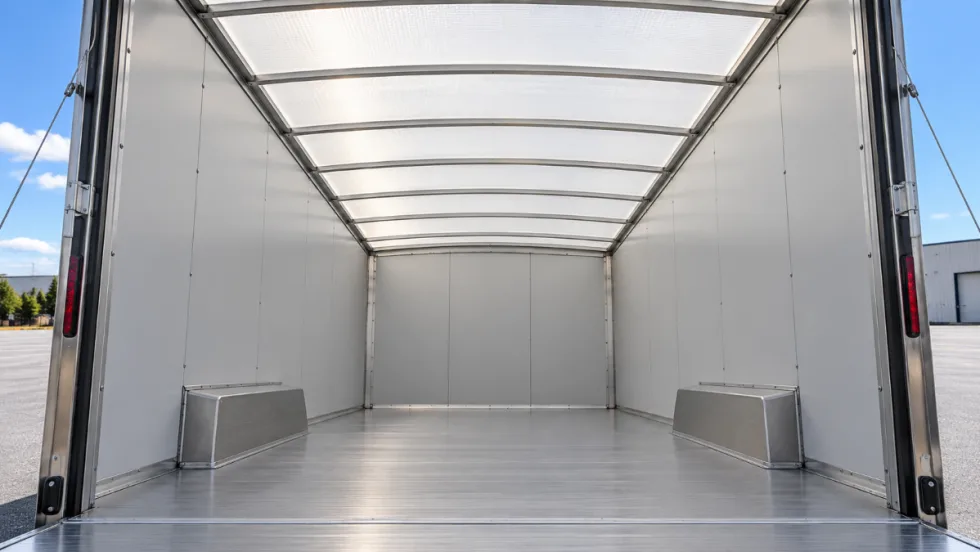
Tekmodo Introduces CargoBright Brand for Translucent Trailer Roofs
CargoBright is designed to diffuse daylight across the cargo area while performing as a working vehicle roof.
Read More →
Fleet Economics Shape Electric Truck Outlook
ACT Research expects costs, charging infrastructure, and technology improvements to drive zero-emission commercial vehicle adoption as federal regulations and incentives retreat.
Read More →
Kodiak Targets Dallas–Houston for Driverless Trucks
The company says its autonomous trucks are completing the I-45 run without a safety observer taking control. It plans to remove the observer by the end of 2026.
Read More →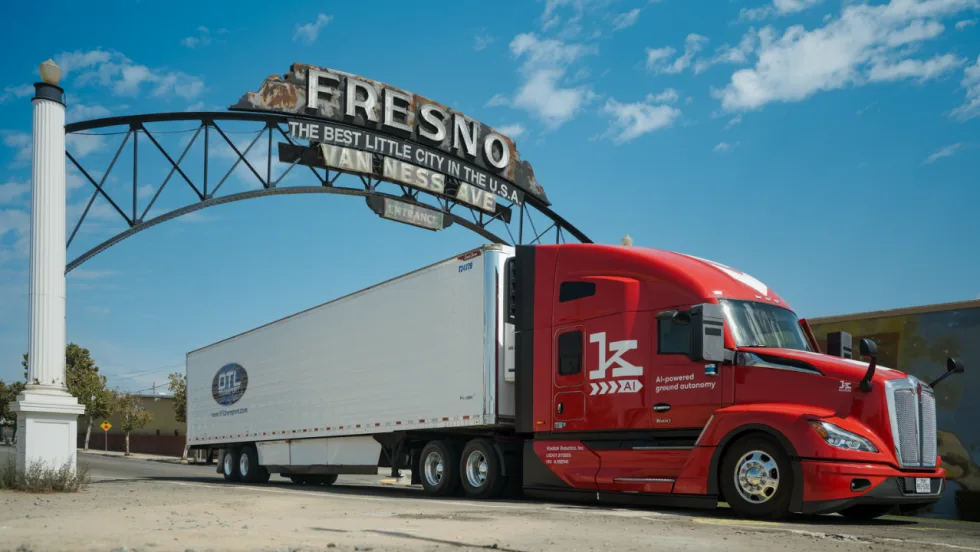
Kodiak Hauls Produce in California Autonomous Truck Pilot
Kodiak AI and DTL Transport have begun hauling produce between Fresno and Los Angeles under California’s new rules for testing heavy-duty autonomous trucks. A safety driver remains behind the wheel.
Read More →
Used-Truck Remarketing Math Is Changing
Used-truck value is no longer just a concern at trade-in. Decisions made throughout a truck’s first life can influence what it’s worth years later.
Read More →
How Volvo Updated Its D13 for EPA 2027 [Watch]
Volvo’s updated D13 promises lower emissions without sacrificing performance or fuel economy. Take a closer look at what changed inside the engine in this HDT Spotlight video.
Read More →
Michelin Tire Improves Efficiency and Durability for Regional Fleets
The Michelin X Multi Energy D2 is a regional haul drive tire engineered to help fleets improve fuel efficiency, durability and traction in demanding stop-and-go operations.
Read More →
ZF Expands Commercial Vehicle Push in North America
ZF is expanding its North American commercial-vehicle presence with new transmission applications, electrification, trailer technology and autonomous-driving systems.
Read More →
Tesla Wants a Self-Driving Semi. Are Cameras Enough?
Could Tesla’s camera-only autonomous driving technology work on an 80,000-pound Semi? In this commentary, HDT's Deborah Lockridge takes a look at Tesla, Cybercab, and how autonomous trucks see the road.
Read More →Kodiak: Driverless Long-Haul Truck Launch on Track for 2026
Kodiak AI says its driverless long-haul safety case is 93% complete and it remains on track to begin commercial operations by year-end 2026.
Read More →