




Tips for Maintaining Trailer Floors
When it comes to maintaining your dry van hardwood or composite trailer floor, fleet maintenance managers should follow the Boy Scout motto: Be prepared.


When it comes to maintaining your dry van hardwood or composite trailer floor, fleet maintenance managers should follow the Boy Scout motto: Be prepared.

Most of the dry vans running on the road today were built with a hardwood floor.
According to John Carr, vice president of sales and marketing with Havco, about 80% of the hardwood used is American white and red oak, which is spec’d as an oak floor. Oak’s popularity comes from its natural resistance to rotting.
Another wood-based flooring option is composite floors, which typically are a hardwood floor that “incorporates a specially designed glass/epoxy composite reinforcement sheet applied to the bottom-side of the floor,” Carr says.
Preventive maintenance and proactive repairs will go a long way to help keep both flooring types from failing, but the first step in floor maintenance happens before the trailer hauls its first load.
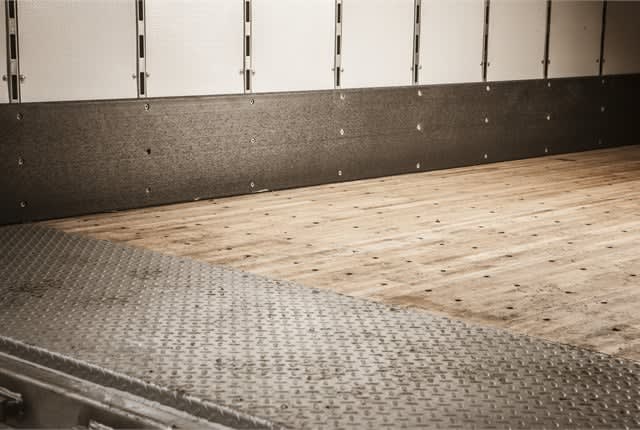
When it comes to maintaining your dry van hardwood or composite trailer floor, fleet maintenance managers should spec your trailer flooring with an eye on reducing future maintenance.
Spec’ing with floor maintenance in mind
Plan ahead and spec your trailer flooring with an eye on reducing future maintenance.
Simply put: “Spec the floor system that is right for the application,” said David Giesen, director of sales for Stoughton Trailers.
In general terms, you should consider the type of load, the length of time you are going to keep the trailer, and the geographical location you are going to be running, according to David Gilliland, vice president of branch sales and operations for Great Dane Trailers.
More specifically, the floor system’s (i.e. floor, cross-member and side rail) design needs to match the loading weight and frequency of the freight being transported, adds Havco’s Carr.
What you’re putting inside the trailer may not be as important than how you’re loading and unloading, says Larry Roland, director of marketing for Utility Trailers.
“If forklifts are being used as opposed to pallet jacks, the combined weight of the forklift and the product being carried should be understood to determine if the ‘forklift capacity’ floor rating on the trailer meets this requirement.”
When it comes to supporting the floor, there are many options in terms of various materials, shapes and spacing, says Hyundai Vice President-Engineering Group Christian Lee.
“There are many different combinations of the floor material and cross member specification to make up different floor ratings, which will affect the floor longevity and endurance,” Lee says.
As important as floor rating requirements is keeping in mind the geographical location where the trailer is going to be running.
In regions where there is more precipitation, there will naturally be more moisture. Wood expands and contracts depending on the amount of moisture it is exposed to.
“When deciding on a wood floor system, make sure to verify there is an adequately sized crusher bead, which allows the wood board to expand. This will help prevent buckling as the wood board expands,” Rodney Ehrlich, chief technical officer with Wabash National.
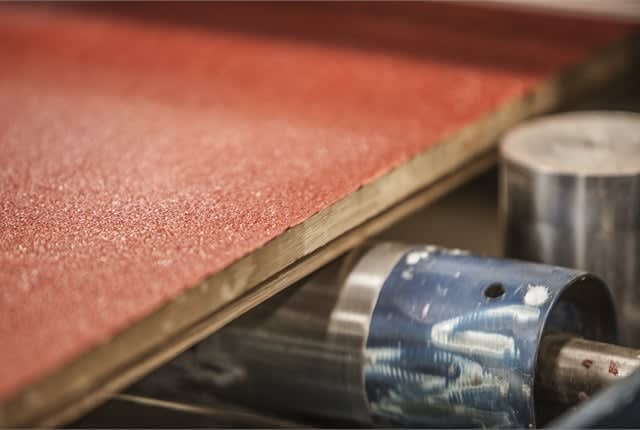
One of the most important steps you can take to maintain your trailer floor comes actually during the spec’ing process.
Tips to keep it in tip top shape
Beyond spec’ing, there are other things you can do to prevent problems.
Key is protecting the floor from moisture.
“Keeping the doors open and letting rain water onto the floor has always been a problem of rotting out floors,” says Craig Bennett, senior vice president sales and marketing at Utility Trailer Manufacturing. “There are materials to seal the rear of the floors to minimize the rot, or keeping doors closed is an option.”
Great Dane’s Gilliland agrees. “When fleets leave doors open—sitting in yards or when sitting at the dock – water can get in and sit at the rear. This can cause a lot of damage.”
According to Jim Jannell, the national sales manager at Prolam Flooring Co., “Ninety-nine percent of floor failures and maintenance costs associated with a laminated hardwood floor occur at the rear of a dry van near the rear doors, and is related to excessive moisture content in the wood. The higher the moisture content in the wood, the less strength and stiffness in the floor.”
Jannell recommends limiting moisture exposure from the top and bottom of your floor, including when cleaning. Instead of power washing the floor, he recommends sweeping or using air pressure.
Dry van trailers floors of all types should be inspected on a regular basis.
If a problem with the floor or a floor system component is discovered, they should be repaired as needed, notes Havco’s Carr. “It is useful to inspect the bottom side of floors to determine any damage caused due to fork truck load cycles and also due to overloading. Damaged sections of floors can be patched with repair boards.”
Kent Musick, product specialist – fleet maintenance solutions with Rockland Flooring, notes that many fleet managers overlook the floor while performing a preventive maintenance check. That is a mistake.
“Many fleets have a checklist of items that include landing gear, suspension, and lighting, but many overlook the mechanics of a floor,” Musick says.
“Early detection of a potential issue could prevent a catastrophic failuredown the road.”
More Equipment

How Volvo Updated Its D13 for EPA 2027 [Watch]
Volvo’s updated D13 promises lower emissions without sacrificing performance or fuel economy. Take a closer look at what changed inside the engine in this HDT Spotlight video.
Read More →
Michelin Tire Improves Efficiency and Durability for Regional Fleets
The Michelin X Multi Energy D2 is a regional haul drive tire engineered to help fleets improve fuel efficiency, durability and traction in demanding stop-and-go operations.
Read More →
ZF Expands Commercial Vehicle Push in North America
ZF is expanding its North American commercial-vehicle presence with new transmission applications, electrification, trailer technology and autonomous-driving systems.
Read More →
Tesla Wants a Self-Driving Semi. Are Cameras Enough?
Could Tesla’s camera-only autonomous driving technology work on an 80,000-pound Semi? In this commentary, HDT's Deborah Lockridge takes a look at Tesla, Cybercab, and how autonomous trucks see the road.
Read More →
Kodiak: Driverless Long-Haul Truck Launch on Track for 2026
Kodiak AI says its driverless long-haul safety case is 93% complete and it remains on track to begin commercial operations by year-end 2026.
Read More →
What DOT’s Automated Vehicle Strategy Means for Trucking
The U.S. Department of Transportation issued a new automated-vehicle strategy that outlines plans for driverless-truck regulations, cross-state freight corridors, and federal safety standards.
Read More →
East Coast Port Launches $45M Electric Truck Push
The Port Authority of New York and New Jersey announced millions in incentives for zero-emission drayage trucks, yard tractors, and new charging hubs near the port.
Read More →
PlusAI Going Public to Fund Autonomous Truck Launch
A SPAC deal could provide PlusAI with up to $300 million as it works toward a 2027 commercial launch of factory-built autonomous trucks.
Read More →
NHTSA Moves to Rewrite Truck Fuel-Economy Rules
The National Highway Traffic Safety Administration says it lacks authority to regulate medium- and heavy-duty truck engines separately from complete vehicles, but the existing standards have not yet been eliminated.
Read More →
Detroit Opens Orders for EPA 2027 Engines
Detroit isn’t starting from scratch to meet EPA 2027 diesel emissions standards. Its Gen 6 DD13 and DD15 engines keep much of today’s platform while updating the fuel and aftertreatment systems.
Read More →