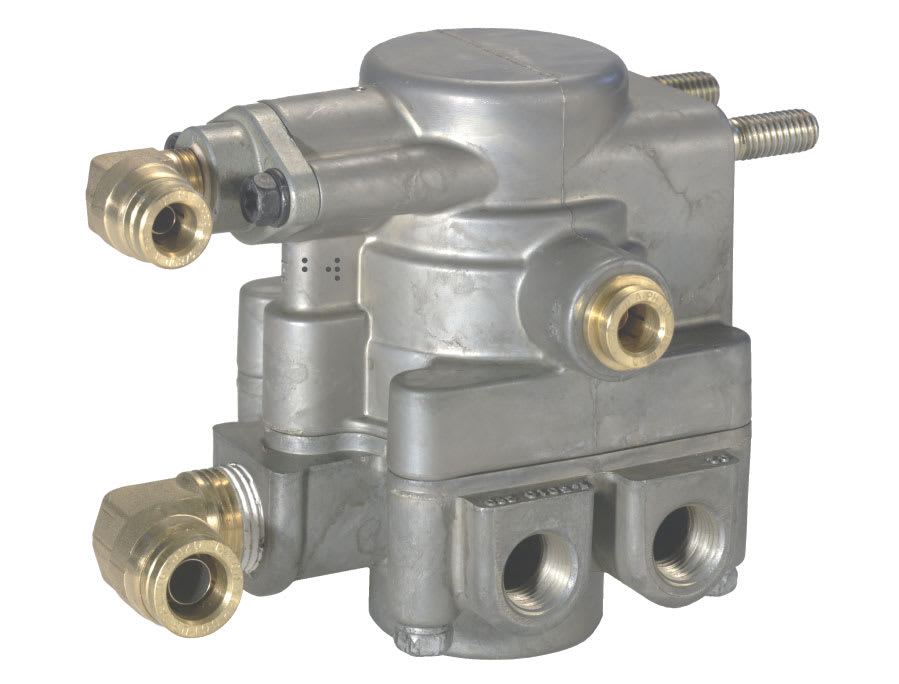
Getting a valve out of a vehicle isn’t too hard – it’s putting the new one in that requires more care.
Photo courtesy Bendix
4 min to read
A typical commercial vehicle air braking system requires, at minimum, around a dozen core pneumatic valves to meet baseline regulatory standards. And these days, there’s no “typical” air brake system – they can be highly customized with various accessories that use the same compressed air supply, such as lift axles. There are often mechatronic components as well, like valves with solenoids used in antilock braking and stability control. Some automated manual transmissions rely on pneumatic controls, as do emissions controls and other systems.
Ad Loading...
The lesson is: Valves matter to help improve driver safety and comfort. This article focuses on proper troubleshooting, maintenance, and upkeep of valves in a compressed air system.
What’s the Problem?
With a wide variety of valve types and applications in a connected air system, recognizing and diagnosing a valve issue can begin in a number of ways, noted Brian Sheehan, Bendix engineering manager of pneumatic valves.
Ad Loading...
“The most common customer concern with valves is leakage, which could be noticed through an audible air hiss,” he said. “Closer examination using a bubble solution on the suspected leak area can help pinpoint leaks, and the size and frequency of the bubbling will help determine the severity.”
In other cases, the evidence could be right at the driver’s fingertips, or just beneath their feet. “There are some dash valves that have trip pressures or pop pressures, and if those pressures are incorrect, it’s pretty apparent when you push or pull them,” Sheehan said. “Same with foot-controlled valves: If the pedal feels loose, or the travel distance feels off, there could be a valve issue that needs to be addressed.”
To determine issues with valves that are deeper within the system and not as easily accessible, Bendix stresses examining the problem from a system level: What’s the vehicle doing (or not doing) that’s out of the ordinary? Refer to service data sheets, guides, and checklists to narrow down the possible locations of a problem valve before doing any work on the system.
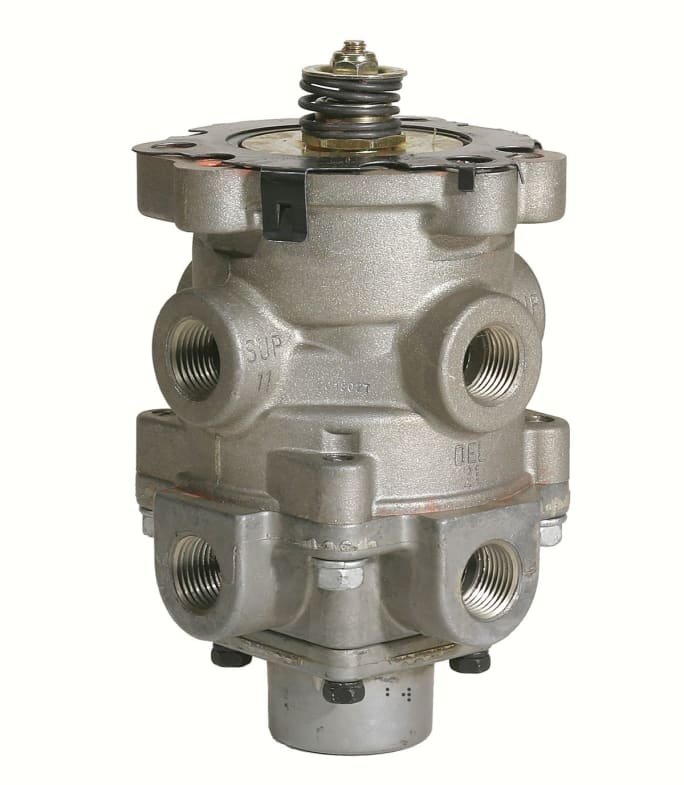
There are some dash valves that have trip pressures or pop pressures, and if those pressures are incorrect, it’s pretty apparent when you push or pull them.
Photo courtesy Bendix
Valve Replacement
If you do find it’s time to swap out a valve, you begin with the air system maintenance basics, chocking the wheels so the vehicle doesn’t roll, and draining the air system and tanks before you open things up.
“Then you can dig in,” Sheehan says. “Getting a valve out of a vehicle isn’t too hard – it’s putting the new one in that requires more care.”
Ad Loading...
He offers the following specific tips:
Always follow the General Safety Guidelines detailed in each Bendix Service Data Sheet or Installation Instructions to help prevent personal injury.
Whenever possible, dress the valve with its fittings before putting it on the vehicle. If the valve has an integrated mounting surface, use that to hold it during dressing.
Don’t put a valve in a vise for dressing, and don’t squeeze the main diameter of the valve. Changing the shape of the valve even slightly is a quick path to needing another replacement.
Avoid using too much thread sealant on the fittings: More isn’t always better, because if the substance gets into the valve, it can clog things up and prevent internal parts from moving.
Once you get a fitting oriented, avoid backing off the torque: Always go in a tightening direction.
Remember proper valve orientation: You don’t want to install a valve upside down – the exhaust port should always be facing down to prevent water or other contamination from collecting within.
Finishing the Job
When it’s time to reconnect the air lines, check your connection type. A threaded hose simply screws into place, while a push-connector hose will require a nice, clean 90-degree cut on the end. “You can see a lot of issues if you’re hooking up a hose that’s not trimmed correctly,” Sheehan says. “Once the air is hooked up again, follow standard system-level check procedures for chassis valves, and go through the specific tests for dash valves, testing the trip pressures, override functions, and other operations.”
Bendix emphasizes one other valve-care tip for technicians and drivers alike: As a general rule, avoid putting anything into the air system. Sheehan has seen everything from various alcohols – which can wash away valve lubricants and deteriorate valve seals – to tool oil put directly into brake lines. It’s almost invariably a bad idea, he said.
“Valves are dependable and vital, and don’t require much in the way of care,” he said, “but exposing them to substances they’re not engineered for is definitely on the ‘Not-to-Do’ list.”
Ad Loading...
This article originally appeared as part of the Bendix Tech Tips series, found in the Bendix multimedia center at knowledge-dock.com. It was edited according to the standards of HDT to provide useful information to our readers.
For fleet managers and collision repair professionals keeping heavy-duty trucks on the road, getting the color right the first time isn't just about appearance — it's about efficiency, turnaround time, and bottom-line results. Discover how today's digital color tools are transforming the repair process from guesswork to precision.
DTNA is recalling more than 2,400 trucks that received an incompatible software fix instead of the hardware repair required to address brake valve corrosion.
Fleets have more visibility into truck health, safety events, and driver activity than ever. The next challenge is turning all that information into useful guidance for the person who has to decide what to do next.
Making it through August isn’t the same as being ready for the next several months of operation. Find out what systems may have suffered from summer heat and need to be checked out before fall.
With freight improving but costs still climbing, fleet maintenance executives explain how they're balancing price, quality, and supplier relationships.
The new API PC-12 heavy-duty engine oil category reflects the changing demands of modern diesel engines. But fleets like Foodliner are looking to getting their own data before making decisions on adopting the new oils and questions such as extending oil drain intervals.
The joint venture will operate MCT's network of Carrier Transicold dealerships and mobile service locations, with the companies promising greater service capacity and uptime for refrigerated fleets.