





Disc Brakes Outperform Drum Brakes Where It Matters
It’s understood and accepted that modern tractor drum brakes (those produced after the stopping distance rules changed in 2011) perform as well as disc brakes in stopping distance tests. If they didn’t, they wouldn’t be installed on trucks.
But that’s not the whole story.
The stopping distance rule change didn’t apply to trailers — yet trailer axles contribute roughly 40% of the truck’s total braking effort. That figure would probably be somewhat less when you consider the likelihood that some trailer brakes are operating beyond their adjustment limit, or have been refitted at some point with aftermarket friction material that might not be the same as the OEM spec.
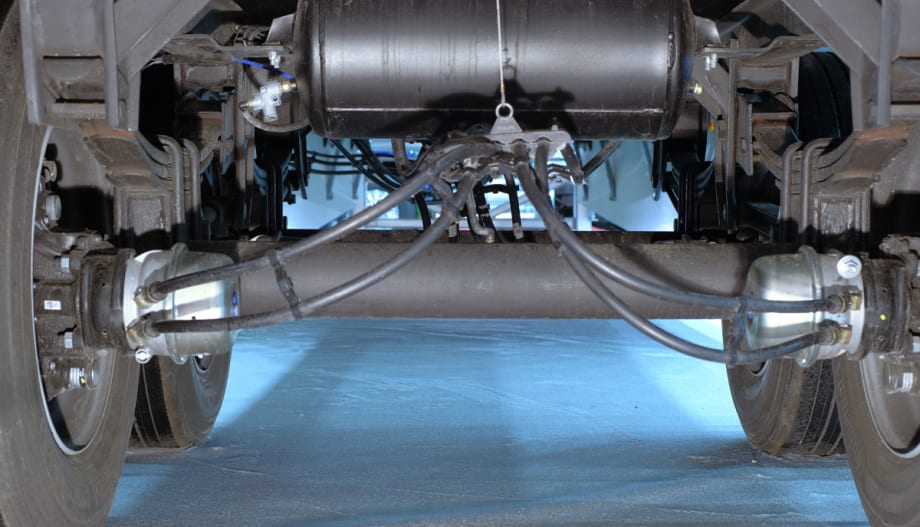
Additionally, drum brakes can suffer some performance degradation over time as linkages and bushings wear and linings thin out. Automatic brake adjusters are designed to compensate for some degree of wear, but they can only do so much.
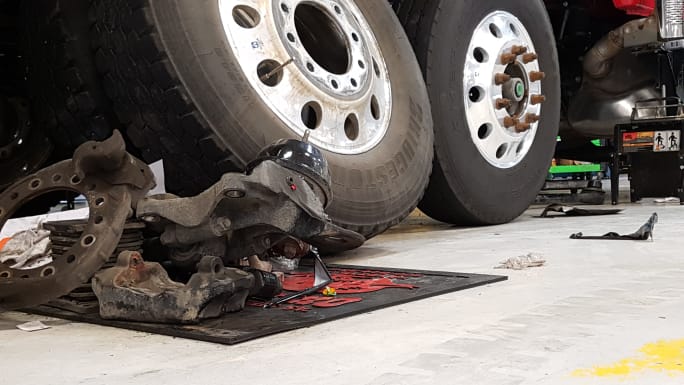
By design, with the exception of the performance and thickness of the friction material (brake pads in disc brakes), none of the mechanical conditions common in drum brakes can afflict disc brakes. It would be rare to hear a complaint about “brake failure” from a driver of a truck equipped with disc brakes.
In the heavily publicized case of Rogel Aguilera-Mederos, the driver convicted in a 2019 Colorado crash and initially sentenced to 110 years, said during his court testimony that his brakes had “failed.”
More likely, bad driving practices, and possibly worn or mis-adjusted brakes were behind his inability to maintain a reasonable speed during his descent of that long hill in I-70 leading into Lakewood, Colorado.
It’s understood that if truck weight is doubled, stopping power must be doubled. But if speed is doubled, stopping power must be increased four times. If both weight and speed are doubled, stopping power must be increased eight times.
In practical terms, that means a fully loaded truck descending a hill at 60 mph will require eight times the stopping power of a lightly loaded truck traveling at 30 mph. Put another way, the brakes on the faster, heavier truck will be doing eight times as much work as the brakes on the slower, lighter truck. The brakes must absorb or dissipate eight times as much heat.
The brake drum and the lining material are designed to dissipate heat, but too much heat that cannot dissipate quickly enough will eventually overwhelm the brakes, rendering them less and less effective, and eventually almost useless in extreme cases. As brake drums expand due to the extreme temperatures, brake stroke increases, lessening the force applied by the actuator via the push rod.
Exactly the opposite happens when disc brakes get hot.
The rotor expands in the direction of the brake pads, reducing the length of the stroke and increasing the force applied to the rotor by the actuator. Disc brakes glowing bright cherry red actually have more stopping power than cold brakes.
That’s probably not a big concern for fleets operating in the Midwest. But when poorly trained drivers venture into mountainous terrain with poorly maintained equipment, brakes become front-page news.
“Even though manufacturers can meet or exceed stopping distance standards with drum brakes, not adopting the latest technology of disc brakes leaves a fleet open for criticism by our friends in the litigious realm,” observes fleet maintenance consultant Bruce Stockton of Stockton Solutions.









