




Test Driving the Nissan NV Light-Duty Commercial Van
As light-duty commercial trucks go, cargo vans are a hot seller because they're so useful. In a good year, about a quarter million are built and snatched up by tradesmen, building contractors, rental fleets and many other types of users

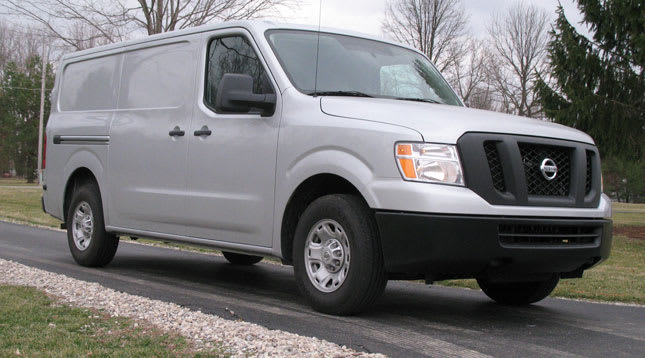
As light-duty commercial trucks go, cargo vans are a hot seller because they're so useful. In a good year, about a quarter million are built and snatched up by tradesmen, building contractors, rental fleets and many other types of users.
Now here's Nissan with a brand-new van that's meant to be more useful than what's already out there.
The NV, as it's called, is built in Mississippi, USA, and is definitely an American-style vehicle. It's large and roomy and has a big, gutsy gasoline V-8. A V-6 is standard in some models and there's no diesel option.
It's aimed at the high-volume segment dominated by Ford's E-series vans. Other competitors are General Motors' G vans and the Mercedes-made Sprinter van, sold by some Freightliner and Mercedes-Benz dealers.
Several years ago Nissan Commercial Vehicles pointedly hired a top Ford executive, Joe Castelli, because he knows a lot about the cargo van business. He helped guide the NV design process, which was aided by extensive research. Castelli also required Nissan dealers who'll handle the NV to invest in equipment, tools and training.
The NV comes as a half-ton 1500, a three-quarter-ton 2500 HD, and a 1-ton 3500 HD. There's a Nissan disc on the grille, but model identification appears only on one rear door. So in early March, when I was driving the one you see here, a lot of people peered at the truck with "what-is-it?" looks on their faces.
The 3500 HD that Nissan lent me resembled a Ford or GM van, but with an obvious difference: the longer nose that allows that V-8 to sit further forward, almost completely within the engine compartment and not in the cab. This makes it easier to work on and, with no wide doghouse to cover the engine's rear, there's more foot and leg room for the driver and particularly for the passenger.
Nissan calls the cab interior "pickup-like" and it pretty much is. A big transmission hump was covered by a small console with a couple of cup holders and not much else. A tall armrest between the two seats had more cup holders and a bin big enough to take file folders and a laptop computer. Overhead storage is optional in some models.
I drove the van locally and then took it from home, near Columbus, Ohio, to Indianapolis and back. I can testify that the driver's seat was large and nicely padded and contoured, so offered excellent support. So was the passenger seat, according to my wife, who rode along as I ran an errand near home. She suffers from spinal arthritis but called the seat "very comfortable." There were no power adjustments, but we didn't need any. A power driver's seat is available in an SV trim level.
This one had the base S trim, so there were power steering and brakes and automatic transmission, but not much else. The side windows were hand cranked, and I had to use the ignition key from outside to lock and unlock the sliding side and rear "French" doors. The cab floor is about 19 inches high, so climbing in for me required grabbing the steering wheel or the large handle on the A pillar. The plastic cover on the door sill was slippery when wet, but I learned to put a foot in the rounded crook where the sill transitions from horizontal to vertical.
The instrument panel was attractively laid out, if sparse, with only a large speedometer and tachometer, and smaller gauges for the fuel level and coolant temperature. I'd have preferred a smaller tach, which would have left room for oil pressure and volt or amp gauges. Of course there were plenty of warning lights, and they'll flash and yell if something ever goes wrong with the engine or other systems. Rotary switches and buttons controlled the HVAC. In early March, when I had the van, it was plenty cool, but the heater kept me warm and ventilation was plentiful.
Windows and windshield were big and so were the side mirrors, so I could see everything I needed to. The mirrors were remotely adjustable, but the multifunction switch for them was at the lower-left side of the dash, hidden by the steering wheel except if I cocked my head in its direction. The long hood was prominent but it sloped down, so forward visibility was good. A center mirror gave a view directly to the rear, through the windows in the two swing doors.
In this base model the cargo compartment's ceiling, walls and floor were bare painted steel, which made for enough road noise out on Interstate 70 to drown out the otherwise nice-sounding radio/CD player. It begs to be upfitted with sound-deadening panels, shelves, bins, and whatever a user might need. Multiple hard points on the floor and roof can accommodate a variety of equipment. There were tie-down rings in the floor, which would've been handy if I had hauled anything besides luggage for my trip to Indy, but I didn't.
The body comes in two roof heights: Standard, which stands about 7 feet from the pavement - and sure enough, I couldn't get into parking garages with posted overhead clearances of 6 feet, 5 inches - and High, which is 8.8 feet off the pavement and offers standup room and quite a bit of interior volume. In the vertical sense the High-roof NV is like the tall German-made Sprinter van, whose cab interior is also more like a pickup's, by the way.
Nissan started with only gasoline engines, the 5.6-liter V-8 that's standard in 3500 HDs and optional in others, and a 4-liter V-6 that's standard in the two lighter-duty models. They're far less expensive than diesel to build and buy, and while they're a bit thirsty, gasoline costs somewhat less than diesel fuel. The many dollars saved upfront results in a lower cost of ownership unless a van will run 25,000 to 30,000 miles per year or more.
This NV did OK on gas mileage, according to a small readout in the dash. It said 15.2 mpg upon delivery, and that dipped to 14.9 around town, then settled on 15.2 while cruising at 70 to 72 mph on I-70, during which the tach read 2,200 to 2,300 rpm. Returning home I took old U.S. 40 and expected economy to drop. But it actually climbed, to 15.6 mpg, even with stops and starts as I passed through numerous towns and a few cities. I'm guessing the better number came from cruising at 60 mph and 2,000 rpm or so on the highway, a much more economical speed for the engine and 5-speed automatic transmission. Load the truck and crawl around town and it might dip to 14 mpg or less.
Not so incidentally, the 317-horsepower Nissan V-8 really goes. No, I didn't do any tire burnouts and I never timed the seconds from 0 to 60 mph, but I moved away from stoplights briskly enough to beat any other car or truck I wanted to. That's what most drivers want, and it's why Ford and GM still put big V-8s in their vans and pickups. Of course this was with an all-but-empty vehicle, but I think the Nissan engine would also haul cargo (payload, including people, is 3,975) and pull heavy trailers without breathing too hard.
This utilitarian truck won't make you breathless in the Chevy Van tradition (remember that 1973 tune?), but it'll be alright with you because it'll do a lot of work, and might be more comfortable than what's been available. Qualified Nissan dealers now have them, but they'll have to work hard to overcome many years of sales momentum and product quality from competitors.
From the July Issue of Heavy Duty Trucking
More Equipment
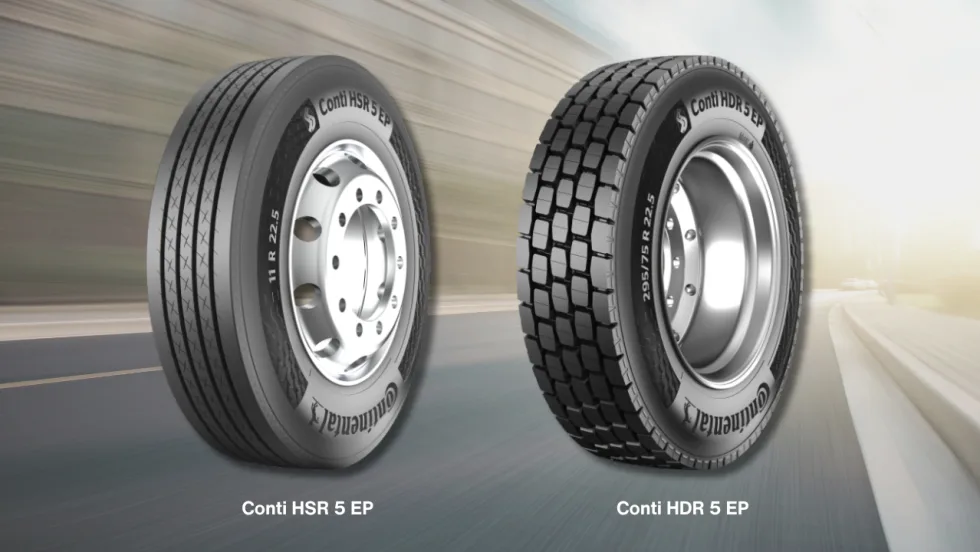
Continental Introduces New Regional Truck Tires
Continental says its new Generation 5 steer and drive tires for regional operations offer longer tread life, with estimated mileage gains of 22% and 19%, respectively.
Read More →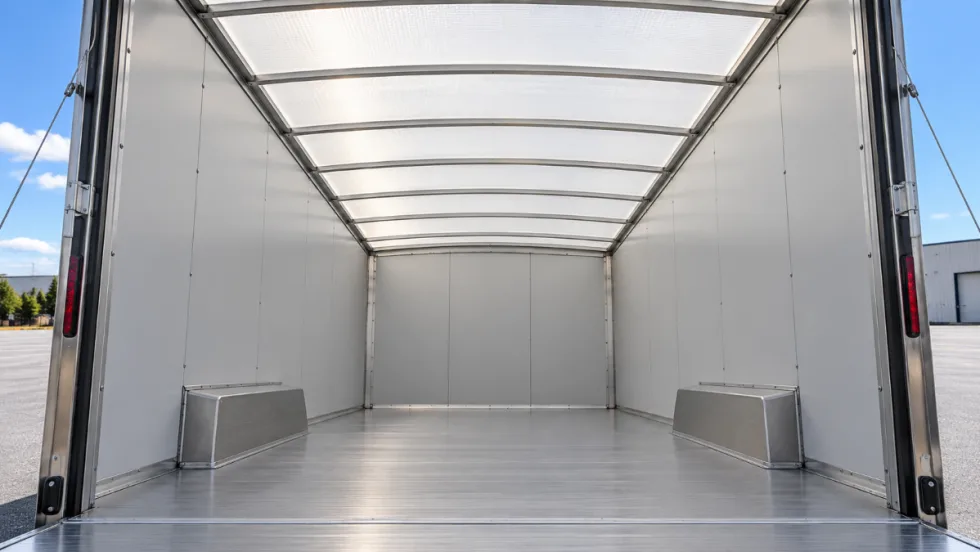
Tekmodo Introduces CargoBright Brand for Translucent Trailer Roofs
CargoBright is designed to diffuse daylight across the cargo area while performing as a working vehicle roof.
Read More →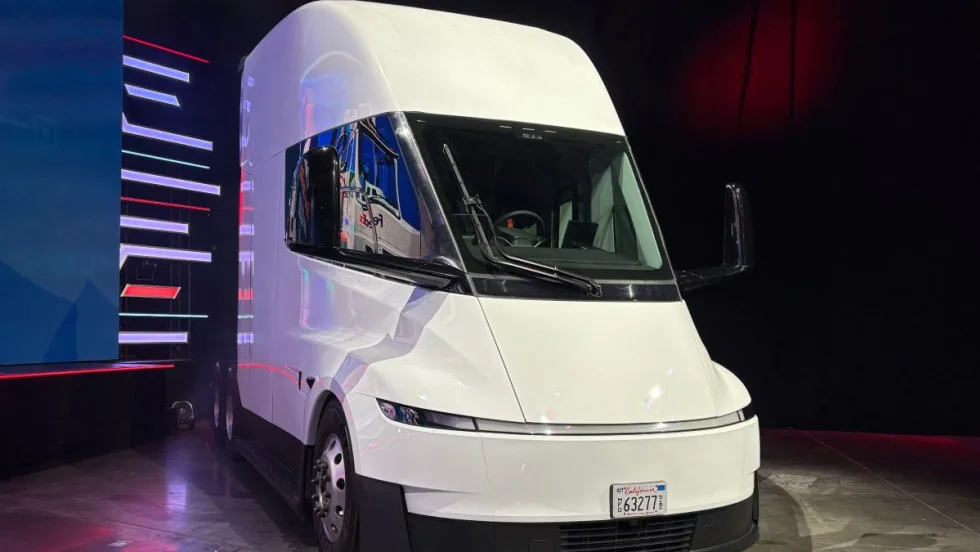
Fleet Economics Shape Electric Truck Outlook
ACT Research expects costs, charging infrastructure, and technology improvements to drive zero-emission commercial vehicle adoption as federal regulations and incentives retreat.
Read More →
Kodiak Targets Dallas–Houston for Driverless Trucks
The company says its autonomous trucks are completing the I-45 run without a safety observer taking control. It plans to remove the observer by the end of 2026.
Read More →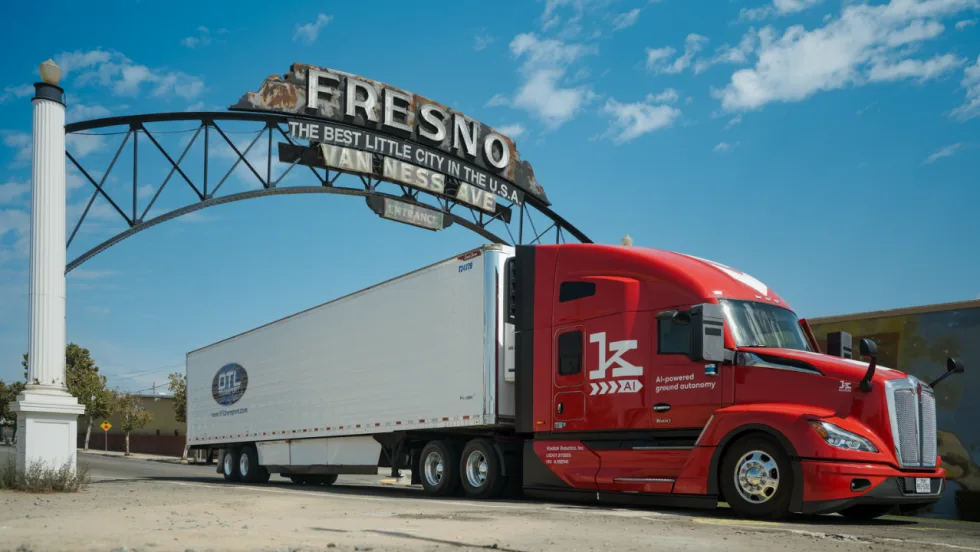
Kodiak Hauls Produce in California Autonomous Truck Pilot
Kodiak AI and DTL Transport have begun hauling produce between Fresno and Los Angeles under California’s new rules for testing heavy-duty autonomous trucks. A safety driver remains behind the wheel.
Read More →
Used-Truck Remarketing Math Is Changing
Used-truck value is no longer just a concern at trade-in. Decisions made throughout a truck’s first life can influence what it’s worth years later.
Read More →
How Volvo Updated Its D13 for EPA 2027 [Watch]
Volvo’s updated D13 promises lower emissions without sacrificing performance or fuel economy. Take a closer look at what changed inside the engine in this HDT Spotlight video.
Read More →
Michelin Tire Improves Efficiency and Durability for Regional Fleets
The Michelin X Multi Energy D2 is a regional haul drive tire engineered to help fleets improve fuel efficiency, durability and traction in demanding stop-and-go operations.
Read More →
ZF Expands Commercial Vehicle Push in North America
ZF is expanding its North American commercial-vehicle presence with new transmission applications, electrification, trailer technology and autonomous-driving systems.
Read More →
Tesla Wants a Self-Driving Semi. Are Cameras Enough?
Could Tesla’s camera-only autonomous driving technology work on an 80,000-pound Semi? In this commentary, HDT's Deborah Lockridge takes a look at Tesla, Cybercab, and how autonomous trucks see the road.
Read More →