




Test Drive: The Cummins Westport ISX12 G
When I first throttled up the new Cummins Westport ISX12 G, I wanted to make a comparison between this natural-gas-fueled engine and its diesel-fired counterpart. But they are different engines, with very different approaches to getting fuel into the cylinders

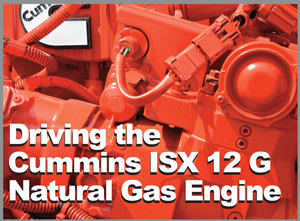
When I first throttled up the new Cummins Westport ISX12 G, I wanted to make a comparison between this natural-gas-fueled engine and its diesel-fired counterpart. But they are different engines, with very different approaches to getting fuel into the cylinders.
The star of this article is one of a handful of Kenworth/Cummins Westport Inc. field test units based at the Paccar Technical Center in Mt. Vernon, Wash.
This and the other field test engines are constantly being tweaked and tinkered with before they start regular production in a few months, so my observations may be inconsistent with other experiences.
The ISX12 G has an engine brake and can be used with manual transmissions, both a welcome change from its smaller cousin, the ISLG.
The fuel system
These natural gas engines do not use fuel injection like their diesel brethren. They are throttled in a manner similar to, but not the same as, a carbureted gasoline engine.
The natural gas fuel, stored in pressurized tanks in liquid (LNG) or compressed (CNG) form, is delivered to a metering/mixing module at about 100 to 110 psi. Here, fresh intake air, recirculated exhaust gas and fuel in its gaseous state are blended together. It sits physically in 1 the same place on the engine as the 5 exhaust gas recirculation mixer on a conventional diesel - the end of the engine's intake manifold.
"With the ISL G we're at a bit of a disadvantage regarding fuel flow, because the fuel is injected into the incoming air stream in the intake manifold, or intake plenum, coming into the engine," explains Christopher Matheis, divisional field service engineer with Cummins Westport. "It's physically several feet away from the cylinders, if you think about it from a volume standpoint."
With today's common rail diesel-fueled engines, he explains, you can stop or start fueling almost instantaneously.
"With a natural gas engine, there is still a charge of fuel-laden air between what we'll call the throttle plate and the cylinders. It takes a split second to burn that fuel off until the driver feels the engine respond to the throttle pedal."
Adding to the challenge is the engine brake. Because compression brakes need large volumes of air to function, Matheis says, they couldn't simply close a throttle plate to cut the fuel/air supply to the engine.
"Unlike 'conventional' throttled engines, we do not use the throttle to slow the engine down. When you let off the accelerator pedal, the throttle plate on the ISX12 G engine actually opens. This allows air to pass into the cylinder so the engine brake will function," he says. "If you closed the throttle plate, there would be no air in the cylinder to compress, and the engine brake simply wouldn't work."
To slow the engine, the fuel supply is cut off at the metering module, but a charge of air and fuel still has to make its way through the intake manifold and into the cylinder. That takes time - roughly half a second.
This was noticeable when downshifting with the manual transmission. When revving the engine prior to the downshift, there was a moment's hesitation before the engine responded to the throttle pedal command to increase engine speed.
The same thing happens on an upshift, but in reverse. The engine revs continue climbing for a moment after releasing the throttle pedal.
That's why many natural gas engines are mated to automatic transmissions. The driver keeps the throttle pedal depressed and the transmission shifts under power. The slight lag in engine response is eliminated.
A work in progress
The delay characteristics are due to the length of the intake manifold pipe, or the distance the fuel/ air mixture has to travel from the throttle plate to the combustion chamber. Engineers are working to keep the lag as short as possible.
"Engine calibrations can make a difference," Matheis explains. "We've recently made some table changes to allow for better shift quality. As you adjust the throttle pedal position, the engine calculates that and determines a torque value that it is trying to achieve depending on rpm.
So, for example, the driver may have to push the pedal down a little farther before the engine responds so it will feel more like a diesel."
Although it feels different from a diesel ISX 12, the natural gas version pulls the way you'd expect a diesel would, and the torque and horsepower ratings are very similar. This one boasted 400 horsepower and 1,450 pounds-feet of torque (compared to 425/1,650 in a diesel).
What is missing is the noise. The ISX12 G is exceptionally quiet, and that has a lot to do with the way the fuel burns. The compression ratio in the gas engine is lower than a diesel, and the fuel is less "potent." The combustion event is less violent, softer feeling. It feels and sounds more like a gasoline engine than a diesel, but it's got diesel power at cruise rpm.
A few hours later
We had the truck for a couple of hours of track driving and then out on the highways around the Technical Center.
While hills were in short supply, the basic maneuvering, up and downshifting, decelerating, etc. gave me a pretty good feel of what the engine would do. We had 75,000 pounds in a dry van, so the engine was certainly earning its keep.
Once I had adjusted for the lag in engine response to the throttle pedal, I nailed every shift and found myself winding up and down through the gears like it was a favorite old ride. The throttle is very snappy in the first 5% or 10% of throttle position. Under load that goes away and it feels just as responsive as a diesel.
The torque curves on the ISX 12 G are very similar to the diesel's curve for the 400/1,450 rating. The real beef is between 1,200 and 1,400 rpm, but even down at 1,075 rpm there's still about 1,425 pounds-feet underfoot. It's very drivable.
I walked away more than satisfied with the ISX12 G. The engineers are trying to make a natural gas engine work and feel like a diesel. They are very close, and in my opinion, the remaining differences are inconsequential.
From the September 2012 issue of HDT
Learn more about natural gas in our special Web section,What Fleets Need to Know About Natural Gas
More Equipment
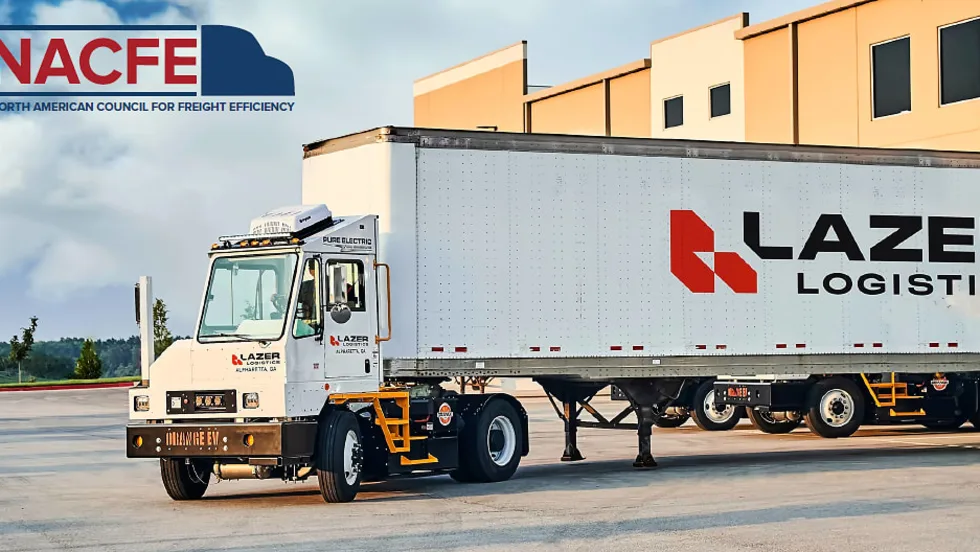
Electric Yard Tractors Move Beyond Pilots
Operating-cost savings have overtaken sustainability goals as the leading reason surveyed fleets are adopting battery-electric terminal tractors, according to new NACFE research.
Read More →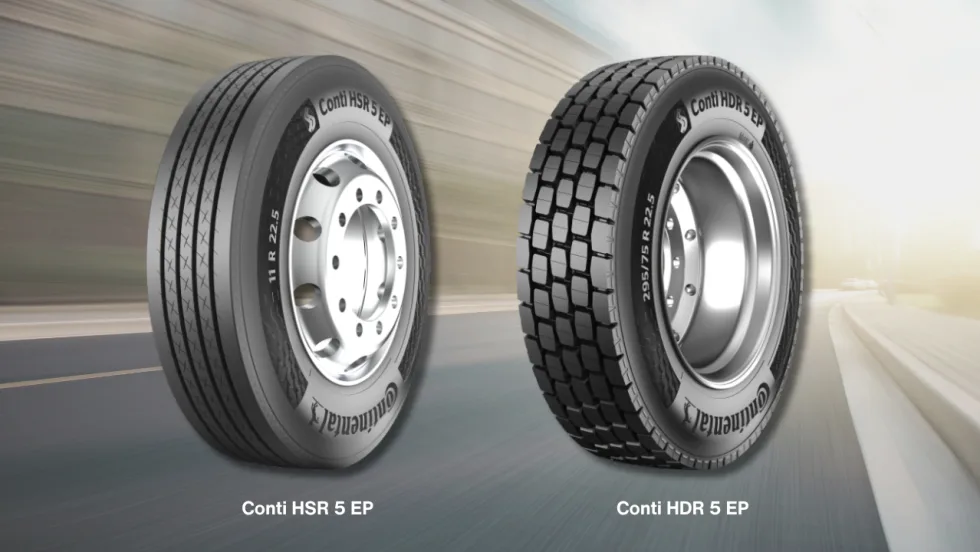
Continental Introduces New Regional Truck Tires
Continental says its new Generation 5 steer and drive tires for regional operations offer longer tread life, with estimated mileage gains of 22% and 19%, respectively.
Read More →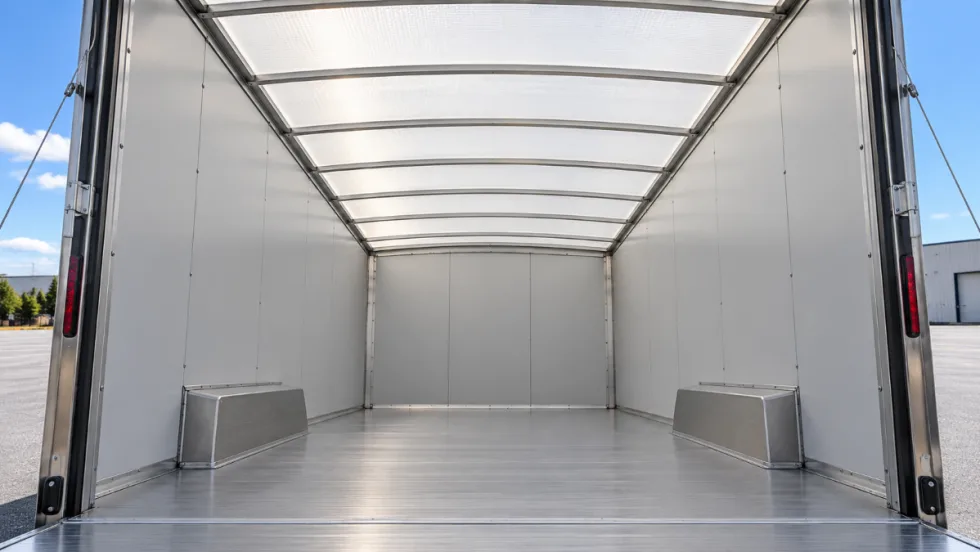
Tekmodo Introduces CargoBright Brand for Translucent Trailer Roofs
CargoBright is designed to diffuse daylight across the cargo area while performing as a working vehicle roof.
Read More →
Fleet Economics Shape Electric Truck Outlook
ACT Research expects costs, charging infrastructure, and technology improvements to drive zero-emission commercial vehicle adoption as federal regulations and incentives retreat.
Read More →
Kodiak Targets Dallas–Houston for Driverless Trucks
The company says its autonomous trucks are completing the I-45 run without a safety observer taking control. It plans to remove the observer by the end of 2026.
Read More →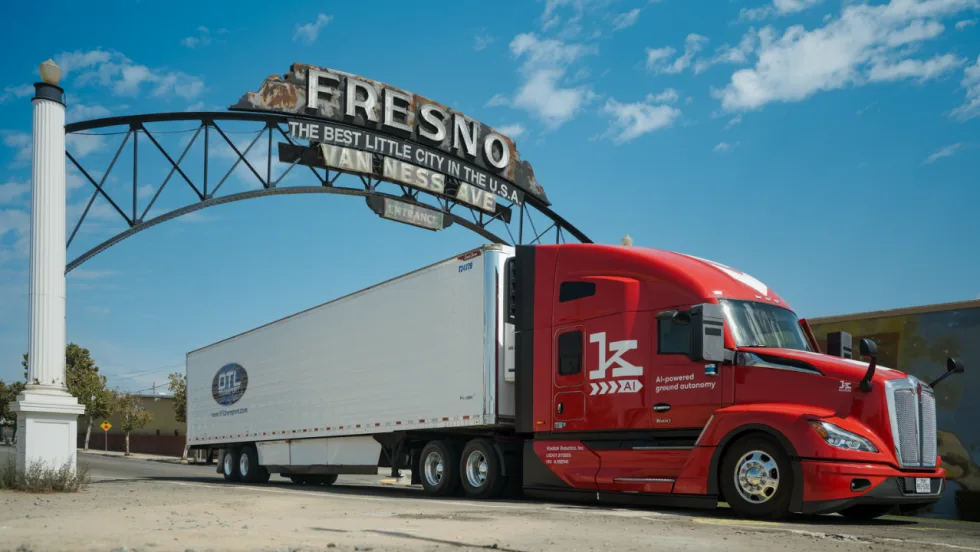
Kodiak Hauls Produce in California Autonomous Truck Pilot
Kodiak AI and DTL Transport have begun hauling produce between Fresno and Los Angeles under California’s new rules for testing heavy-duty autonomous trucks. A safety driver remains behind the wheel.
Read More →
Used-Truck Remarketing Math Is Changing
Used-truck value is no longer just a concern at trade-in. Decisions made throughout a truck’s first life can influence what it’s worth years later.
Read More →
How Volvo Updated Its D13 for EPA 2027 [Watch]
Volvo’s updated D13 promises lower emissions without sacrificing performance or fuel economy. Take a closer look at what changed inside the engine in this HDT Spotlight video.
Read More →
Michelin Tire Improves Efficiency and Durability for Regional Fleets
The Michelin X Multi Energy D2 is a regional haul drive tire engineered to help fleets improve fuel efficiency, durability and traction in demanding stop-and-go operations.
Read More →
ZF Expands Commercial Vehicle Push in North America
ZF is expanding its North American commercial-vehicle presence with new transmission applications, electrification, trailer technology and autonomous-driving systems.
Read More →