




TA Chief O’Brien Carries Torch for Natural Gas
If you’re skeptical about the future of natural gas in trucking, meet Thomas O’Brien, president and CEO of TravelCenters of America.

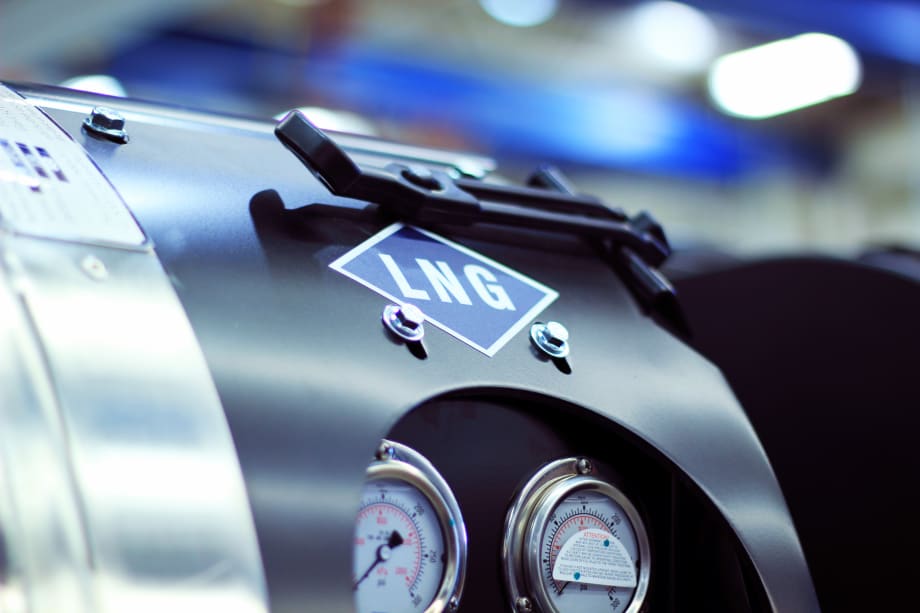
TA says starting next year it will offer liquefied natural gas fueling stations for trucks like this new Kenworth available for rent from Paclease.
If you’re skeptical about the future of natural gas in trucking, meet Thomas O’Brien, president and CEO of TravelCenters of America.
“The math is close enough and we’re moving on,” said O’Brien in an assertive message to hundreds of fuel and transportation experts gathered in June in Washington, D.C., for the 2013 Alternative Clean Transportation Expo.
TA says starting next year it will offer liquefied natural gas fueling stations for trucks like this new Kenworth available for rent from Paclease.
Skeptics list several roadblocks to widespread adoption of natural gas, O’Brien said.
They say the equipment costs more than diesel equipment, both up-front and in terms of the risk. If the demand for natural gas goes up and diesel goes down, then gas loses its pricing edge. And, skeptics say, the infrastructure to distribute gas is not yet in place.
This is “pencil pushing,” O’Brien said. “Nobody really cares any more.”
He said TA, a full-service truckstop chain with 165 locations, is committed to providing natural gas at its facilities, because his customers want it.
TA and Shell are planning a nationwide network of liquefied natural gas fueling centers for trucking customers. The first of 100 or so planned gas fueling lanes at TA and Petro Stopping Centers is scheduled to open next year.
TA has selected the first 20 locations, O’Brien said. They will start in California, Texas and Nevada, and the result will be well-connected corridors where natural gas is available.
The installations are more expensive than diesel – six to seven times more expensive, in fact – but that cost will come down as volume goes up.
There’s more to the decision than just the immediate infrastructure cost, though.
The discovery of natural gas resources, and of the fracking technology to tap them, is a game-changer for the United States, O’Brien said.
“Natural gas has the ability to transform the transportation industry, to meaningfully expand the economy and can help ensure energy independence.”
Natural gas could provide the largest single competitive advantage the United States has enjoyed in the past century, he said.
“The dreamers found it. Now it’s up to us to act. We need to work together to use our new advantage wisely. Alternatives to polluting foreign fuel are here today and are here to stay.”
The pace of adoption is accelerating. O’Brien said many large fleets are testing or converting to natural gas, such as UPS (see sidebar on p. 32), and some are predicting that gas could reach 40% of the heavy-duty market.
He said he is confident of TA’s role in adopting the fuel.
“We have taken the time to plan to do it right,” he said. “For those who may come to rely on over-the-road liquid natural gas, TA will hold up its end.”
The Environmental Protection Agency is more ambitious for the next phase of its heavy-duty truck fuel economy standards than it was for the first round.
Christopher Grundler, director of the EPA Office of Transportation and Air Quality, said while it’s too early to spell out details, the agency will look at trailers as well as new engine and transmission technologies.
In remarks to fuel and transportation experts gathered in Washington, D.C., for the Alternative Clean Transportation Expo, Grundler said the agency also will look at aerodynamics, alternative fuels and the legacy fleet.
Grundler was discussing the issue in the wake of President Obama’s announcement that EPA will develop new fuel economy and greenhouse gas standards for post-2018 model year trucks, following on the standards put in place in 2011 that start going into effect next year.
“We are talking to manufacturers and we’re very excited about the technologies they are working on for the future,” Grundler said. “The technologies span the gamut from better engines to better transmissions, to better aerodynamic designs to mass production to fuel-based strategies. All of that will be on the table for consideration as we begin this collaborative process.”
He said the agency intends to build on the “substantial amount of good will” generated by the collaborative effort that led to the 2011 standards.
Still, he said, the agency is setting higher goals for the next round.
“It will be more challenging and more difficult to achieve, but worth while. There are still cost savings that are available to customers that we would like to see.”
More Fleet Management

Color Match Smarter: Tools That Restore & Perform
For fleet managers and collision repair professionals keeping heavy-duty trucks on the road, getting the color right the first time isn't just about appearance — it's about efficiency, turnaround time, and bottom-line results. Discover how today's digital color tools are transforming the repair process from guesswork to precision.
Read More →
FMCSA Pauses Biennial-Update Enforcement Amid Motus Transition
Carriers whose updates were due on or after June 1 have more time, while FMCSA works to stabilize its new registration system and warns of phishing sites impersonating its new carrier registration system, Motus.
Read More →
2026 Blueprint for Countering Smarter Supply Chain Theft
Cargo theft is no longer just the cost of doing business. It's a multi-billion-dollar criminal enterprise exploiting vulnerabilities across your fleet, drivers, and supply chain.
Read More →


How Telematics Improves Visibility, Control, and Performance in Refrigerated Fleets
Explore how telematics help refrigerated fleets improve visibility, uptime, efficiency, compliance, and cargo protection across connected cold chain operations.
Read More →
What the U.S.-Canada Trade War Means for Trucking
Escalating U.S.-Canada tariffs could disrupt cross-border freight, reduce truck volumes, raise costs, and create new uncertainty for carriers on both sides of the border.
Read More →
What Are Trucking’s Top Concerns for 2026?
The American Transportation Research Institute wants to know what's worrying trucking fleet managers, drivers, and other stakeholders in its annual Industry Issues survey.
Read More →
American Trucking Associations Looks for a New Leader
ATA President and CEO Chris Spear abruptly left his job at the association on August 21, at a pivotal time for the trucking industry.
Read More →
Public Wi-Fi Cybersecurity Risks: How Truck Drivers and Fleets Can Protect Their Data
Public Wi-Fi can expose truck drivers and fleets to credential theft, malware, and other cyber threats. Here’s how to reduce the risk on the road.
Read More →
For Nicky Cupp, Fleet Innovation Starts With Frustration
HDT Truck Fleet Innovator Nicky Cupp turns everyday pain points at Fraley & Schilling into opportunities for better technology and smarter processes.
Read More →
Adam Buttgenbach’s Approach to Electric Trucks: Start With Where They Fit
HDT Truck Fleet Innovator Adam Buttgenbach helped PepsiCo build one of North America’s largest EV fleets by focusing on where electric trucks make operational sense.
Read More →