




Sacramento Provides Power so Truckers Can Plug In and Avoid Idling
The Sacramento Municipal Utility District is working with truckers and truck stop operators to achieve a clean-air alternative to truck idling. By providing utility power where big rig drivers spend their rest period, truckers can plug in their rigs to electrical outlets and avoid idling their engines.
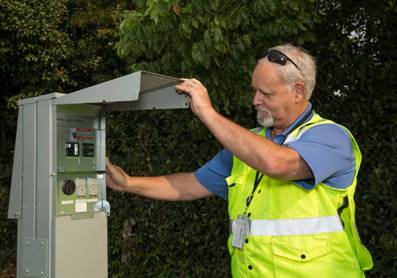
Sacramento Municipal Utility District (SMUD) program manager David Hatfield inspects newly installed “shore power” electric hookups at the Sacramento 49er Travel Plaza, a truckstop near the interchange of Interstates 80 and 5. By providing utility power where big rig drivers spend their rest period, truckers can plug in their rigs to electrical outlets and avoid idling their engines.

The Sacramento Municipal Utility District is working with truckers and truck stop operators to achieve a clean-air alternative to truck idling. By providing utility power where big rig drivers spend their rest period, truckers can plug in their rigs to electrical outlets and avoid idling their engines.
More than 30 electrical “shore power” hookups have been installed at the Sacramento 49er Truck Travel Plaza truck stop on Interstate 80 just west of the Interstate 5 interchange. When truckers turn off the diesel engines and plug into SMUD’s grid to power appliances, harmful emissions are reduced and truckers save money.
SMUD has partnered with federal and state agencies to promote this new national effort to accommodate truckers with auxiliary power so they can reduce the idling of polluting engines.
About 10 years ago, SMUD began a pilot program to introduce truckers to plugging in their big rigs by installing sixteen electrical “shore power” hookups at the 49er. The current 18-month demonstration project is intended to gather technical data and determine feasibility. If it works, the project will go commercial.
“Last decade, getting truckers to plug in instead of idling was challenging,” said Tristen Griffith, president, Sacramento 49er Truck Travel Plaza. “A lot has changed since then. We expect to see considerably more truckers plugging in now, and we’re very proud to be a leader in this change for the better,” said Griffith. “One of SMUD’s core values is environmental protection,” said David Hatfield, SMUD project manager.
Truckers save money using the new technology. Considering the price of diesel fuel—now at more than $4 per gallon in California—staying cool and running appliances for ten hours costs more than $40 compared to about $1 in electricity costs.
Engine idling has been standard practice in the trucking industry ever since drivers began lodging in their trucks during long-haul trips. Many trucks have sleeper compartments that resemble small apartments with most of the comforts of home. Idling the truck engine consumes about a gallon of fuel per hour, producing significant amounts of carbon dioxide and air pollutants such as nitrogen oxides, carbon monoxide and particulate matter. It also makes a lot of noise that interrupts the restfulness of the rest period.
In the U.S., trucks consume more than two billion gallons of fuel annually while idling, resulting in wasted energy and emissions of air pollutants that can be harmful to the environment and public health. For every truck that eliminates idling there is a savings of 580 pounds of NOx per year, based on an 8-hour per day reduction in run time. That’s equivalent to the emissions from 116 passenger cars. When combined with other gases on hot, sunny days, NOx produces ground-level ozone, which can be harmful to the environment and to our health.
For more information about SMUD and its energy-saving and pollution-reducing programs and efforts, visit smud.org.
More Fuel Smarts
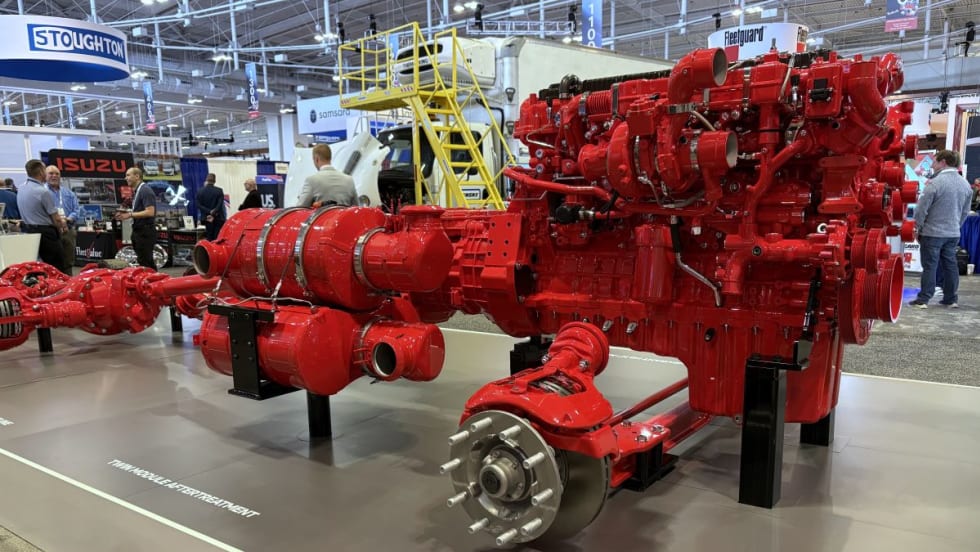
Cummins Adjusts 2027 Engine Rollout After EPA Proposal
The engine maker will gradually introduce its new Model Year 2027 diesel engines while continuing to offer current models during the transition, citing the EPA's proposed emissions rule changes.
Read More →
EPA Proposal Could Ease 2027 Truck Costs and Buying Uncertainty
The proposal doesn't change the tougher NOx standard, but it would revise key implementation requirements that manufacturers say have driven up costs and complicated fleet purchasing decisions.
Read More →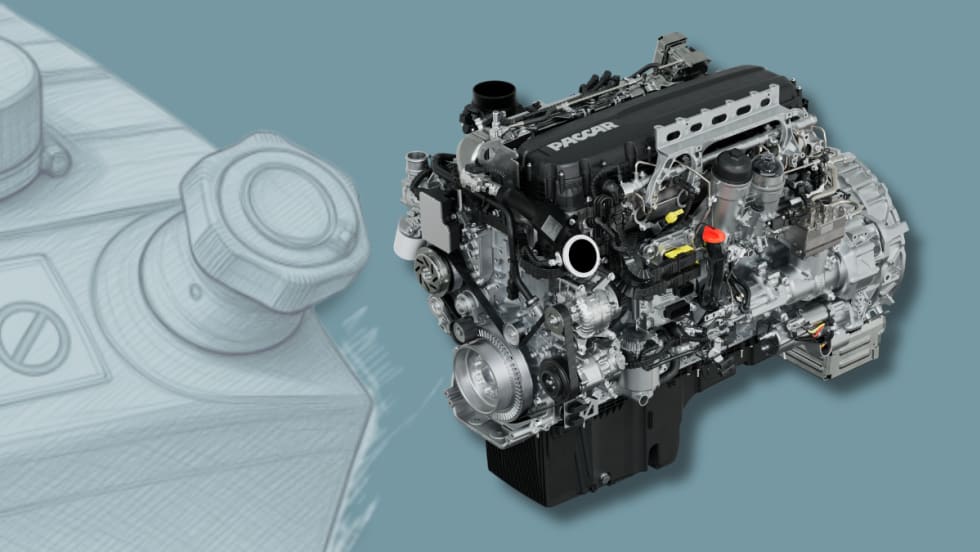
Cummins, Paccar Ease DEF Derates After EPA Guidance
Updated diesel engine software gives truck operators more time to address emissions-system issues while staying compliant with EPA emissions standards.
Read More →
Maintenance in the Messy Middle Part 3: Biodiesel
Biodiesel can reduce emissions, improve fuel-system lubricity and use existing diesel infrastructure. But NACFE’s Messy Middle maintenance report says fleets must actively manage storage, cold-weather operation, filters and oil drain intervals to avoid problems.
Read More →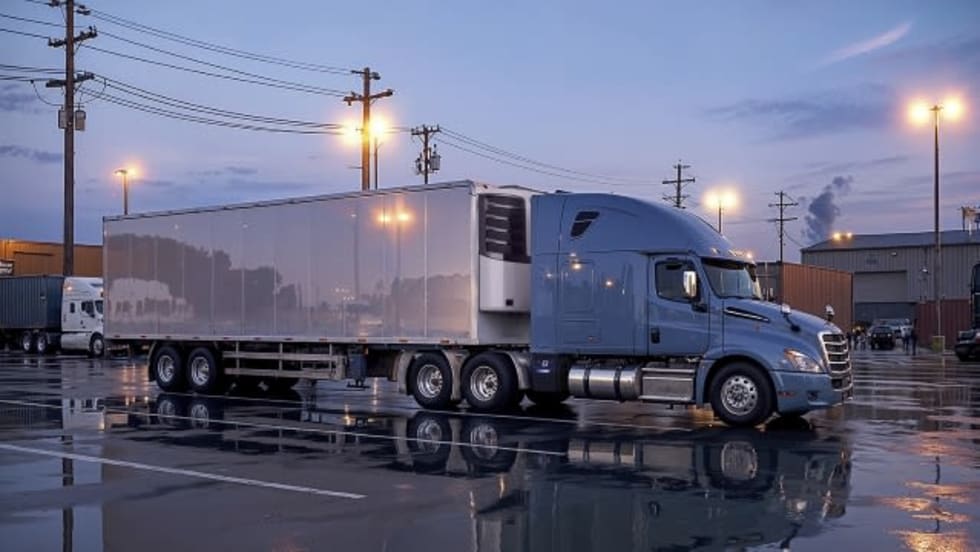
Enhance Fleet Performance with High-Efficiency Auxiliary Power Units
Drive sustainable cost savings while increasing driver comfort during short- and long-haul logistics operations.
Read More →
Maintenance in the ‘Messy Middle’ Part 2: Renewable Diesel Fuel
NACFE's latest Messy Middle Powertrain Service & Maintenance report says renewable diesel gives fleets an opportunity to reduce carbon emissions without changing trucks, fueling infrastructure or maintenance practices. But technicians still need to understand several important operational differences.
Read More →
The Diesel Engine Enters NACFE’s ‘Messy Middle’
NACFE’s new Messy Middle Powertrain Service & Maintenance report says keeping modern diesel engines running now depends as much on software, diagnostics and data as traditional mechanical service.
Read More →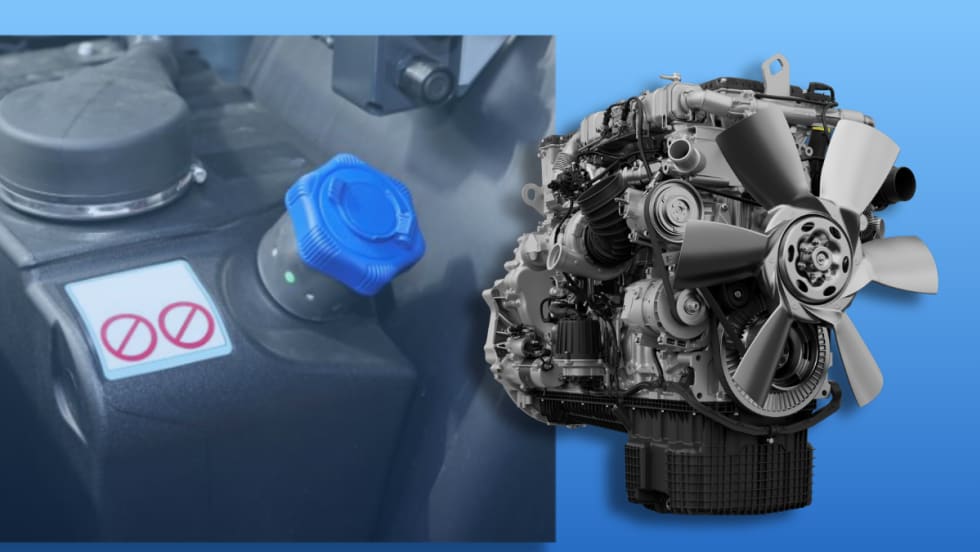
DTNA Software Update Gives Truckers More Time Before DEF Derates Take Effect
The changes reflect EPA guidance aimed at reducing downtime caused by emissions-system faults while maintaining compliance requirements.
Read More →
New Agentic Predictive Maintenance Report Demonstrates How Degraded Aftertreatment Systems Waste Fuel
Questar analyzed a large mixed-class fleet and discovered it was wasting as much as $30 in fuel per vehicle, per day, because of mechanically degraded aftertreatment systems.
Read More →
New York City's Microhub Project is Delivering Results
Trucking, last-mile delivery companies, and environmental advocates like what they are seeing so far with New York's microhub program.
Read More →