




Retractable Tarping Mechanisms Quick, Safe
Throwing a tarpaulin over a big load on a flatbed trailer, especially on a cold, snowy windy day might be the most difficult job in trucking but there are easier alternatives.

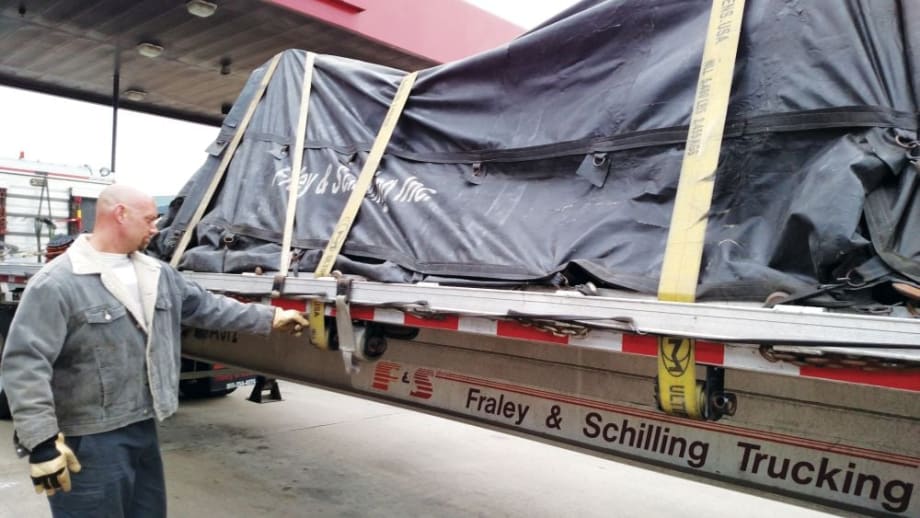
Joe Bryant, a flatbedder from Ohio, checks the strapping on his tarped load of steel coils while fueling near Wilmington along I-71. He prefers manual tarps because it’s hands-on.
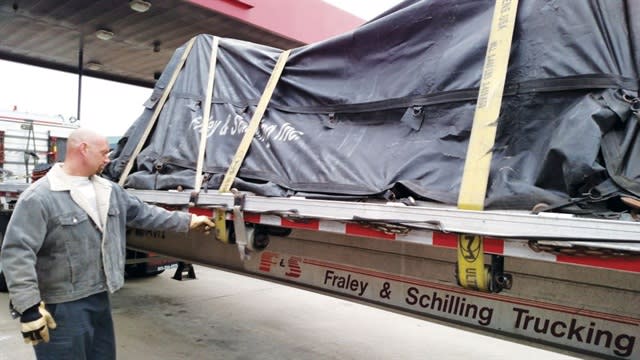
Joe Bryant, a flatbedder from Ohio, checks the strapping on his tarped load of steel coils while fueling near Wilmington along I-71. He prefers manual tarps because it’s hands-on.
Is there any more difficult job in trucking than throwing a tarpaulin over a big load on a flatbed trailer, especially on a cold, snowy and windy day? A tarp is bulky and, depending on size and material type, weighs 40 to 90 pounds, says Bernie Carpenter, president and owner of Tarpco Inc. in Kent, Ohio. The risk of injuries is high in such work, and slips and falls constitute the single biggest category in worker’s compensation claims in the trucking industry, according to insurance sources.
“Materials sensitive to the elements that need to be covered -- they need to be wrapped and the tarp tucked under on both sides and at both ends,” he says. “You tie the load down and throw the tarps. It’s hard on the back, shoulders and arms, and it’s especially hard on older drivers, and that’s why lots of them are retiring. It’s hard to get younger guys to take jobs like that. Frankly, they don’t want to work that hard.”
Carpenter will gladly sell you a tarp and custom-sew it to your specifications, and that’s a big part of his company’s business. But there are a couple alternatives: a side kit that costs $2,800 to $3,800, and a retractable mechanism that’s priced from $12,000 to $15,000. His company sells both types.
A side kit consists of plastic side panels, wood or metal stakes, and overhead metal bows covered by sections of tarp. The result is a trailer that looks vaguely like an old covered wagon. A retractable product is semi-permanently attached to a flatbed and forms a van-like enclosure for a load. The roof and sides fold up like an accordion to bare the trailer’s platform for loading and unloading, then rolls back into position on side tracks to cover the load.
A side kit takes maybe 20 minutes to take out the panels, undo straps and fold back part of the tarp to load, he says. Then the driver replaces the pieces and secures them. It’s easier and faster than dealing with a large foldable tarp, but either way the driver’s out in the elements, unless a hospitable shipper allows him to work inside a warehouse or plant.
But Carpenter’s high on the retractable mechanisms because they are fast to fold back and deploy, taking less than 10 minutes each way. In most cases the driver can operate one from the ground, limiting the time aboard the trailer – and his chances of falling off it. For some loads he’d have to get up on the deck to tie them down, but many can be secured from the ground.
“Steel producers love ‘em because they’re quick,” he says of the retractables. “And fleet managers like ‘em because the truck spends more time on the road earning money,” he says, “particularly if you’re loading and unloading three or four times a day. Then the return on investment is quick. In a fleet, experienced drivers who take care of their equipment get the new retractables. It’s actually extending their careers.
“We’re the number one Quick Draw dealer in the U.S.,” Carpenter continues. “Usually there are six fabric sections in a 48-foot trailer, and each of them is replaceable, versus patching with a damaged single-section cover. They will last six to nine years if you take care of them. And all Quick Draw parts are replaceable. Van Gogh, Arrow, ShurTight, and Roll Rite – we install them all. I’ve got very talented people.
“We see ‘em all but we choose to stay with Quick Draw because it’s the simplest and the best. It’s simple to use, quick to repair and boom – you’re back on the road.” He adds that some situations might not allow use of the retractable, and many fleets prefer to stay with regular tarps.
Manual, folding tarps remain widely used because they’re relatively cheap and, with care and proper training, drivers can deal with them safely and expeditiously, fleet sources say. And they’re almost always paid extra for the work. On longer hauls, loading, unloading and tarping is a relatively short amount of the total time spent, and the savings from a retractable product would take a long time to pay back. Also, some loads are too wide to be covered by retractables or side kits, but tarps are flexible and can do the job.
Tarpaulin material is usually vinyl that comes in varying weights: 14, 18 and 22 ounces per square yard, with 18 being the most popular, Carpenter explains. Two or three separate tarps would be used to cover loads on a 48-foot trailer.
“We buy the material and make the tarps. We lay out, cut, and sew or heat-form the edges, and install grommets. Owner-operators, fleets, whoever’s hauling the loads — everybody wants something different.” Tarpco supplies custom colors and stencils on lettering and other graphics. Some look really sharp, he says — even tarps made by competitors. ‘Nuff said.
More Equipment
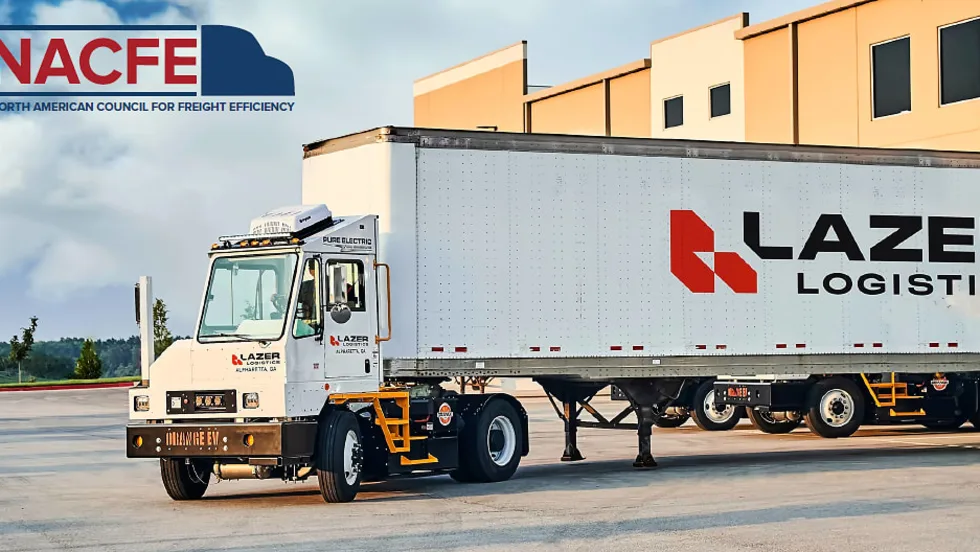
Electric Yard Tractors Move Beyond Pilots
Operating-cost savings have overtaken sustainability goals as the leading reason surveyed fleets are adopting battery-electric terminal tractors, according to new NACFE research.
Read More →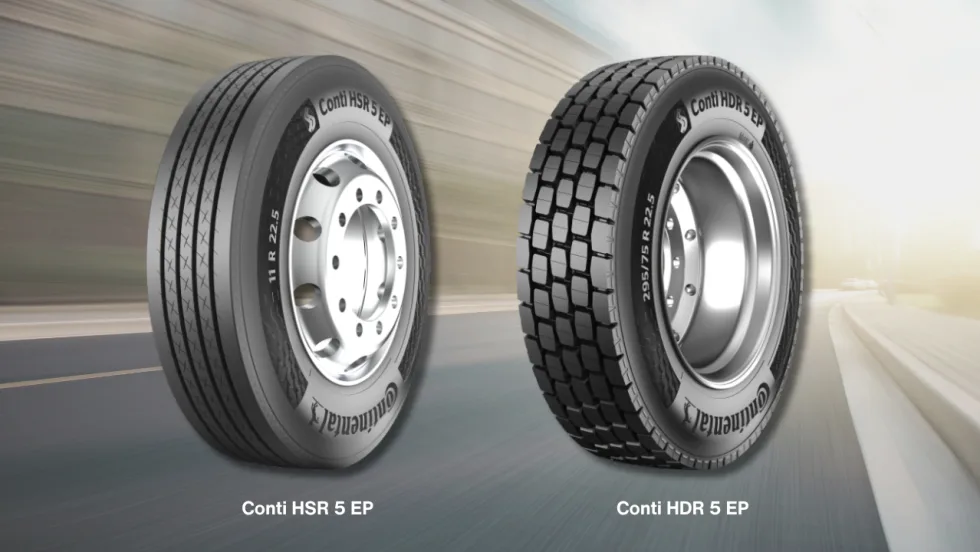
Continental Introduces New Regional Truck Tires
Continental says its new Generation 5 steer and drive tires for regional operations offer longer tread life, with estimated mileage gains of 22% and 19%, respectively.
Read More →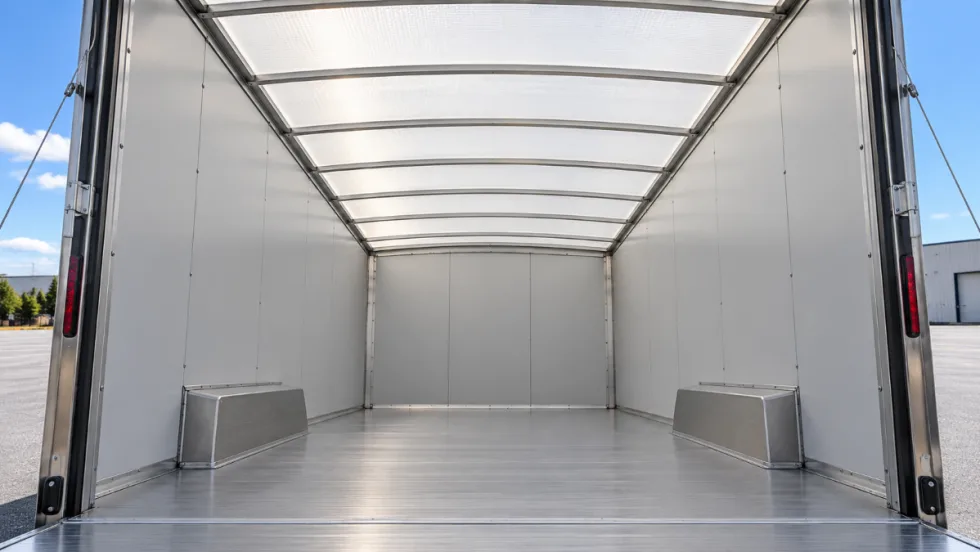
Tekmodo Introduces CargoBright Brand for Translucent Trailer Roofs
CargoBright is designed to diffuse daylight across the cargo area while performing as a working vehicle roof.
Read More →
Fleet Economics Shape Electric Truck Outlook
ACT Research expects costs, charging infrastructure, and technology improvements to drive zero-emission commercial vehicle adoption as federal regulations and incentives retreat.
Read More →
Kodiak Targets Dallas–Houston for Driverless Trucks
The company says its autonomous trucks are completing the I-45 run without a safety observer taking control. It plans to remove the observer by the end of 2026.
Read More →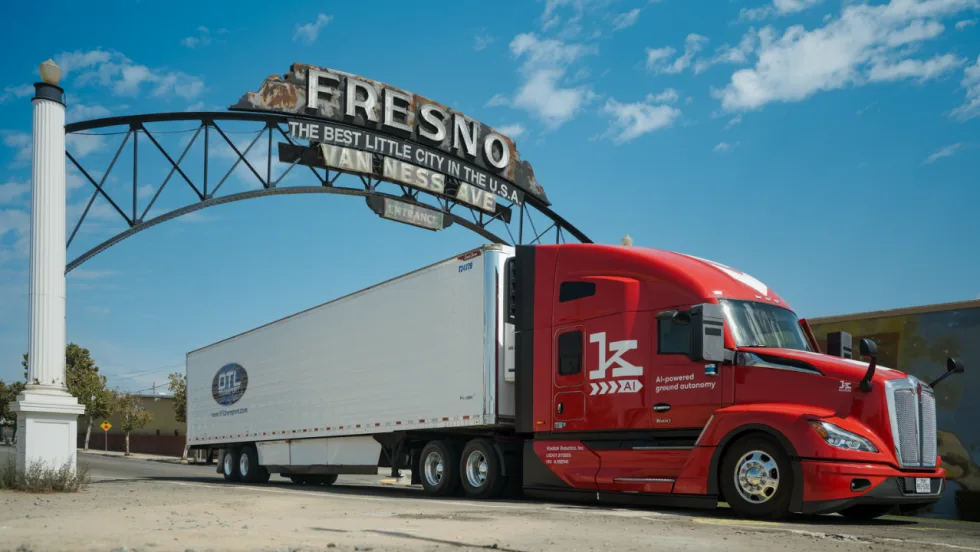
Kodiak Hauls Produce in California Autonomous Truck Pilot
Kodiak AI and DTL Transport have begun hauling produce between Fresno and Los Angeles under California’s new rules for testing heavy-duty autonomous trucks. A safety driver remains behind the wheel.
Read More →
Used-Truck Remarketing Math Is Changing
Used-truck value is no longer just a concern at trade-in. Decisions made throughout a truck’s first life can influence what it’s worth years later.
Read More →
How Volvo Updated Its D13 for EPA 2027 [Watch]
Volvo’s updated D13 promises lower emissions without sacrificing performance or fuel economy. Take a closer look at what changed inside the engine in this HDT Spotlight video.
Read More →
Michelin Tire Improves Efficiency and Durability for Regional Fleets
The Michelin X Multi Energy D2 is a regional haul drive tire engineered to help fleets improve fuel efficiency, durability and traction in demanding stop-and-go operations.
Read More →
ZF Expands Commercial Vehicle Push in North America
ZF is expanding its North American commercial-vehicle presence with new transmission applications, electrification, trailer technology and autonomous-driving systems.
Read More →