





Related: QuickSpin - Mack's mDrive HD
QuickSpin: Driving ProStars with Different Engines
With almost identical engine ratings, does bigger displacement really make a difference?
October 6, 2015
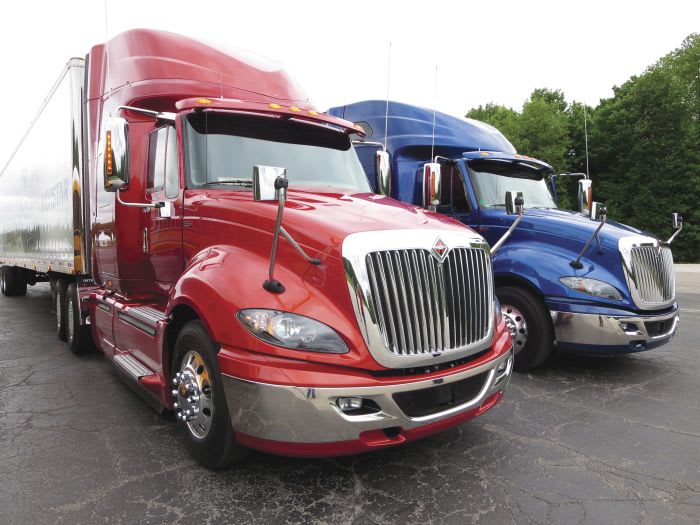
International ProStar ES with Navistar’s N13-450 (left) and ProStar ES with Cummins ISX15-450. Bigger displacement seemed to perform better, and might offer extra life. Photo: Tom Berg
2 min to read
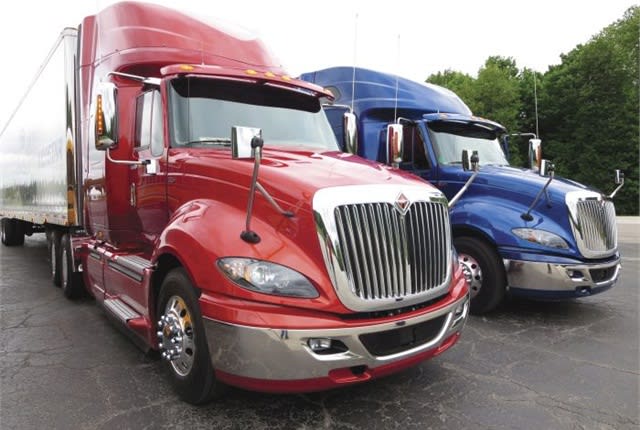
International ProStar ES with Navistar’s N13-450 (left) and ProStar ES with Cummins ISX15-450. Bigger displacement seemed to perform better, and might offer extra life.Photo: Tom Berg
The old Studebaker proving grounds in northern Indiana are now under the ownership of Navistar Inc., and an event for trade press reporters proved to be an interesting opportunity to compare some of the different engines offered in International trucks.
The facility south of New Carlisle is far more spacious than the company’s old tech center and track in Fort Wayne, and reporters engaged in a multi-vehicle ride and drive that covered many of the on- and off-road testing paths.
A 3-mile paved and banked oval allows steady 65- to 70-mph cruising by heavy tractor-trailers without using public roads, something Navistar engineers never had before. There are also several miles of dirt trails and oddly paved surfaces that shake and rattle trucks nearly to pieces.
Navistar bought the facility from Robert Bosch, the German component maker that had acquired it in the 1990s from Bendix Corp., which picked it up after Studebaker-Packard folded in the 1960s.
The ride and drive included 13 International trucks and an IC school bus. Among those was a pair of ProStar ES sleeper-cab tractors designed for over-the-road service. Both trailers weighed about the same so we could make reasonable comparisons.
Both ProStars had Eaton Advantage 10-speed automated manual transmissions, but the engines differed: One had a Navistar N13 diesel and the other a Cummins ISX15, both rated at 450 hp with multiple torque output: 1,550/1,700 for the 12.4-liter N13 and 1,550/1,750 for the 14.9-liter ISX15. On paper, there was only 50 lb-ft of difference between the two engines, so one might think performance would be almost identical. But the Cummins had a larger displacement, by 2.5 liters or 153 cubic inches. Should that matter?
My seat-of-the-pants judgment was yes. Once up to highway cruising speed on the long oval track, the Cummins simply felt a bit stronger. When I nudged the accelerator to ask for more speed, the ISX seemed to respond with more authority than the N13, though the Navistar diesel’s reaction was entirely acceptable. If I had driven only an N13-450-powered truck, I’d have been pleased; but once exposed to the ISX15, I preferred it.
Was that merely perception prompted by my knowing that the Cummins was bigger? Did the extra 50 lb-ft matter? It would be interesting to do timed acceleration testing with these two rigs, from 50 to 60 mph, then from 50 to 70 mph, and see if there really is a quantifiable difference. Now there’s a project where that long track would come in handy.
Subscribe to Our Newsletter
More Equipment
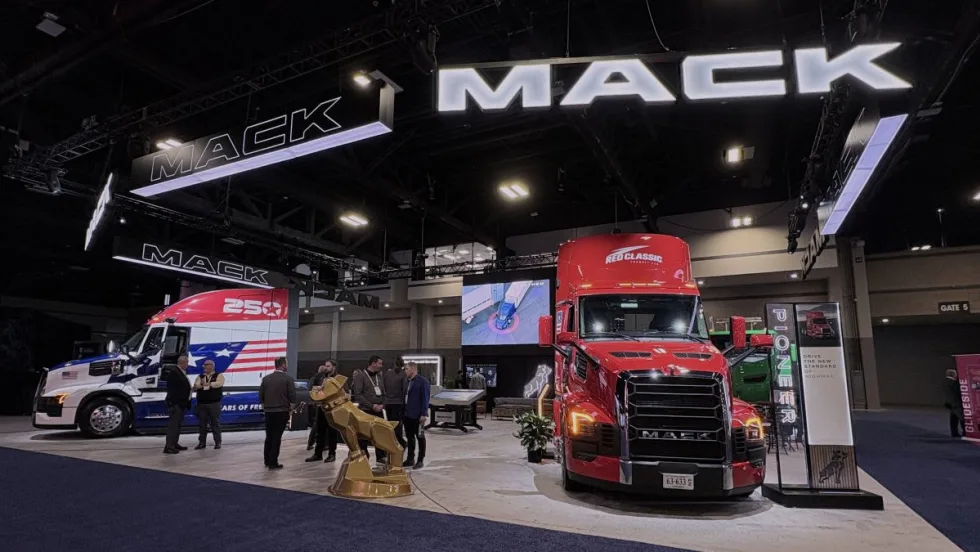
Trucks at ATA's 2026 MC&E in Charlotte, North Carolina [Photos]
From rigs decked out in patriotic America's 250 paint schemes to autonomous trucks and more, check out these photos from ATA's 2026 Management Conference & Exhibition.
Read More →
Help HDT Find Trucking’s Top Products
Have you come across a new product that could make a difference for trucking fleets? Nominate it for HDT’s 2027 Top 20 Products Awards by November 9.
Read More →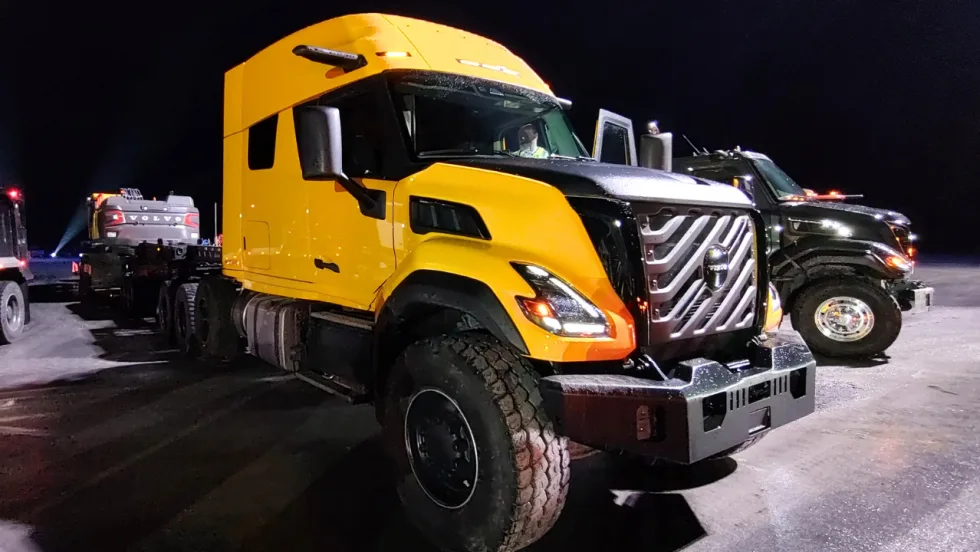
Volvo Unveils New VNX Heavy-Haul and Vocational Truck
Volvo Trucks has launched the VNX, a new vocational truck also available as a tractor in day cab and two sleeper configurations, with one heavy-haul model. The Volvo VNX is powered by Volvo's D13 platform, which delivers up to 540 horsepower and 1,950 pound-feet of torque and is EPA 2027-compliant.
Read More →
How GP Transco Cuts Trucking Fuel Costs, a Tenth of a Gallon at a Time
What’s another tenth of a mile per gallon worth? GP Transco shares how equipment upgrades and driver coaching turn small gains into meaningful fuel savings.
Read More →
Electric Yard Tractors Move Beyond Pilots
Operating-cost savings have overtaken sustainability goals as the leading reason surveyed fleets are adopting battery-electric terminal tractors, according to new NACFE research.
Read More →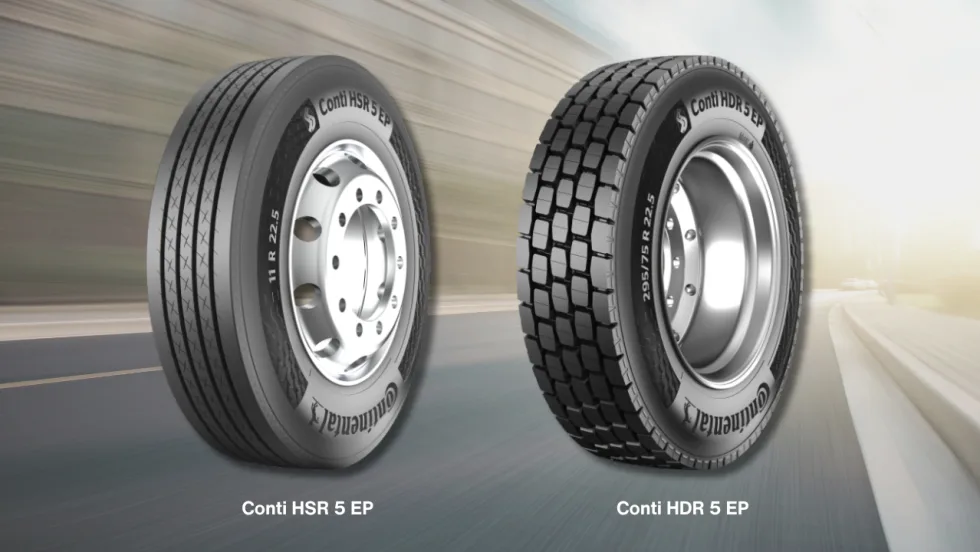
Continental Introduces New Regional Truck Tires
Continental says its new Generation 5 steer and drive tires for regional operations offer longer tread life, with estimated mileage gains of 22% and 19%, respectively.
Read More →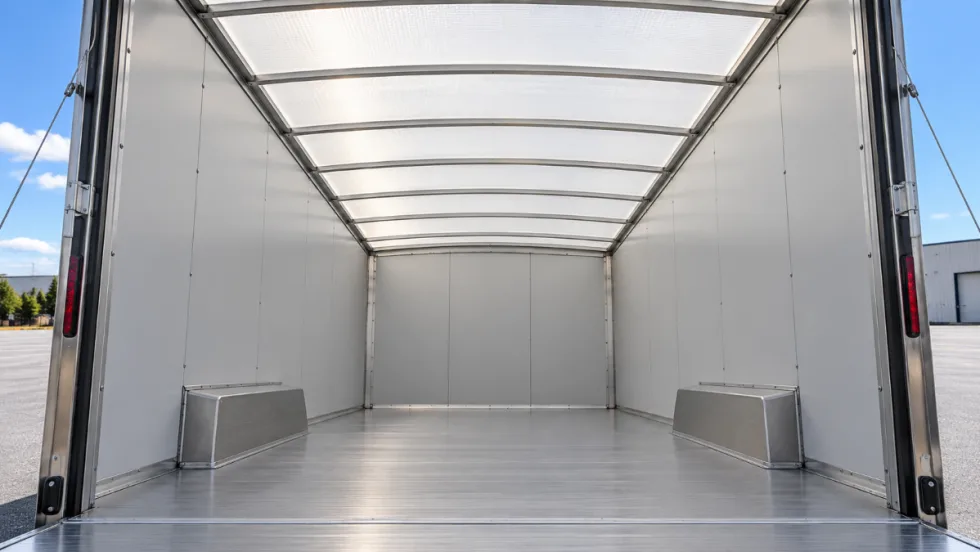
Tekmodo Introduces CargoBright Brand for Translucent Trailer Roofs
CargoBright is designed to diffuse daylight across the cargo area while performing as a working vehicle roof.
Read More →
Fleet Economics Shape Electric Truck Outlook
ACT Research expects costs, charging infrastructure, and technology improvements to drive zero-emission commercial vehicle adoption as federal regulations and incentives retreat.
Read More →
Kodiak Targets Dallas–Houston for Driverless Trucks
The company says its autonomous trucks are completing the I-45 run without a safety observer taking control. It plans to remove the observer by the end of 2026.
Read More →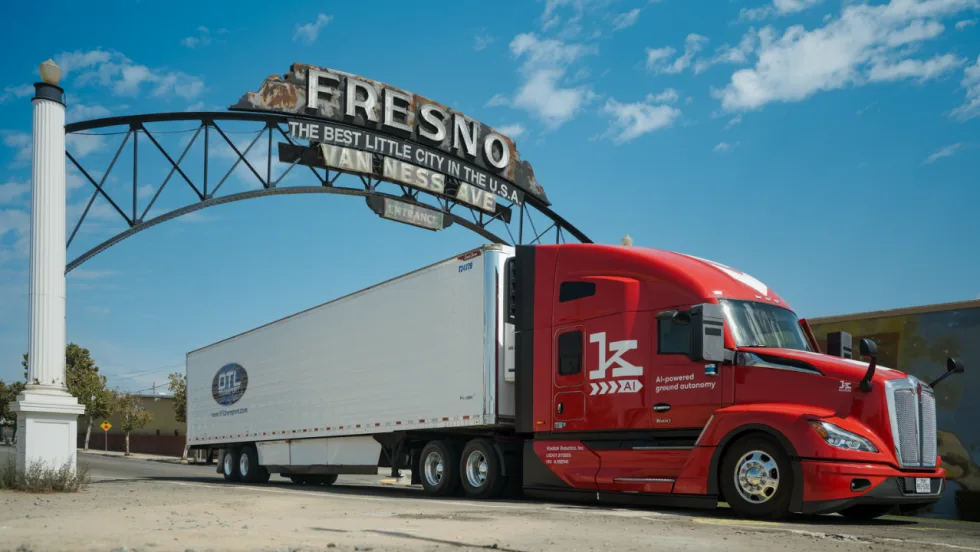
Kodiak Hauls Produce in California Autonomous Truck Pilot
Kodiak AI and DTL Transport have begun hauling produce between Fresno and Los Angeles under California’s new rules for testing heavy-duty autonomous trucks. A safety driver remains behind the wheel.
Read More →