





Related: CIMC Launches Intermodal Tire Chassis Tire Provider
Q&A: Triple G Express' Randy Guillot on Intermodal Chassis and Trucker Choice
Randy Guillot, president of Triple G Express and Southeastern Motor Freight, recently gave us his take on how a growing lack of choice and competition in the chassis pool environment is impacting intermodal motor carriers.
January 25, 2018

Randy Guillot says truckers need more choice in intermodal chassis.
Photo: Triple G Express
3 min to read
Randy Guillot, president of Triple G Express Inc. and Southeastern Motor Freight, recently gave us his take on how a growing lack of choice and competition in the chassis pool environment is impacting intermodal motor carriers, their customers, and potentially consumers, too.
(This interview has been edited for length and clarity.)
HDT:As an American Trucking Associations vice chair and past chair of the International Intermodal Motor Carriers Conference, you’re engaged in fighting the designating of chassis providers. Please explain the issue.
Guillot: Ocean lines have begun to require that motor carriers here use designated providers of chassis. The ocean carriers control the selection of the chassis and the rates to use them. American trucking companies have to pay more to use the chassis, incur longer delays at ports, and get little to no choice to select the safest and most efficient chassis.
HDT: What’s the difference now from what was it was historically?
Guillot: Up until five to seven years ago, chassis were provided by the ocean carriers, as part of their service. But in the rest of the world, they are provided by the truckers. As more of the ocean lines have come under foreign ownership, they want the same here — to not bear the chassis expense. The problem is some are dictating which chassis we must use and at what rate. What we are seeking is to have it be the trucker’s choice so we can operate more safely and efficiently.

Randy Guillot says truckers need more choice in intermodal chassis. Photo: Triple G Express
HDT:Can you explain what happens at a facility where you don’t have, as you put it, “trucker’s choice” in chassis selection?
Guillot: Since chassis ownership has begun transitioning away from the ocean lines, motor carriers have limited to no choice in selecting chassis. In a location where an ocean line is dictating which chassis can be used, we can be forced to use an older chassis that may not be maintained to our standards. Even though there could be a new chassis right there not being used that is equipped with the latest safety technology. And it can delay shipments. Our customers may not be able to move a given box on a given day. Still, a huge concern beyond the economic one is the safety of the unit. It is unfair and unsafe the exposures we now have as motor carriers because of this on a daily basis.
HDT: How widespread is the impact of this forced chassis selection?
Guillot: It’s turning into a nationwide problem, even with the unique characteristics of various ports. Ultimately, the extra [chassis] cost being shouldered by truckers will be passed along the supply chain to the consumer.
HDT: What have truckers done so far to address the situation?
Guillot: We as an industry have approached the ocean lines and told them of our dissatisfaction The International Intermodal Carriers Conference began a campaign under my leadership to achieve trucker’s choice and will continue it; it’s something that needs rectifying. We have engaged [consulting firm] Nahigian Strategies to help develop the best strategy, whether that is through legislation or action by the Department of Justice, or through the courts.
Subscribe to Our Newsletter
More Fleet Management

What the U.S.-Canada Trade War Means for Trucking
Escalating U.S.-Canada tariffs could disrupt cross-border freight, reduce truck volumes, raise costs, and create new uncertainty for carriers on both sides of the border.
Read More →
What Are Trucking’s Top Concerns for 2026?
The American Transportation Research Institute wants to know what's worrying trucking fleet managers, drivers, and other stakeholders in its annual Industry Issues survey.
Read More →
American Trucking Associations Looks for a New Leader
ATA President and CEO Chris Spear abruptly left his job at the association on August 21, at a pivotal time for the trucking industry.
Read More →
Public Wi-Fi Cybersecurity Risks: How Truck Drivers and Fleets Can Protect Their Data
Public Wi-Fi can expose truck drivers and fleets to credential theft, malware, and other cyber threats. Here’s how to reduce the risk on the road.
Read More →
For Nicky Cupp, Fleet Innovation Starts With Frustration
HDT Truck Fleet Innovator Nicky Cupp turns everyday pain points at Fraley & Schilling into opportunities for better technology and smarter processes.
Read More →
Adam Buttgenbach’s Approach to Electric Trucks: Start With Where They Fit
HDT Truck Fleet Innovator Adam Buttgenbach helped PepsiCo build one of North America’s largest EV fleets by focusing on where electric trucks make operational sense.
Read More →
Deen Albert: Let Automation Do the Math, People Make the Decisions
HDT Truck Fleet Innovator Deen Albert makes sure people are still at the heart of operations at Grand Island Express, even while adopting artificial intelligence tools. AI-assisted dispatch helped boost revenue 25% with the same number of trucks.
Read More →
Trimble’s New AI Agent Takes Aim at Fleet Back-Office Busywork
Arc Agent works across Trimble TMS products to automate repetitive tasks such as freight orders, maintenance, invoices, fuel costs and more.
Read More →
How HDT’s 2026 Truck Fleet Innovators Are Rethinking Fleet Operations
Meet five trucking leaders who are challenging assumptions, solving operational problems, and putting innovative ideas to work.
Read More →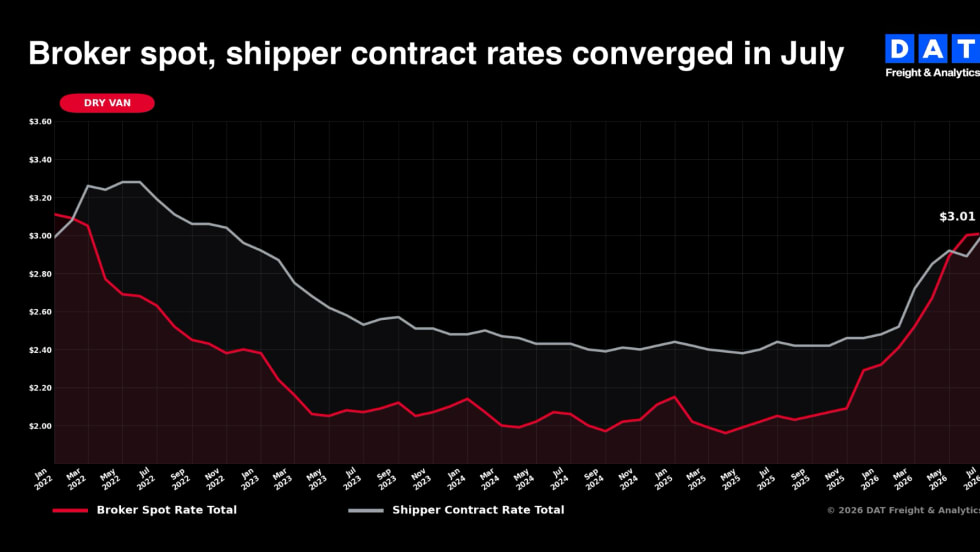
Tight Trucking Capacity Pushes Rates Higher Even as Freight Volumes Fall
“Spot rates moving ahead of contract rates have historically signaled a tightening market, but we haven’t seen a capacity-driven market quite like this one,” said DAT's Dean Croke.
Read More →