




Q&A: Green Fleet Conference Speaker Mark Smith
Mark Smith, the Department of Energy’s Clean Cities program’s vehicles technologies deployment manager, will be kick starting the 2014 Green Fleet Conference as its opening keynote speaker. We talked to him about he program, fleet challenges and more.
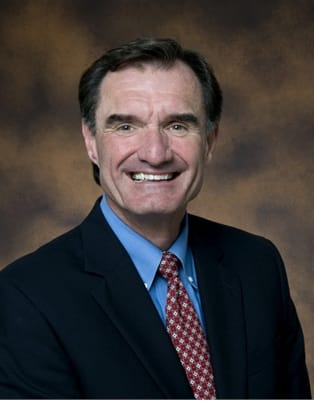
Mark Smith
Mark Smith, the DOE's Clean Cities program’s vehicles technologies deployment manager, will be kick starting the 2014 Green Fleet Conference & Expo in late October as its opening keynote speaker.
Smith is a GFC veteran, having presented in 2010 at the conference in San Diego and participating as a panelist in 2011 in Dallas. This year, Smith accepted an invitation to come back and speak about the challenges he sees within the DOE and for fleet managers, and about ways to make the transition to alternative fuel vehicles.
Smith spends his day developing outreach strategies for implementing new national partnerships between industry and the Clean Cities program to successfully deploy new vehicle technologies. Before joining DOE, Smith was an alternative fuel vehicle consultant to American Honda, FuelMaker and Clean Energy.
Green Fleet:What does the Clean Cities Program do?
Smith: We were born out of Energy Policy Act of 1992, and our whole reason for existence is to work with the transportation sector to reduce the amount of petroleum being used by fleets and the retail consumer. You could call Clean Cities the deployment arm of the Vehicle Technologies Office. We help people make the right decisions about what fuel or technology will work best for their fleet.
Green Fleet: What is the most common challenge that fleet managers face?
Smith: Oftentimes people aren’t sure what to expect with an alternative fuel vehicle. Part of the challenge is getting people comfortable [with the idea] that these technologies and alternative fuels can work for them with their fleet. So that education piece is an important part of what we do at Clean Cities.
Green Fleet: Do you think that is something that has gotten easier over the years?
Smith: More has happened to move the needle with alternative fuel vehicles within the last five years than we have seen in the last 15 years. One of the things that held us back for so long is we were looking for a silver bullet, that one magic fuel that would replace gasoline and diesel. What we’ve come to realize is that the best approach is what President Obama calls the ‘all of the above approach.’ UPS is using everything from battery-electric vehicles in Manhattan to Claa 8 [liquified natural gas] tractors in the West. It’s about finding that fuel or technology that is going to work best for the vehicle in its duty cycle.
And an even bigger reason for this is when we saw oil prices get to $150 a barrel a few years ago. I think for the first time, fleet managers found that controlling fuel costs can be very difficult. During that five-year period, we started seeing Fortune 500 companies making some big forays into the alternative fuel market. As we’ve seen these large fleets come into being, they have served as pace setters. They help demonstrate that whether you are a national, regional, small or local fleet, you can make these vehicles work in your operations.
Green Fleet: What do you expect the alternative fuels landscape to look like in the next five years?
Smith: Right now we have tremendous momentum behind us. We were the recipient of $300 million in funding that we could put out as grant money through the American Recovery and Reinvestment Act. That money was matched by the private sector, so we had about 25 projects totaling an investment of around one billion dollars that covered a variety of fuels and infrastructures.
Green Fleet: How have you used your previous experience in the industry for this current role?
The one lesson I learned was that in order to get the growth you want, you need the vehicles and the infrastructure to come along at the same pace, you can’t wait for one. There’s always this chicken and egg argument and it’s not one or the other, it has to be both.
Editor's note: For more information on the Green Fleet Conference or to register, visit the conference website.
More Fuel Smarts

How Volvo Updated Its D13 for EPA 2027 [Watch]
Volvo’s updated D13 promises lower emissions without sacrificing performance or fuel economy. Take a closer look at what changed inside the engine in this HDT Spotlight video.
Read More →
Diesel Price Spike Shortens Payback for Natural Gas Trucks, Report Says
Energy Vision estimates fleets could recover the higher purchase price of an RNG-fueled Class 8 tractor in 1.3 to 2.8 years under current fuel-price scenarios.
Read More →
Calstart Becomes Catalyst Mobility, Reflecting Broader Focus
Calstart is now Catalyst Mobility, reflecting the nonprofit’s growing national role in clean transportation, including zero-emission trucks, infrastructure and incentive programs.
Read More →

Record Diesel Prices Squeeze Trucking Fleets
Average U.S. diesel prices have climbed to nearly $6 a gallon, surpassing the 2022 record as tight refinery capacity and Middle East disruptions keep fuel costs elevated.
Read More →
How Fuel Delivery Shapes Engine Performance
Fuel delivery depends on more than what happens at the injector. For fleet, maintenance and technical professionals, looking at the full path from pump to injector can provide useful context for understanding engine performance.
Read More →
East Coast Port Launches $45M Electric Truck Push
The Port Authority of New York and New Jersey announced millions in incentives for zero-emission drayage trucks, yard tractors, and new charging hubs near the port.
Read More →
California Bill Could Shed Light on Electric Truck Prices
Why do battery-electric Class 8 trucks remain so expensive? A California bill headed to Gov. Gavin Newsom would give fleets and state agencies more visibility into what manufacturers charge.
Read More →
Detroit Opens Orders for EPA 2027 Engines
Detroit isn’t starting from scratch to meet EPA 2027 diesel emissions standards. Its Gen 6 DD13 and DD15 engines keep much of today’s platform while updating the fuel and aftertreatment systems.
Read More →
Zero-Emission Truck Corridor Planned for West Coast
California, Oregon, Washington, British Columbia and Baja California are coordinating plans for truck charging and hydrogen fueling from Canada to Mexico.
Read More →
A Closer Look at Kenworth’s Electric T880E Vocational Truck [Video]
Learn more about Kenworth's T880E battery-electric vocational truck at the Paccar Technical Center, including its range, applications, upfitting considerations, and PTO options, in this HDT Spotlight video.
Read More →