




Pushing Out Trade Cycles Can Save Money, But It Isn't for the Ill Informed
Many fleets have discovered in recent months that you can't put 10 pounds of rocks into a 5-pound bag. Pushing trade cycles for highway trucks to squeeze a few more months or a year out of an asset may seem feasible, but the unplanned costs can eat you alive

Many fleets have discovered in recent months that you can't put 10 pounds of rocks into a 5-pound bag. Pushing trade cycles for highway trucks to squeeze a few more months or a year out of an asset may seem feasible, but the unplanned costs can eat you alive.
Planning for extended trade cycles - four, five, or even six years - is another matter. It's one way to reduce the lifecycle cost of a truck or trailer, but it's not something to be done on a whim.
The task of keeping the trucks chugging along may fall to the maintenance department, but buy-in and support for the initiative must be company wide, from finance and accounting, dispatch, and even human resources.
"It's not just a maintenance decision. It's a game-changing, company-wide decision that requires maintenance, finance, and upper management to be onside," says Joe Stianche, former vice president of maintenance at KLLM Transportation Services, now an industry consultant. "In many fleets, they look to maintenance for part of that answer, but there's much more to it than that. It's a cost of money thing, but the maintenance guys take the heat because they'll say it's going to cost more to run that vehicle in the fourth, fifth and sixth years."
The implications of the decision to run trucks out beyond a normal trade cycle of 36 to 48 months will impact company finances through the loss of depreciation write-downs, loss of resale value on the truck when it is eventually traded out, and through higher than normal operating costs. It could lower the capital cost outlay, but the trade-off between the improved liquidity and higher monthly maintenance expenses has to be carefully measured.
Dispatch will need to be on side knowing the trucks will be spending more time in the shop, and will be overall less available than a new truck on a normal trade cycle.
And drivers may not be keen on driving your five- or six-year-old truck when the competition is offering new or close-to-new equipment as a recruiting incentive.
That said, done right, extending trade cycles can be highly beneficial in some circumstances, such as turning a five-year-old truck with 900,000 miles on it worth $25,000 into a like-new power unit with between two and four years of warranty for little more than $32,000.
The starting point is weighing the lifecycle cost of the truck you're planning to keep versus the cost of running the truck you're planning to buy, says Stianche.
"To begin with, you're going from an acquisition cost of maybe $90,000 four or five years ago, to $100,000 or $120,000 today," he notes. "Carrying that truck over four years will of course be more expensive over the time. How much more is the question, because you then have to compare that against what it will cost to keep your existing trucks in service a few years longer."
And then there are the tax implications. It depends if the company has an appetite for depreciation or not. That typically revolves around how much depreciation you have elsewhere in the business. If you're a pure trucking company, fleet depreciation is an important factor in your balance sheets. On the other hand, if the fleet is part of a larger group of assets, like warehouses or other equipment, fleet depreciation might not be as large a factor.
"It depends how much you need now or in future years. It becomes a cash flow thing for the business," Stianche suggests. "How much debt can I stand, can I recover that depreciation, and do I have the maintenance infrastructure to support the fleet if I keep it longer?"
That, today, seems to be a critical question. On top of the shortage of qualified technicians that already exists, fleets have had to cut back on staff and find ways of reducing maintenance costs over the past couple of years. Which raises the question, is the fleet in a position to support longer trade cycles?
Assuming you have concluded that extending your trade cycles would be a good business proposition, you'll need to make some changes to your vehicle spec and to its maintenance routine to help it last longer, advises Tom Culver, vice president of operations and fleet services at Clark Power Services, members of the WheelTime Network.
"The total maintenance cost for a six-year trade cycle is going to be higher than a four-year truck, so you can start with upgrading several specs to improve longevity and keep running costs down," he says. "The up-front cost will be higher, but lower maintenance costs are the payback."
He suggests upgrading to heavier driveline, using big-block brakes, running synthetic lubes, and spec'ing for fuel economy to further reduce operating costs. And then paying meticulous attention to service intervals and maintenance requirements. Almost any choice where premium or long-life components are available would be advantageous. Extended warranties will help, too.
Carl Tapp, vice president of maintenance at P.A.M. Transport of Tontitown, Ark., cites the lowly air conditioning compressor as a good example of where extended warranty helps.
"We used to change out our A/C compressors at 100,000 miles because we knew from experience they were going to fail shortly after that," he says. "For about $150 I can buy a 500,000-mile warranty on those compressors. Now I get a free compressor out to half a million miles. For less than the price of one replacement, I get three or four compressors under warranty."
The engine spec, Culver says, is a controversial one. Many fleets buy small-block engines for fuel economy and weight savings, but he says they are generally less robust than their big-block brothers.
"We've seen problems with customers pushing their 13-liter engines harder than the B-25 service life. They will work if you budget for an overhaul at or before B-25, but you're on borrowed time after that," he notes. "A down-rated 15-liter might be a better choice in cases where you plan to run it more than five years."
Even then, he cautions that extending oil drains, for example, probably isn't worth the small savings accrued.
"You really want all the protection you can from a disciplined maintenance plan, such as doing regular valve-lash adjustments, checking injector heights, and servicing the intake system, including the charge-air cooler, to prevent contamination," Culver says.
Smaller fleets may not have the in-house expertise to do that kind of work, so shop time at dealer rates will have to be factored in for all that extra service that you maybe didn't do when the truck was scheduled to be traded out before warranty expired.
So how does one make all those cost assumptions and calculations? Good recordkeeping and comparative analysis.
Dave Walters, a solutions engineer with TMW Systems, providers of TMT Fleet Maintenance software, says historic data can help immeasurably in predicting future costs, which you'll need to make an accurate prediction of the potential increases in operating older trucks.
"You need to be able to analyze the data by system and component, and that's where VMRS does a really good job," he says. (VMRS, or Vehicle Maintenance Reporting Standards, offer standard numeric descriptors for parts.) "We can break down a vehicle system by system, and further, component by component. If your data entry is at the top of its game, we can pull out under-performing hose clamps as an abnormal cost item. If you're looking at absolute lowest cost of operation, you can pull that information off the system and make changes at the parts sourcing level."
Getting back to Stianche's remarks about system-wide impacts, Walters says a good maintenance software package will help offset the cost of extending trade cycles by exposing every possible extraneous costs, and it can help with warranty recovery as well. If
More Equipment

ZF Expands Commercial Vehicle Push in North America
ZF is expanding its North American commercial-vehicle presence with new transmission applications, electrification, trailer technology and autonomous-driving systems.
Read More →
Tesla Wants a Self-Driving Semi. Are Cameras Enough?
Could Tesla’s camera-only autonomous driving technology work on an 80,000-pound Semi? In this commentary, HDT's Deborah Lockridge takes a look at Tesla, Cybercab, and how autonomous trucks see the road.
Read More →
Kodiak: Driverless Long-Haul Truck Launch on Track for 2026
Kodiak AI says its driverless long-haul safety case is 93% complete and it remains on track to begin commercial operations by year-end 2026.
Read More →
What DOT’s Automated Vehicle Strategy Means for Trucking
The U.S. Department of Transportation issued a new automated-vehicle strategy that outlines plans for driverless-truck regulations, cross-state freight corridors, and federal safety standards.
Read More →
East Coast Port Launches $45M Electric Truck Push
The Port Authority of New York and New Jersey announced millions in incentives for zero-emission drayage trucks, yard tractors, and new charging hubs near the port.
Read More →
PlusAI Going Public to Fund Autonomous Truck Launch
A SPAC deal could provide PlusAI with up to $300 million as it works toward a 2027 commercial launch of factory-built autonomous trucks.
Read More →
NHTSA Moves to Rewrite Truck Fuel-Economy Rules
The National Highway Traffic Safety Administration says it lacks authority to regulate medium- and heavy-duty truck engines separately from complete vehicles, but the existing standards have not yet been eliminated.
Read More →
Detroit Opens Orders for EPA 2027 Engines
Detroit isn’t starting from scratch to meet EPA 2027 diesel emissions standards. Its Gen 6 DD13 and DD15 engines keep much of today’s platform while updating the fuel and aftertreatment systems.
Read More →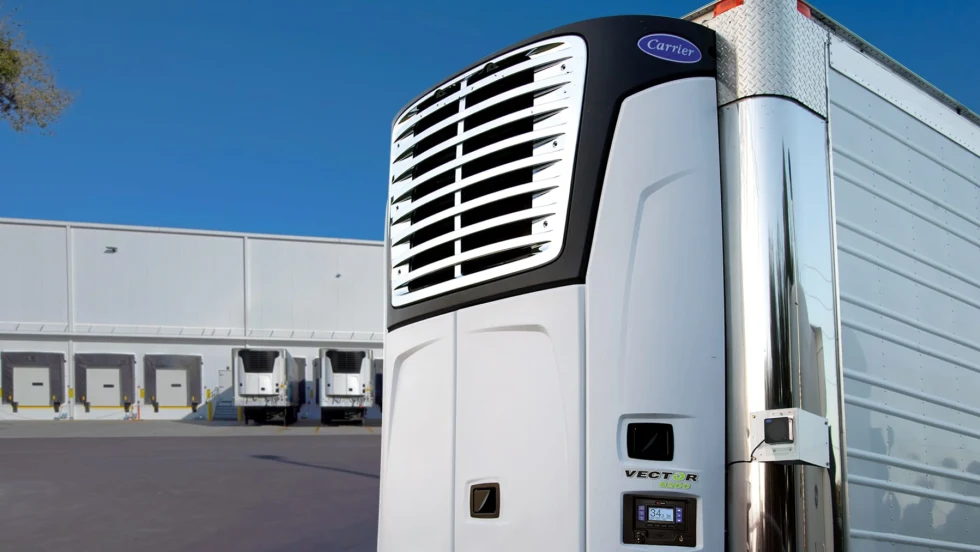
Carrier Transicold Adds All-Electric TRU for Stationary Cold Storage
Carrier Transicold’s new Vector 8200 all-electric transport refrigeration unit gives fleets a diesel-free option for temporary refrigerated and frozen trailer storage.
Read More →
A Closer Look at Kenworth’s Electric T880E Vocational Truck [Video]
Learn more about Kenworth's T880E battery-electric vocational truck at the Paccar Technical Center, including its range, applications, upfitting considerations, and PTO options, in this HDT Spotlight video.
Read More →