




Near-Term Aftermarket Outlook a Double-Edged Sword
The recession has been good for some aftermarket parts and service providers, but others took a bit of a thrashing between 2008 and 2011. Many cash-strapped fleets decided to keep trucks in service longer, which meant an increase in parts sales and service opportunities

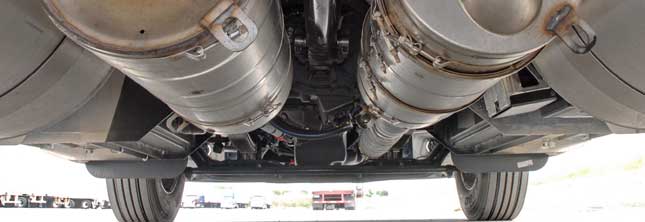
The burgeoning retrofit market offers opportunities for aftermarket sales as well as service and cleaning.
The recession has been good for some aftermarket parts and service providers, but others took a bit of a thrashing between 2008 and 2011. Many cash-strapped fleets decided to keep trucks in service longer, which meant an increase in parts sales and service opportunities,
but fewer distributors and shops were left standing to take advantage of the extra business.
Going forward, there's reason for optimism, even if the market will eventually squeeze out some of its less sophisticated players. According to Kumar Saha, automotive and transportation analyst with Frost & Sullivan, the near-term prospects are good, with several factors driving demand for aftermarket service. The successful players will be those who can make the most of increasing component complexity and maintain a staff of highly trained technicians.
"The OE service channel, or dealerships if you will, stand to make considerable gains in the heavy-duty sphere thanks to competitive pricing and increasing verticalization of components, but I think it's still too early to write off the independents," Saha said, speaking at Heavy Duty Dialogue in Las Vegas in January.
"Even with that, evolving regulations continue to play a role in this market: EPA 2010, CSA 2010 and the new stopping distance regulations may be headaches for fleet managers, but they present huge opportunities for the aftermarket."
OEs or dealerships currently hold 40% of the market and are expected to increase that share in coming years, he said. They will leverage the use of proprietary components and advanced technician training along with diagnostic capabilities necessary because of increasing technical complexity.
The independent service channel still claims about 60% of the market but is expected to lose some of that to the OE channel because of the inherent weakness of the smaller market players. The independent channel includes the larger heavy-duty specialists, automotive warehouse distributors, independent repair facilities, truckstops and independent retailers.
Opportunity in
outsourcing
While Saha sees the independents at a disadvantage when it comes to the technical requirements, he sees plenty of opportunity for that sector of the market in outsourced service and maintenance due to diminished operating budgets and staff cuts at for-hire and government fleets.
"The commercial vehicle aftermarket gained 2% in outsourced services between 2008 and 2010 and is likely to gain about 5% more by 2017," Saha said. "The number of smaller truck fleets is forecast to increase at a faster pace than large truck fleets. Most of those fleets do not have on-site repair facilities, which will drive more business to OE and independent participants."
At the same time, Saha expects long-haul fleets to begin doing more of their maintenance in-house.
Growing component complexity will be a key factor in this outsourcing trend, he said, especially for smaller fleets, whose technicians often don't possess the capability to work with advanced technology, he noted. "Fleet spending on outsourced repairs and service will increase by 5% by 2017, taking outsourced work to about 30% of the average fleet's maintenance spend."
Technician training
Class 4-8 truck repair and maintenance channels are finding it increasingly difficult to attract skilled technicians because of the complex and dirty nature of the work. At the same time, the adoption of advanced technologies is placing technician knowledge management at center stage. Technician training is emerging as a new and potentially rewarding revenue stream for the service and maintenance industry.
That said, and despite the slight economic recovery, Saha believes fewer shops are providing the level of training that they historically provided.
"In 2010, 55% of independents offered formal training to their technicians versus 87% of dealerships," he pointed out. "Dealerships have an edge here. The competitive pressure falls squarely on the independents to upgrade their knowledge base if they want to put up a fight in the years ahead. Technical expertise will be a game-changer in the future."
Trending upward
Saha sees two elements on the horizon as tremendous growth opportunities: exhaust aftertreatment and diagnostics and prognostics.
The OE dealerships pretty well have the market cornered when it comes to diesel particulate filters and diesel oxidation catalyst devices because they are application-specific, and their care and handling require a high level of proprietary skill and tooling. Yet, Saha said, there's still a lot of room in the service and retrofit market.
"The Diesel Emissions Reduction Act was renewed earlier this year and will be in effect until 2016. Because of that, and the fact that nearly every truck on the road will have an aftertreatment system going forward, we see the aftertreatment market growing from $530 million in 2010 to $2.9 billion by 2017."
Remote diagnostics and prognostics continue to be the dark horse of the industry. Prognostics, which enables the prediction of pending failures on systems and subsystems, is poised to be a major revenue growth opportunity to all corners of the North American trucking industry.
"By predicting impending failures and service and maintenance requirements, and by communicating those need to the fleets, service providers can help fleets dramatically reduce downtime and associated costs," he said. "All OEs are investing heavily in prognostics, and fleets are very interested."
This offers highly lucrative opportunities to the aftermarket, as well. Dealers can address potential component issues more effectively, providing greater customer satisfaction over the service life of the vehicle and fostering brand loyalty.
For independents, prognostics can help reduce inventory costs by accurately tracking demand for replacement parts and services.
Diagnostic and prognostic service revenue is expected to reach $6 billion by 2017, with prognostics alone expected to generate revenue streams of nearly $1.5 billion.
Although different market participants will need to focus on different strategies to drive their growth, if there's one thing that will separate the winners from the also-rans in this market, it will be technical preparedness, Saha said.
"Technical knowledge management - or lack thereof - remains the 1,000-pound elephant in the room," he said. "I have three words of advice for you all: Feed the elephant."
From the April/May 2012 issue of HDAJ
More Aftermarket
What Three Fleets Are Doing Differently When Buying Truck Parts in 2026
With freight improving but costs still climbing, fleet maintenance executives explain how they're balancing price, quality, and supplier relationships.
Read More →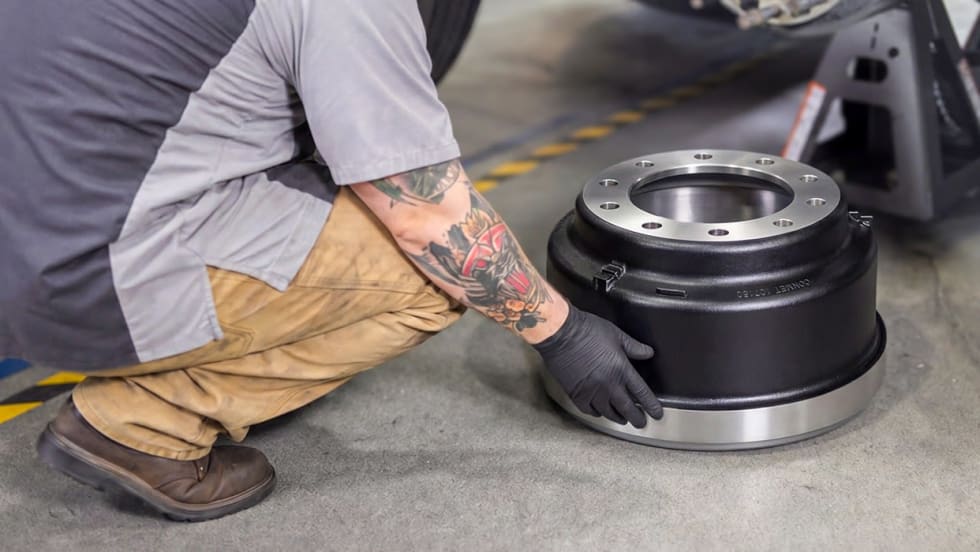
ConMet Expands Aftermarket Brake Drum Lineup With TruCast
A new heavy-duty truck brake drum option in the aftermarket gives customers more flexibility within the ConMet product family.
Read More →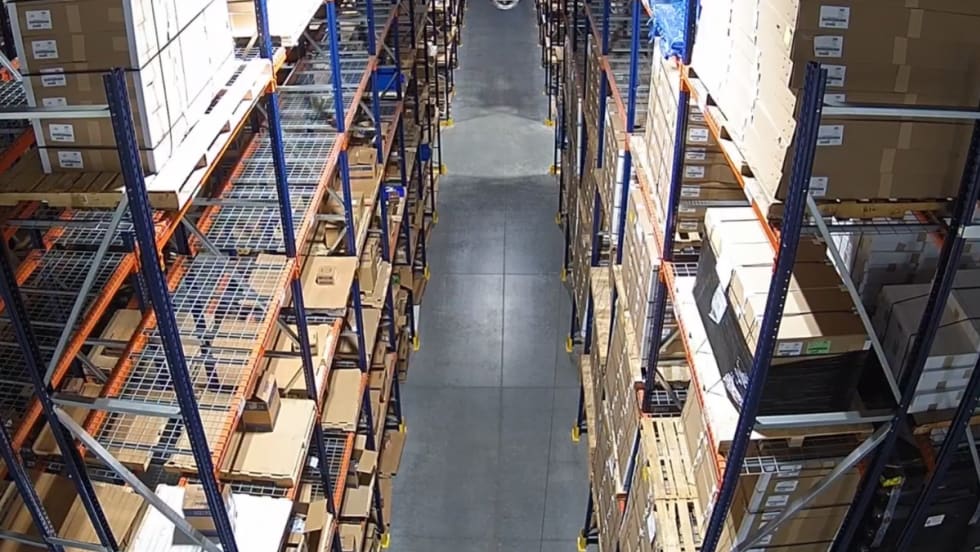
Phillips Opens High-Tech Distribution Center for Faster Parts Delivery
Phillips Industries’ new Cincinnati-area distribution center is now shipping aftermarket trucking parts nationwide, aiming to speed up delivery times for customers.
Read More →
Volvo to Sponsor America’s Road Team for 2025
Volvo Trucks announced that it is extending its exclusive sponsorship of America’s Road Team for 2025.
Read More →
Webb to Start Taking Orders for UltraSet Pre-Adjusted Wheel Hubs
Webb, which recently acquired the Stemco Trifecta pre-adjusted hub program, will soon start taking orders for its replacement pre-assembled hub, the UltraSet.
Read More →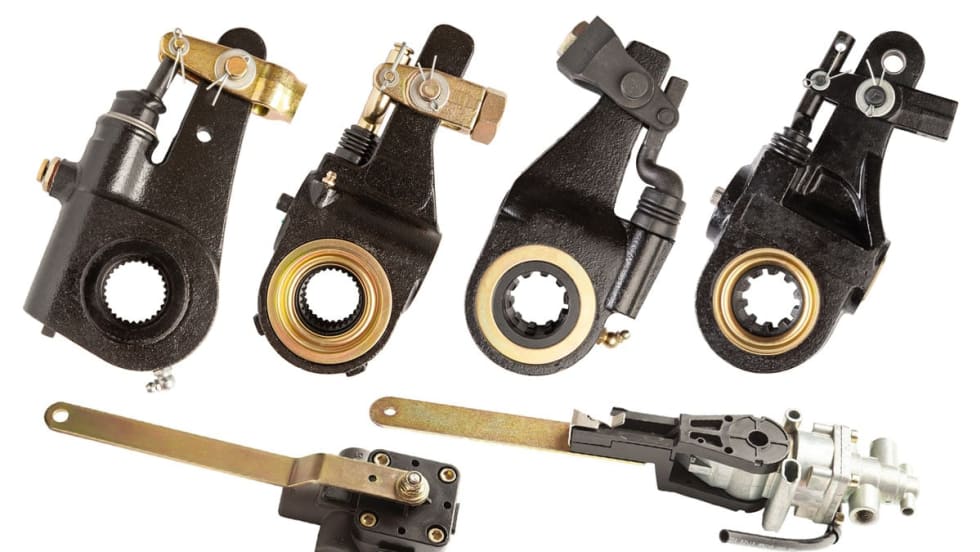
All-Makes Automatic Brake Adjusters, Ride Height Control Valves from Midland
SAF-Holland has added automatic brake adjusters and ride height control valves to its Midland All-Makes Program.
Read More →
ZF Aftermarket Expands [pro]Academy Training
ZF Aftermarket said it is expanding its ZF [pro]Academy training and will be adding 40 new modules this year.
Read More →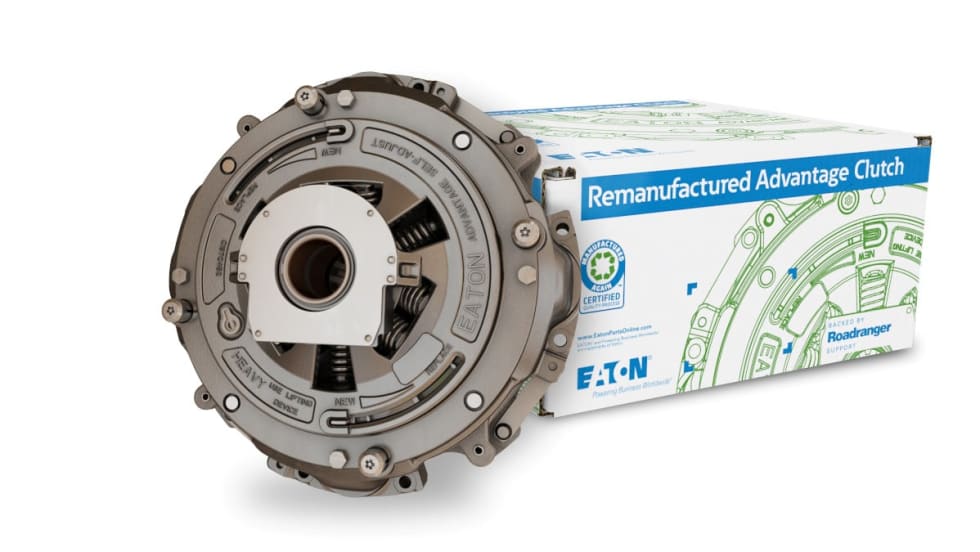
Eaton Adds Remanufactured Advantage Line of Clutches
Eaton has added its Advantage clutches to its remanufactured product line. The clutches feature a unique strap drive intermediate plate designed to allow customers to choose the latest OE specification
Read More →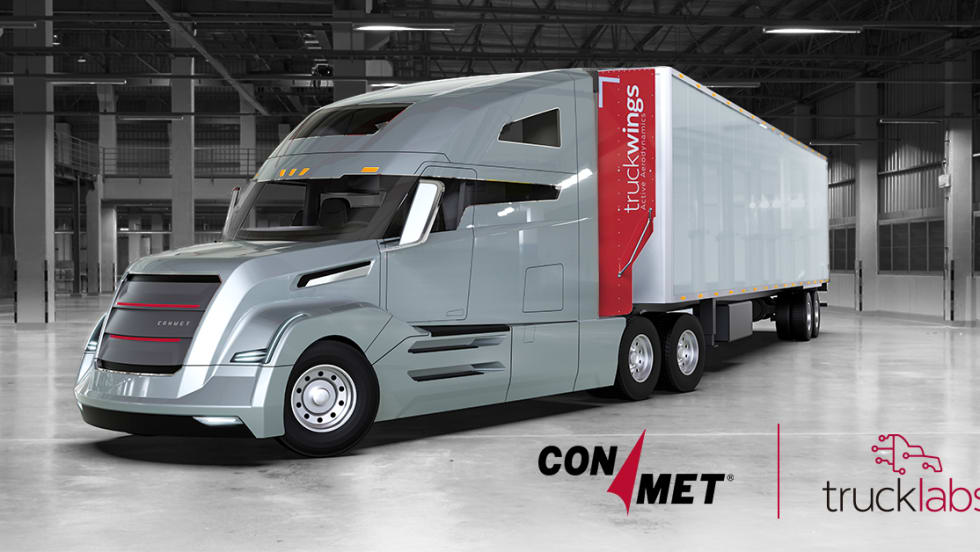
ConMet Acquires TruckLabs, the Creator of TruckWings
Commercial truck and trailer parts provider ConMet acquired TruckLabs, the company that created TruckWings, an aerodynamic device that attaches to truck cabs and deploys to close the gap between truck and trailer. TruckLabs now operates as a subsidiary of ConMet.
Read More →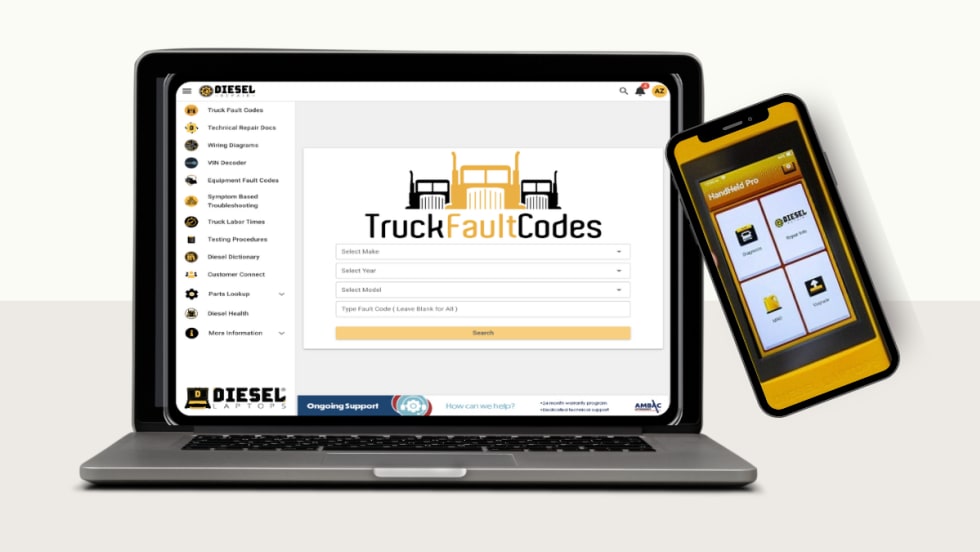
Diesel Laptops Releases Fault-Code-to-Part-Number Tool
Diesel Laptops said its Truck Fault Codes allows users to input a fault code and immediately identify and order the parts needed to complete repair work.
Read More →