





Related: Dual-Fuel Gliders: A Way to Get Into Natural Gas for Less Money
Navigating A Natural Gas Shop Conversion
If you’re planning to add natural gas trucks to your fleet, you will likely have to make some modifications to your shop. That exercise could go smoothly or not, depending on how much homework you do in advance.
January 26, 2015
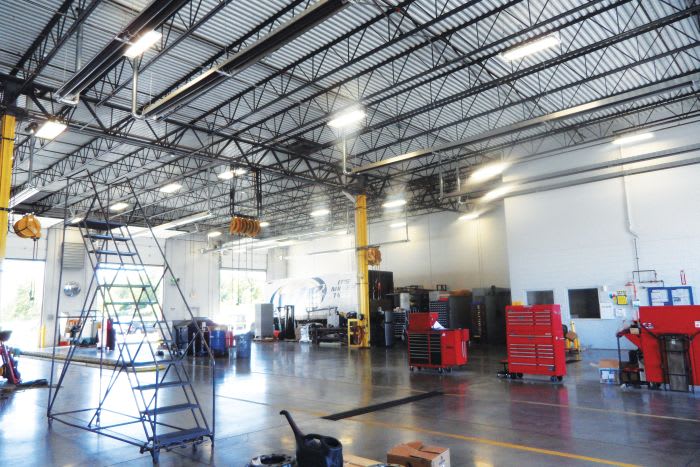
Monarch Beverage in Indianapolis retrofitted its large shop with gas-safe light fixtures, methane detectors and ventilation fans as part of a conversion to CNG-powered tractors. Photo: Tom Berg
3 min to read
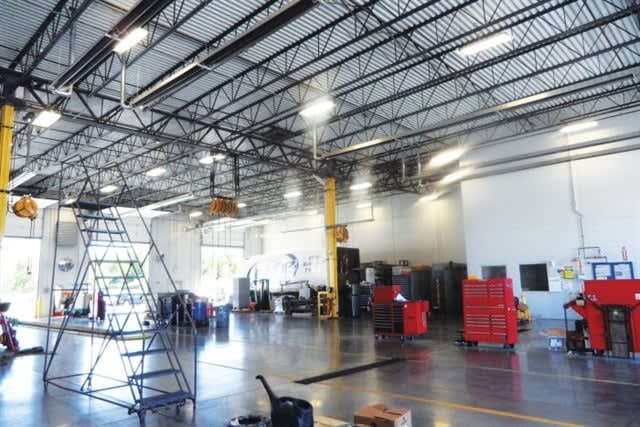
Monarch Beverage in Indianapolis retrofitted its large shop with gas-safe light fixtures, methane detectors and ventilation fans as part of a conversion to CNG-powered tractors. Photo: Tom Berg
If you’re planning to add natural gas trucks to your fleet, you will likely have to make some modifications to your shop. That exercise could go smoothly or not, depending on how much homework you do in advance.
Speaking at the Green Fleet Expo and Conference in Schaumburg, Illinois, in October, Mark Ellis, central region manager for the Maintenance Design Group, offered up 20 years worth of experience in designing and building such a facility. He said with all the conflicting code and standards across the country, it’s best to choose designers and contractors that know the local market — and to start the conversation early with local regulators and enforcement officials.
“The scariest part of a shop conversion is the codes and what the agencies that have jurisdiction over your shop will enforce and make you do as you begin incorporating alternative-fueled vehicles into your fleet,” he said. “You’re dealing in some cases with state, county and municipal governments, and no two across the country seem to be on the same page on this.”
He said 43 states have adopted the National Fire Protection Association and the International Building, Fire and Mechanical codes. However, only 13 states have controlling enforcement over all other state agencies. In many cases, local code officials have local code adoption capability. City councils in some areas can adopt codes, as might the city planning departments. Fire marshals, too, can adopt codes.
There are even conflicting codes in some cases.
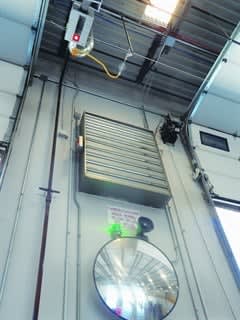
A buildup of gas will trigger alarms, activate fans and open doors. The system is wired to the local fire house so firefighters can automatically be called. Photo: Tom Berg
“You can look at the NFPA books and see conflicts between the 2009 and the 2012 versions,” he notes. “Beware of what version you’re working from.”
Code compliance is only one piece of the puzzle. The kind of shop you plan to build can make a difference, too. Many jurisdictions make distinctions for so-called minor-repair garages versus a full-service shop that does engine overhauls, for example.
“Some of the newest codes exempt minor repair garages, or apply less stringent standards related to ventilation and electrical,” Ellis said. “With that said, there are still codes and standards that apply to minor repair garages.”
Ellis advised fleets to begin the process with an open mind, and be ready to consider modifications to their plans, such as functional separation where you split the work into two or more location based on task. That might keep the major work in one facility, or on one side of the shop, and the minor work in another.
In major repair facilities, there are requirements for ventilation and air turnover that are quite demanding and can be very expensive to operate. Methane detections systems can in some cases be used with less demanding air exchange requirements, but these requirements vary. Again, it pays to get talking with your contractors and city officials before getting too deep into the planning process. It’s really helpful when the contractor has a good working relationship with the code officials as well as enforcement officials.
Based on previous experience, Ellis offered these three tips on getting the project off to a smooth start and bringing it to a successful conclusion.
1. Control the risk assessment narrative: There are many misconceptions about natural gas, so set the tone of the discussion with research-based facts, and be up front about what you plan to do and what will be going on in the shop.
2. Keep lines of communication open: Get everyone involved in the project talking early and keep them talking all the way through the process. Don’t let the misconceptions about natural gas torpedo your project at the last minute.
3. Look for opportunities to compromise: There can be trade-offs between ventilation requirements and, say, ceiling design, methane detection systems, and electrical modifications. Explore all the possibilities.
Subscribe to Our Newsletter
More Fuel Smarts

How Volvo Updated Its D13 for EPA 2027 [Watch]
Volvo’s updated D13 promises lower emissions without sacrificing performance or fuel economy. Take a closer look at what changed inside the engine in this HDT Spotlight video.
Read More →
Diesel Price Spike Shortens Payback for Natural Gas Trucks, Report Says
Energy Vision estimates fleets could recover the higher purchase price of an RNG-fueled Class 8 tractor in 1.3 to 2.8 years under current fuel-price scenarios.
Read More →
Calstart Becomes Catalyst Mobility, Reflecting Broader Focus
Calstart is now Catalyst Mobility, reflecting the nonprofit’s growing national role in clean transportation, including zero-emission trucks, infrastructure and incentive programs.
Read More →

Record Diesel Prices Squeeze Trucking Fleets
Average U.S. diesel prices have climbed to nearly $6 a gallon, surpassing the 2022 record as tight refinery capacity and Middle East disruptions keep fuel costs elevated.
Read More →
Sponsored•September 9, 2026
How Fuel Delivery Shapes Engine Performance
Fuel delivery depends on more than what happens at the injector. For fleet, maintenance and technical professionals, looking at the full path from pump to injector can provide useful context for understanding engine performance.
Read More →
East Coast Port Launches $45M Electric Truck Push
The Port Authority of New York and New Jersey announced millions in incentives for zero-emission drayage trucks, yard tractors, and new charging hubs near the port.
Read More →
California Bill Could Shed Light on Electric Truck Prices
Why do battery-electric Class 8 trucks remain so expensive? A California bill headed to Gov. Gavin Newsom would give fleets and state agencies more visibility into what manufacturers charge.
Read More →
Detroit Opens Orders for EPA 2027 Engines
Detroit isn’t starting from scratch to meet EPA 2027 diesel emissions standards. Its Gen 6 DD13 and DD15 engines keep much of today’s platform while updating the fuel and aftertreatment systems.
Read More →
Zero-Emission Truck Corridor Planned for West Coast
California, Oregon, Washington, British Columbia and Baja California are coordinating plans for truck charging and hydrogen fueling from Canada to Mexico.
Read More →
A Closer Look at Kenworth’s Electric T880E Vocational Truck [Video]
Learn more about Kenworth's T880E battery-electric vocational truck at the Paccar Technical Center, including its range, applications, upfitting considerations, and PTO options, in this HDT Spotlight video.
Read More →