




Related: Tips to Keep the Rubber on the Road
Marangoni's Armstrong Sees Uptick in Demand for Retreads
Clif Armstrong, CEO and president of Marangoni Tread North America, says members of Marangoni’s U.S. retread network “are very bullish about where they are. They’re looking forward to things starting to loosen up.”
by Mike Manges
June 8, 2020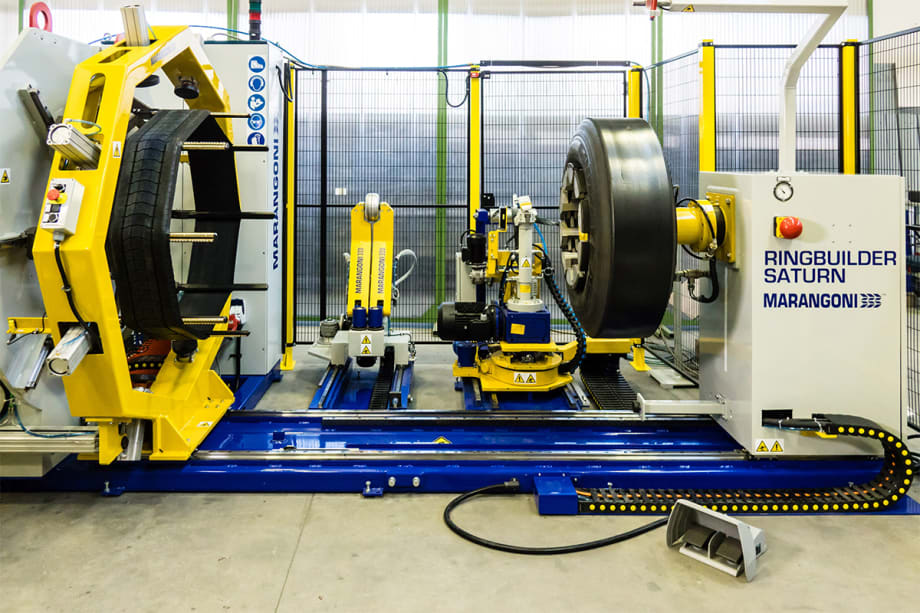
According to Marangoni Tread North America CEO and President Clif Armstrong, Marangoni’s U.S. retread network is bullish about the present but looking forward to the future.
Photo: Marangoni
3 min to read
What’s in store for retreaders as the economy starts to reopen? Clif Armstrong, CEO and president of Marangoni Tread North America, says members of Marangoni’s U.S. retread network “are very bullish about where they are. They’re looking forward to things starting to loosen up.”
Armstrong believes that a rebound in demand “will not be dramatic. There will not be an on-off switch, but it will come back at a pace that allows the market to plan for what the business climate will be.”
In the meantime, retreaders will continue to hold their own as demand gradually increases, he says.
Fluctuating Demand
Armstrong says demand for retreading spiked during the early days of the COVID-19 pandemic. “There were so many unknowns. When local governments started issuing stay-at-home orders, I think retread customers somewhat panicked. ‘I don’t want to run out.’
“Business was very brisk. Fleets were saying, ‘I need these tires retreaded.’ They were grabbing every casing they could so they would have stock. Freight was being hauled. Consumer goods were being put in grocery stores. And construction had not been curtailed in most places. The first few weeks of the pandemic were robust. It was a good time for retreaders.”
Overall demand for retreads has levelled out somewhat, says Armstrong.
But he predicts that demand will rise, especially as trucks that were sold in 2017 and 2018 enter their first tire replacement cycle. “The (truck) original equipment manufacturers had several good years. But the trucks that were sold in mass quantities are now coming to (the point) where they need to replace worn-out tires.”
Fleets and owner-operators “can buy new tires or they can retread. I think it’s our time to be part of that mix. If nothing else, the pandemic has given all of us an opportunity to sit in our chairs and really think about what we’re doing and if there’s something better we can do.
“I think we offer something unique to the marketplace versus strictly a new tire program, whether it be a low-cost import or a high-end, domestic new tire. I truly think that with the tariffs in 2019, (fleets) were moving in that direction,” he says.
Seeing an Uptick
Looking ahead to the rest of 2020, Armstrong says Marangoni “is in a great position and poised to respond to business increases.”
The company has made a number of key investments in its tread rubber plant in Madison, Tenn., over the last several years, “so we have the ability to ramp up production quickly. From a production standpoint, we haven’t missed a beat. Our raw material suppliers are working very hard to keep us where we need to be. We have a unique product, Ringtread, which has a following.
“We’re seeing a gradual increase in demand,” he notes. “Over the last three weeks, we’ve seen an uptick. A lot of our dealers rely on us for the majority of their retread supply. When their business is off a certain percentage, our business is going to be off a certain percentage. While our business is not at 2019 levels, it’s healthy. We’re shipping every day.”
As the economy inches back, his advice to retreaders is simple. “Stay close to your customers. Solve their problems. Use the time we’re in to think through what you’re doing. Make sure your foundation is covered and you can build from it.”
Subscribe to Our Newsletter
More Equipment

How Volvo Updated Its D13 for EPA 2027 [Watch]
Volvo’s updated D13 promises lower emissions without sacrificing performance or fuel economy. Take a closer look at what changed inside the engine in this HDT Spotlight video.
Read More →
Michelin Tire Improves Efficiency and Durability for Regional Fleets
The Michelin X Multi Energy D2 is a regional haul drive tire engineered to help fleets improve fuel efficiency, durability and traction in demanding stop-and-go operations.
Read More →
ZF Expands Commercial Vehicle Push in North America
ZF is expanding its North American commercial-vehicle presence with new transmission applications, electrification, trailer technology and autonomous-driving systems.
Read More →
Tesla Wants a Self-Driving Semi. Are Cameras Enough?
Could Tesla’s camera-only autonomous driving technology work on an 80,000-pound Semi? In this commentary, HDT's Deborah Lockridge takes a look at Tesla, Cybercab, and how autonomous trucks see the road.
Read More →
Kodiak: Driverless Long-Haul Truck Launch on Track for 2026
Kodiak AI says its driverless long-haul safety case is 93% complete and it remains on track to begin commercial operations by year-end 2026.
Read More →
What DOT’s Automated Vehicle Strategy Means for Trucking
The U.S. Department of Transportation issued a new automated-vehicle strategy that outlines plans for driverless-truck regulations, cross-state freight corridors, and federal safety standards.
Read More →
East Coast Port Launches $45M Electric Truck Push
The Port Authority of New York and New Jersey announced millions in incentives for zero-emission drayage trucks, yard tractors, and new charging hubs near the port.
Read More →
PlusAI Going Public to Fund Autonomous Truck Launch
A SPAC deal could provide PlusAI with up to $300 million as it works toward a 2027 commercial launch of factory-built autonomous trucks.
Read More →
NHTSA Moves to Rewrite Truck Fuel-Economy Rules
The National Highway Traffic Safety Administration says it lacks authority to regulate medium- and heavy-duty truck engines separately from complete vehicles, but the existing standards have not yet been eliminated.
Read More →
Detroit Opens Orders for EPA 2027 Engines
Detroit isn’t starting from scratch to meet EPA 2027 diesel emissions standards. Its Gen 6 DD13 and DD15 engines keep much of today’s platform while updating the fuel and aftertreatment systems.
Read More →