




Making the Connection -- Beyond the Fifth Wheel
Doubles and triples combinations are the primary over-the-road equipment for less-than-truckload fleets, truck-trailer rigs are common among specialty haulers in many western states

Doubles and triples combinations are the primary over-the-road equipment for less-than-truckload fleets, truck-trailer rigs are common among specialty haulers in many western states,
and equipment trailers are often pulled by dump trucks. The link that holds one trailer to another, or the truck to the trailer, includes the pintle hitch on the pulling vehicle and the drawbar and eye of the one behind.
The condition of the hook and eye are vital to keeping the vehicles together and rolling down the road, and safety chains serve as a backup. But what should a driver and mechanic look at to ensure that the hardware doesn't fail to where the chains come into play?
The American Trucking Associations' Technology and Maintenance Council has a pair of recommended practices that provide guidance. The one for pintle hooks, RP-744, was updated in 2005. The publication for eyes, RP-747, was issued last year. Both are brief because neither device is overly complex. Yet much design work and manufacturing care went into them, because they must be about as rugged as an anvil to keep working. And they need regular attention to ensure their health.
While a driver will discover a non-working pintle hook pretty fast, he or she may not notice excessive wear. He'll never see a problem if a mechanic periodically does a more technical inspection. This should be at least once a year, during the required annual inspection, and at least every 90 days in operations where hooking and unhooking are frequent, according to RP-744.
The pintle-hook hitch actually resembles an anvil in its shape, at least when the latch is open and the top of the horn is visible. But the latch obviously has some moving parts, which can dry out and become stiff and balky in operation. Here, lubrication is the ticket.
After long service, the horn wears due to constant contact with the eye, especially if either is worn beyond initial specifications. At that point, slack action can result, and the pounding of one against the other causes further and faster wear, to where the hardware should be replaced.
Both the horn and the eye become problems if their surfaces are worn down 1/8 of an inch, because that's as deep as the hardening process gets during manufacturing. Unhardened steel wears even faster and can be more readily damaged.
A mechanic can measure surface wear using a "go, no-go" gauge available from manufacturers. Such gauges are simple templates that, when pressed against the horn's surface, clearly show if wear has reached the point where the device should be replaced.
Similar gauges are made for drawbar eyes, RP-747 says. The 1/8-inch rule also applies to the eye, and a gauge will reveal when wear has reached that point. Inside diameters of new eyes vary from 7/8 of an inch to 1 11/16 inches, depending on model. If an eye's inside diameter is larger than spec, wear has occurred and the eye might have to be replaced. The gauge will tell for sure.
Some pintle hitches have an "air cushion," which is a snubber-type plunger that extends outward from the vehicle and against the eye. Pushed by an air cylinder, the plunger holds the drawbar's eye tightly to minimize or eliminate slack action and reduce wear, yet allows the eye to pivot within the hook during turns and vertical movements. It also gives a little during braking to reduce sudden relative motion between vehicles, and shock felt by the driver.
The plunger should have an adjustment nut at the base of the air cylinder, behind the frame crossmember on which the pintle hitch is mounted. The nut should be set so the plunger pushes tightly against the eye when the cylinder is activated. When it's deactivated for coupling and uncoupling, or when the truck isn't pulling a trailer, the plunger should allow enough room for the eye to lift in or out. To work properly, the cylinder should be plumbed to the air system's emergency line, not its service line.
These and other tips are in TMC's Recommended Maintenance and Engineering Practices Manual, now produced on compact discs for your computer. It's among the benefits of membership in the Technology and Maintenance Council of the American Trucking Associations, Alexandria, Va., phone (703) 838-1763, or visit online at http://tmc.truckline.com.
From the March 2009 issue of Heavy Duty Trucking.
More Equipment
Rush, MCT Team Up to Grow Refrigeration Service Network
The joint venture will operate MCT's network of Carrier Transicold dealerships and mobile service locations, with the companies promising greater service capacity and uptime for refrigerated fleets.
Read More →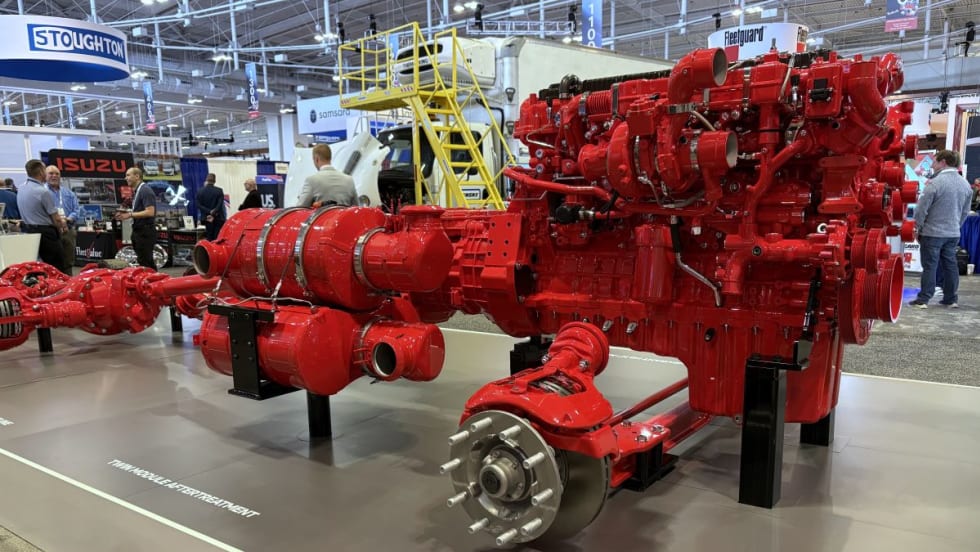
Cummins Adjusts 2027 Engine Rollout After EPA Proposal
The engine maker will gradually introduce its new Model Year 2027 diesel engines while continuing to offer current models during the transition, citing the EPA's proposed emissions rule changes.
Read More →
Aurora Rolls Out Next Generation of Driverless Trucks for Commercial Freight
Aurora's latest autonomous trucks it's rolling out with International feature lower-cost hardware designed for a million miles as the company expands commercial driverless freight operations across the U.S. Sun Belt.
Read More →

Peterbilt 589 Spotlight: A Close Look at a Custom Working Truck [Video]
There's more to this customized Peterbilt Model 589 and Great Dane refrigerated trailer than chrome and stainless (although there's plenty of that too!) A veteran driver explains the design choices and practical features behind this working truck.
Read More →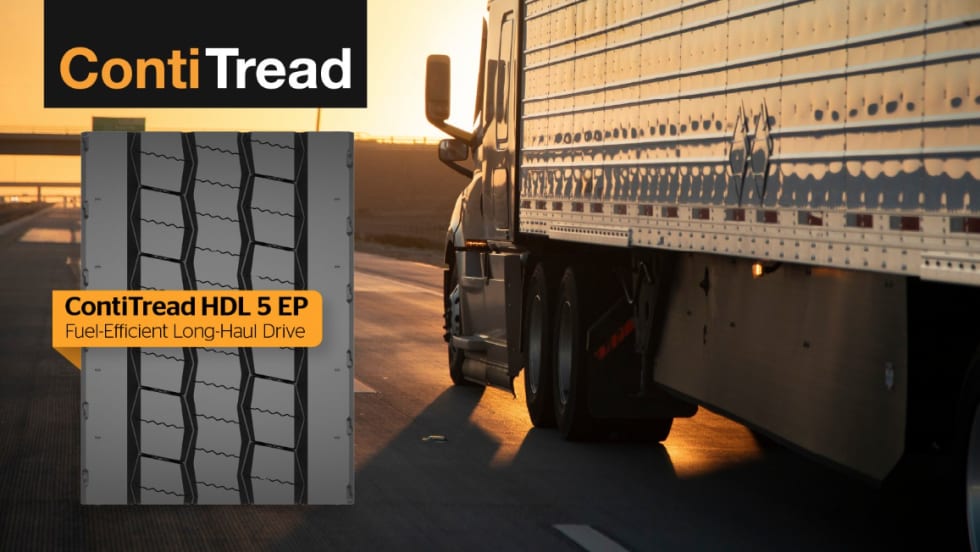
Continental Expands Retread Lineup With New ContiTread HDL 5 EP
New long-haul drive retread is designed to improve fuel efficiency, extend tread life, and lower fleets' cost per mile.
Read More →
EPA Proposal Could Ease 2027 Truck Costs and Buying Uncertainty
The proposal doesn't change the tougher NOx standard, but it would revise key implementation requirements that manufacturers say have driven up costs and complicated fleet purchasing decisions.
Read More →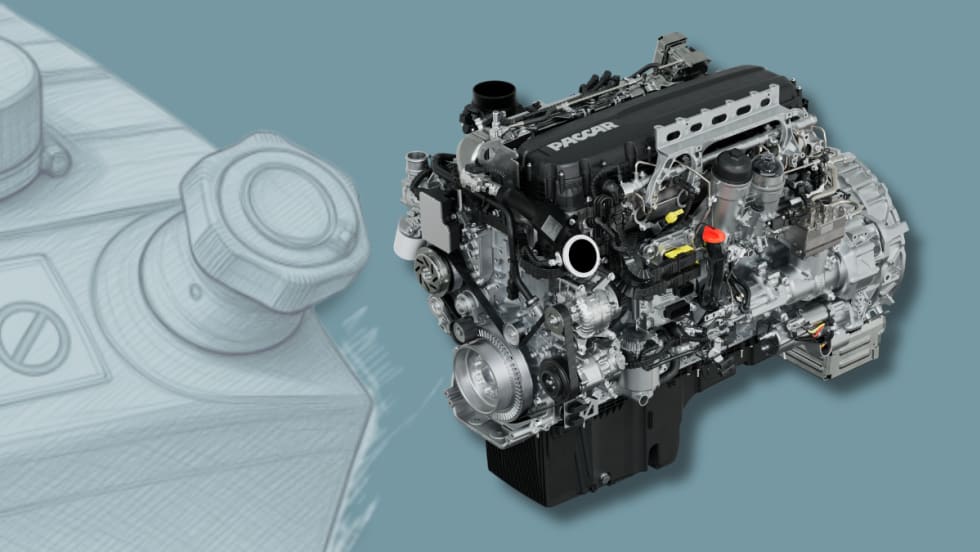
Cummins, Paccar Ease DEF Derates After EPA Guidance
Updated diesel engine software gives truck operators more time to address emissions-system issues while staying compliant with EPA emissions standards.
Read More →
America at 250: How the Truck Helped Connect a Continent
America was founded on revolutionary ideas, but it was built by movement. For 250 years, the nation has depended on ever-better ways to move people, products, and prosperity across a vast continent. No machine has carried that mission further — or more faithfully — than the truck.
Read More →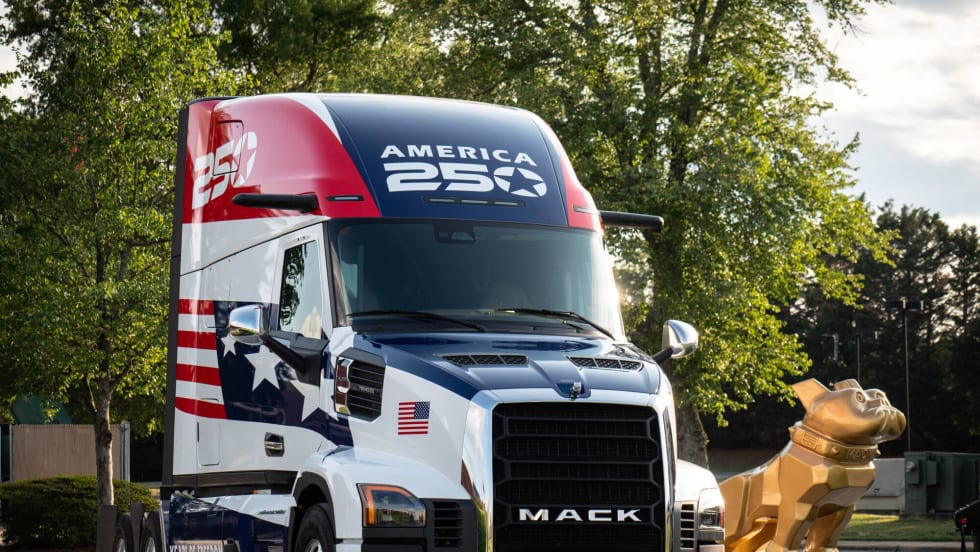
Mack Unveils America 250 Tribute Truck to Celebrate Nation's Semiquincentennial
Just in time for the Fourth of July! Mack unveils a brand-new patriotic, limited-edition, red, white, and blue truck wrap.
Read More →
Enhance Fleet Performance with High-Efficiency Auxiliary Power Units
Drive sustainable cost savings while increasing driver comfort during short- and long-haul logistics operations.
Read More →