




Making the Case for Fuel-Efficient Tires
You get 30% less tread on some fuel-efficient tires, they cost 15% less up front and they run fewer miles to take-off, but does the money saved on fuel because of the lower rolling resistance make up for the shorter overall life? Many fleets are struggling with that question today. The answer is often anything but clear.

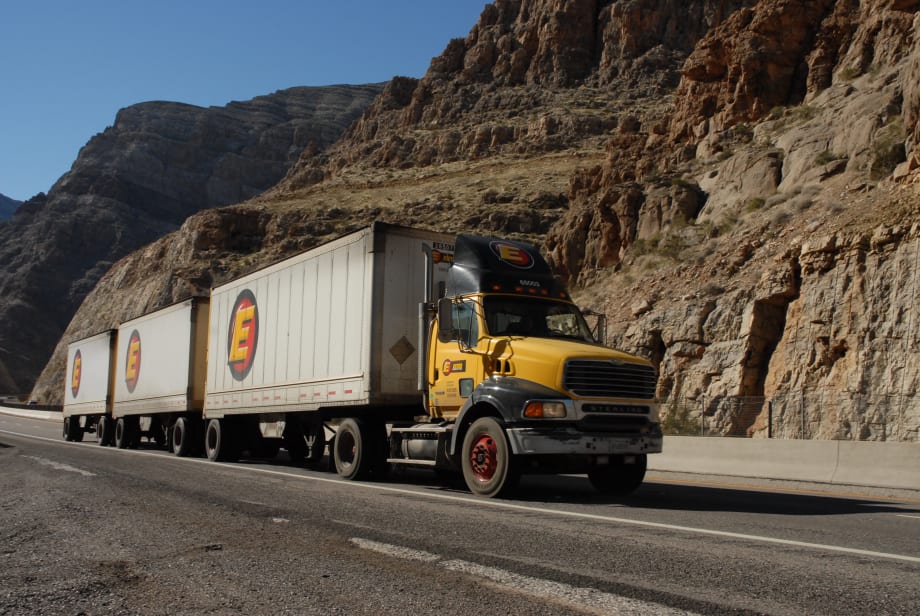
The more rubber you have on the road, the sooner the improvements become obvious.
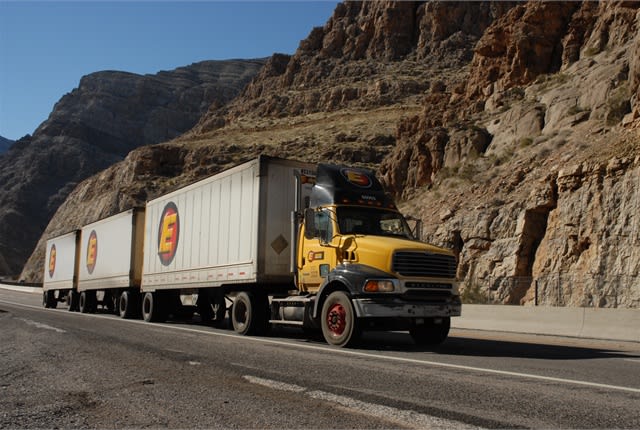
The more rubber you have on the road, the sooner the improvements become obvious.
You get 30% less tread on some fuel-efficient tires, they cost 15% less up front and they run fewer miles to take-off, but does the money saved on fuel because of the lower rolling resistance make up for the shorter overall life?
Many fleets are struggling with that question today. The answer is often anything but clear.
But don't be too quick to blame the tires.
Mike Jeffress, vice president of maintenance at Arkansas-based Maverick Transportation, is one such fleet. Asked if he has ever done cost/benefit calculations on shallow-tread, fuel-efficient tires, he chuckled and said, "fuel economy is a very convoluted scenario.”
"When you get everything in the fleet set up the way you want it and you can measure fuel economy across the fleet, and you find you're getting 7 mpg at 62 mph, it's good," he says. "Then a few things change, more aero equipment comes in, new drivers come in and old ones leave, speed limits change, but the fuel economy remains 7 mpg. I can't put it all down to the tires but I'm inclined to believe the tire makers' claims are true."
Maverick did some extensive Type IV fuel economy testing 10 years ago with the Michelin X One wide-base singles tires came on to the market. Jeffress says he saw 2/10 of a mile per gallon improvement using the wide-single tires on drive axles only.
"But on tire life, where we used to get 260,000 miles to removal from a set of duals, we dropped to 210,000 miles with the singles," he notes. Nevertheless, "even though we were short on miles to wear-out, our test results showed the wide singles made sense."
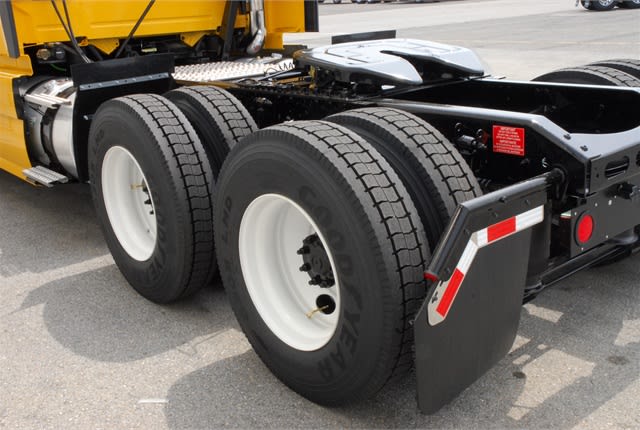
Fuel-efficient tires come in many shapes and sizes. Traction, tread depth, miles-per-32nd and rolling resistance are the variables you must contend with. Hard, reliable comparisons won't be easy to come by.
Sometimes other advantages that might not appear on the fuel reports can add to the attractiveness of the tires.
Roy Gambrell, director of maintenance for Truck It, Cottontown, Tenn., and formerly general chairman of the ATA's Technology and Maintenance Council, runs fuel-efficient shallow-tread duals on his trailer. He found with less rubber on the tires to begin with, they were less susceptible to dipping and cupping wear common to free-rolling positions.
"The problem with that kind of wear, once it starts, it's impossible to stop," Gambrell told HDT. "But if it never starts, the tires actually last longer than standard tires used to on a trailer, even though there are fewer 32nds of rubber there to begin with.
"As for fuel economy gains, I really can't say. We move so many different things from one day to the next, it's hard to get the consistency you need for an accurate fuel test."
The secret sauce
Gambrell's observations about miles to removal are likely the result of compounding and tread design improvements. Until recently, you spec'd for traction, tread life, or low rolling resistance. Often, you gave up one to get more of the other two. It was difficult to get all three in equal measure.
William Estupinan, GITI Tire vice president of technical service for the Americas, says when major tire manufacturers began using silica in commercial tire treads, miles to removal improved. Since then, traction and rolling resistance have improved as well.
"In the beginning, there were certainly compromises to be made," he says. "That's hardly the case anymore. You can achieve a good balance between traction, tire life and rolling resistance."
Further, today's casings are optimized to lower rolling resistance by refining stress distribution and minimizing internal friction caused when the sidewall flexes under load. In the case of wide-base single tires, two sidewalls per wheel position are eliminated, further reducing the tires’ overall rolling resistance.
The remaining percentage of a tire's rolling resistance comes from the tire tread. That's why much of the focus in developing fuel-efficient tires has been on tread design.
"Some compounds, especially those incorporating silica, or using formulas that combine natural and engineered synthetic rubber, can reduce tire rolling resistance significantly," says Guy Walenga, director of engineering for commercial products and technologies at Bridgestone.
Proving the case
Fleet uptake of the newer fuel-efficient tires has been good, notes Curtis Decker, manager of product development, Continental Tire North America, but he believes many fleets are missing out on savings because they have a harder time proving them.
"Tire makers have the burden of proving to the customer that the technology works, but there's only so much we can hand them," he says. "People are naturally skeptical about marketing claims. And it's harder for some fleets to evaluate the efficiency of the tires – especially smaller fleets – because of the need for direct side-by-side comparisons."
The problem with tire comparisons is there are so many variables that must be isolated or eliminated, lest they taint the results.
"Fleets have to clean up their tire maintenance house before embarking on an evaluation," Decker says. "If factors like alignment and tire pressure management – especially pressure management – aren't perfect going in, the results will be skewed."
So if you can't test them yourself, and you're not sure about the marketing hype, how do you know the tires are working for you?
Don't feel bad. Even a fleet as sophisticated Maverick can't always nail everything down to two decimal points.
"I think a lot of fleets are struggling with the miles-to-removal question, especially if the improvement in the fuel numbers is lost in the noise," Jeffress says. "It's not going to be a big number."
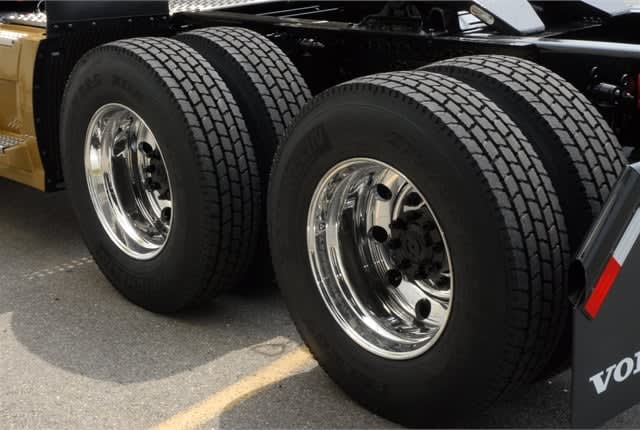
Until recently, you spec'd for traction, tread life or low rolling resistance. Often, you gave up one to get more of the other two.
Jeffress is responsible for fuel economy at Maverick, though his department doesn't pay the fuel bills. But if fuel mileage began dropping, he'd sure hear about it.
"If I was just one guy tasked with managing fuel economy and maintenance costs, I would be watching to see if fuel costs were climbing, dropping or staying the same and whether my miles per 32nd were changing," he says. "It's way too easy to get tricked with a couple of trucks and a couple of sets of tires. It's a 'big picture' exercise."
Fuel economy in the city
The recognized benefits of fuel-efficient tires in a long-haul environment are fairly obvious, but not so much in urban situations. Curb strikes and scrubbing from tight turns are big threats to tire longevity, and annual miles pale in comparison to over-the-road trucks. On the highway, because of the high number of miles, even a 0.3% improvement is noticeable.
Still, fuel-efficient tires are making their way into medium-duty markets, driven in no small part by new federal fuel efficiency requirements. Not much can be done to improve aerodynamics on trucks that don't often go over 30 mph, so the potential for improvement lies elsewhere.
"The new fuel economy regulations are certainly rearranging the priorities for tire manufacturers," says Brad Weaver, product portfolio manager at Michelin. "Things like aerodynamics don't even apply in the medium-duty market. The original equipment manufacturer's improvement options are very limited – smaller engines and lower rolling resistance tires.
"As tire makers, we have to begin putting a higher priority on fuel economy and offering products that will help the original equipment manufacturers meet their targets."
The urban nature of the segment does bring a few challenges.
Shallower tread depth on low-rolling-resistance tires can be seen as a threat to urban and vocational trucks, where a thick layer of protection between the road and the casing is seen as beneficial. However, ongoing product development programs are focused on producing a tire for an urban setting with lower rolling resistance and the same damage-mitigating performance attributes as before.
"We'll be taking essentially the same approach we did with the on-highway market, using tread compounds and designs to reduce rolling resistance while maintaining traction and durability," Weaver says. "But it won't be the same tire at all. In the medium duty and vocational market, the priorities are different. It's a more abusive environment with concerns about curbing, scrubbing, etc."
Goodyear's Don Kramer, director of marketing commercial tires, says customers won't have to accept "less of a tire" because of thinner, more efficient tread. He says manufacturers have improved manufacturing processes and made big gains in materials.
"In the past, we had two choices in tread compounding – tread wear or fuel efficiency – and the fleet had to choose. Sometimes there were huge trade-offs," he says. "That's not so today. Some steer and drive tires could have as many as two to four different compounds in the tread area to minimize those trade-offs. It will be the same for medium-duty tires as well."
More Drivers

Platform Science Adds Dispatch and Safety Tools
Four additions to PS Fleet help fleets monitor loads, manage driver coaching, share truck locations and adjust video system settings.
Read More →
When Language Stops the Truck: The Return of ELP Out-of-Service Orders
English language proficiency rules for commercial drivers aren’t new, but renewed out-of-service enforcement has raised the stakes. Here’s what carriers need to know before a driver reaches a roadside inspection.
Read More →
Samsara Launches Custom AI Agent Builder
Agent Studio lets fleets create AI tools for hours-of-service monitoring, reporting and driver support, including agents that communicate by phone.
Read More →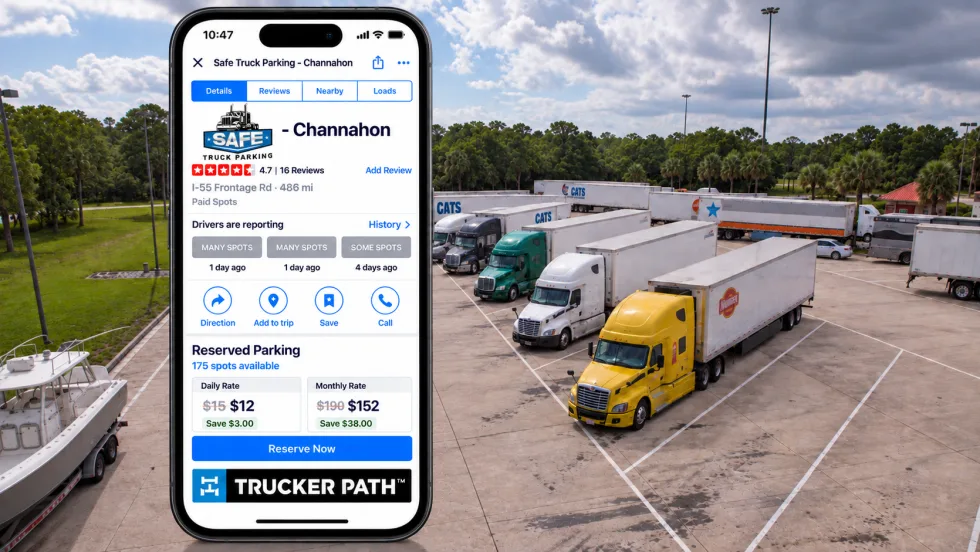
Trucker Path Expands Reserved Parking Network
Trucker Path has added close to 6,000 more truck parking spaces to its Trucker Path Reserved Parking Network with the addition of Safe Truck Parking.
Read More →
EEOC Sues Texas Trucking Company Over Driver Age Limits
The agency says Trancasa USA rejected applicants over 65 and applied tougher driving-record standards to those over 60.
Read More →
Nussbaum, Roehl Announce Second Driver Pay Increase This Year
This year has seen a swath of major truck driver pay increases as freight capacity has tightened.
Read More →
From One Generation to the Next: How Mentorship Builds Safer Truck Drivers
After three decades in trucking, Harold Perry shares what he's learned about driver safety, mentorship, and helping the next generation build confidence behind the wheel.
Read More →
Truck Drivers Need More Than Another Alert
Fleets have more visibility into truck health, safety events, and driver activity than ever. The next challenge is turning all that information into useful guidance for the person who has to decide what to do next.
Read More →
FMCSA Removes 110 Truck Driver Training Schools from Certified ELDT List
Federal regulators also are targeting more than 160 additional training providers and launching a nationwide audit of third-party CDL skills testers as part of a broader crackdown on trucking fraud.
Read More →
Hours of Service Pilot Programs: FMCSA Readies for 2027 Rollout
Two pilot programs could eventually reshape hours-of-service rules, giving truck drivers options to pause their 14-hour clock or use longer split sleeper rest periods.
Read More →