




Keeping Converter Dollies in Top Condition
These tips can keep drivers from wasting time in drop yards assembling their doubles sets.

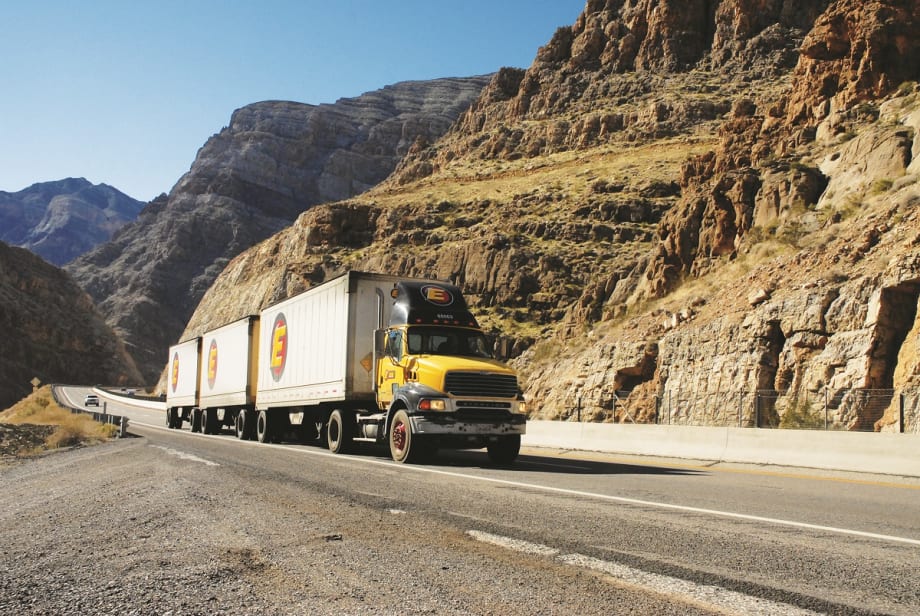
Converter dollies sometimes disappear in trailer inventories and aren’t seen for months. Fleets can usually get away with semi-annual inspections, but they shouldn’t be forgotten.
Photos: Jim Park
Converter dollies are about one-tenth the size and cost of a trailer, but they require nearly as much maintenance, especially with the running gear. Tire pressures need to be checked regularly. Brakes need to be checked for wear, function and adjustment, along with the suspensions and fifth-wheel mounting components and locking mechanisms. And the air and electrical systems, as simple as they are, need periodic inspection, too. A thorough inspection on a clean unit should take no more than 30 minutes two to three times a year, depending on the annual mileage.
As is the case with any other trailing vehicle, DOT roadside inspectors look for common defects and signs of neglect, such as damaged, chafed or rubbing air hoses, burnt-out lights, and wheel-end issues, such as loose or missing wheel nuts, signs of lubricant leakage from the wheel seals, and of course the condition of the tires. Since converter dollies are often left in drop yard and drivers aren’t always as vigilant as we’d like them to be on trip inspections, it pays to get these things into the shop regularly.
Converter dollies have drawbars that need a little attention too, along with the trailer-mounted pintle hooks. Technology & Maintenance Council Recommended Practices 747 and 744, respectively, outline inspection procedures for these components, including wear limits and replacement thresholds. Some of the procedures will vary with different manufacturers, but the principles apply broadly to most converter dollies.
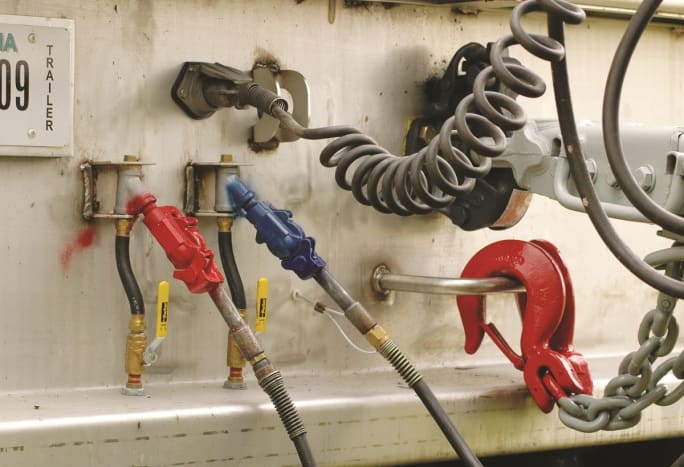
Converter dollies are subject to the same out-of-service criteria as other semi-trailers, with additional standards for pintle hooks and drawbar eyes.
Since the forward portion of the drawbar eye and the pintle hook assembly share a metal-to-metal contact area, usually without the aid of lubricant, both bits are subject to wear. RP 747 suggests that if wear exceeds 0.125 inches from the original surface profile it must be replaced. Gauges are available from manufacturers to assist with this measurement. Drawbar eye diameters can vary by manufacturer, so consult RP 747 or the manufacturer before condemning a worn part.
Some eyes are welded to the drawbar and some are bolted. In either case, frequent checks should be done to ensure the integrity of the joints and connection points.
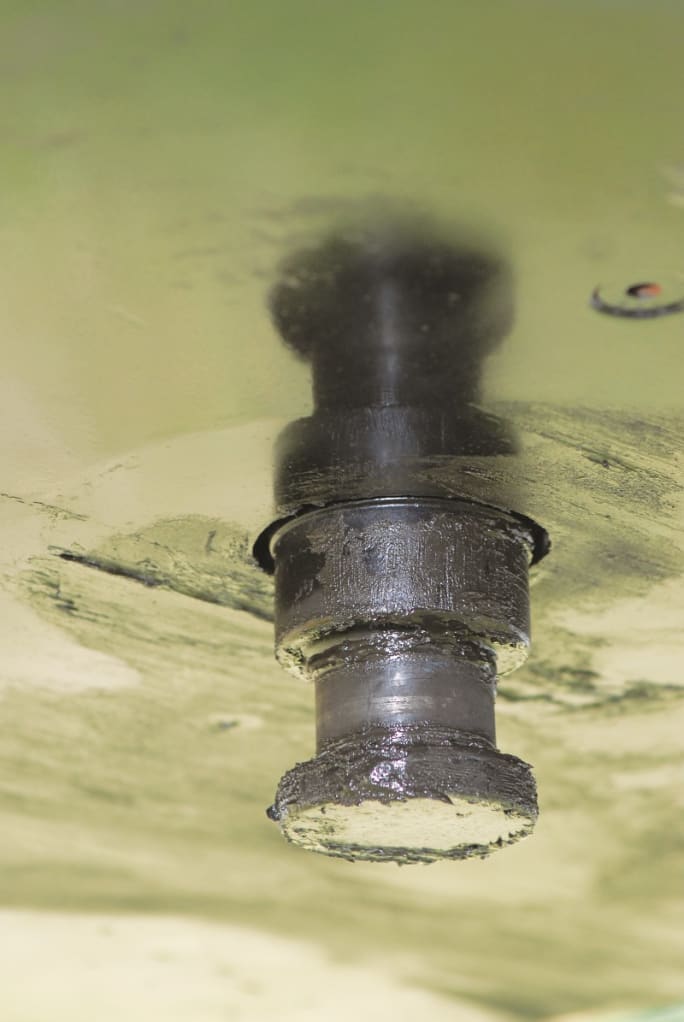
Trailers used in piggyback rail service are subject to additional stress as the flatcar sways from side to side. Kingpins on such trailers should be inspected frequently.
Like drawbar eyes, the horn on the pintle hook is usually case-hardened only to a depth of about 0.125, or one-eighth of an inch. If the wear extends much deeper than that, it will accelerate quickly. RP 744 indicates the out-of-service wear limit for the horn; the part that pulls the second trailer is 20% of the original profile section of the horn. As before, gauges are available from manufacturers to assist with these determinations because of variations in the horn designs. It’s not necessarily a one-size-fits-all approach.
Nicks and gouges can weaken the structure of the horn, so inspect carefully for damage, cracks, etc., and replace damaged parts. TMC suggests prohibiting welded repairs on any part of the pintle housing.
The latch mechanism also requires periodic inspection. You can probably gauge the required frequency of these inspections by driver complaints. If the latch is difficult to operate or isn’t working at all, they aren’t running, and you’ll be hearing about it.
Manufacturers provide gauges for this measurement too, so get the right one before making the inspection. In most cases, the maximum allowable gap between the pintle hook horn and the latch is 0.38 inches. The latch and/or the horn should be replaced if the gap is any larger.
Finally, check the condition and function of the pneumatic snubber used to maintain a tight fit between the drawbar and the pintle hook. It should be energized when the drawbar is present and back off completely when the latch is opened and the system de-energized. Drivers will not be able to withdraw the drawbar if this mechanism jams or fails to de-energize. Inspect the condition, function and alignment of the air chamber and the pushrod used to hold the snubber in place.
Drivers rely on the proper function of these devices. With electronic logging devices now measuring their time, few drivers can afford to be fiddling around with converter dollies before setting out on a trip.
More Equipment

How Volvo Updated Its D13 for EPA 2027 [Watch]
Volvo’s updated D13 promises lower emissions without sacrificing performance or fuel economy. Take a closer look at what changed inside the engine in this HDT Spotlight video.
Read More →
Michelin Tire Improves Efficiency and Durability for Regional Fleets
The Michelin X Multi Energy D2 is a regional haul drive tire engineered to help fleets improve fuel efficiency, durability and traction in demanding stop-and-go operations.
Read More →
ZF Expands Commercial Vehicle Push in North America
ZF is expanding its North American commercial-vehicle presence with new transmission applications, electrification, trailer technology and autonomous-driving systems.
Read More →
Tesla Wants a Self-Driving Semi. Are Cameras Enough?
Could Tesla’s camera-only autonomous driving technology work on an 80,000-pound Semi? In this commentary, HDT's Deborah Lockridge takes a look at Tesla, Cybercab, and how autonomous trucks see the road.
Read More →
Kodiak: Driverless Long-Haul Truck Launch on Track for 2026
Kodiak AI says its driverless long-haul safety case is 93% complete and it remains on track to begin commercial operations by year-end 2026.
Read More →
What DOT’s Automated Vehicle Strategy Means for Trucking
The U.S. Department of Transportation issued a new automated-vehicle strategy that outlines plans for driverless-truck regulations, cross-state freight corridors, and federal safety standards.
Read More →
East Coast Port Launches $45M Electric Truck Push
The Port Authority of New York and New Jersey announced millions in incentives for zero-emission drayage trucks, yard tractors, and new charging hubs near the port.
Read More →
PlusAI Going Public to Fund Autonomous Truck Launch
A SPAC deal could provide PlusAI with up to $300 million as it works toward a 2027 commercial launch of factory-built autonomous trucks.
Read More →
NHTSA Moves to Rewrite Truck Fuel-Economy Rules
The National Highway Traffic Safety Administration says it lacks authority to regulate medium- and heavy-duty truck engines separately from complete vehicles, but the existing standards have not yet been eliminated.
Read More →
Detroit Opens Orders for EPA 2027 Engines
Detroit isn’t starting from scratch to meet EPA 2027 diesel emissions standards. Its Gen 6 DD13 and DD15 engines keep much of today’s platform while updating the fuel and aftertreatment systems.
Read More →