




Infrastructure Disaster
Minnesota bridge collapse sharpens focus on highway spending.
Up until Wednesday, Aug. 1, the controlling political insight on Capitol Hill was this: Voters don't want to pay higher fuel taxes – even if it means better roads and bridges. This position has shaped national transportation policy since 1993, when the federal fuel tax was last increased, and it has sparked the emergence of an alternative source of highway funding – public-private partnerships – that many find deeply troubling.
Then a 40-year-old bridge fell into the Mississippi River, and the narrative changed.
The collapse of the I-35W bridge in Minneapolis during evening rush hour on Aug. 1 claimed at least nine lives (others were still missing as HDT went to press). It also provided a dramatic story that will focus the public's attention on one of the major policy debates of the decade – the reauthorization of the national highway program.
"This is yet another wake-up call for the nation's infrastructure," said Rep. James Oberstar as he introduced legislation to authorize $250 million to begin reconstruction of the Minneapolis bridge. Oberstar's bill was cleared by Congress and signed by the president, although the money still has to be appropriated.
Oberstar followed that initiative with another, broader plan that he intends to introduce this month: a comprehensive program to repair structurally deficient bridges in the National Highway System, which includes the Interstate System, the Strategic Highway Military Network and other major highways. NHS bridges carry more than 70 percent of the nation's bridge traffic, according to an Oberstar statement.
Oberstar's plan includes four elements: improve bridge inspection requirements, provide dedicated funding, distribution of funds on the basis of safety, and a dedicated fund similar to the Highway Trust Fund for bridge repair, rehabilitation and replacement. The plan would prohibit earmarks – the mechanism by which Congress and the administration can carve out funds for special projects, or pork.
Oberstar, a Democrat from Minnesota, is chairman of the House Transportation and Infrastructure Committee, a position of enormous influence over transportation policy. Barring an upset in the 2008 election, he will remain chairman while the reauthorization, due to be completed in 2009, is under way.
He and others on the committee, Republicans as well as Democrats, have long held that the policy of no tax increases is shortchanging national infrastructure needs.
"We have provided in excess of $2 billion a year for bridge reconstruction and maintenance in the current transportation law," Oberstar said. "We would have had more – $3 billion – if (the Bush) administration had not insisted on a $90 billion smaller transportation program."
Oberstar said the value of the highway construction dollar has dropped 47 percent in the 12 years since 1993. "We've got to keep up with inflation. The last bill didn't. We will do that in the future."
It is one thing for Oberstar to call for a fuel tax hike. It is another for the Republican governor of Minnesota, Tim Pawlenty, to do so. Pawlenty has twice vetoed legislation to raise fuel taxes, but the bridge collapse has changed his perspective. He is now open to the idea of raising the tax to address infrastructure needs, according to news reports.
Pawlenty and other governors have ordered state transportation departments to immediately begin bridge inspections, and U.S. Transportation Secretary Mary Peters called on all states to inspect bridges that have the same steel deck truss design as the Minneapolis span. There are 756 bridges of that type in the country, according to the Federal Highway Administration. Peters also asked the DOT Inspector General to assess the National Bridge Inspection Program.
The American Association of State Highway and Transportation Officials estimates that capital outlay at all levels of government would have to increase by 42 percent to simply maintain what's in place, and by 94 percent to improve it. The Federal Highway Administration, on the other hand, estimates that it would take a 17.5 percent increase to maintain and a 65.3 percent increase to improve.
In either case, that's a significant increase in investment.
"In the next reauthorization in 2009, we're not going to settle for a bargain basement transportation bill," Oberstar said. "We're going to have an increase in the highway user fee. I don't know who's going to be the president, but whoever it is, is going to listen to the Congress and not the other way around."
The collapse in Minnesota notwithstanding, the condition of the nation's bridges has actually improved over the years. The rate of structurally deficient and functionally obsolete bridges declined from 31.8 percent in 1995 to 27.9 percent in 2000 to 25.8 percent in 2006, according to DOT's Bureau of Transportation Statistics.
The bridge in Minneapolis, which was on an annual inspection cycle rather than the two-year cycle required by federal rules, was classified as structurally deficient. That term refers to the condition of the bridge's components and means that they require anything from maintenance to rehabilitation to replacement. The designation does not imply that the bridge is likely to collapse or is unsafe, DOT said. A bridge is rated functionally obsolete when the geometry of its design falls behind current design standards.
In its last major inspection in June 2006, the bridge received an overall rating of 4 on a scale of 0 to 9, and was found suitable to continue in operation with load restrictions. It carried 141,000 vehicles a day, according to a 2004 count.
It will take at least 18 months for the National Transportation Safety Board to complete its analysis of why the bridge collapsed. According to ASCE, this bridge was relatively young to have collapsed – the average age of failure for bridges is 52.5 years. More than half of collapses are caused by scouring of the supports by water flow.
Meanwhile, the debate in Congress over the highway program is going to proceed with more attention from the public than it has had in the past. Oberstar's committee has held numerous hearings already, covering the condition of the highways and how funding shortfalls will be corrected.
Public-private partnerships have been the subject of at least a half-dozen hearings already. In these alternative funding mechanisms, a private investor fronts the money for a new road or maintenance of an existing road in return for income from tolls. Perhaps the best-known example of such an arrangement is the 75-year lease of the Indiana Toll Road to an international consortium.
Pennsylvania Gov. Ed Rendell, a Democrat, explained the attraction of this approach in comments several months ago. He noted that the cost of road construction materials in Pennsylvania has gone up 36 percent in the past two years and said there is no way to raise fuel taxes high enough or quickly enough to meet that cost.
"If we're hoping that the federal government raises the gasoline tax and produces enough money to fund (the highway program) and come to rescue of this massive infrastructure deficit that we have in this country, I think we're dreaming," Rendell said.
Trucking interests, meanwhile, are alarmed about the emergence of the PPP alternative. The American Trucking Associations and the Owner-Operator Independent Drivers Association are leading a group of highway users who are pushing alarms on Capitol Hill.
ATA President and CEO Bill Graves has warned that leasing highways threatens to dismantle interstate highway network. "We must take the time to consider the long-term impact privatization will have on our nation's transportation system."
Oberstar and Rep. Peter DeFazio, D-Ore., share Graves' concern.
"We are open to all proposals for funding of future needs," Oberstar said. "But the core has to be a dedicated revenue stream as Congress created in 1956 with the Highway Trust Fund."
More Fleet Management
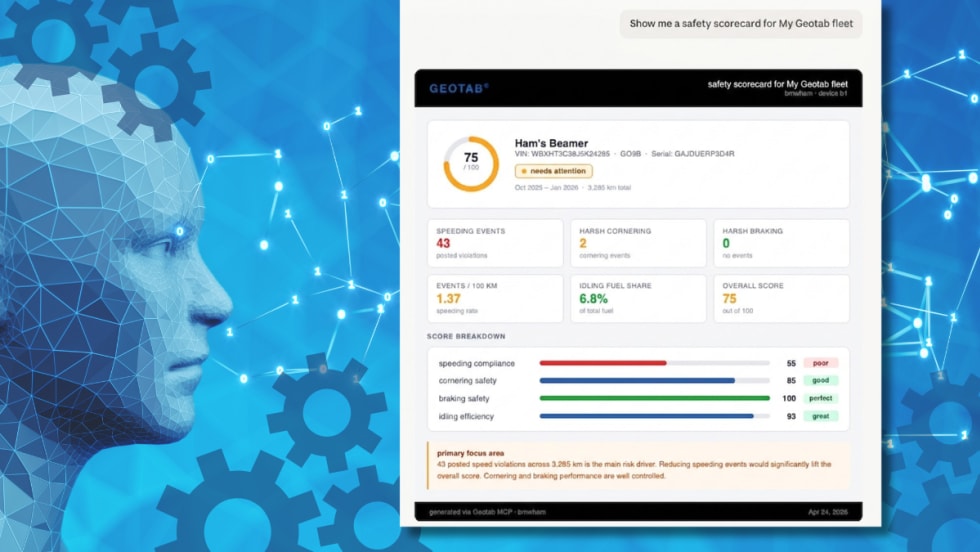
What Geotab's New AI Connector Means for Fleets
Fleets can now ask their usual AI assistants questions about maintenance, safety, fuel use, and vehicle performance, using their live Geotab data, and take action on the answers without leaving their preferred AI tool.
Read More →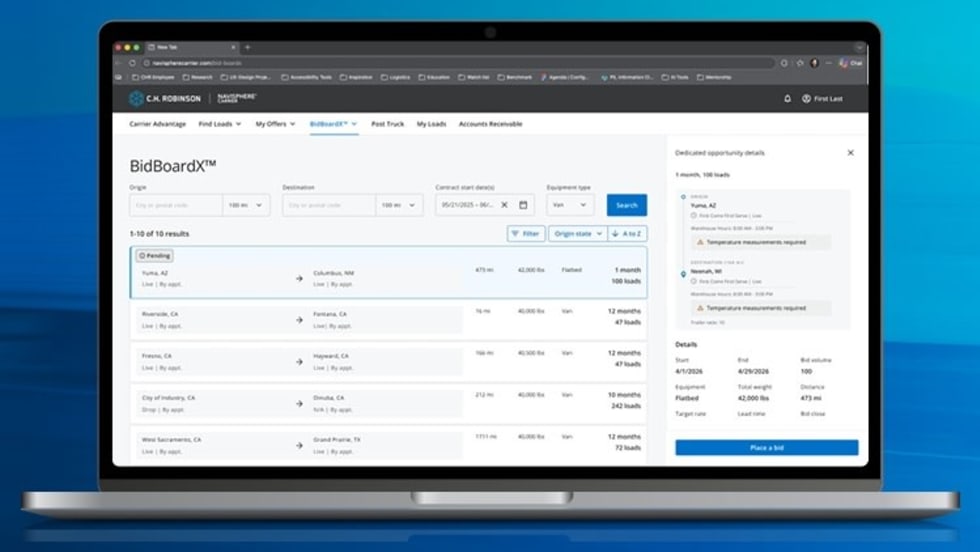
New C.H. Robinson Tool Opens Door to More Predictable Freight
BidBoardX lets carriers search, bid on, and secure committed freight opportunities through a single digital marketplace.
Read More →
New York City's Microhub Project is Delivering Results
Trucking, last-mile delivery companies, and environmental advocates like what they are seeing so far with New York's microhub program.
Read More →
Why Truck Detention Keeps Costing Fleets Time and Money
A 2024 ATRI study found detention affects nearly 40% of truckload stops and costs the industry more than $15 billion annually. Despite the toll on drivers, fleets, and supply chains, the problem remains stubbornly persistent.
Read More →
Time is Running Out to Apply for Exclusive HDT Event
Heavy Duty Trucking Exchange brings fleet managers and suppliers together for the deeper conversations that lead to ideas, partnerships, and solutions. Time is running out to apply for the September event.
Read More →
Amazon Launches Less-Than-Truckload Freight Offering for All Businesses
This launch is the latest addition to Amazon Supply Chain Services, a portfolio of supply chain capabilities from Amazon, including freight, distribution, fulfillment, and parcel shipping.
Read More →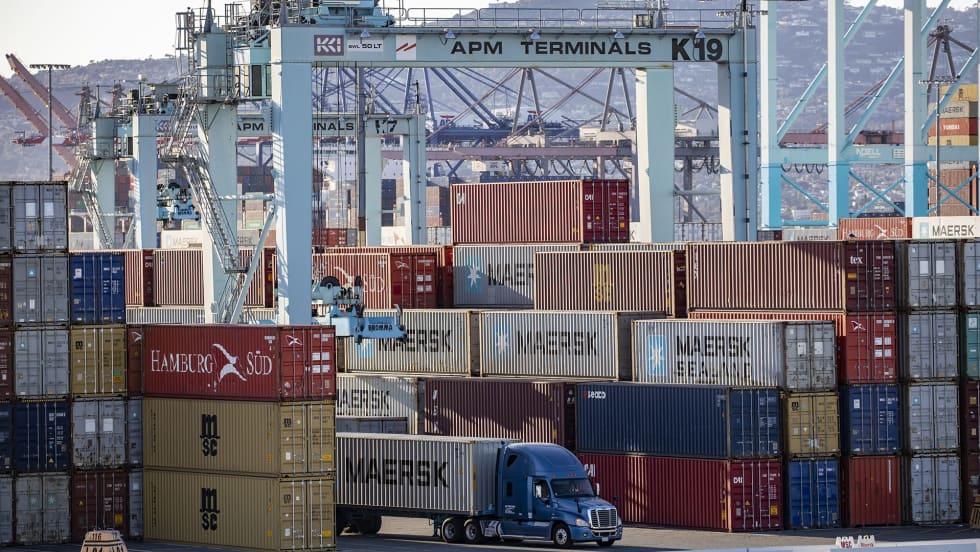
Import Cargo Volume to See Year-Over-Year Gain Again in June, Then Remain Below 2025 Levels Into Fall
After July, the report predicts a weakening in import volume as consumer uncertainty remains high and the impact of increasing inflation takes its toll.
Read More →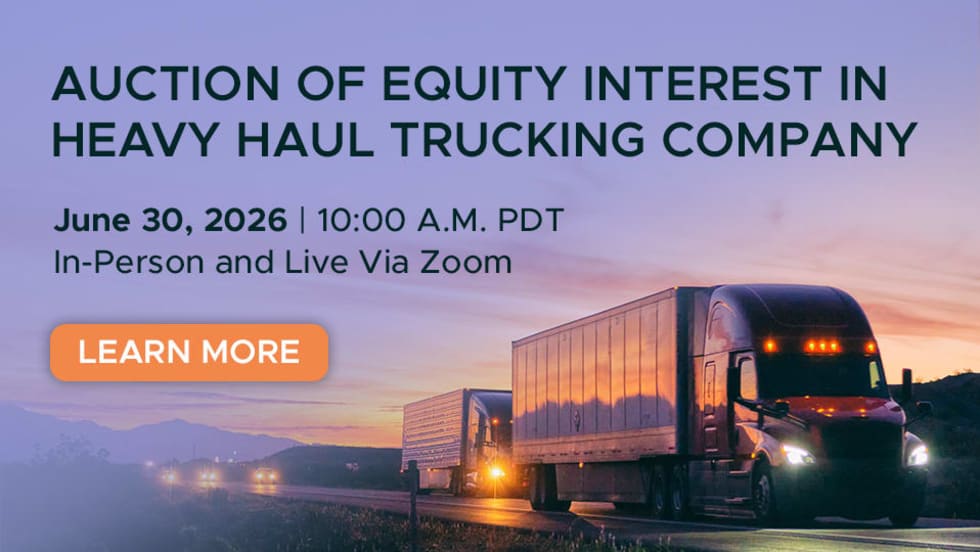
AUCTION OF EQUITY INTEREST IN HEAVY HAUL TRUCKING COMPANY!!
Mark your calendar: June 30, 2026 (10:00 a.m. PDT). A 37.5% ownership interest in MagnaTrans, LLC, a California limited liability company doing business as Magna Transportation Group, will be sold in an in-person and online auction to the highest bidder or bidders under Article 9 of the Uniform Commercial Code. The Rancho Cucamonga-based heavy haul and over-dimensional trucking company operates across California, Oregon, and Arizona.
Read More →
Volvo Trucks Adds Unattended Over-the-Air Software Update Capabilities
The latest evolution of Volvo’s over-the-air update technology allows software updates to run while trucks are parked, helping fleets keep vehicles current without disrupting operations.
Read More →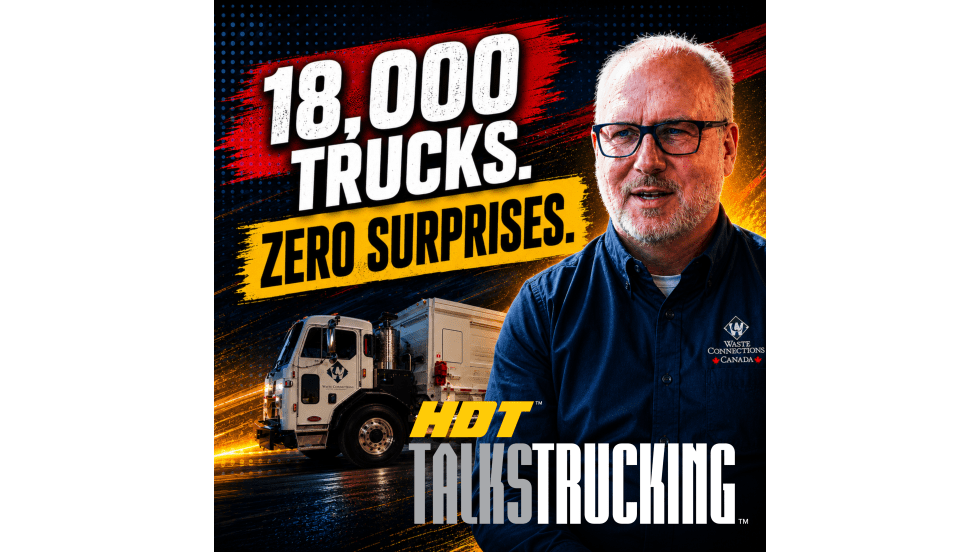
How Waste Connections is Using Data, Telematics, and AI
How do you manage and maintain more than 18,000 connected trucks? Data. Lots of it.
Read More →