





Senate-Passed Infrastructure Legislation Includes Trucking Provisions
Infrastructure Bill: From There to Where?
The Senate’s enormous infrastructure bill must still make it through the House.
August 18, 2021
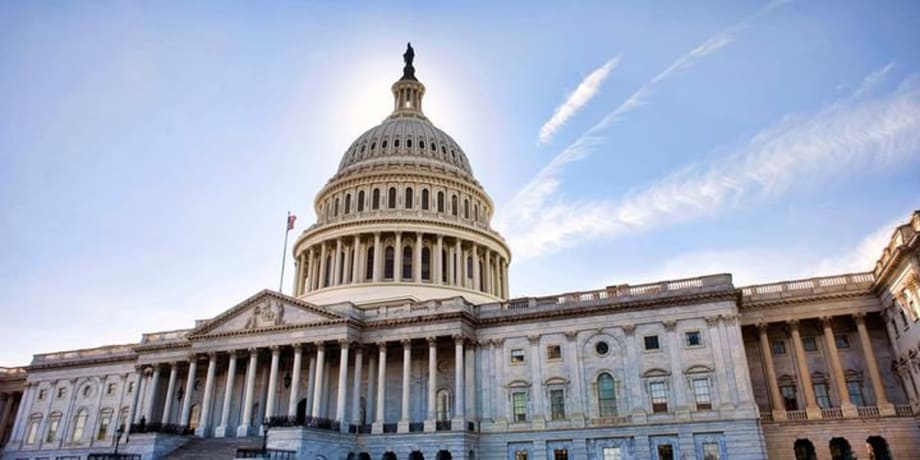
The Senate’s enormous infrastructure bill must still make it through the House.
Photo:Gettyimages.com/mj0007
3 min to read
The fate of the infrastructure bill will be decided by politics as usual, but amped up by the coming fight for control of Congress in the 2022 mid-term elections.
The Senate managed on Aug. 10 to pass in bipartisan fashion a $1.2 trillion infrastructure bill, the Infrastructure Investment and Jobs Act of 2021. But passing a similar companion bill in the House is looking to be anything but smooth and fast. That’s because the moderate and liberal wings of the Democratic Party are not of the same mind on how and when an infrastructure bill should move forward in the House.
If House Republicans can maneuver as adroitly as their Senate colleagues did to assure passing a bipartisan bill, then in 2022 they can deflect any charges that they were unwilling to negotiate across the aisle on a bill popular with most Americans by an awesome margin.
But things get even more complicated when factoring in the internal party politics of House Democrats on the Hill. It’s long been held that massive infrastructure legislation might best pass by rolling over Capitol Hill on two tracks, both of which would end on President Biden’s desk.
At this point, the status of the two-track strategy is that a straight-up infrastructure bill (covering roads, bridges, broadband internet, etc.) has passed the Senate. That’s one track, and it would be completed by the House essentially rubber-stamping the Senate bill. This is the approach largely favored by moderate Democrats in the House.
Over on track two, things get Machiavellian. On this track, liberal Democrats in the House are pressing Speaker Nancy Pelosi (D-CA) to move forward on the Senate bill only after both chambers authorize a gigantic budget that would earmark $3.5 trillion to spend on an array of Democrats’ policy goals, including major overhauls to health care, education, immigration, and the tax code. It’s all part of the Biden Administration’s “Build Back Better” initiative.
There is little to no Republican support for this proposed budget. That means it would have to be passed in both chambers by the Democrats using the fast-track tool known as budget reconciliation. The reconciliation process makes certain types of legislation easier to pass, especially in the Senate, where it removes the threat of a filibuster.
But here’s the rub: Like most House Republicans, moderate Democrats want to get the existing infrastructure bill passed by the House and whisked to the president’s desk as soon as possible. That way they will have a major accomplishment to talk up — the sooner, the better — on the campaign trail back home.
But liberal Democrats in the House want the reverse. They want the $3.5 billion budget package passed first by both the House and the Senate, because they fear if they don’t strike while this iron is hot, they might not get the chance again. And, yes, they are fine with passing the infrastructure bill, but only after they use it as a leverage to get the big budget bill passed.
All this is happening only about two weeks before Congress returns from recess to begin debate.
In an Aug. 15 letter Pelosi addressed to her “Democratic Colleagues,” the speaker states that the goal is “to pass the budget resolution the week of Aug. 23 so that we may pass Democrats’ Build Back Better agenda via [budget] reconciliation as soon as possible… I have requested that the Rules Committee explore the possibility of a rule that advances both the budget resolution and the bipartisan infrastructure package.”
“Advances both,” yes, but by putting all her fire behind the $3.5 billion measure, Pelosi is pushing infrastructure to the back burner.
Whether it stays there remains to be seen.
Subscribe to Our Newsletter
More Fleet Management

Sponsored•September 16, 2026
Color Match Smarter: Tools That Restore & Perform
For fleet managers and collision repair professionals keeping heavy-duty trucks on the road, getting the color right the first time isn't just about appearance — it's about efficiency, turnaround time, and bottom-line results. Discover how today's digital color tools are transforming the repair process from guesswork to precision.
Read More →
FMCSA Pauses Biennial-Update Enforcement Amid Motus Transition
Carriers whose updates were due on or after June 1 have more time, while FMCSA works to stabilize its new registration system and warns of phishing sites impersonating its new carrier registration system, Motus.
Read More →
Sponsored•September 14, 2026
2026 Blueprint for Countering Smarter Supply Chain Theft
Cargo theft is no longer just the cost of doing business. It's a multi-billion-dollar criminal enterprise exploiting vulnerabilities across your fleet, drivers, and supply chain.
Read More →


Sponsored•September 1, 2026
How Telematics Improves Visibility, Control, and Performance in Refrigerated Fleets
Explore how telematics help refrigerated fleets improve visibility, uptime, efficiency, compliance, and cargo protection across connected cold chain operations.
Read More →
What the U.S.-Canada Trade War Means for Trucking
Escalating U.S.-Canada tariffs could disrupt cross-border freight, reduce truck volumes, raise costs, and create new uncertainty for carriers on both sides of the border.
Read More →
What Are Trucking’s Top Concerns for 2026?
The American Transportation Research Institute wants to know what's worrying trucking fleet managers, drivers, and other stakeholders in its annual Industry Issues survey.
Read More →
American Trucking Associations Looks for a New Leader
ATA President and CEO Chris Spear abruptly left his job at the association on August 21, at a pivotal time for the trucking industry.
Read More →
Public Wi-Fi Cybersecurity Risks: How Truck Drivers and Fleets Can Protect Their Data
Public Wi-Fi can expose truck drivers and fleets to credential theft, malware, and other cyber threats. Here’s how to reduce the risk on the road.
Read More →
For Nicky Cupp, Fleet Innovation Starts With Frustration
HDT Truck Fleet Innovator Nicky Cupp turns everyday pain points at Fraley & Schilling into opportunities for better technology and smarter processes.
Read More →
Adam Buttgenbach’s Approach to Electric Trucks: Start With Where They Fit
HDT Truck Fleet Innovator Adam Buttgenbach helped PepsiCo build one of North America’s largest EV fleets by focusing on where electric trucks make operational sense.
Read More →