




How the True Cost of Freight Shipping Affects the Carrier Market
An analytical look at consumer spending, the pandemic, and the spot market — where we've been, where we're headed, and what that means for owner-operators and fleets.
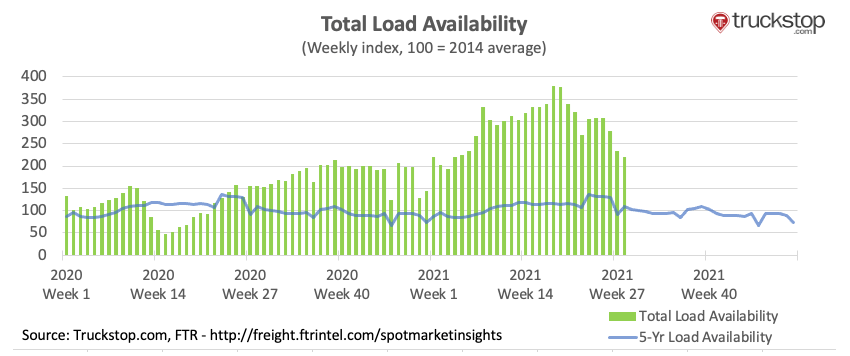
With loads and spot rates still well above the norm, how does that affect carrier behavior?
Graph: Truckstop.com
Consumer spending shifted in 2020 as the world stayed indoors and avoided crowds as much as possible amid the pandemic. Service-based experiences, such as food and recreation, declined at historic levels. while sales of physical goods — particularly food and other consumable products — increased. According to a report by Statista, sales of goods rose 4.8%, while service spending fell 5.9%.
Consumers wanted and needed more physical goods, creating a host of challenges as suppliers and manufacturers rushed to keep up. Carriers benefited as the demand for freight skyrocketed, propelling the Truckstop.com Market Demand Index — the number of loads available compared to the number of available trucks — from a historical market balance of 30 before the pandemic to above 200 in recent months. In turn, this caused spot rates to increase from $1.63 per mile at the beginning of quarantine to over $3 per mile.
In fact, looking back a little further, the data tells a fascinating story of how dynamically the spot freight market changes with demand of the U.S. consumer. After the market boom in 2018, the freight market balanced out and was averaging 400,000 loads per day and approximately $2 per mile. But the pandemic’s effect on purchasing behavior resulted in a market that peaked at 1.8 million loads in a single day and rates of $3.15 per mile.
Despite no immediate signs of slowing down, this level of growth cannot last forever. Even with the Delta variant slowing down a full return to normal, we can expect consumer spending to shift once more.
Yet spot rates are likely to remain high for the foreseeable future — at least through the fourth quarter of this year. This creates additional opportunities for carriers (both owner-operators and fleets), brokers, and shippers to collaborate with each other. And with a recent stimulus pumping more cash into the economy, many consumers can afford to keep spending, with consumer confidence reaching a 17-month high in July.
Spot Rates Dictate Carrier Interest
We know that spot rates can fluctuate at any time — by the hour, day, week, month and year — and are ultimately at the mercy of supply and demand, which is reflected in the MDI. Supply and demand directly impact the bottom line for fleets and owner-operators. Carriers are more likely to accept a lower rate when the supply of trucks has surpassed the load demand. Likewise, higher spot rates are more likely to inspire company drivers and leased owner-operators to leave their employers and start their own trucking operations.
With high rates, existing independent owner-operators may hire more truck capacity to keep up with demand and to take advantage of a favorable rate marketplace.
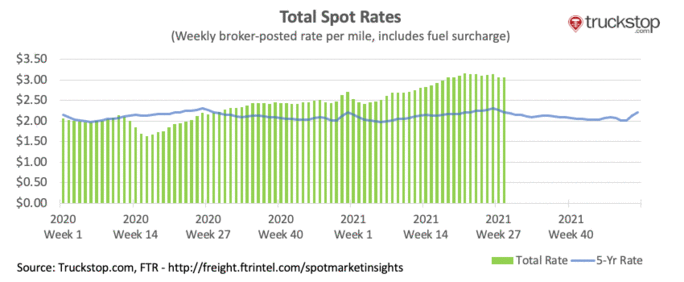
Coming down from such a big high will likely take some time, meaning rates will continue to favor the carrier.
Graph: Truckstop.com
The opposite is also true. When spot rates are low, truckers make less money and may be less attracted to the profession. Some owner-operators will get squeezed and trade their independent businesses for a more traditional role with a larger trucking company.
Currently, the freight marketplace heavily favors the carrier. This carrier advantage is being driven by the explosion of load-posting volumes in the spot market. In fact, FTR recently reported that its May Shippers Conditions Index reflected the most negative rate environment since it started the index.
Current load volumes are more than 100% more than a normal spot market. These load volumes increases started in the third quarter of 2020 and reached epic highs in the second quarter of 2021 — and they have remained high until today. The truck turnaround time will most likely continue to stay below normal until the spot market returns to balance.
Where Do We Go From Here?
How long will this level of growth last as people resume normal activity? There will certainly be some normalization in the market eventually, but it is important to remember that rates will be dropping from such a high level, it will take a long period of time. We believe that more “normal” rates will begin to reappear toward the end of 2021. However, this remains to be fully determined. Historically, peak periods are limited to two quarters, as evidenced by the results of 2018 and 2014. In fact, since 2000, only one period — the spike of 2004 — has lasted four quarters.
Where this one might differ is in the continued need for goods as the world attempts to regain a degree of normalcy. According to the U.S. Census Bureau, retail trade sales were up 18% in June compared to a year earlier. In addition to not seeing a drop in goods purchases, we are also starting to witness slight increases in services purchasing. While the desire to stock up on toilet paper and disinfectant wipes may be waning, the need for other goods will only continue to increase as the pandemic in the U.S. subsides.
The last year has taught us about the power of physical goods, which became even more important through stay-at-home orders and social distancing guidelines. When consumers can't go out and eat, watch movies, attend live sporting events or experience other things in person, they eagerly turn to the goods they can order from the comfort of home. That, coupled with the need for a number of essential items, transformed the market for freight and pushed spot rates and load volumes to record highs.
Those levels may soften as the U.S. economy continues to normalize, but with the recent stimulus, demand is expected to remain at high levels for the foreseeable future. Our advice is to keep a close eye on weekly spot market data and watch for the leading indicators to the directional changes in the market. In doing so, carriers and owner-operators will be ahead of the market and in a strong position to react quickly whenever changes occur.
Brent Hutto is chief relationship officer for Truckstop.com, with more than 20 years of leadership in sales and marketing. This article was authored and edited according to HDT editorial standards and style to provide useful information to our readers. Opinions expressed may not reflect those of HDT.
More Fleet Management

Color Match Smarter: Tools That Restore & Perform
For fleet managers and collision repair professionals keeping heavy-duty trucks on the road, getting the color right the first time isn't just about appearance — it's about efficiency, turnaround time, and bottom-line results. Discover how today's digital color tools are transforming the repair process from guesswork to precision.
Read More →
FMCSA Pauses Biennial-Update Enforcement Amid Motus Transition
Carriers whose updates were due on or after June 1 have more time, while FMCSA works to stabilize its new registration system and warns of phishing sites impersonating its new carrier registration system, Motus.
Read More →
2026 Blueprint for Countering Smarter Supply Chain Theft
Cargo theft is no longer just the cost of doing business. It's a multi-billion-dollar criminal enterprise exploiting vulnerabilities across your fleet, drivers, and supply chain.
Read More →


How Telematics Improves Visibility, Control, and Performance in Refrigerated Fleets
Explore how telematics help refrigerated fleets improve visibility, uptime, efficiency, compliance, and cargo protection across connected cold chain operations.
Read More →
What the U.S.-Canada Trade War Means for Trucking
Escalating U.S.-Canada tariffs could disrupt cross-border freight, reduce truck volumes, raise costs, and create new uncertainty for carriers on both sides of the border.
Read More →
What Are Trucking’s Top Concerns for 2026?
The American Transportation Research Institute wants to know what's worrying trucking fleet managers, drivers, and other stakeholders in its annual Industry Issues survey.
Read More →
American Trucking Associations Looks for a New Leader
ATA President and CEO Chris Spear abruptly left his job at the association on August 21, at a pivotal time for the trucking industry.
Read More →
Public Wi-Fi Cybersecurity Risks: How Truck Drivers and Fleets Can Protect Their Data
Public Wi-Fi can expose truck drivers and fleets to credential theft, malware, and other cyber threats. Here’s how to reduce the risk on the road.
Read More →
For Nicky Cupp, Fleet Innovation Starts With Frustration
HDT Truck Fleet Innovator Nicky Cupp turns everyday pain points at Fraley & Schilling into opportunities for better technology and smarter processes.
Read More →
Adam Buttgenbach’s Approach to Electric Trucks: Start With Where They Fit
HDT Truck Fleet Innovator Adam Buttgenbach helped PepsiCo build one of North America’s largest EV fleets by focusing on where electric trucks make operational sense.
Read More →