





Related: Why Fleets Should Care About Logistics and Supply Chains
How Logistics Technology is Helping Small Carriers and Brokers Compete
Technology is allowing the small carriers that make up the vast majority of the trucking industry to become a more integral part of the supply chain.
July 15, 2019
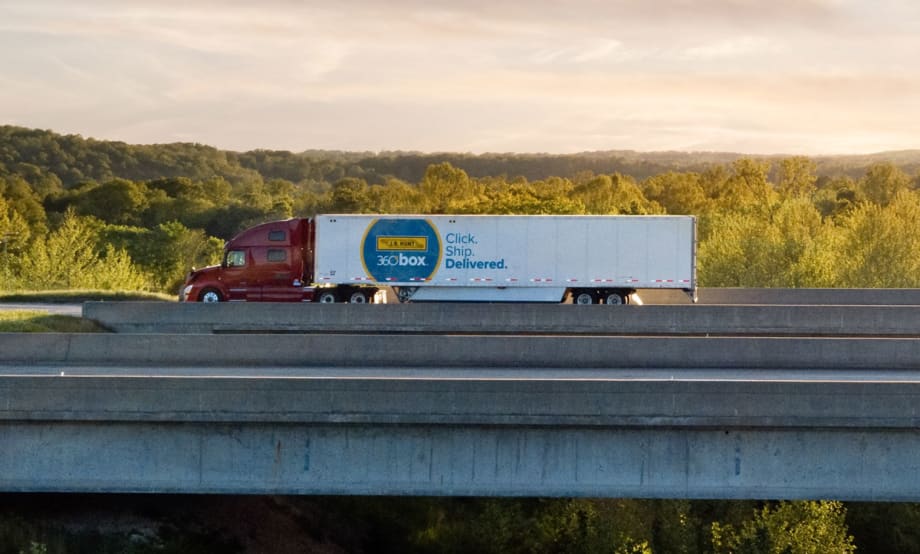
Trailer pools allowing access to drop and hook freight is one way logistics tech is helping smaller carriers.
Photo courtesy J.B. Hunt
4 min to read
Technology is allowing the small carriers that make up the vast majority of the trucking industry to become a more integral part of the supply chain.
“You have a lot of smaller carrier companies that are able to bid on and compete for larger shipper contracts or freight just because technology has enabled them to be a player in that marketplace,” says Bryan Coyne, general manager of visibility for Trimble Transportation.
Take Elizabeth Orton, owner of Find a Way Shipping, a family-based business she started with her cousin last year in Dayton, Ohio. They specialize in moving high-end furniture shipments.
Starting with one cargo van, she soon added a trailer, a second cargo van, and a box truck, and reports being able to keep all her vehicles full and running using uShip, a company that connects retailers with truckers who have extra space to carry additional goods. It’s the kind of small-fleet success story that would have been a lot harder before the use of technology to find loads.
“The industry is so fragmented – 90% of companies are small ones,” says Lidia Yan, CEO of Next Trucking, which offers a technology load-matching solution for the drayage industry in southern California. “Most of them don’t have the latest technology. Now they can take advantage of that technology and become more efficient.”
ELD-Driven Telematics Helps Make it Possible
One thing that’s driving that? The electronic logging device mandate.
“I think it’s really important to recognize the most fundamental change in the last two years is that small carriers are now online,” says Shoaib Makani, who founded KeepTruckin, a company that started out as an electronic log provider and since has moved into fleet management technology solutions. “The ELD mandate essentially catalyzed the adoption of telematics devices. It brought connectivity to a segment of the market that was totally disconnected. The small carriers were offline, and they’re the ones that are carrying spot freight, brokered freight, so the shipper experience was poor because they couldn’t get visibility. Now small carriers are online, they’re connected, so it actually has improved the prospects of small carriers and the end user shipper experience.”
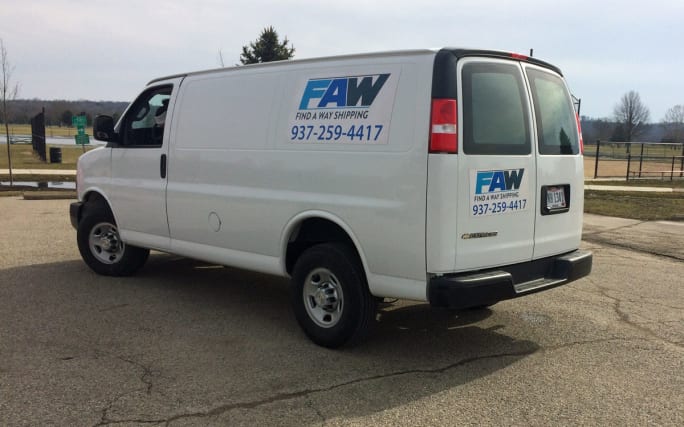
Using uShip to get freight has helped Find A Way Shipping grow from one to four vehicles in a year's time.
Photo courtesy uShip
Makani says KeepTruckin’s smart load board is positioned, “not as a replacement of a 3PL, but an enabler, allowing small brokers and asset-based carriers to access connected capacity and deliver a better experience to shippers, which allows them to compete in this new world. I don’t think the small broker or mid-size asset-based carriers go away in the new world; by leveraging technology and accessing connected capacity they can actually thrive.”
EKA Solutions, for instance, says its affordable, cloud-based Omni-TMS software platform allows brokers, carriers, and shippers to manage their entire business from beginning to end – from assigning and tracking loads to back-end billing and financial functions.
“It's a step change in affordability for small- and medium-size customers to conduct their business in a manner that’s competitive with large companies,” says J.J. Singh, EKA Solutions founder and CEO.
Mark Walker, EKA president, points out that unlike most industries that are dominated by a few large players, trucking is made up primarily of small businesses – many of which are still not using any kind of transportation management system software.
“Whether shippers, brokers or carriers, there are a very high number of them still on spreadsheets and paper,” he says. “We felt the first move was to try to digitize the players that were in the industry, because there’s no other way to get to a transparent or visible supply chain.”
No Trailer Fleet? No Problem!
In addition, some companies have developed trailer pool systems that allow small fleets to participate in drop-and-hook freight that traditionally would only be available to larger carriers with large numbers of trailers.
Convoy, for instance, has leased thousands of trailers and placed them at shipper facilities, where they are pre-loaded. Truckers using Convoy Go can just bring a power unit to pick up a preloaded Convoy trailer instead of bringing a tractor-trailer and waiting while the trailer is loaded.
“Optimizing trailer pool movement is a difficult data science project. Computers can do that more efficiently than humans can,” says Nikhil Jaipuria, Convoy’s director of product, carriers.
J.B. Hunt and Uber Freight recently launched trailer pools as part of their freight-matching platforms, as well.
Having determined that what it terms the “traditional trailer pool model” to be “particularly ripe for reinvention,” Uber Freight last fall launched Powerloop. The new company is described as affiliated with Uber Freight, and will rent trailers to eligible Uber Freight motor carriers and “in doing so, enable them to participate in an innovative new trailer pool model,” said the company.
J.B. Hunt Transport Services’ trailer pool and drop-and-hook service, called J.B. Hunt 360box, is starting out with a pool of 500 additional 54-foot trailers that can be reserved for drop trailer purposes. Carriers can make offers to transport the trailers using Carrier 360 by J.B. Hunt, the company’s digital freight-matching platform. As demand grows, J.B. Hunt plans to accelerate the available units.
Subscribe to Our Newsletter
More Fleet Management

Sponsored•September 16, 2026
Color Match Smarter: Tools That Restore & Perform
For fleet managers and collision repair professionals keeping heavy-duty trucks on the road, getting the color right the first time isn't just about appearance — it's about efficiency, turnaround time, and bottom-line results. Discover how today's digital color tools are transforming the repair process from guesswork to precision.
Read More →
FMCSA Pauses Biennial-Update Enforcement Amid Motus Transition
Carriers whose updates were due on or after June 1 have more time, while FMCSA works to stabilize its new registration system and warns of phishing sites impersonating its new carrier registration system, Motus.
Read More →
Sponsored•September 14, 2026
2026 Blueprint for Countering Smarter Supply Chain Theft
Cargo theft is no longer just the cost of doing business. It's a multi-billion-dollar criminal enterprise exploiting vulnerabilities across your fleet, drivers, and supply chain.
Read More →


Sponsored•September 1, 2026
How Telematics Improves Visibility, Control, and Performance in Refrigerated Fleets
Explore how telematics help refrigerated fleets improve visibility, uptime, efficiency, compliance, and cargo protection across connected cold chain operations.
Read More →
What the U.S.-Canada Trade War Means for Trucking
Escalating U.S.-Canada tariffs could disrupt cross-border freight, reduce truck volumes, raise costs, and create new uncertainty for carriers on both sides of the border.
Read More →
What Are Trucking’s Top Concerns for 2026?
The American Transportation Research Institute wants to know what's worrying trucking fleet managers, drivers, and other stakeholders in its annual Industry Issues survey.
Read More →
American Trucking Associations Looks for a New Leader
ATA President and CEO Chris Spear abruptly left his job at the association on August 21, at a pivotal time for the trucking industry.
Read More →
Public Wi-Fi Cybersecurity Risks: How Truck Drivers and Fleets Can Protect Their Data
Public Wi-Fi can expose truck drivers and fleets to credential theft, malware, and other cyber threats. Here’s how to reduce the risk on the road.
Read More →
For Nicky Cupp, Fleet Innovation Starts With Frustration
HDT Truck Fleet Innovator Nicky Cupp turns everyday pain points at Fraley & Schilling into opportunities for better technology and smarter processes.
Read More →
Adam Buttgenbach’s Approach to Electric Trucks: Start With Where They Fit
HDT Truck Fleet Innovator Adam Buttgenbach helped PepsiCo build one of North America’s largest EV fleets by focusing on where electric trucks make operational sense.
Read More →