




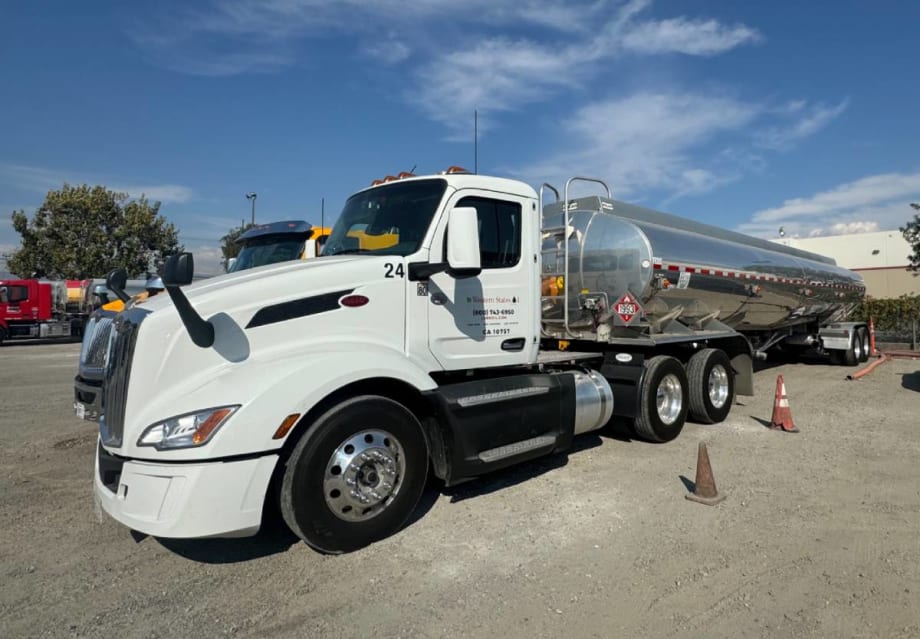
Spreadsheets and paperwork ruled the workday at Western States Oil, creating inefficiencies and business risks. The company risked losing orders and missing deliveries whenever dispatchers handed drivers printed order sheets to make deliveries.
How a Petroleum Fleet Transformed its Dispatch and Delivery Processes
Going from a manual, paper-based dispatch process to a fully digital system was a game-changer for Western States Oil.

Among other things, Western States Oil's new TMS has increased dispatcher productivity, allowing for growth without adding office staff.
Photo: Western States Oil
Problems surfaced when orders changed or needed rescheduling. Dispatchers and accounting team members would scramble to reroute drivers and paperwork. Lacking a centralized system to automate data flow and maintain control and visibility compounded this and other issues.
The company brought in Transportation Manager Scott Swain, who has been in the petroleum and fuel-hauling business for 30 years, to start a new chapter.
How a New Digital Platform Helped Western States Oil
In the first half of 2024, Swain directed the implementation of TrueLiquid, an extension of TrueTMS, a web-based transportation management system (TMS), developed for distributors and for-hire tanker operations.
Key features of the digital platform include:
A driver mobile app for paperless dispatching and real-time updates.
Integration with the fleet’s Geotab electronic logging device system and suppliers' petroleum pricing and allocation data.
Accurate demand forecasting to proactively schedule customer deliveries.
Equipment maintenance and compliance tracking.
Customizable user views for different divisions and equipment types.
Western States Oil Sees Increased Dispatcher Productivity
In Swain’s eyes, the change is yielding impressive results. The technology has increased dispatcher productivity, allowing for growth without adding office staff.
Meanwhile, TrueTMS provides real-time delivery tracking and accurate ETAs to improve customer service.
"I could double the dispatch workload of each dispatcher with this technology," he says. “We're not hiring more bodies.”
Improved data flow and user efficiency ensure dispatchers notice load schedule changes and immediately make needed adjustments.
The system streamlines billing by automating the flow of orders through delivery planning and dispatch, with drivers using the mobile app to capture documents.
“Our billing can go out by the next day after we deliver,” Swain says.
Scaling for Future Growth
Implementing the cloud-based platform has positioned Western States Oil for expansion, with better efficiency, better customer service, and centralized dispatching and management that allows greater flexibility and control.
“If our dispatchers in San Jose need to dispatch drivers in southern California, they can do it easily. The information goes right to the driver's smart device,” Swain says.
“The technology streamlines the delivery process like you wouldn't believe.”
Going from a manual, paper-based dispatch process to a fully digital system has set Western States Oil up for scalable growth and sharpened its competitive edge in the petroleum distribution industry.
More Fleet Management

ATA’s Spear Warns Fuel Prices, Trade Policy, and Global Conflict Could Stall Trucking Recovery
Speaking at the TMC Annual Meeting in Nashville, ATA President Chris Spear said trucking faces mounting pressure from rising fuel prices, geopolitical instability, and uncertainty around trade policy.
Read More →
New Entrants, Chameleon Carriers, and Safety: Is It Too Easy to Start a Trucking Company?
More than 100,000 new trucking companies enter the industry each year, but regulators manage to audit only a fraction of them. That churn creates opportunities for inexperienced startups — and for “chameleon carriers” that shut down after safety violations and reappear under new identities. Read more from Deborah Lockridge in this commentary.
Read More →
Fleet Managers Invited to Apply for Exclusive HDT Exchange Event
HDTX is an intimate event that connects heavy-duty trucking fleet managers with industry suppliers through small-group discussions, educational sessions, and structured one-on-one meetings.
Read More →
DAT Launches iPhone Widget to Help Owner-Operators Find Loads Faster
New DAT One feature shows top-paying loads directly on an iPhone’s home screen, helping carriers react faster to spot-market opportunities.
Read More →
Optimal Dynamics Launches AI System to Help Carriers Choose Better Freight
Optimal Dynamics says its new Scale platform uses AI agents and optimization to help carriers find and secure freight that improves network balance and profitability.
Read More →
DAT: Flatbed Demand Climbs as Van and Reefer Rates Soften
DAT Freight & Analytics data shows tightening flatbed capacity, easing produce markets, and softening van and reefer rates.
Read More →
Run on Less “Messy Middle” Data Shows Multiple Paths Forward for Truck Powertrains [Watch]
NACFE's Run on Less - Messy Middle project demonstrates the power of data in helping to guide the future of alternative fuels and powertrains for heavy-duty trucks.
Read More →
Federal Court Lets NYC Congestion Pricing Continue
A federal court ruling allows New York City’s congestion pricing program to continue, leaving truck tolls in place for fleets delivering into Manhattan.
Read More →
Fontaine Modification Launches Real-Time Truck Modification Tracking Portal
Fontaine Modification has introduced a new customer portal designed to give fleets real-time visibility into the truck modification process, addressing one of the most common questions fleet managers face: “Where’s my truck?”
Read More →
FTR: Trucking Conditions Index Climbs to Highest Level Since 2022
Strong freight rates, rising volumes and tighter capacity push trucking conditions higher, though diesel prices could temper gains in the near term, FTR cautions.
Read More →











