




Hours of Service: Resetting the Clock
With just days to go before the scheduled implementation of the new and more restrictive hours of service rules, fleets and drivers need to be asking if their electronic onboard recording devices are ready for the change.


Credit: Continental Commercial Vehicles.
With just days to go before the scheduled implementation of the new and more restrictive hours of service rules, fleets and drivers need to be asking if their electronic onboard recording devices are ready for the change.
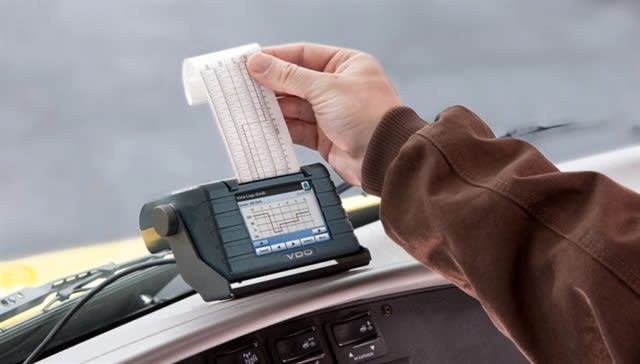
Continental Commercial Vehicles.
"For the most part, updating to the new rules is a slam dunk," says Joel Beal, president of LoadTrek Technologies. "The big guys are already there. Some of the smaller providers, especially those using older in-cab devices could face a few challenges."
Beal says some older devices may not have enough onboard memory to accept the coding changes required by the new rules.
The way most of the code is written today, the parameters like driving time are not hard coded, instead they are variables.
"X hours of driving. You fill in the X. Could be 10, could be 11," Beal says. "You just have to type in a value and you're done. It's the same with the 14 hours off or 70-hour weekly limit. It's just a number to a programmer."
The 30-minute break could pose problems for some applications, Beal warns. "It's something we don't have now, so it's not a variable we can change in a hard-coded system. We have to create it," he says. "If you're using any recently designed (within the past five years) automatic on-board recording device that won't be a problem. Problems could arise with older units that have been around for 10 years or more. There may not enough memory to support the changes."
Fleets and independents using EOBRS or ELDs or AOBRDs, or whatever the current moniker is, should check with their providers to make sure their device can accept the update.
Rolling out the update is the easy part.
While the exact process may vary across the different brands and system networks, Alexis Capelle, the EOBR program manager for Continental Commercial Vehicles, says it will be a very easy and transparent process transparent process with VDO RoadLog.
"When we push the update out across our network, the customer will see a message advising that an automatic update is ready to install," he says. "All the customer has to do is accept it. The update will not become active until it has been accepted."
Continental says updates are available to its VDO RoadLog customers to meet the new HOS requirements.
Beal says in many telematics systems, the updates to the in-cab devices will be equally transparent. They will be sent downstream from the main office system in the usual manner and will sit on the in-cab device until they are accepted and activated.
The activation date still remains somewhat in question. FMCSA has said in no uncertain terms it wants the change to take place as planned on July 1. A slim chance that a court could derail that plan with a decision on the rule before or even after its implementation date.
According to Capelle, even if the update is activated before July 1, and the recorder begins running on the new rules, the driver will not be in violation of the rule if they continue operating under the old rule.
"The device will be running the new hours of service rules, but compliance with the rule is not required until July 1, or when it officially comes into effect," he says.
In the case of EOBRs without telematic capability, updates will have to be physically installed on the in-cab devices before the July 1 deadline.
"Some of the programming changes will have to be handled with physical media, a card or a key," Beal says. "Some newer systems do that too, but it's not a shortage of resources, it's just the way the system is designed. Drivers "turn in their logs" on a USB stick or something like it, and the updates are delivered to the truck via the same key when the driver plugs it in again."
Due to the varying capabilities of the different systems current available, some may include alerts that drivers are approaching compliance thresholds. These aren't required by law, but they are sure nice to have. Even older systems without the advanced features can still be compliant.
More Drivers

Truck Drivers Need More Than Another Alert
Fleets have more visibility into truck health, safety events, and driver activity than ever. The next challenge is turning all that information into useful guidance for the person who has to decide what to do next.
Read More →
FMCSA Removes 110 Truck Driver Training Schools from Certified ELDT List
Federal regulators also are targeting more than 160 additional training providers and launching a nationwide audit of third-party CDL skills testers as part of a broader crackdown on trucking fraud.
Read More →
Hours of Service Pilot Programs: FMCSA Readies for 2027 Rollout
Two pilot programs could eventually reshape hours-of-service rules, giving truck drivers options to pause their 14-hour clock or use longer split sleeper rest periods.
Read More →
Medical Cards, English Proficiency Reshape Roadcheck Violations
Medical-card violations jumped to the top of the driver out-of-service list during CVSA’s 2026 International Roadcheck, while English-language proficiency violations appeared among the leading violations for the first time.
Read More →
Driver Trust Can Make or Break the Success of Fleet Safety Technology
New Teletrac Navman research suggests that onboarding, transparency about driver data, and positive feedback can play a significant role in how commercial drivers respond to safety and coaching technology.
Read More →
EEOC Sues KLLM Over Alleged Sex Discrimination in Driver Training
KLLM is facing a federal sex-discrimination lawsuit over policies the EEOC alleges put female truck driver trainees at a disadvantage.
Read More →
FMCSA Moves to Codify English Language Requirements for Commercial Drivers
By changing regulations on English-language proficiency requirements for commercial drivers, rather than relying on a guidance memo, the FMCSA said future administrations won't be able to walk back the Trump administration's stricter enforcement with just a memo.
Read More →
Drivers Put Western Star Trucks to the Test at Star Nation Experience
Watch to get an inside look at the Western Star trucks, technology, and community behind the Star Nation Experience 2026!
Read More →
Trump Administration Looks to Put More Veterans Behind the Wheel
The Freedom Haulers program pulls together existing and expanded programs at several federal agencies to recruit veterans to drive commercial heavy-duty trucks and cut the red tape for them to get a CDL, training, and employment.
Read More →
Putting Mack’s Command Steer to the Test
A test drive of Mack’s Command Steer active steering system evaluates how it can make truck driving easier and less tiring.
Read More →