




Highway Funding: The Journey Ahead
Congress recently passed a highway program that was better than expected, and both parties took credit for it during their recent presidential nominating conventions - but it's not nearly what the country needs
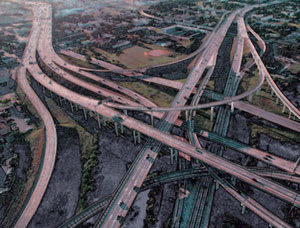
Congress recently passed a highway program that was better than expected, and both parties took credit for it during their recent presidential nominating conventions - but it's not nearly what the country needs.
"This is an outstanding piece of business," said President Obama when he signed the $105 billion Moving Ahead for Progress in the 21st Century Act (MAP 21) on July 6.
He was referring to the law's investment in transportation infrastructure at current spending levels and the related jobs, as well as important reforms at the Department of Transportation, all of which deserve to be celebrated. And certainly it was a positive that Congress was able to overcome partisan divisions to pass a bill after nine stopgap extensions.
But the law falls far short of addressing the nation's long-term transportation needs.
It runs for two years. That's better than yet another temporary extension as Congress has done since the preceding program expired in October 2009, but it's just a patch for state transportation departments that rely on the six-year planning horizon offered in previous highway laws.
It keeps funding at about the same level as it has been, much better than the 30% cut that many House Republicans had advocated. However, it fails to address the core money problem.
Not enough
There's no doubt that U.S. infrastructure investment is woefully inadequate.
"System demands are outpacing current investments, meeting only about one-third of the roughly $200 billion required each year to maintain and improve the system."
That's the main conclusion of the National Surface Transportation Infrastructure Financing Commission, which was chartered by Congress to prepare an objective, in-depth analysis of highway funding in preparation for this law.
MAP 21 provides a little more than $50 billion a year.
Moreover, the commission said, the use of fuel taxes to fund the system is flawed on two counts. First, the taxes are too low; they have lost a third of their purchasing power since they were last raised in 1993. Second, they are not sustainable as a revenue source as vehicles become more efficient and use alternative fuels.
The solution to the first problem is to raise the taxes. The commission recommended a 10-cent increase on gasoline and a 13-cent increase on diesel, as well as doubling the heavy-vehicle use tax.
The solution to the second problem is some kind of user-fee system based on vehicle miles traveled, a concept the commission urged Congress to begin to address in this law.
Failure to confront these issues means that as the population and freight volumes increase, transportation will be an ever-increasing drag on growth and productivity.
No tax increases
From the outset, the Obama administration and Republican leaders agreed on one point: Neither would support a fuel tax increase.
The administration said it would not raise taxes during a recession, and the Republicans oppose tax increases on principle. The idea of a VMT was a non-starter for both sides, as well.
During the three-year negotiation, legislators occasionally talked about taxes - highway user groups such as American Trucking Associations were pushing for a fuel tax increase - but such talk amounted to bubbles that floated briefly and then popped.
The Senate Finance Committee, for example, flirted with the issue when Sen. Michael Enzi, R-Wyo., offered and then withdrew the idea of indexing the fuel tax to inflation.
This drew rhetorical support from Senators on both sides, and the chairman of the Committee, Sen. Max Baucus, D-Mont., indicated that the idea has a future. "When unemployment comes down and housing comes back, this will be on table," he said.
Baucus will have the opportunity to follow up on that pretty soon. MAP 21 will expire September 30, 2014, meaning Congress probably will have to start hearings for a new bill in the next year or so.
The funding mechanisms that were cobbled together for this law amount to one-time changes that will be hard to replicate next time around.
Congress had to supplement the Highway Trust Fund by transferring almost $ 19 billion from the general fund and $2.4 billion from the Leaking Underground Storage Tank Trust Fund. Offsets for these came from changes in accounting for pension interest rates and Pension Benefit Guarantee Corp. premiums, among other things.
Important reforms
The new law contains important reforms that could make it easier for Congress to address funding issues next time around.
One of the most successful arguments against raising fuel taxes is that the money has not been well spent.
The political bargain struck in 1956 to build the Interstate System was simple: Pay a user fee and get a highway system. But now that system is complete, and support for the user fee has been diluted by the perception that highway funds have been poorly used. This law goes to great lengths to address these shortcomings:
- It contains no earmarks.
- It gives states more say over how they spend highway dollars.
- It consolidates some 60 overlap ping and redundant programs at the Department of Transportation.
- It eases permitting restrictions that have slowed the process of getting approval for projects.
- It establishes performance measurements so the public can get a better idea of how its money is being spent.
Other important policy initiatives include more funding and fewer restrictions on DOT's financing capabilities.
The Transportation Infrastructure Finance and Innovation Act program, which provides loans and guarantees to states for highway projects, got a bump from $ 100 million to $ 1 billion. Congress also increased the amount of a project's cost that is eligible for TIFIA funds, from 33% to 49%. A move on the Senate side to create a national infrastructure bank did not survive.
The law maintains states' ability to toll new lanes on the Interstates, as long as they don't cut back on current toll-free lanes. It also orders DOT to produce a best-practices guide for states looking at public-private partnerships. And it includes $500 million for a DOT program for projects of national and regional significance in highway, rail, transit and other modes.
Trucking provisions
Trucking interests gained some and lost some in the law.
ATA got a provision that requires the Federal Motor Carrier Safety Administration to conduct a field study of the 34-hour restart rule, and it got a provision mandating electronic logs. It did not get the increase in truck weight limits that it wanted and had to settle for a study.
ATA and the Owner-Operator Independent Drivers Association got a provision requiring the National Highway Traffic Safety Administration to study the need for crash-worthiness standards in tractors. But OOIDA staunchly opposes the electronic logging mandate.
The law lays the groundwork for the first national freight policy and creation of a 27,000-mile national freight highway network based on freight volumes and flow.
It will help fund new truck parking facilities and keep open existing weighing and inspection stations, and it codifies a host of truck safety regulations, many of which are in process at FMCSA.
Another provision increases the freight broker bond to $75,000 and extends that requirement to freight forwarders.
Few in Washington believed Congress would be able to do this much. Transportation Secretary Ray LaHood did not expect to see a bill, nor did ATA CEO and President Bill Graves.
The new law is a good thing for trucking and the national economy, Graves says. "It is not perfect, but this law advances the cause of highway safety and, I believe, will ultimately be seen as a springboard to even more robust transportation funding in the future," he says.
The electronic logging mandate
The highway law mandates electronic logs to record driver hours of service.
It says all interstate trucks and all drivers covered by the hours-of-service rules must have the logs, and adds that the devices cannot be used to harass drivers.
FMCSA has one year to finish the rule it has been working on for several years,and three years to put it into effect. The agency is revising earlier proposals to comply with a court order that the rule not be used to harass drivers, and to resolve technical issues.
The agency does not need this provision in order to go ahead with its rule, but it does give specific instructions on the terms of the rule, and it strengthens the case for the rule in the likely event that it will be challenged in court.
A major supplier of electronic recorders, Qualcomm Enterprise Services, applaudsthe provision. Dave Kraft, director of industry affairs, says the law sets performance requirements that will make the rule effective.
The requirements cover:
- Information displays for drivers and enforcement personnel
- Driver identification and log entries
- Standards for tamper resistance, data transfer and data portability
- Third-party certification of the devices
- An automated approach to hours-of-service supporting documents.
A bid to cut off funding for rulemaking appears unlikely to get through Congress. The Owner-Operator Independent Drivers Association was able to get an amendment attached to a House transportation appropriations bill that would prevent the agency from spending any money on the rule in fiscal year 2013.
But the Senate will be a much tougher sell. That chamber has supported an electronic log mandate three times in the past seven months,and key Senate appropriators are strong supporters of the mandate.
"The Senate had such strong support for the highway bill and the (logging) mandate,"says Qual-comm's Kraft."I think for this year (the funding cut-off) is theater."
ATA, which supports the mandate and worked against the House amendment, does not expect the measure to survive but nonetheless takes it seriously.
Dave Osiecki,senior vice president of policy and regulatory affairs at ATA,says if it does, it will disrupt the ongoing EOBR rule-making at FMCSA.
"We believe it would restrict FMCSA's ability to move forward on their current rule and any future rule, at least for fiscal year 2013," he says.
Size and weight
A provision in the law orders DOT to conduct a comprehensive study of truck size and weight limits.
This is a disappointment to trucking and shipping interests that had been pursuing a provision to let states raise the limits on Interstate highways from 80,000 pounds to 97,000 pounds on six-axle vehicles. That provision got into an earlier bill on the House side, but it was struck and replaced by the study.
"While there is much to like about this bill, ATA is extremely disappointed that Congress has once again kicked the can down the road with respect to truck productivity," says American Trucking Associations CEO and President Bill Graves.
Congress gave in to "fear-based misinformation,"Graves said, referencing the messaging of opponents who claim heavier trucks are a safety hazard. The provision also was opposed by the rail industry, which says heavier trucks will harm its business.
"This bill delays the deployment of some of our industry's safest, most fuel-efficient trucks," Graves said.
He added that he expects the study to confirm that "modest increases in truck size and weight limits have a net positive effect on highway safety and maintenance."
The study, which DOT has two years to complete, must cover safety, pavement and bridge costs, as well as diversion of freight from the railroads and other modes.
The new law does give carriers a weight break on idle reduction equipment,such as auxiliary power units.
Formerly, a truck could exceed the federal gross weight limit by 400 pounds for a proven idle reduction device. The new law increases that to 550 pounds.
The law also allows states to issue 120-day oversize-overweight permits to trucks responding to disasters if a national emergency is declared, ATA reports.
Hazardous materials
The law puts a hold on a pending rule at the Pipeline and Hazardous Materials Safety Administration that could restrict flammable liquids in "wet lines,"the external pipes on tank trailers.
It orders the Government Accountability Office to study the issue and says PHMSA must hold off for at least two years or until the study is done.
Also, the agency must update its record-keeping and reporting requirements,and it must establish standard training for hazmat enforcement personnel.
American Trucking Associations noted that the law does not include provision that had been in the House bill to prevent the Occupational Safety and Health Administration from extending its jurisdiction into areas already regulated by DOT.
National freight policy
The law lays the groundwork for the first national freight policy. It gives DOT a year to establish a 27,000-mile national freight highway network based on freight volumes and flow. Inland and maritime ports must be included.
This network can be increased to 30,000 miles at DOT's discretion, and it must be updated every 10 years. States will have the ability to designate some roads as part of a rural freight corridor.
DOT has three years to come up with a national freight strategic plan based on the condition of the freight network. The plan must look at bottlenecks,forecasts of freight volume and trade corridors.
In addition, DOT must develop new ways to evaluate freight-related infrastructure projects.
The federal government will pick up a greater share of the tab for projects that meet the new freight standards. It will boost the federal payout from 80% to 95% of the cost for projects on the Interstate System, and to 90% for any project DOT certifies as meeting the standards.
Eligible projects include highway construction to eliminate freight bottlenecks, intelligent transportation systems, environmental improvements, highway-rail grade separation, runaway truck lanes and truck parking facilities.
The provision also says DOT should encourage states to set up freight advisory committees made up of stakeholders from public and private interests,and to produce their own freight plans.
The American Trucking Associations applauded the initiative but noted that it does not include the funding that would give freight its due presence among DOT programs.
Jason's Law
The law contains a "Jason's Law" provision, which makes truck parking facilities eligible for funding. It eliminates, however, a pilot program that set money aside for truck parking projects.
The provision applies to new truck parking facilities and to keeping existing weighing and inspection stations open to parking.
It gives DOT 18 months to complete a survey to assess each state's truck parking capacity.
This provision commemorates truck driver Jason Rivenburg,who was murdered in March 2009 while parked at an abandoned gas station in South Carolina, a place drivers frequented because they could not find space at established rest areas.
Funds in this provision also can go to construction of electric recharging and natural gas refueling stations.
FMCSA safety rules
The law gives the Federal Motor Carrier Safety Administration legal authority for a range of initiatives. Many already are under way.
- It gives the agency two years to finish work on the national clearing house for drug and alcohol test results. A proposed rule,long sought by trucking interests, has been in the works since 2009,and its release is scheduled for December. Among other things, it will require carriers to query the clearinghouse when screening applicants for driving job and annually after they are hired. Third-party service providers could do these searches.
- It gives the agency 18 months to finish work on a written proficiency exam for those seeking operating authority. The test must cover the applicant's knowledge of the safety rules. The provision also accelerates the schedule for safety reviews of new entrants,from 18 months to 12 months. The agency has had this rule on its agenda for several years.
- It orders applicants for authority to disclose any relationship with any other carrier,forwarder or broker within the previous three years. Failure to comply will lead to revocation of the certificate.
- It tells FMCSA to give all new carriers a safety review within a year of opening for business.
- It gives the agency authority to withhold or revoke authority for any carrier or company officer found to have a pattern of safety violations. The agency has been working on this rule since 2005 and is scheduled to publish it in September.
- It says if Canadian authorities find a Canadian carrier unfit to operate, the agency may deny that carrier authority to operate in the U.S., pending clearance by the Canadian authorities.
- It gives the agency a year to finish work on the qualifications medical examiners must have in order to be listed on the pending national registry of examiners.
- It gives the agency a year to set up standards for state systems to automatically notify carriers of drivers' moving violations and suspensions. And the agency has two years to develop a plan for a national system for employer notification. Under the system, carriers will be required to check the violation records of their drivers at least once a year. This would not apply to drivers who work for more than one carrier during a one-week period.
- It gives the agency one year to finish work on its entry-level driver-training rule.
More Fleet Management

Color Match Smarter: Tools That Restore & Perform
For fleet managers and collision repair professionals keeping heavy-duty trucks on the road, getting the color right the first time isn't just about appearance — it's about efficiency, turnaround time, and bottom-line results. Discover how today's digital color tools are transforming the repair process from guesswork to precision.
Read More →
FMCSA Pauses Biennial-Update Enforcement Amid Motus Transition
Carriers whose updates were due on or after June 1 have more time, while FMCSA works to stabilize its new registration system and warns of phishing sites impersonating its new carrier registration system, Motus.
Read More →
2026 Blueprint for Countering Smarter Supply Chain Theft
Cargo theft is no longer just the cost of doing business. It's a multi-billion-dollar criminal enterprise exploiting vulnerabilities across your fleet, drivers, and supply chain.
Read More →


How Telematics Improves Visibility, Control, and Performance in Refrigerated Fleets
Explore how telematics help refrigerated fleets improve visibility, uptime, efficiency, compliance, and cargo protection across connected cold chain operations.
Read More →
What the U.S.-Canada Trade War Means for Trucking
Escalating U.S.-Canada tariffs could disrupt cross-border freight, reduce truck volumes, raise costs, and create new uncertainty for carriers on both sides of the border.
Read More →
What Are Trucking’s Top Concerns for 2026?
The American Transportation Research Institute wants to know what's worrying trucking fleet managers, drivers, and other stakeholders in its annual Industry Issues survey.
Read More →
American Trucking Associations Looks for a New Leader
ATA President and CEO Chris Spear abruptly left his job at the association on August 21, at a pivotal time for the trucking industry.
Read More →
Public Wi-Fi Cybersecurity Risks: How Truck Drivers and Fleets Can Protect Their Data
Public Wi-Fi can expose truck drivers and fleets to credential theft, malware, and other cyber threats. Here’s how to reduce the risk on the road.
Read More →
For Nicky Cupp, Fleet Innovation Starts With Frustration
HDT Truck Fleet Innovator Nicky Cupp turns everyday pain points at Fraley & Schilling into opportunities for better technology and smarter processes.
Read More →
Adam Buttgenbach’s Approach to Electric Trucks: Start With Where They Fit
HDT Truck Fleet Innovator Adam Buttgenbach helped PepsiCo build one of North America’s largest EV fleets by focusing on where electric trucks make operational sense.
Read More →