




Heavy Duty Dialogue Looks at Trucks in the Next Decade
What does the next decade hold for the commercial vehicle industry? How will trucks and the way they are marketed change? What will be the driving factors behind those changes? Heavy Duty Dialogue '10 tried to answer that question


What does the next decade hold for the commercial vehicle industry? How will trucks and the way they are marketed change? What will be the driving factors behind those changes? Heavy Duty Dialogue '10 tried to answer that question
with a day packed full of analysts and industry leaders Jan. 18 in Las Vegas.
Heavy Duty Dialogue is an annual business conference developed for executives in the global and domestic commercial vehicle supplier industry and put on by the Heavy Duty Manufacturers Association.
A global market
Globalization was a theme addressed by a number of speakers. Juergen Reers, partner at Roland Berger Strategy Consultants, said we should expect to see an increasing number of partnerships between truck and component manufacturers in the developed world and those in emerging markets. Of key interest are what is known as the BRIC markets - Brazil, Russia, India and China - where healthy long-term growth in commercial vehicles is expected.
Reers predicted that as the industry becomes more globalized, we will see an increased focus on total cost of ownership, rather than focusing exclusively on the initial purchase price.
The environment
Another major topic was environmental concerns, and the use of hybrid powertrains to address those concerns was cited by several speakers.
Sandeep Kar, global program manager of commercial vehicle research for Frost & Sullivan, said hybrids offer a solution to a number of the top powertrain technology demands fleets listed in a survey done by the company, including fuel efficiency and reduced maintenance. But hybrid trucks are not perceived to offer lower lifecycle costs, another major issue, and won't until the industry can get some economies of scale.
"There is imminent and rising demand for green, fuel-efficient trucks," Kar said. In 2015, the company predicts 39,400 Class 6-8 hybrid trucks will be producd in North America, or about 8 percent. By 2020, Frost & Sullivan predicts 15 percent of Class 6-8 trucks manufactured in North America will be hybrids.
Denny Slagle, president and CEO of North American Trucks (which includes both Mack and Volvo), noted that environmental impact is one of the challenges we're facing in the next 10 years.
"Isn't it cool how companies have all adopted and are more aware - and as anew grandfather, I'm more aware, of the sustainability of things," Slagle said. "I think most companies if you sat down and wrote a mission statement would come up with environmental concerns near the top." Volvo, he noted, adopted an environmental policy back in 1972, and being environmentally friendly became one of the company's core values in 1992.
In addition to strides in aerodynamics, embracing the EPA SmartWay initiative, Slagle says the company is working on lighter-weight materials for trucks, which will help them be more fuel efficient. "We think what we have on the drawing board could offer another 20 percent in weight savings with the same structural integrity," he said.
But the best way to address the challenges of fuel efficiency and greenhouse gas emissions, Slagle said, is with hybrids. "But we need scale." Same thing for alternative fuels. Volvo has demonstrated trucks that can run on a variety of alternative fuels, from biodiesel to methanol to synthetic diesel and DME, but "I think some government help, some incentives would be very valuable here."
Technology
In the U.S. truckload sector, more than 40 percent of trucks are equipped with a mobile resource management system, said Clem Driscoll, C.J. Driscoll & Associates, including the majority of large fleets. Those fleets are quick to be able to pinpoint how these systems offer financial benefits. A large alcoholic beverage distributor, he said, saved $200,000 in six months from reduction in overtime. A supermarket operator with 78 vehicles saved $100,000 over four years due to reduced accidents, man-hours and overtime.
"Overall, we believe installed solutions will continue to be more widely used by large trucking fleets than handheld solutions" such as cell phones or rugged handheld computers, Driscoll said, because of all the systems integrated into the vehicle allow the fleet to remotely monitor vehicle diagnostics, driver behavior, etc. "We believe there is a place for handheld solutions, but it's primarily going to be small fleets, fleets that operate in a relatively small radius, perhaps a fixed route fleet such as food delivery and other local/regional operations."
In the next 10 years, Driscoll predicts we'll see:
* Growing use of technology for safety and security. "We believe all major trucking fleets will monitor driver behavior to reduce accident risk." High-tech safety systems like lane departure or proximity warnings, voice recognition and text-to-speech technologies will become common.
* The truck will become a mobile office, with scanner, printer, Internet access, etc.
* All major trucking fleets will use navigation systems that will route trucks based on truck attributes, traffic conditions and weather/road conditions.
* Increased use of technology for reducing fleet operating costs, especially monitoring everything that can impact fuel consumption, such as mpg, rpm, engine performance, tire inflation, speed.
* Alternative-fueled vehicles will require drivers and fleet managers to monitor fuel availability and location of nearby fuel sources.
Sandeep Kar focused on telematics; fleet managers surveyed said they can reduce operating costs, increase productivity, help screen unsafe dirvers and reduce unsafe driving practices, and improve compliance with regulations.
One problem, however, is "too much data and too little information," Kar said. 'This has to change."
The next step
Kar also predicted that the next big factor for product differentiation between truck brands will be health, wellness and well-being. "The truck cabin is a workplace, and workplace regulations are expected to enter the cabin."
Kar noted that the inside of a truck cab is not the most ergonomic or comfortable environment, yet truck driver typically spend eight hours a day or more in the truck. Expect things like better visibility, more attractive surroundings, more intuitive instrument clusters, cabs that literally look, feel and smell better.
More Equipment
Michelin Tire Improves Efficiency and Durability for Regional Fleets
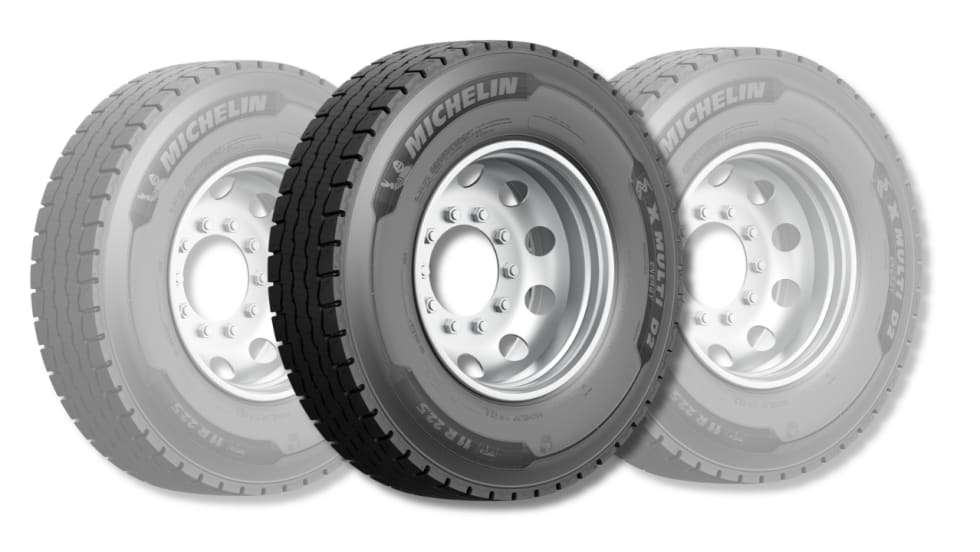
The Michelin X Multi Energy D2 is a regional haul drive tire engineered to help fleets improve fuel efficiency, durability and traction in demanding stop-and-go operations.
Read More →
ZF Expands Commercial Vehicle Push in North America
ZF is expanding its North American commercial-vehicle presence with new transmission applications, electrification, trailer technology and autonomous-driving systems.
Read More →
Tesla Wants a Self-Driving Semi. Are Cameras Enough?
Could Tesla’s camera-only autonomous driving technology work on an 80,000-pound Semi? In this commentary, HDT's Deborah Lockridge takes a look at Tesla, Cybercab, and how autonomous trucks see the road.
Read More →
Kodiak: Driverless Long-Haul Truck Launch on Track for 2026
Kodiak AI says its driverless long-haul safety case is 93% complete and it remains on track to begin commercial operations by year-end 2026.
Read More →
What DOT’s Automated Vehicle Strategy Means for Trucking
The U.S. Department of Transportation issued a new automated-vehicle strategy that outlines plans for driverless-truck regulations, cross-state freight corridors, and federal safety standards.
Read More →
East Coast Port Launches $45M Electric Truck Push
The Port Authority of New York and New Jersey announced millions in incentives for zero-emission drayage trucks, yard tractors, and new charging hubs near the port.
Read More →
PlusAI Going Public to Fund Autonomous Truck Launch
A SPAC deal could provide PlusAI with up to $300 million as it works toward a 2027 commercial launch of factory-built autonomous trucks.
Read More →
NHTSA Moves to Rewrite Truck Fuel-Economy Rules
The National Highway Traffic Safety Administration says it lacks authority to regulate medium- and heavy-duty truck engines separately from complete vehicles, but the existing standards have not yet been eliminated.
Read More →
Detroit Opens Orders for EPA 2027 Engines
Detroit isn’t starting from scratch to meet EPA 2027 diesel emissions standards. Its Gen 6 DD13 and DD15 engines keep much of today’s platform while updating the fuel and aftertreatment systems.
Read More →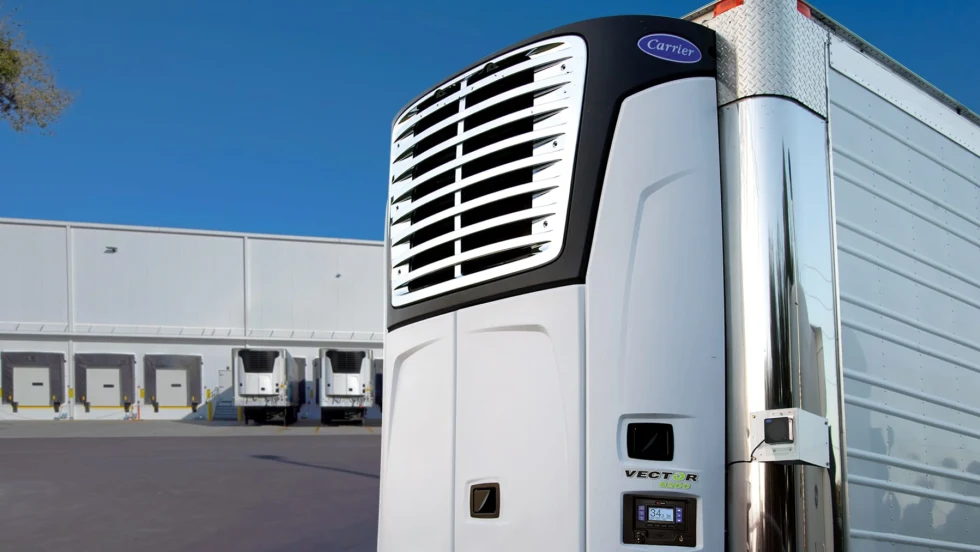
Carrier Transicold Adds All-Electric TRU for Stationary Cold Storage
Carrier Transicold’s new Vector 8200 all-electric transport refrigeration unit gives fleets a diesel-free option for temporary refrigerated and frozen trailer storage.
Read More →