




Government SNAFUs Over APUs
The regs mean any APU or heating device will have to have its own diesel particulate trap technology.


If you attended the spring meeting of the ATA's Technology and Maintenance Council, I hope you had time to wander around and see some of the 300 exhibitor displays. It seemed like half of them featured anti-idling solutions.
Many are based on auxiliary power units that run climate control systems and feature a separate power unit from the truck's main engine. Obviously, shutting the truck down and running climate control and other accessory "hotel loads" makes good sense from an operational and environmental standpoint. And the growing effort to support the goals of cleaner air and lower fuel usage by trucks is, to me, a very worthwhile endeavor.
But apparently it's not good enough for the California Air Resources Board.
In a follow-up to the existing idling airborne toxic control measure (ATCM) adopted in July 2004, the state's Air Resources Board a year later approved a regulatory measure to limit idling of new and in-use sleeper-berth-equipped diesel trucks starting in 2008.
CARB's new engine requirements require 2008 and newer model year heavy-duty diesel engines to be equipped with a non-programmable engine shutdown system that automatically shuts down the engine after five minutes of idling or, alternatively, meet a stringent oxides of nitrogen idling emission standard. And not only are new trucks affected, but also existing units.
"The in-use truck requirements require operators of both in-state and out-of-state registered sleeper-berth-equipped trucks to manually shut down their engine when idling more than five minutes at any location within California, beginning in 2008," the regulation reads.
So that argues for APUs, doesn't it?
Not in California. The regulation continues: "Emission-producing alternative technologies such as diesel-fueled auxiliary power systems (APS) and fuel-fired heaters are also required to meet emission performance requirements that ensure emissions are not exceeding the emissions of a truck engine operating at idle. Specifically, the regulation requires diesel APSs installed on 2007 and newer truck engines to control particulate matter (PM) emissions by either routing the APS exhaust through the PM trap of the truck engine or by retrofitting the diesel APS with a verified level 3 PM control device that reduces PM emissions by at least 85 percent.
"Fuel-fired heaters installed on 2007 and newer truck engines are also required to meet the Ultra Low Emission Vehicle requirements specified in the Low Emission Vehicle regulations. These requirements are effective beginning in 2008."
Now here's a conundrum: The diesel particulate filter is part of the truck engine emissions system. It is certified with the engine and thereafter no one can mess with it. So any APU or heating device will have to have its own diesel particulate trap technology to be operated in California for more than five minutes, supposedly in association with any 2007 engine, though the regulation is not effective until 2008. But in case you hadn't noticed, trucks built starting Jan. 1, this year, with '07 engines are sold as '08 models and are definitely affected.
The cost of DPFs is the main cause of the increase of $7,000-$10,000 in the price of the new truck models this year. For the production numbers required for APUs, the filters will likely double the cost of an APU from $4,000 to $8,000. There's an APU available in Germany with the technology, but it is so expensive no one will buy it.
The truly alarming thing is that various Northeastern states are looking to follow CARB's lead.
So I ask you, legislators: Having rolled a boulder in front of a worthwhile effort by the trucking industry and its suppliers to reduce pollution and fuel usage, what's to happen next? Are we to rethink the whole process (i.e. Kenworth Clean Power and Bergstrom Nite technologies) and dump all that promising APU technology from the TMC show?
It certainly looks that way.
More Fleet Management
Why This Trucking Recovery Is Different
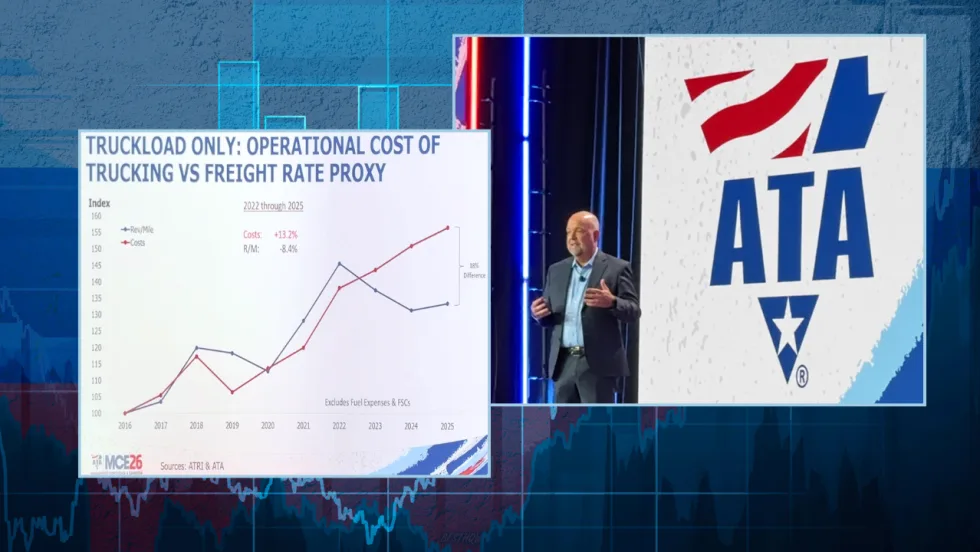
Freight demand remains sluggish, but rising costs and tougher enforcement have taken enough capacity out of the market to change the outlook for motor carriers.
Read More →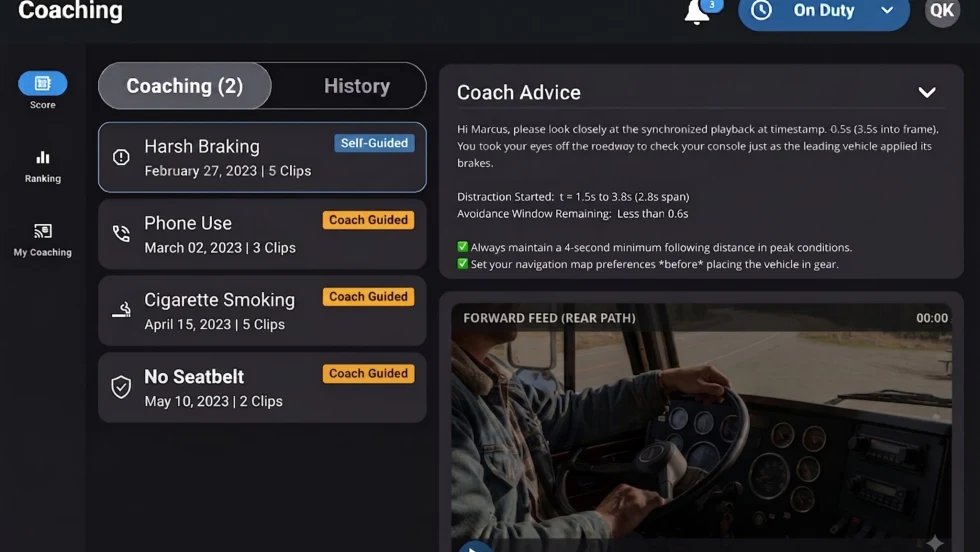
Platform Science Adds Dispatch and Safety Tools
Four additions to PS Fleet help fleets monitor loads, manage driver coaching, share truck locations and adjust video system settings.
Read More →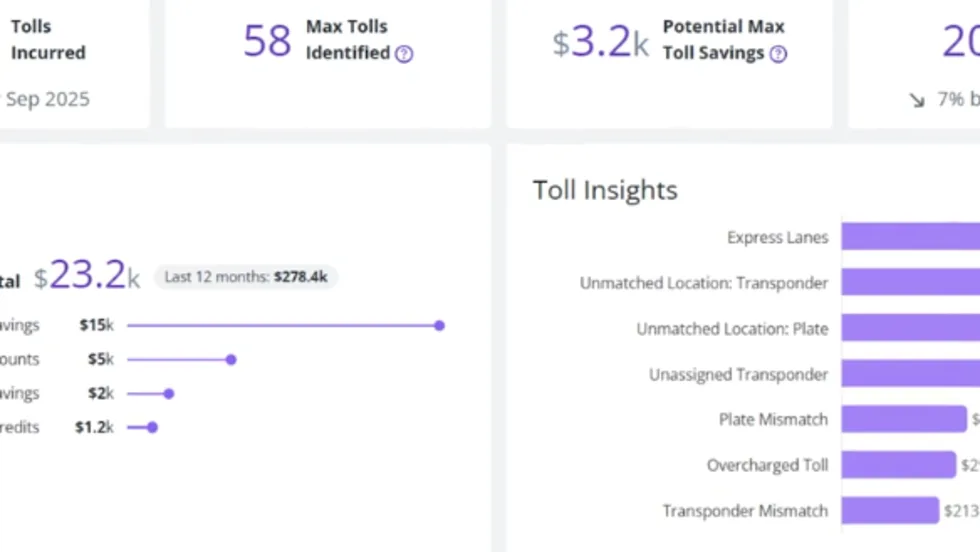
PrePass Intelligence Mines Fleet Bypass, Toll and Safety Data
PrePass Intelligence helps fleets measure bypass savings, flag potential toll overcharges, and spot suspicious transactions by combining data from separate systems.
Read More →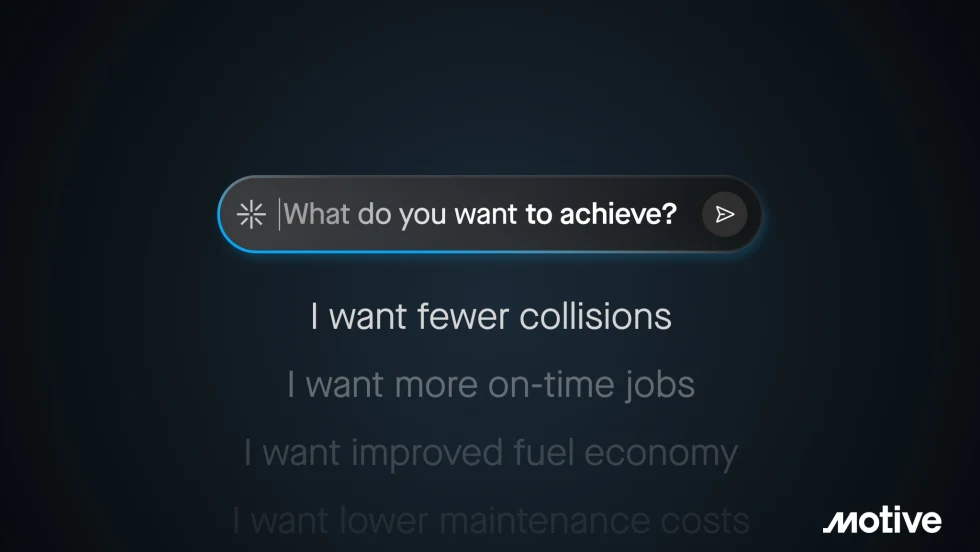
Motive Adds AI Agents for Fleet Operations
New tools automate follow-up on fleet data, from maintenance work orders to driver alerts, with two-way voice conversations planned for later this year.
Read More →
Can You Beat Our Trucking Trivia Challenge?
Test your truck knowledge with 19 trivia questions from Heavy Duty Trucking Exchange. Can you keep up with the fleet pros?
Read More →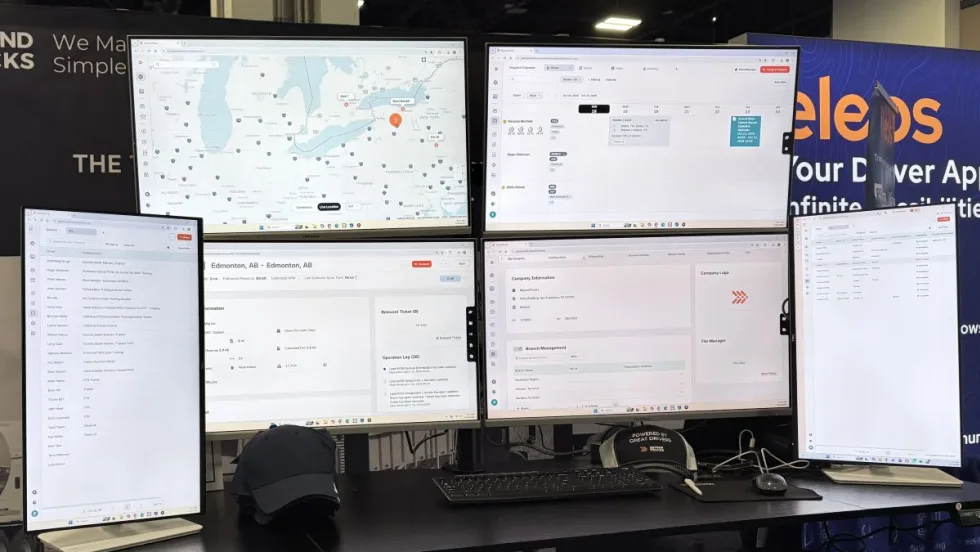
BeyondTrucks Adds Rules Checks to Dispatch
New Compatibility Engine checks driver qualifications, equipment requirements and fleet policies before loads are dispatched.
Read More →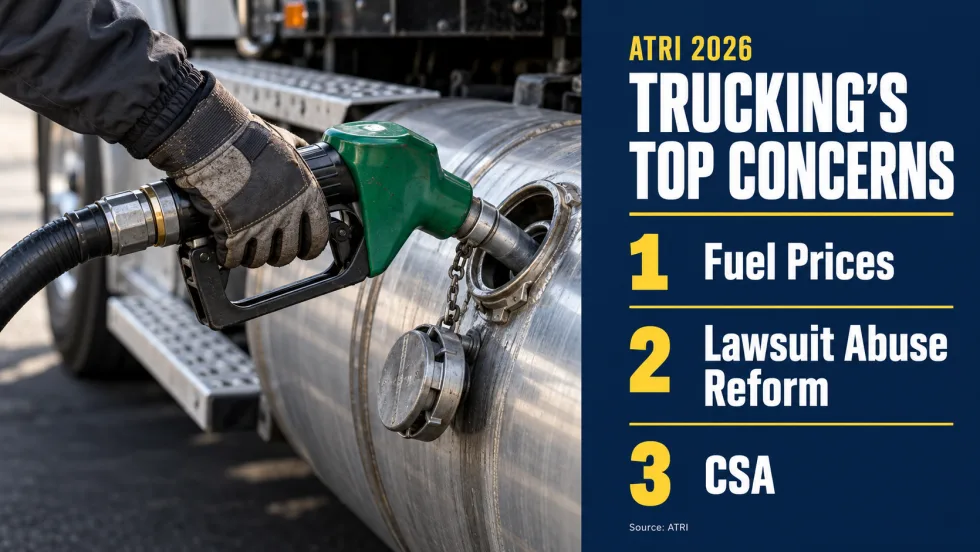
Diesel Prices Hijack Trucking’s Worry List
ATRI’s annual survey finds cautious optimism about freight, but diesel costs, litigation, and insurance continue to squeeze fleets. Drivers have different priorities on several issues.
Read More →
Nomination Deadline Extended for HDT Emerging Leaders
Just a few more days to nominate accomplished trucking fleet professionals under 40 who are making an impact and helping lead the industry forward for the HDT Emerging Leaders award. Deadline extended to October 20!
Read More →
What Will ATA’s New Leader Bring to Trucking's Table?
Incoming President and CEO Mark Colson’s record in Alabama offers clues about his priorities and approach following Chris Spear’s abrupt departure as the head of the American Trucking Associations.
Read More →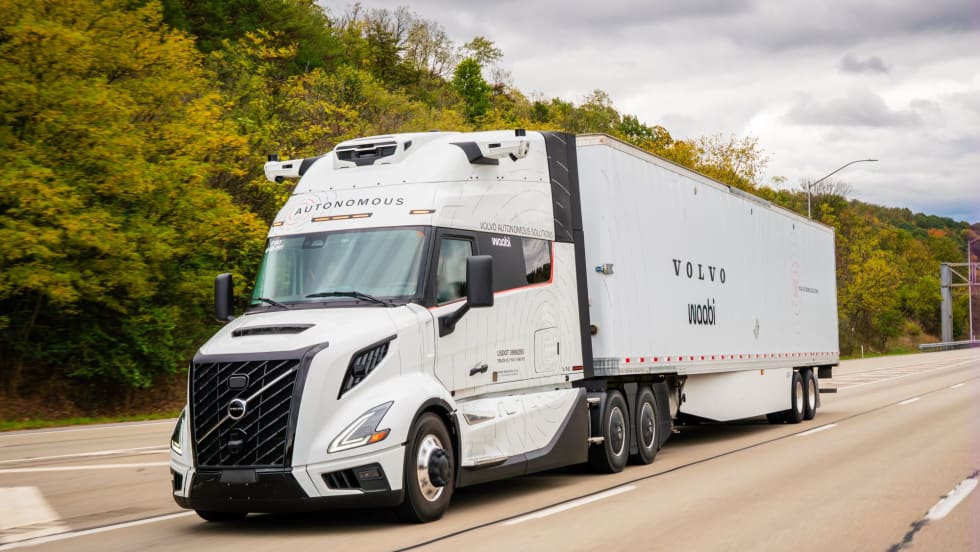
Volvo, Waabi Start Commercial Autonomous Operations in Texas
Volvo VNL Autonomous trucks, powered by the Waabi Driver, are hauling freight directly to third-party facilities for a customer in Texas.
Read More →